Best Snowshoeing Poles of 2026
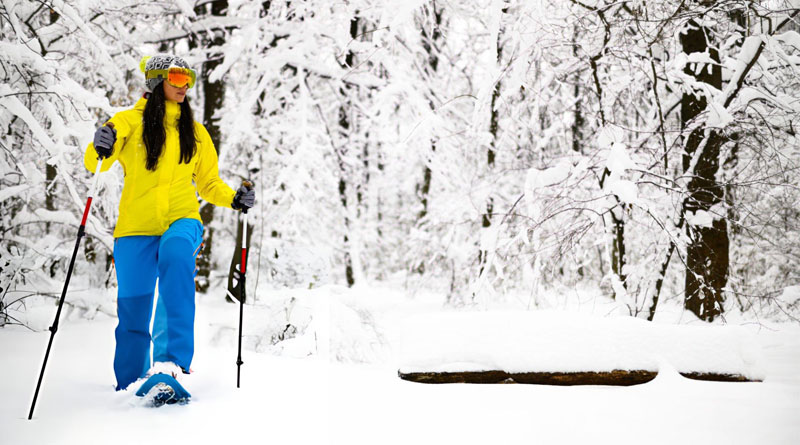
If you love exploring snowy trails, having the right snowshoeing poles can make a big difference. Good poles help you stay balanced, save energy, and move more easily over snow. They are especially useful on uneven terrain or during long hikes. Choosing the best snowshoeing poles can feel tricky because there are many options with different lengths, grips, and materials. In this article, we will guide you through the top choices, explaining what to look for so you can pick poles that are strong, comfortable, and perfect for your winter adventures.
1. Cascade Mountain Tech Aluminum

- Brand: Cascade Mountain Tech
- Shaft Material: Aircraft-grade 6061 aluminum
- Tip Material: Tungsten carbide
- Grip Material: Cork with EVA extended grip
The Cascade Mountain Tech Aluminum snowshoeing poles are perfect for hikers looking for durability and comfort. Made with aircraft-grade aluminum, these poles are strong enough to handle rugged trails, yet lightweight at 10.4 ounces each. The cork grips are comfortable and sweat-wicking, while the EVA extension ensures versatility on steep climbs. The tungsten carbide tips provide excellent traction on icy or uneven surfaces, making them reliable for snowshoeing and winter hikes.
These poles are fully adjustable from 26 inches to 54 inches, offering a custom fit for most users. They disassemble into three pieces for easy travel and storage, making them ideal for backpacking or air travel. With quick-lock mechanisms on each section, adjusting height is simple and secure. Overall, these poles offer a solid balance of strength, comfort, and portability for outdoor enthusiasts.
Pros: Lightweight, Durable, Adjustable, Comfortable grip
Cons: Aluminum may scratch easily, Not ideal for extreme ice climbing
See the Cascade Mountain Tech Aluminum
2. KINGGEAR Nordic Walking Stick

- Shaft Material: Aviation-grade 7075 Aluminum
- Adjustable Length: 25.5″ to 54″
- Grip Material: Cork with EVA bottom
- Tip Material: Tungsten carbide with snow & mud baskets
The KINGGEAR Nordic Walking Stick is a versatile option for snowshoeing and hiking. Its aviation-grade aluminum shaft is lightweight yet strong, making it easier to hike longer distances. The natural cork grip reduces hand fatigue and wicks away sweat, while the EVA extension and adjustable wrist straps add extra comfort. The tungsten carbide tips, combined with included snow and mud baskets, ensure stability on a variety of terrains.
These poles feature quick flip-lock adjustments, allowing you to easily set the perfect height for your needs. With a range from 25.5 inches to 54 inches, they are suitable for the entire family. KINGGEAR also provides numerous accessories, enhancing balance and traction for different activities. Trusted by hikers worldwide, these poles combine strength, convenience, and ergonomic design for dependable outdoor performance.
Pros: Lightweight, Strong, Adjustable, Includes multiple accessories
Cons: Slightly expensive, Slight learning curve for flip locks
See the KINGGEAR Nordic Walking Stick
3. TrailBuddy Trekking Poles
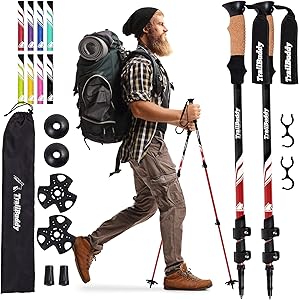
- Shaft Material: Aircraft-grade 7075 Aluminum
- Weight: 9.7 ounces per pole
- Adjustable Length: 24.5″ to 54″
- Grip Material: Cork with padded straps
TrailBuddy Trekking Poles are a reliable choice for snowshoeing and hiking enthusiasts. Constructed from elite aircraft-grade aluminum, they are both lightweight and strong, supporting tough outdoor conditions. The cork handles are comfortable and moisture-wicking, while padded straps provide extra support. The poles’ lever locks are user-friendly, allowing quick adjustments with one hand, unlike twist-lock systems which are slower and harder to operate.
These poles collapse down to just 24.5 inches and disassemble into travel-friendly 21-inch sections. Ideal for both adults and kids, TrailBuddy poles provide stable support on uneven terrain and deep snow. They offer a dependable, lightweight solution for hikers, seniors, and anyone looking for enhanced balance during winter treks or general outdoor adventures.
Pros: Lightweight, Durable, Easy to adjust, Travel-friendly
Cons: Limited color options, May need extra accessories for extreme conditions
See the TrailBuddy Trekking Poles
4. Hiker Hunger Carbon Fiber
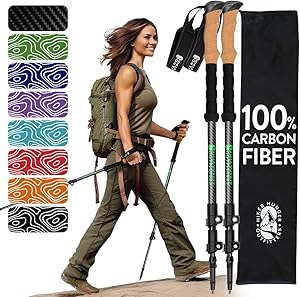
- Shaft Material: 3k 100% Carbon Fiber
- Weight: 7.6 ounces per pole
- Adjustable Length: 24″ to 55″
- Grip Material: Cork with EVA foam extension and neoprene straps
The Hiker Hunger Carbon Fiber snowshoeing poles are designed for lightweight performance without sacrificing strength. The carbon fiber shafts make these poles extremely light, allowing you to move quickly and use less energy on long hikes. The ergonomic cork grips conform to your hands for comfort, while EVA foam extensions and padded straps reduce chafing and improve control on steep climbs.
These poles use a flip lock lever system that securely locks each section in place, more reliable than twist locks. Adjustable from 24 to 55 inches, they fit both short and tall hikers, making them versatile for families or groups. Ideal for snowshoeing, backpacking, or casual walks, these poles offer excellent stability, comfort, and durability for serious outdoor enthusiasts.
Pros: Ultra-lightweight, Strong carbon fiber, Comfortable grips, Secure locking system
Cons: Slightly more expensive, Not as durable on rocky trails
See the Hiker Hunger Carbon Fiber
5. TheFitLife Nordic Walking Trekking Poles

- Adjustable Length: 25.6″ to 51.2″
- Weight: 9.92 ounces per pole
- Shaft Material: High-strength aluminum alloy
- Grip Material: Non-slip ergonomic rubber
TheFitLife Nordic Walking Trekking Poles are compact and travel-friendly, perfect for hikers who need lightweight yet durable support. Constructed from strong aluminum alloy, they offer excellent stability while remaining easy to carry. The ergonomic rubber grips provide a secure hold in all conditions, while the twist-lock system allows quick and precise height adjustments even with gloves on.
These poles come with a full set of accessories, including rubber tips, snow baskets, and mud baskets, making them suitable for all terrains and seasons. With a weight of just under 10 ounces, they are easy to handle and reduce fatigue during long hikes. Overall, TheFitLife poles combine comfort, versatility, and convenience for outdoor enthusiasts of all levels.
Pros: Lightweight, Adjustable, Full accessory kit, Comfortable grips
Cons: Twist lock may loosen over time, Less premium feel than carbon fiber poles
See the TheFitLife Nordic Walking Trekking Poles
6. TREKOLOGY Trek-Z
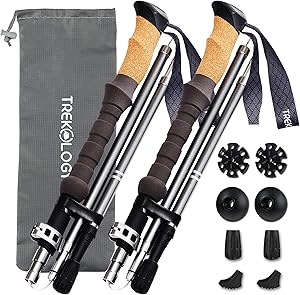
- Shaft Material: Aircraft-grade aluminum
- Weight: 11.5 ounces per pole
- Adjustable Length: 110cm to 130cm
- Grip Material: Cork with EVA foam extension
TREKOLOGY Trek-Z poles are engineered for durability and comfort. Made from aircraft-grade aluminum, these poles can withstand rugged terrain while supporting heavier loads. The cork grips wick away sweat and provide a comfortable hold, while EVA foam extensions make it easier to navigate steep trails. The metal flip lock system ensures each section stays securely in place during use.
The Trek-Z poles fold compactly to just 15 inches, ideal for travel or backpacking. They are adjustable from 110cm to 130cm, fitting a wide range of users. Weighing only 11.5 ounces each, they strike a good balance between strength and portability. These poles are perfect for hikers, snowshoers, or anyone looking for reliable, easy-to-carry trekking gear.
Pros: Durable, Lightweight, Compact, Secure locking system
Cons: Slightly heavier than carbon fiber poles, Limited color options
7. Foxelli Trekking Poles

- Adjustable Length: 24″ to 54″
- Weight: 9.4 ounces per pole
- Shaft Material: Aircraft-grade aluminum
- Grip Material: Cork with EVA extended sleeve
Foxelli Trekking Poles are ideal for snowshoeing and hiking enthusiasts seeking lightweight, compact support. The poles extend from 24 to 54 inches with convenient flip locks, accommodating all heights. Anti-slip cork grips and EVA sleeves provide comfort, while adjustable wrist straps help prevent slipping during long treks. The poles’ tungsten carbide tips ensure traction on icy or rocky terrain.
At just 9.4 ounces each, these collapsible poles are easy to carry and disassemble to 21 inches for travel or storage. The durable aluminum construction ensures reliable performance across all seasons. Foxelli poles offer a balance of strength, comfort, and portability, making them suitable for hikers, seniors, or anyone who wants stability and confidence on the trail.
Pros: Lightweight, Adjustable, Durable, Comfortable grips
Cons: Aluminum may dent, Accessories sold separately
See the Foxelli Trekking Poles
8. Montem Ultra Strong

- Adjustable Length: 24″ to 53″
- Weight: 9.6 ounces per pole
- Shaft Material: Aluminum 7075
- Grip Material: Padded ergonomic strap grips
Montem Ultra Strong Trekking Poles are built for strength and convenience. Made from aluminum 7075, they are lightweight yet ultra-strong, making them suitable for rugged terrain. The padded ergonomic grips provide comfort during long hikes, while the quick-lock system allows easy adjustments to the desired height. These poles are perfect for snowshoeing, backpacking, and all-season trekking.
Compact and travel-ready, Montem poles can be packed easily into backpacks or luggage. They come with rubber tip protectors, pole connectors, and mud baskets, enhancing versatility on different terrains. With a lifetime replacement promise, these poles offer excellent reliability and performance for hikers who demand durable, convenient, and high-quality trekking gear.
Pros: Strong and lightweight, Quick-lock system, Travel-friendly, Lifetime replacement
Cons: Slightly heavier than carbon fiber, Limited color options
How to Choose the Right Snowshoeing Poles
Snowshoeing is an exhilarating way to explore winter landscapes, offering access to serene, snow-covered trails. While the snowshoes themselves are the star of the show, a pair of well-chosen poles is the unsung hero of a successful outing. They provide critical balance, reduce fatigue, improve propulsion, and offer stability on tricky terrain. Choosing the right pair isn’t complicated, but focusing on a few key features will dramatically enhance your comfort and performance.
Why You Absolutely Need Poles for Snowshoeing
Before diving into the specifics, it’s important to understand the role poles play. Unlike summer hiking, where poles are often optional, snowshoeing poles are essential. They create two additional points of contact with the ground, vastly improving your stability in deep, uneven snow. They help you maintain rhythm and efficiency, engaging your upper body to share the workload with your legs. When ascending steep slopes, you can plant them for powerful leverage. When descending, they act as brakes and prevent unwanted slides. Furthermore, they are indispensable for testing snow depth and stability over streams or uncertain ground.
Key Considerations When Choosing Poles
Selecting your ideal snowshoeing poles involves evaluating several interconnected factors: adjustability, material, grip style, basket size, and tip design.
1. Adjustability: Fixed-Length vs. Adjustable vs. Folding
This is one of the most critical decisions.
- Adjustable/Telescoping Poles: The most popular and versatile choice for snowshoeing. They feature two or three sections that slide and lock, allowing you to change the pole length. This is vital because you’ll want longer poles for flat terrain and shorter poles for steep ascents. A good rule of thumb is to set the pole so your elbow forms a 90-degree angle when the tip is on the ground. Adjustable poles also compact for easy travel and storage.
- Folding/Z-Poles: These poles collapse down via a cord internal to their segmented design, making them extremely compact and lightweight. While excellent for backpacking, ensure the model you choose is rated for winter use, as some mechanisms can freeze or be less durable in very cold, wet conditions.
- Fixed-Length Poles: Typically the lightest and most robust due to their simple, one-piece construction. However, their lack of adjustability makes them a niche choice for snowshoeing, best suited for those who know the exact, optimal length for their primary terrain.
Recommendation: For most snowshoers, a high-quality pair of adjustable telescoping poles offers the best balance of performance, versatility, and value.
2. Shaft Material: Weight and Durability
The material of the pole shaft affects its weight, strength, vibration dampening, and price.
- Aluminum: The workhorse of the pole world. Aluminum alloys (like 7075) are durable, affordable, and can bend under extreme stress rather than snapping. They are slightly heavier than carbon but offer excellent reliability in cold weather and rough use. Ideal for most recreational snowshoers and those who travel in rocky or mixed terrain.
- Carbon Fiber: Significantly lighter and stiffer than aluminum, reducing arm fatigue over long distances. Carbon poles also absorb trail vibration very well. The trade-off is cost and potential brittleness in extreme cold; a hard impact against a rock or ice can cause them to crack or break, rather than bend. Best for weight-conscious users on established, less-technical trails.
3. Grip and Strap Design: Comfort and Control
Your hands are in constant contact with the poles, so comfort here is paramount.
- Grip Material: Look for ergonomic grips made of soft, tacky foam or rubber. Foam is excellent for moisture-wicking and comfort in a variety of temperatures. Avoid hard plastic grips.
- Strap Design: Proper snowshoeing poles will have a wide, adjustable webbing strap (often called a trekking pole strap). You should be able to slide your hand up through the bottom of the strap, then grip the pole, allowing the strap to take the bulk of your weight. This prevents you from having to squeeze the grip constantly, saving hand energy. Some winter-specific models feature extra-insulated or removable strap covers.
- Extended Grip: Many poles feature a lower section of grip texture or extended foam. This is useful for quick hand placement during steep ascents or when using the pole for tasks like probing snow.
4. Baskets: Your Flotation on Snow
Baskets are the wide, round discs mounted near the tip of the pole. Their primary job is to prevent the pole from plunging too deeply into soft snow.
- Size Matters: Summer trekking poles come with small, 2-3 inch baskets. For snowshoeing, you need larger, winter-specific baskets, typically 5 inches or more in diameter. The deeper and softer the snow, the larger the basket you’ll want to stay on top of the surface.
- Interchangeability: Ensure the baskets on your chosen poles are easily removable and replaceable. They can break, and having the option to swap to a different size for different conditions is a bonus.
5. Tips: For Grip and Safety
The very bottom of the pole is its business end.
- Carbide/Tungsten Tips: This is the standard and essential for winter. These hard-metal tips bite into ice, hardened snow, and rocky patches, providing secure traction. They far outlast standard steel tips.
- Tip Shape: A sharp, angled tip provides the best penetration on hard surfaces. Some poles come with interchangeable tips for different seasons.
- Snow Baskets/Powder Rings: Some models offer an additional, larger removable ring that fits above the basket for extreme powder conditions, offering even more surface area.
Putting It All Together: Recommendations by User Type
The Casual Recreational Snowshoer
You stick to groomed or well-packed trails in parks and recreational areas. Focus on durability and value. A pair of adjustable aluminum poles with comfortable foam grips, standard winter baskets (5-6 inches), and carbide tips will serve you perfectly for years.
The Mountain and Backcountry Adventurer
You tackle steep, variable, and deep snow conditions. Prioritize robustness and adjustability. Sturdy adjustable aluminum poles with a reliable locking mechanism are key. Look for extended grips, large interchangeable baskets, and aggressive carbide tips. Consider slightly heavier-duty models from reputable outdoor brands.
The Fitness and Distance-Oriented Snowshoer
You move fast and cover long distances on trails, prioritizing speed and efficiency. Weight becomes a bigger factor. You might opt for lightweight adjustable carbon poles or high-end folding poles rated for winter. Ensure they still have proper winter baskets and carbide tips. The vibration dampening of carbon can reduce fatigue on long, hard-packed trails.
Final Fitting and Preparation Tips
Once you have your poles, set them to the correct length. On flat ground, with the tip on the floor, your elbow should be at a 90-degree angle. Shorten them by 5-10 cm for ascents, and lengthen them slightly for descents. Before your first outing, practice the strap technique and familiarize yourself with the adjustment mechanism—it’s much harder to do with cold, gloved hands on the trail. With the right poles in hand, you’ll unlock greater stability, endurance, and confidence, letting you fully enjoy the magic of the winter wilderness.