

Best Waterproof Hiking Backpacks of 2026
Heading out for a hike? The weather can change quickly, and a wet backpack can ruin your day. That’s why a reliable waterproof hiking backpack is essential. It keeps your gear, clothes, and electronics completely dry, no matter how hard it rains. This guide will help you find the best waterproof backpacks. We’ll look at durable materials, smart features, and trusted brands to ensure your adventures stay comfortable and your belongings stay safe.
1. NEMO Resolve 35

- Gear Capacity: 37.5 liters
- Weight: 2 lbs. 14 oz.
- Frame Material: Spring-steel loop
- Main Material: 100% recycled polyester
The NEMO Resolve 35 is a standout technical pack designed for active hikers who prioritize sustainability without sacrificing performance. Its spring-steel loop internal frame provides excellent load transfer, making it comfortable for full days on the trail. The use of 100% recycled materials aligns with modern eco-conscious standards while maintaining a rugged, waterproof build.
This pack offers impressive organization with eight exterior pockets and dual access through the top and side. The adjustable torso length ensures a precise fit for a wide range of body types. While it lacks an included raincover, its inherent water resistance and modular design make it a versatile choice for fast-paced adventures in unpredictable weather conditions.
Pros: Eco-friendly recycled materials, adjustable torso for custom fit, waterproof construction.
Cons: Raincover not included, slightly heavier than ultralight frameless alternatives.
See the NEMO Resolve 35 See the Women’s Resolve 35
2. Loowoko 50L Hiking Backpack
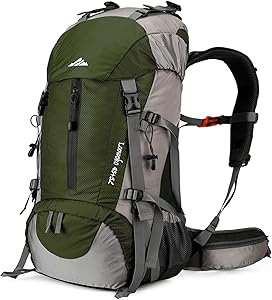
- Gear Capacity: 50 liters
- Weight: 2.1 pounds
- Frame Type: Frameless
- Included Accessories: Waterproof rain cover
The Loowoko 50L is an upgraded version of a popular budget-friendly hiker favorite, focusing on improved durability and material quality. Despite its large 50-liter capacity, the pack remains remarkably lightweight at just over two pounds. The high-quality polyester and nylon fabric are tear-resistant and anti-scratch, making it a reliable companion for 3-5 day backpacking trips or camping excursions.
Comfort is prioritized through S-type shoulder straps and breathable mesh padding. The organizational layout is excellent, featuring a dedicated shoe separator and multiple compression straps for attaching tents or sleeping bags. While it lacks an internal frame, the high elastic back support helps ease the burden, making it a solid choice for those seeking maximum volume without the bulk of a heavy metal frame.
Pros: Massive storage capacity, very lightweight for its size, includes a dedicated rain cover.
Cons: Lack of internal frame limits heavy load stability, durability may vary under extreme use.
See the Loowoko 50L Hiking Backpack
3. Osprey Downburst 34

- Gear Capacity: 34 liters
- Weight: 3 lbs. 4.4 oz.
- Frame Material: Lightwire steel alloy
- Back Panel: Suspended mesh
Osprey’s Downburst 34 is engineered for hikers who refuse to let the weather dictate their plans. This pack features a fully waterproof main compartment constructed from TPU-laminated recycled nylon, ensuring your gear stays bone-dry during heavy downpours. The Lightwire steel alloy frame and suspended mesh back panel provide the industry-leading ventilation and support that Osprey is known for across their technical line.
The pack is highly adjustable, catering to torso lengths between 14 and 19 inches, which is perfect for smaller frames. While it is the heaviest pack on this list, the weight is justified by the premium suspension system and rugged materials. It is reservoir compatible and includes five exterior pockets for quick access to essentials, making it a top-tier choice for serious day hikers.
Pros: Superior waterproof protection, excellent back ventilation, highly adjustable suspension system.
Cons: Heaviest option in its class, higher price point than basic daypacks.
See the Downburst 34 See the Downburst 26 See the Downburst 24
4. Maelstrom Hiking Backpack

- Gear Capacity: 40 liters
- Material: Rip-stop 210d nylon
- Special Feature: Waterproof wet pocket
- Safety: Survival whistle on chest buckle
The Maelstrom 40L is a versatile daypack designed for everything from fishing trips to mountain treks. It is built from high-quality rip-stop nylon that offers great resistance against tears and scratches. One of its most unique features is the dedicated waterproof wet pocket inside the main compartment, which allows you to separate sweaty clothing or wet gear from your dry items.
Ergonomics are at the forefront, with thick padded back supports and breathable shoulder straps that help reduce fatigue. The pack is loaded with utility, including a headphone port, trekking pole attachments, and a survival whistle. With its airline-compliant dimensions and reflective safety signs, it serves as both a rugged outdoor tool and a practical travel bag for the modern adventurer.
Pros: Integrated wet/dry separation, included rain cover, feature-rich for the price point.
Cons: Zippers can be stiff initially, back panel may get warm during high-intensity activity.
See the Maelstrom Hiking Backpack
5. MIYCOO Backpack
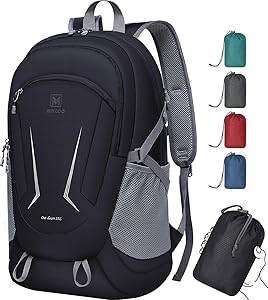
- Gear Capacity: 35 liters
- Folded Size: 4.5 x 3.9 x 7.8 inches
- Waterproof Rating: IPX4
- Weight: Ultra-lightweight packable
The MIYCOO 35L is the ultimate secondary bag for travelers and casual hikers. This packable backpack is designed to fold down into its own inner pocket, becoming no larger than a small sandwich. Despite its compact storage size, it unfolds to provide 35 liters of space, featuring three main compartments and a wet/dry separator to keep your belongings organized after a workout or light rain.
Constructed from IPX4 rated waterproof fabric, it handles splashes and light showers with ease. It features reinforced stress points and upgraded zippers to ensure longevity during daily activities. While it lacks the rigid support of a dedicated hiking pack, it includes a survival whistle on the strap, making it a smart, safety-conscious choice for light excursions or as an emergency spare bag in your suitcase.
Pros: Extremely portable and packable, great organizational compartments, budget-friendly.
Cons: No structural support for heavy loads, limited water resistance in heavy downpours.
6. Seektop 20L Foldable Backpack

- Gear Capacity: 20 liters
- Material: High-density nylon
- Closure Type: Waterproof zippers
- Weight: Ultralight foldable
The Seektop 20L is a compact, high-efficiency daypack perfect for short trips and daily commuting. Crafted from high-density nylon with waterproof zippers, this bag is surprisingly resilient against the elements for a foldable model. Its humanized design includes breathable soft padding on the shoulder straps and back panel, which is a rare and welcome feature for a pack that can be collapsed into a suitcase.
Organization is a highlight, with five zippered compartments and an external suspension system for trekking poles. The addition of reflective elements ensures visibility during night hikes or city walks. While the 20L capacity is the smallest on our list, it is perfectly sized to meet airline carry-on standards, making it an ideal companion for the minimalist traveler or weekend warrior.
Pros: Comfortable padded straps for a foldable bag, excellent zipper quality, very compact.
Cons: Small capacity not suitable for multi-day trips, limited weight-bearing ability.
See the Seektop 20L Foldable Backpack
7. IGOLUMON Hiking Backpack

- Gear Capacity: 40 liters
- Weight: 1 pound
- Material: Tear-resistant nylon
- Pockets: 40L with wet pocket
The IGOLUMON 40L is an impressively light large-capacity pack, weighing in at just one pound. It balances the features of a full-sized trekking bag with the convenience of a foldable design. The pack includes a specialized wet pocket on the back with its own zipper access, allowing for easy management of damp towels or exercise gear without disturbing the dry contents of the main compartment.
Durability is enhanced with a double-layer bottom and reinforced stress points, allowing it to carry more gear than typical packable bags. The chest strap includes a survival whistle and helps keep the load stable and centered. It also features bottom webbing straps for attaching bulkier items like tents or sleeping mats, offering versatility usually reserved for much heavier, framed backpacks.
Pros: Incredible weight-to-volume ratio, bottom straps for extra gear, effective wet pocket.
Cons: Lack of frame can lead to bulging when overpacked, shoulder padding is thin.
See the IGOLUMON Hiking Backpack
8. Fjallraven Ulvo 23

- Gear Capacity: 23 liters
- Weight: 1 lb. 6.9 oz.
- Material: 400-denier Bergshell nylon
- Laptop Fit: 15 inches
The Fjallraven Ulvo 23 blends classic Scandinavian styling with modern technical performance. Made from Fjallraven’s waterproof Bergshell fabric, this pack is exceptionally durable and ready for harsh conditions. It is uniquely designed to transition from the forest to the office, featuring a padded 15-inch laptop sleeve and a clean, minimalist exterior that doesn’t scream “backpacker” in an urban setting.
This frameless daypack is lightweight yet structured enough to maintain its shape. While it lacks reservoir compatibility, its focus on everyday utility makes it a perfect choice for students, commuters, and casual hikers alike. The 400-denier fabric provides significant abrasion resistance, ensuring this pack will last through years of daily use and weekend trail adventures.
Pros: Highly durable Bergshell fabric, stylish urban-to-trail design, excellent laptop protection.
Cons: No reservoir compatibility, limited exterior attachment points.
9. Black Diamond Beta Light 30

- Gear Capacity: 30 liters
- Weight: 1 lb. 10.4 oz. (Size M)
- Material: Ultra 200 / Ultra 400
- Frame Type: Frameless
The Black Diamond Beta Light 30 is a precision tool for the ultralight backpacking community. Built with cutting-edge Ultra 200 fabric, it offers an incredible strength-to-weight ratio and is inherently waterproof. This pack is designed for fast-and-light objectives where every ounce matters, yet it still provides essential features like hipbelt pockets and a four-way stretch mesh front pocket for quick-access gear.
Available in multiple sizes for a perfect torso and waist fit, the Beta Light 30 ensures that the weight stays close to your center of gravity. Despite being frameless, the design manages loads efficiently for experienced hikers. This is a high-performance pack that sacrifices traditional heavy padding for streamlined efficiency and elite-level durability in rugged environments.
Pros: State-of-the-art ultralight materials, multiple size options for perfect fit, very durable.
Cons: Requires careful packing due to lack of frame, premium price for ultralight tech.
See the Beta Light 30 See the Beta Light 45
10. Exped Typhoon 25

- Gear Capacity: 25 liters
- Weight: 1 lb. 1 oz.
- Material: Recycled 210D Robic HD ripstop
- Back Pad: Recycled Air Mesh
The Exped Typhoon 25 is a robust, waterproof daypack that thrives in wet environments. Utilizing a roll-top closure and seam-taped lining, it acts like a dry bag for your back, ensuring that even a swim in a river won’t soak your gear. The recycled Robic ripstop nylon is incredibly tough for such a lightweight pack, and the Air Mesh back pad provides a comfortable interface for all-day wear.
Its minimalist design features a simple hipbelt and three exterior pockets, keeping the weight down to just over a pound. While it isn’t reservoir compatible, its streamlined nature makes it an excellent choice for cycling, canyoning, or rainy-day summit pushes. It’s a no-nonsense, high-quality pack for those who prioritize absolute weather protection in a compact form factor.
Pros: Fully waterproof roll-top design, very lightweight, durable Robic fabric.
Cons: No hydration bladder port, simple hipbelt provides minimal weight distribution.
See the Typhoon 25 See the Typhoon 15
Choosing the Ultimate Waterproof Hiking Backpack
For any outdoor enthusiast, the weather is the one variable that remains stubbornly outside our control. Whether you are trekking through the misty Highlands, navigating a tropical rainforest, or simply caught in a sudden afternoon downpour on a local trail, the gear you carry is your first line of defense. Among your equipment, your backpack is perhaps the most critical to keep dry. A soaked backpack doesn’t just mean wet clothes; it means a heavier load, potential damage to expensive electronics, and, in cold climates, a higher risk of hypothermia. Choosing a waterproof hiking backpack requires a balance of understanding materials, construction techniques, and your specific trail needs.
Understanding Waterproofing vs. Water Resistance
The first step in choosing the right pack is understanding the terminology used by manufacturers. These terms are often used interchangeably in casual conversation, but in the world of technical gear, they mean very different things.
Water-Resistant Packs
Most standard hiking backpacks are water-resistant. They are typically treated with a Durable Water Repellent (DWR) coating. This allows water to bead up and roll off the surface in light mist or brief showers. However, under sustained rain or pressure, water will eventually seep through the fabric and the zippers.
Water-Repellent Packs
These are a step above water-resistant. The fabric itself is often denser, and the DWR coating is more robust. While they can handle more significant moisture, they are not designed for submersion or prolonged exposure to torrential storms.
Truly Waterproof Packs
A truly waterproof backpack is designed to keep the contents bone-dry even in extreme conditions. These packs often use specialized construction like TPU (Thermoplastic Polyurethane) lamination, RF-welded seams, and roll-top closures. Some are even submersible, meaning you could drop the bag in a river, and the interior would remain dry.
Key Materials to Look For
The durability and effectiveness of a waterproof pack depend heavily on the textiles used. High-performance waterproof bags generally move away from traditional canvas or light nylon in favor of more advanced composites.
Dyneema Composite Fabric (DCF)
Formerly known as Cuben Fiber, Dyneema is the gold standard for ultralight, waterproof hiking. It is incredibly strong, doesn’t absorb water (meaning it won’t gain “water weight”), and is naturally waterproof. However, it is also one of the most expensive materials on the market.
TPU Laminated Nylon
Many premium waterproof packs use high-denier nylon coated with TPU. This creates a rubber-like barrier that is impervious to water. It is highly abrasion-resistant and holds up well to the scrapes and scuffs of dense brush or rocky terrain.
X-Pac
X-Pac is a multi-layer laminate fabric originally designed for sailcloth. It features a distinct diamond pattern (the X-Ply) that provides excellent stability and tear resistance while remaining completely waterproof. It is a favorite for “fast and light” hikers who need a balance of weight and ruggedness.
Construction Methods: Beyond the Fabric
A backpack is only as waterproof as its weakest point. Even the most waterproof fabric will fail if the construction allows moisture to bypass the barrier.
Seam Taping and Welding
Traditional backpacks are sewn together, creating thousands of tiny holes for water to enter. Waterproof packs solve this in two ways. Seam taping involves applying a waterproof adhesive tape over the stitched lines. A more advanced method is RF (Radio Frequency) welding, which uses electromagnetic energy to fuse the fabric pieces together without any needles or thread, creating a molecular bond that is entirely airtight.
Roll-Top vs. Zippered Access
Zippers are a major failure point for waterproofing. While “water-resistant” zippers (often coated in urethane) exist, they can still leak under pressure. This is why many dedicated waterproof packs utilize a roll-top closure. By rolling the fabric over itself several times and clipping it shut, you create a mechanical seal that water cannot penetrate.
Choosing Based on Capacity and Use Case
How you intend to use the pack will dictate the volume and features you should prioritize.
Day Hiking (15L to 30L)
For single-day excursions, a lightweight waterproof pack like the Exped Typhoon or a foldable option is often sufficient. You want enough room for a shell jacket, lunch, and a first-aid kit. Since you aren’t carrying heavy camping gear, a simple frameless design works well here.
Multi-Day Backpacking (40L to 65L)
When you are out for several days, your pack needs a proper suspension system—even if it is waterproof. Look for internal frames and padded hip belts. Packs like the Osprey Downburst 34 or larger technical bags provide the load-bearing support necessary to carry sleeping bags and tents while keeping them dry.
Weight and Comfort Considerations
One common trade-off with waterproof packs is breathability. Because the material is designed to keep water out, it also prevents air from moving through the back panel. This can lead to a “sweaty back” sensation.
To combat this, look for packs with suspended mesh back panels (like Osprey’s AirSpeed system). These create a gap between your back and the waterproof bag, allowing for airflow. Additionally, check the weight. Some waterproof coatings add significant bulk. If you are an ultralight hiker, materials like DCF or Ultra 200 are worth the investment to keep the base weight low.
Essential Features and Accessories
When shopping, keep an eye out for these “small” details that make a big difference on the trail:
- External Mesh Pockets: Since you shouldn’t open your waterproof main compartment in the rain, having large mesh outer pockets for wet rain gear or water bottles is essential.
- Hydration Compatibility: Check if the pack has a port for a hydration bladder. Note that some extremely waterproof bags omit this to ensure no water enters the hole.
- Reflective Accents: Rain often brings low visibility. Reflective strips are a vital safety feature if you find yourself hiking near roads or in the dark.
- Compression Straps: These help stabilize the load, preventing the gear from shifting, which is especially important in frameless waterproof bags.
Maintenance of Waterproof Packs
To ensure your pack remains waterproof for years, proper care is required. Always rinse off salt water or mud after a trip, as these can degrade coatings over time. Avoid machine washing; instead, use a sponge with mild soap. If the exterior fabric starts absorbing water (wetting out), you can apply a fresh spray-on DWR treatment to the outer layer to restore its water-beading properties.
Final Thoughts
Choosing the right waterproof hiking backpack is an investment in your comfort and safety. If you hike in dry climates with only the occasional shower, a water-resistant pack with a separate rain cover might be the most cost-effective solution. However, if you are a dedicated four-season hiker or enjoy coastal treks, a technical waterproof bag with welded seams and a roll-top closure is a game-changer. By focusing on high-quality materials like TPU nylon or Dyneema and ensuring the construction matches your volume needs, you can step onto the trail with the confidence that your gear will remain protected, no matter what the sky decides to do.