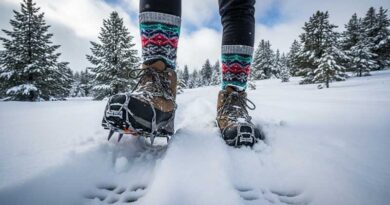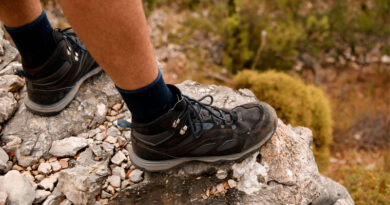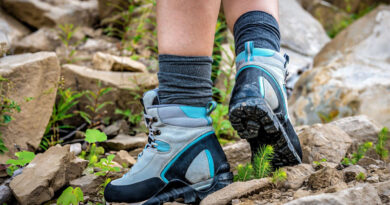
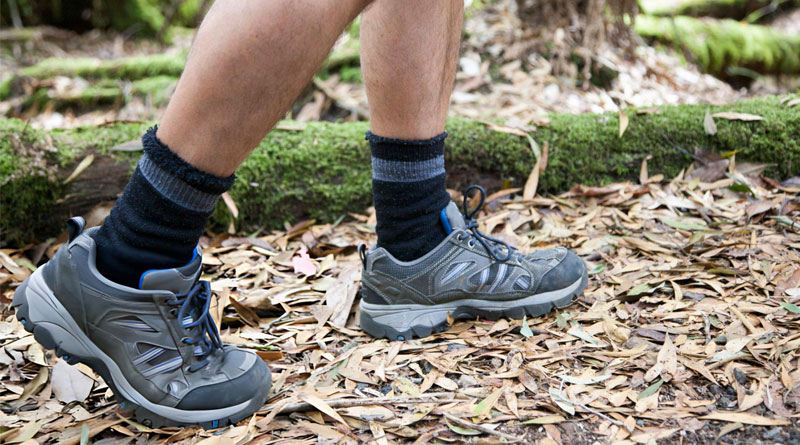
Best Hiking Socks for Hot Weather of 2026
When you’re hiking in hot weather, the right socks can make all the difference. The wrong pair leads to sweaty, uncomfortable feet and painful blisters. You need socks that breathe, wick away moisture, and keep your feet cool on the trail. To help you enjoy your sunny adventures, we’ve found the best hiking socks designed to beat the heat and keep you comfortable mile after mile.
1. REI Co-op Merino Wool Crew Socks

- Fabric: 79% merino wool/20% nylon/1% LYCRA spandex
- Height: Crew
- Cushioning: Light
- Sustainability: Climate Label Certified
These socks represent a fantastic value for hikers who want the benefits of high-percentage merino wool without the premium brand price tag. The high wool content ensures excellent temperature regulation and odor resistance, making them a reliable choice for multi-day trekking or long days on the trail. They feel soft against the skin and maintain a consistent fit even after several washes.
The light cushioning provides just enough protection against friction without adding significant bulk inside your boots. While they are thinner than dedicated winter socks, they excel in three-season conditions where breathability is a priority. The reinforced zones help with durability, though they may show wear slightly faster than high-density competitors. Overall, they are an accessible, high-performance staple for any outdoor wardrobe.
Pros: High wool content, excellent odor control, budget-friendly price.
Cons: Slightly less durable than premium brands, thin for cold weather.
See the REI Co-op Merino Wool Crew Socks
2. RUIXUE Merino Wool Hiking Socks

- Fabric: 50% Merino Wool, 30% Nylon, 17% Acrylic, 3% Lycra
- Certification: OEKO-TEX & GRS Certified
- Size Range: 4 precise US sizes (3-15)
- Features: Seamless toe and terry cushioned sole
RUIXUE offers a versatile multi-pack that balances performance with everyday comfort. By blending merino wool with acrylic and nylon, these socks achieve a high level of pill resistance and durability that helps them withstand the rigors of 12-hour shifts or gym sessions. The inclusion of a seamless toe is a thoughtful touch that prevents the common annoyance of pinching and rubbing during movement.
The moderate thickness makes these a true four-season option, capable of handling a Colorado ski trip or a humid Florida hike. The terry cloth padded sole provides a cloud-like feel that targets high-impact areas to prevent blisters. While the wool percentage is lower than some technical hiking brands, the added stretch from the Lycra ensures they stay snug and never bunch up inside your footwear.
Pros: Great value 3-pack, seamless toe design, eco-friendly certifications.
Cons: Lower wool percentage, synthetic blend may hold more odor.
See the RUIXUE Merino Wool Hiking Socks
3. Smartwool Performance Hike Light

- Fabric: 56% Merino wool/28% recycled nylon/13% nylon/3% elastane
- Cushioning: Light Cushioning
- Gender: Men’s
- Sustainability: ZQ-certified merino and recycled nylon
The Smartwool Performance Hike Light is a masterclass in technical construction, utilizing ZQ-certified merino wool to ensure both animal welfare and high-quality fibers. This specific model features a mapped cushioning system that puts protection where you need it most while maintaining a slim profile elsewhere. The result is a sock that fits perfectly in technical hiking shoes without feeling restrictive or overly warm.
Durability is enhanced through the use of recycled nylon, making this a more sustainable choice for the eco-conscious adventurer. These socks manage moisture exceptionally well, pulling sweat away from the skin to keep your feet dry and blister-free on demanding ascents. They provide a secure, performance-oriented fit that stays in place throughout the day. It is a premium choice for hikers who prioritize technical features and ethical sourcing.
Pros: ZQ-certified wool, targeted cushioning, excellent moisture management.
Cons: Higher price point, light cushion might feel thin for heavy boots.
See the Smartwool Performance Hike Light
4. Darn Tough Light Hiker

- Fabric: 54% nylon/43% merino wool/3% Lycra spandex
- Height: Micro Crew
- Drying: Quick Drying
- Wicking: Moisture Wicking
Known for their legendary durability, the Darn Tough Light Hiker micro crew socks are built to last a lifetime. Despite having a higher nylon content than some competitors, they utilize high-density knitting to create a remarkably comfortable and tough fabric. The micro-crew height sits just above a standard hiking boot, providing protection without the extra heat of a full crew sock, making them ideal for summer treks.
The fit is exceptionally snug, which is intentional to prevent the sock from sliding or bunching—the primary causes of blisters. Because they are quick-drying and moisture-wicking, they are a favorite for backpackers who need to wash and dry gear on the go. While the initial investment is higher, the long-term performance and brand reputation make them a staple for serious hikers. These socks provide a streamlined feel for fast-paced trail activities.
Pros: Incredible durability, lifetime reputation, no-slip fit.
Cons: Snug fit may feel tight to some, lower wool percentage.
See the Darn Tough Light Hiker
5. REI Co-op Merino Wool Quarter Socks

- Fabric: 78% merino wool/21% nylon/1% LYCRA spandex
- Height: Ankle (Quarter)
- Cushioning: Light
- Gender: Unisex
If you prefer low-cut hiking shoes or trail runners, the REI Co-op Merino Wool Quarter socks are an excellent choice. They offer the same high-quality 78% merino wool blend as their crew-length counterparts but in a shorter silhouette that ends just above the ankle. This design is perfect for warm-weather hiking where you want to maximize airflow around your legs while still protecting your heels from shoe friction.
The moisture-wicking properties are impressive, keeping feet dry even when the pace picks up on dusty trails. Because they are unisex and feature light cushioning, they provide a versatile fit for a wide range of foot shapes. These socks are a great way to enjoy the antimicrobial benefits of wool at a fraction of the cost of other brands. They are simple, effective, and reliable for any light outdoor excursion or daily wear.
Pros: High wool content, great for trail runners, very affordable.
Cons: Not suitable for high boots, limited ankle protection.
See the REI Co-op Merino Wool Quarter Socks
6. Darn Tough Hiker Boot Sock

- Fabric: 64% merino wool/33% nylon/3% Lycra spandex
- Height: Crew
- Cushioning: Medium
- Performance: Quick Drying and Moisture Wicking
The Darn Tough Hiker Boot Sock is the gold standard for those who require more substantial padding during their outdoor adventures. Featuring medium cushioning, these socks provide a plush layer underfoot that absorbs shock and protects against the pressure of heavy backpacking boots. The 64% merino wool content ensures that despite the extra thickness, your feet stay dry and odor-free throughout the day.
These socks are built with a performance fit that eliminates slipping and bunching, which is critical when carrying a heavy pack over uneven terrain. The durability is legendary, as they are designed to survive hundreds of miles of trail use without thinning out in the heel or toe. For hikers who tackle rugged environments or prefer a softer feel inside their boots, these socks offer the perfect balance of comfort and extreme toughness.
Pros: Excellent shock absorption, high wool content, extremely durable.
Cons: May be too warm for summer, higher price point.
See the Darn Tough Hiker Boot Sock
7. Darn Tough Critter Club – Women’s

- Fabric: 54% nylon/43% merino wool/3% Lycra spandex
- Height: Micro Crew
- Cushioning: Light
- Gender: Women’s
The Critter Club socks bring a bit of personality and fun to the technical world of hiking gear. Designed specifically for a woman’s foot, they feature a narrower heel and a more contoured fit than unisex models. The lightweight micro-crew height is ideal for pairing with low to mid-height hiking boots, offering a streamlined feel that doesn’t sacrifice performance for its stylish aesthetic.
Underneath the playful designs lies the same high-performance engineering Darn Tough is known for, including a seamless construction that prevents irritation. They wick moisture effectively and dry quickly, making them just as capable on a grueling summit hike as they are for casual weekend walks. These socks prove that you don’t have to choose between technical excellence and a fun design. They stay snug and supportive mile after mile.
Pros: Fun aesthetic designs, women-specific fit, seamless construction.
Cons: Thinner profile lacks heavy padding, higher price for patterns.
See the Darn Tough Critter Club – Women’s
8. Darn Tough Treeline – Women’s

- Fabric: 63% merino wool/35% nylon/2% Lycra spandex
- Height: Micro Crew
- Cushioning: Medium
- Properties: Quick Drying and Wicking
The Treeline socks are designed for women who need a bit more “oomph” in their footwear. With medium cushioning throughout the base of the foot, they offer superior comfort for long-distance trekking and rugged terrain. The 63% merino wool blend is exceptionally high, providing natural temperature regulation that keeps feet warm in the morning and cool as the sun rises, while naturally fighting off bacteria and odor.
These socks feature a beautiful treeline graphic that celebrates the outdoors, but their performance is the real star. The micro-crew height provides a versatile fit for most boots without feeling bulky around the calves. The high-density knit provides a “second skin” feel that prevents friction and hot spots. It is a fantastic choice for serious female hikers who want maximum comfort and a sock that can handle the toughest conditions on the trail.
Pros: High merino content, great cushioning, attractive mountain graphics.
Cons: Can feel thick in tight shoes, premium price tag.
See the Darn Tough Treeline – Women’s
9. REI Co-op Trailsmith

- Fabric: 59-60% merino wool/37-38% nylon/3% LYCRA spandex
- Height: Crew
- Cushioning: Light
- Gender: Unisex
The REI Co-op Trailsmith socks are a fantastic everyday hiking option that blends classic style with modern performance fibers. With a wool content of around 60%, they offer a balanced feel that is soft enough for all-day comfort but durable enough to withstand frequent use. The crew height is perfect for standard hiking boots, providing ample protection for the ankles against brush and debris on the trail.
These socks are designed with light cushioning, making them versatile for everything from a quick morning hike to a full day of travel. They feature the necessary quick-drying and moisture-wicking properties required for active use, ensuring your feet stay comfortable regardless of the intensity. While they might lack the extreme high-tech mapping of more expensive brands, they provide honest, reliable performance for any outdoor enthusiast looking for a solid workhorse sock.
Pros: Versatile for daily wear, good wool balance, classic crew height.
Cons: Basic design, light cushioning may not suit heavy loads.
10. Darn Tough Light Hiker Quarter

- Fabric: 52% nylon/44% merino wool/4% Lycra spandex
- Height: Quarter (Ankle)
- Cushioning: Light
- Gender: Women’s
The Darn Tough Light Hiker Quarter is the ultimate choice for female hikers who prefer a low-profile sock without sacrificing the brand’s legendary durability. Sitting just above the shoe collar, this quarter-height sock is designed to stay in place without sliding down, thanks to the 4% Lycra spandex content. This makes it an ideal companion for technical trail running or fast-and-light hiking in warm weather conditions.
The light cushioning provides a streamlined feel that fits perfectly in precision-fit footwear. Despite the shorter height, the sock still offers excellent moisture-wicking and quick-drying capabilities to manage sweat during high-intensity efforts. It is a specialized, high-performance piece of gear for women who want the best protection for their feet with a minimal footprint. These socks are built to withstand the repetitive friction of trail movement while keeping the foot cool and dry.
Pros: Perfect for trail runners, high stretch for secure fit, very breathable.
Cons: No protection for higher boot collars, less wool than some models.
See the Darn Tough Light Hiker Quarter
How to Choose Hiking Socks for Hot Weather
When the sun is blazing and the trail is dusty, most hikers focus on their breathable shirts or lightweight shorts. However, your feet are often the hardest-working part of your body during a trek, and in hot weather, they are susceptible to a unique set of challenges. Choosing the right hiking socks for summer isn’t just about comfort; it is about preventing blisters, managing moisture, and ensuring you can complete your journey without pain.
High temperatures lead to increased perspiration. When sweat is trapped against the skin by the wrong material, it softens the dermis, creating the perfect environment for friction-induced blisters. To have a successful summer outing, you must understand the science of fiber blends, cushioning levels, and sock heights designed specifically for heat.
The Importance of Moisture Management
In cold weather, socks are meant to trap heat. In hot weather, their primary job is to move moisture away from your skin as quickly as possible. This process, known as wicking, is the foundation of summer foot care. If your feet stay wet, they become prone to fungal infections like athlete’s foot and painful maceration.
A good hot-weather sock uses capillary action to pull sweat from the surface of your foot through the fabric to the outer layer, where it can evaporate through the mesh vents of your hiking shoes. This is why the synergy between your socks and your footwear is vital; even the best moisture-wicking sock will struggle if paired with a heavy, non-breathable waterproof leather boot.
Material Matters: Breaking Down the Fibers
The most critical decision you will make is the material composition. Not all socks are created equal, and in the heat, the differences become magnified. You should generally look for a blend of natural and synthetic fibers to get the best of both worlds.
Merino Wool: The Summer Superstar
It may seem counterintuitive to wear wool in the summer, but Merino wool is vastly different from the itchy, heavy wool of the past. Merino fibers are incredibly fine, allowing them to regulate temperature naturally. In the heat, Merino wool helps keep your feet cool by managing moisture in its vapor state before it even turns into liquid sweat. Furthermore, Merino is naturally antimicrobial, meaning your socks won’t develop a foul odor even after a long day in the sun.
Synthetic Fibers: Durability and Speed
Materials like nylon, polyester, and Lycra spandex are essential components of a summer hiking sock. Nylon provides the structural integrity needed to prevent the sock from thinning out, while spandex ensures a snug fit that doesn’t bunch up. Advanced synthetics like Coolmax are specifically engineered to speed up evaporation, making them excellent choices for high-output activities in humid environments.
The “No Cotton” Rule
If there is one universal law of hiking, it is “cotton is rotten.” Cotton is hydrophilic, meaning it loves water. It absorbs sweat and holds onto it, becoming heavy, losing its shape, and causing massive friction. In hot weather, a cotton sock is essentially a wet rag wrapped around your foot. Always check the label to ensure your hiking socks are 100% cotton-free.
Cushioning and Weight
Sock manufacturers categorize products by weight and cushioning. For hot weather, the general rule is “less is more,” but there are nuances depending on your terrain and pack weight.
Ultra-Light and Lightweight Socks
Ultra-light socks have little to no padding and are the thinnest options available. These are best for short hikes in very high heat or for use with tight-fitting trail runners. Lightweight socks usually feature “targeted cushioning”—extra padding only in the heel and the ball of the foot—while the top of the foot is kept thin or mesh-like for maximum ventilation.
The Trade-off of Medium Cushioning
While medium-weight socks are traditionally for cooler weather, some hikers prefer them in summer if they are carrying a heavy multi-day pack. The extra padding provides a buffer against the downward pressure of the load. However, the increased volume traps more heat. If you choose a cushioned sock for summer, ensure it has high-performance mesh panels on the instep to allow heat to escape.
Choosing the Right Sock Height
The height of your sock is largely determined by your footwear and the trail conditions rather than just the temperature. However, height does impact how much skin is covered and how much heat is retained.
Quarter and Ankle Socks
These are the preferred choices for summer hikers wearing low-cut hiking shoes or trail runners. They cover the heel and the ankle bone, preventing the shoe from rubbing against the skin, but leave the calf exposed to the air. This helps keep your overall body temperature lower.
Crew Socks
The crew height is the classic hiking standard. Even in summer, you might choose a crew sock if you are hiking through tall grass, thorny brush, or areas with high tick populations. A lightweight crew sock provides protection from the elements while still utilizing thin materials to manage heat.
The Role of Fit and Construction
A sock that fits poorly will cause problems regardless of the material. In hot weather, your feet will naturally swell as blood flow increases to the extremities to help cool you down. Your socks must be able to accommodate this minor swelling without becoming restrictive.
Seamless Toes
Look for socks with “seamless” or “flat-stitch” toes. Traditional seams can rub against your toes, and when combined with sweat and heat, they can create blisters in minutes. A smooth toe box is a hallmark of a high-quality hiking sock.
Arch Support and Elasticity
A good summer sock should have an elasticated arch band. This keeps the sock locked in place. If a sock slides or bunches inside your boot because it has lost its elasticity, the folded fabric will create a pressure point that quickly leads to discomfort.
Maintenance Tips for Summer Longevity
To keep your hot-weather socks performing at their peak, you must care for them properly. Salt from your sweat can crystallize within the fibers, acting like tiny sandpaper that degrades the material over time. After a salty summer hike, rinse your socks thoroughly. Avoid using fabric softeners, as these can coat the fibers and significantly reduce their moisture-wicking capabilities.
Summary: The Perfect Summer Selection
When selecting your next pair of hiking socks for a summer adventure, remember the “Three L’s”: Lightweight, Light-colored, and Liner-compatible (if needed). While dark colors absorb heat from the sun, lighter-colored socks can stay slightly cooler. If you are particularly prone to blisters, you might even consider a thin liner sock made of silk or synthetic mesh underneath a lightweight Merino wool sock to further reduce friction.
Investing in three or four pairs of high-quality, heat-specific hiking socks may seem expensive, but compared to the cost of medical supplies for blisters or the disappointment of a ruined trip, it is one of the smartest investments a hiker can make. Your feet carry you to the summit; the least you can do is keep them cool and dry along the way.
Would you like me to recommend specific sock brands or models based on your favorite type of hiking footwear?