Best Hiking Boots for Hot Weather of 2026
When you’re hiking in hot weather, the last thing you want is heavy, sweaty feet. The right boots can keep you comfortable, safe, and cool on the trail. You need footwear that breathes well, offers good support, and handles rocky or dusty paths without overheating. This guide breaks down the best hiking boots for warm-weather adventures, helping you find a pair that will keep you exploring all summer long.
1. Merrell Moab 3 Mid

- Waterproofing: Merrell DRY membrane
- Upper: Pig suede leather and mesh
- Outsole: Vibram TC5+ rubber
- Weight: 2 lbs. 2.9 oz. per pair
The Merrell Moab 3 Mid remains one of the most dependable hiking boots for all-around trail use. It is known for its impressive out-of-the-box comfort, requiring very little break-in time. The updated insole offers better arch support, while the cushioned midsole with Super Rebound Compound absorbs shock effectively on rocky paths. The mid-height collar adds ankle stability without feeling restrictive, making it ideal for day hikes and light backpacking trips.
The pig suede and mesh upper balances durability with breathability. Underfoot, the Vibram TC5+ outsole grips confidently on dirt, gravel, and slick rock. The Merrell DRY membrane keeps water out during stream crossings or rainy hikes while allowing sweat to escape. Although slightly heavier than some synthetic models, it delivers reliable performance and long-lasting comfort for hikers who value support and traction over minimal weight.
Pros: Excellent step-in comfort, solid arch support, dependable traction.
Cons: Slightly heavy, suede needs care in muddy conditions.
See the Merrell Moab 3 Mid See the Women’s Moab 3 Mid
2. NORTIV 8 Waterproof Hiking Boots
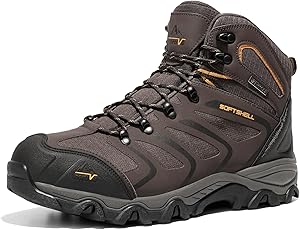
- Midsole: Lightweight EVA
- Insole: Removable cushioned insert
- Outsole: Non-slip rubber
- Design: Multi-purpose outdoor style
The NORTIV 8 Waterproof Hiking Boots are a budget-friendly option for hikers who want versatility without overspending. The lightweight EVA midsole provides decent flexibility and cushioning for long walks, while the removable insole helps reduce foot fatigue during extended wear. These boots feel comfortable straight away and are suitable for casual hikes, light trekking, or even work use.
The rubber outsole offers reliable grip on muddy trails and damp surfaces, though it performs best in moderate conditions rather than extreme terrain. Waterproof protection handles light rain and shallow puddles, making them practical for everyday outdoor activities. While they may not match premium brands in long-term durability, they offer solid value for beginners or occasional hikers who need comfort and traction at an affordable price.
Pros: Affordable, comfortable cushioning, versatile use.
Cons: Moderate durability, waterproofing best for light moisture.
See the NORTIV 8 Hiking Boots See the Women’s NORTIV 8 Boots
3. Columbia Transverse
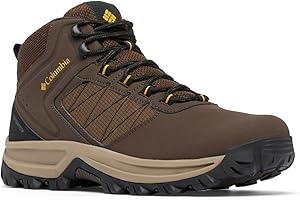
- Waterproofing: Omni-Tech seam-sealed construction
- Midsole: Techlite lightweight cushioning
- Outsole: Omni-Grip non-marking rubber
- Upper: Leather and mesh combination
The Columbia Transverse is designed for hikers who want reliable waterproof protection without sacrificing breathability. The Omni-Tech membrane blocks external moisture while allowing internal heat and sweat to escape, making it suitable for wet and cool conditions. The leather and mesh upper provides a balanced mix of durability and airflow, while the padded collar enhances comfort around the ankle during long hikes.
Underfoot, the Techlite midsole delivers lightweight cushioning with good energy return, helping reduce fatigue on rocky terrain. The Omni-Grip outsole performs well on dirt, loose gravel, and damp surfaces. While the fit may feel slightly narrow for some hikers, the overall construction feels sturdy and dependable. It is a solid three-season boot for day hikes and moderate backpacking trips.
Pros: Breathable waterproofing, lightweight cushioning, dependable traction.
Cons: Slightly narrow fit, lugs wear faster on pavement.
See the Columbia Transverse See the Women’s Transverse
4. Salomon X Ultra 5 Mid GORE-TEX

- Waterproofing: GORE-TEX membrane
- Outsole: All Terrain Contagrip
- Midsole: EnergyCell EVA foam
- Weight: 1 lb. 15 oz. per pair
The Salomon X Ultra 5 Mid GORE-TEX offers the agility of a trail runner with the support of a hiking boot. Its updated chassis improves lateral stability while maintaining flexibility for natural movement. The EnergyCell midsole cushions impact effectively, especially on steep descents or rocky terrain, making it comfortable for fast-paced hikes.
The GORE-TEX lining keeps feet dry in wet conditions while remaining breathable during high-output efforts. The All Terrain Contagrip outsole grips confidently on mud, rock, and loose trails. The snug fit enhances precision on technical ground, though it may feel tight for wide feet. This boot suits hikers who prefer lightweight speed without compromising protection.
Pros: Lightweight and agile, strong waterproofing, excellent grip.
Cons: Snug fit, synthetic upper needs short break-in.
See the Salomon X Ultra 5 See the Women’s X Ultra 5
5. Altra Lone Peak Hiker 3

- Upper: Suede construction
- Midsole: Altra EGO foam
- Outsole: MaxTrac rubber
- Weight: 1 lb. 7.8 oz. per pair
The Altra Lone Peak Hiker 3 is built for hikers who value natural foot positioning and a roomy toe box. Its zero-drop platform promotes a balanced stride and better ground feel. The Altra EGO midsole provides responsive cushioning that feels soft yet energetic over long distances.
The suede upper offers durability with a more casual look, while the MaxTrac outsole grips well on rocky and dry trails. Despite its mid-cut design, it feels remarkably light and flexible. It is not waterproof, so it performs best in dry climates. The wide toe box enhances comfort, especially during long descents.
Pros: Wide toe box, very lightweight, responsive cushioning.
Cons: Not waterproof, adjustment needed for zero-drop design.
See the Altra Lone Peak Hiker 3 See the Women’s Lone Peak Hiker 3
6. La Sportiva Nucleo High II GTX

- Waterproofing: GORE-TEX SURROUND
- Upper: Nubuck leather
- Outsole: Vibram Nano XS-Trek
- Support: 2.5 mm polypropylene stiffener
The La Sportiva Nucleo High II GTX is crafted for serious backpackers tackling demanding terrain. The GORE-TEX SURROUND technology enhances breathability from all angles while keeping water out. This makes it suitable for long treks in varied mountain climates.
The nubuck leather upper resists abrasion from rocks and scree, while the Vibram outsole provides secure traction on mixed surfaces. The added stiffener increases support when carrying heavy packs. Though it requires some break-in time, the boot delivers premium durability and stability for extended backcountry adventures.
Pros: Excellent breathability, durable leather, strong support.
Cons: Expensive, stiff at first.
See the La Sportiva Nucleo High II See the Women’s Nucleo High II
7. Asolo Falcon EVO GV

- Waterproofing: GORE-TEX Extended Comfort
- Upper: Suede and nylon
- Outsole: Vibram Megagrip
- Weight: 2 lbs. per pair
The Asolo Falcon EVO GV blends traditional craftsmanship with modern materials. The suede and nylon upper keeps weight manageable while offering solid durability. GORE-TEX Extended Comfort ensures waterproof protection without trapping excess heat during warmer hikes.
The Vibram Megagrip outsole excels on wet rock and loose surfaces. A dual-density midsole and TPU frame enhance stability on uneven terrain. The fit runs slightly narrow, typical of Italian designs, but it delivers precision and support for technical trails.
Pros: Outstanding grip, lightweight build, premium construction.
Cons: Narrow fit, premium price.
See the Asolo Falcon EVO GV See the Women’s Falcon EVO GV
8. KEEN Targhee IV

- Waterproofing: KEEN.DRY membrane
- Midsole: Luftcell polyurethane
- Outsole: High-traction TPU
- Weight: 2 lbs. 8.6 oz. per pair
The KEEN Targhee IV is built for durability and comfort, especially for hikers who prefer extra room in the toe box. Its spacious forefoot reduces pressure during long descents and helps prevent blisters. The Luftcell midsole provides long-lasting cushioning that resists compression over time.
The KEEN.DRY membrane keeps moisture out in wet conditions, while the aggressive TPU outsole grips well on loose gravel and muddy trails. It is heavier than many competitors, but it offers excellent protection and support for carrying heavier loads. This is a dependable choice for rugged backcountry hikes.
Pros: Wide toe box, durable cushioning, strong protection.
Cons: Heavier build, bulky feel on technical terrain.
See the KEEN Targhee IV Mid See the Women’s Targhee IV Mid
How to Choose Hiking Boots for Hot Weather
When the sun is blazing and the trail is dusty, your choice of footwear becomes the thin line between a glorious outdoor adventure and a miserable, blister-filled trek. While heavy, waterproof leather boots are the gold standard for winter mountaineering or rainy autumn hikes, they can become portable saunas for your feet in high temperatures. Hot weather hiking requires a specific focus on breathability, moisture management, and weight without sacrificing the support needed for rugged terrain.
Choosing the right boot involves understanding the physics of heat transfer and the mechanics of how your feet react to sweat. In this guide, we will break down the essential components of a warm-weather hiking boot to help you stay cool, dry, and comfortable on the trail.
Prioritizing Breathability Above All
In cold weather, your goal is to trap heat. In hot weather, your goal is to shed it. The primary way boots do this is through breathability. When you move, your feet generate heat and moisture. If that moisture cannot escape, it softens the skin, leading to friction and, eventually, blisters.
The Mesh Advantage
Look for boots that incorporate significant amounts of synthetic mesh. Unlike solid leather, mesh allows for passive airflow, letting the breeze reach your socks and helping sweat evaporate quickly. Many modern hiking boots use a “spacer mesh” which adds a bit of loft for comfort while maintaining high porosity.
The Gore-Tex Dilemma
One of the biggest mistakes hikers make is assuming they need a waterproof membrane (like Gore-Tex) for every hike. Waterproof liners work by having pores large enough for vapor to escape but too small for water droplets to enter. However, even the best “breathable” membranes are significantly less breathable than non-waterproof mesh. In hot, dry climates, a waterproof liner acts as a vapor barrier, trapping sweat inside. Unless you expect to be crossing deep streams frequently, opt for “non-waterproof” versions of boots for maximum cooling.
Material Matters: Synthetic vs. Leather
The material of the upper part of the boot dictates both the durability and the internal temperature of the shoe. Traditional full-grain leather is incredibly durable but is naturally insulating and heavy. For summer, you generally have two better options.
Split-Grain Leather and Suede
Split-grain leather is often paired with nylon mesh. This “hybrid” construction gives you the abrasion resistance of leather in high-wear areas (like the toe and heel) while allowing the mesh panels to vent heat. It provides a good balance for those who want a “real boot” feel without the weight of a traditional leather mountaineering boot.
Synthetic Fabrics
Modern synthetics like polyester, nylon, and synthetic “leather” (KPU or TPU) are the kings of hot weather. They are lighter, dry much faster if they do get wet, and usually require zero break-in time. Because they don’t absorb as much water as natural leather, they don’t become heavy and “boggy” when you sweat.
Design Elements for Cooling
Beyond the fabric, the physical “cut” and construction of the boot influence how much heat stays trapped around your ankles and shins.
Low-Cut vs. Mid-Cut
Unless you are carrying a very heavy pack (over 30 lbs) or traversing extremely unstable scree, consider a low-cut hiking shoe or a “trail runner” style boot. A lower collar allows more heat to escape from the top of the shoe and gives your ankles more freedom to move, which increases air circulation around the foot. If you prefer ankle support, look for a “mid” height boot with a padded, ventilated tongue.
The Role of the Outsole
While the outsole (the bottom of the boot) doesn’t directly cool your foot, its weight does. Heavy rubber compounds require more energy to lift. More energy spent means more body heat generated. For hot weather, look for “Vibram Megagrip” or similar compounds that offer high traction with a thinner, lighter profile. A lighter boot reduces the “pendulum effect,” keeping your heart rate and body temperature slightly lower over long distances.
The Internal Ecosystem: Linings and Insoles
What is inside the boot is just as important as the outside. Even a mesh boot will feel hot if the interior is lined with thick, non-wicking foam.
Moisture-Wicking Liners
Check the interior specs for moisture-wicking fabrics. These materials are designed to pull sweat away from your skin and move it toward the outer mesh where it can evaporate. Look for antimicrobial treatments (like M-Select FRESH or Oily-Resistant finishes) to help manage the inevitable odor that comes with summer hiking.
Ventilated Insoles
Most stock insoles are made of solid EVA foam, which traps heat under the sole of your foot. You can upgrade to aftermarket insoles that feature perforations or “honeycomb” structures. These allow air to circulate under the foot, providing a noticeable cooling effect during the “pump” phase of your stride.
Fit and Swelling Management
Heat causes things to expand, and your feet are no exception. On a hot day, your feet can swell by half a size or more due to increased blood flow and gravity.
Sizing for Expansion
When trying on boots for summer, do so in the afternoon when your feet are at their largest. You should have about a thumb’s width of space between your toes and the front of the boot. If the boot is too tight in the store, it will become a torture device three miles into a hot canyon hike. A slightly roomier fit also allows for better air circulation inside the shoe.
The Unsung Hero: The Right Sock
You can buy the most breathable boot in the world, but if you wear thick cotton socks, your feet will still be miserable. Cotton absorbs moisture and holds it against your skin, leading to “maceration” (soggy, wrinkled skin) and blisters.
Merino Wool and Synthetic Blends
Merino wool is surprisingly excellent for hot weather. It is naturally thermoregulating and can hold a large amount of moisture without feeling damp. Look for “Lightweight” or “Ultra-light” hiking socks. These are thin enough to allow the boot’s venting system to work while still providing enough cushioning to prevent friction.
Summary Checklist for Hot Weather Boots
| Feature | Look For… | Avoid… |
|---|---|---|
| Upper Material | Synthetic mesh, split-grain leather | Full-grain, heavy leather |
| Waterproofing | Non-waterproof (for max venting) | Heavy Gore-Tex or thick membranes |
| Height | Low-cut or “Mid” with mesh collars | High-cut, heavily padded boots |
| Weight | Under 2 lbs per pair | Traditional 3lb+ heavy boots |
Final Thoughts
Choosing a hiking boot for hot weather is an exercise in minimalism. You want the least amount of material possible between your foot and the air, without compromising the protection you need from rocks and roots. By prioritizing mesh construction, skipping the waterproof liners, and ensuring you have room for foot swelling, you’ll be able to focus on the view rather than your burning soles.