Best Breathable Hiking Boots of 2026
Tired of sweaty, uncomfortable feet ruining your hike? The right boots make all the difference. This guide explores the best breathable hiking boots designed to keep your feet cool and dry on the trail. We’ve found top picks that offer excellent airflow without sacrificing the support and grip you need for a safe and enjoyable adventure in the outdoors.
1. Merrell Moab 3 Mid

- Waterproofing: Merrell DRY membrane
- Upper: Pig suede leather and mesh
- Outsole: Vibram TC5+ rubber
- Weight: 2 lbs. 2.9 oz. per pair
The Merrell Moab 3 Mid stays true to its reputation as one of the most comfortable hiking boots straight out of the box. The updated insole offers better arch support, while the cushioned midsole with Super Rebound Compound absorbs shock effectively on rocky trails. Its mid-height collar delivers reliable ankle stability without feeling restrictive, making it suitable for moderate day hikes and light backpacking trips.
The pig suede and mesh upper balances durability with breathability, and the Vibram TC5+ outsole grips confidently on dirt, gravel, and slick surfaces. The Merrell DRY membrane keeps water out while allowing heat and sweat to escape, helping maintain comfort in changing weather. While slightly heavier than modern synthetic boots, it offers dependable performance and long-lasting comfort for hikers who value a traditional, supportive feel.
Pros: Excellent step-in comfort, strong arch support, dependable traction.
Cons: Slightly heavy, suede requires extra care in muddy conditions.
See the Merrell Moab 3 Mid See the Women’s Moab 3 Mid
2. NORTIV 8 Waterproof Hiking Boots
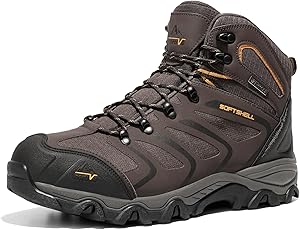
- Midsole: Lightweight EVA
- Insole: Cushioned removable insert
- Outsole: Non-slip rubber
- Design: Multi-purpose outdoor style
The NORTIV 8 Waterproof Hiking Boots are designed for hikers who want solid performance at an affordable price. The lightweight EVA midsole delivers flexibility and helps reduce fatigue during long walks. Combined with a shock-absorbing insole, the boot feels comfortable for extended wear, whether on forest trails or during demanding workdays.
The rubber outsole provides dependable traction on muddy paths and damp rock, offering confidence on uneven terrain. While the waterproofing handles light rain and shallow puddles, it may not match premium membranes in prolonged wet conditions. The overall build is practical and versatile, making this boot a good entry-level option for casual hikers or those needing a reliable all-round outdoor boot.
Pros: Budget-friendly, flexible cushioning, versatile design.
Cons: Moderate durability, waterproofing best for light moisture.
See the NORTIV 8 Hiking Boots See the Women’s NORTIV 8 Boots
3. Columbia Transverse
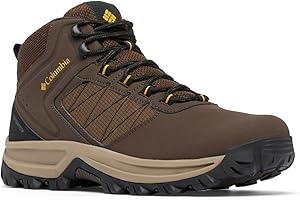
- Waterproofing: Omni-Tech seam-sealed
- Midsole: Techlite lightweight cushioning
- Outsole: Omni-Grip rubber
- Upper: Leather and mesh
The Columbia Transverse blends classic hiking boot styling with modern trail technology. Its Omni-Tech waterproof construction keeps rain and puddles out while maintaining solid breathability during active hikes. The leather and mesh upper offers durability in high-wear areas while allowing airflow through lighter panels, making it comfortable for variable weather conditions.
Underfoot, the Techlite midsole absorbs impact efficiently and provides noticeable energy return on longer treks. The Omni-Grip outsole performs well on loose gravel, forest trails, and damp dirt. While the fit can feel slightly narrow for some hikers, the overall design delivers reliable comfort and traction. It is a strong option for day hikes and moderate terrain without the bulk of heavier backpacking boots.
Pros: Good breathability, lightweight cushioning, solid traction.
Cons: Slightly narrow fit, outsole lugs wear faster on pavement.
See the Columbia Transverse See the Women’s Transverse
4. Salomon X Ultra 5 Mid GORE-TEX

- Waterproofing: GORE-TEX membrane
- Outsole: All Terrain Contagrip
- Midsole: EnergyCell EVA
- Weight: 1 lb. 15 oz. per pair
The Salomon X Ultra 5 Mid GORE-TEX offers the agility of a trail running shoe with the protection of a mid-height boot. Its updated chassis improves lateral stability while allowing natural movement on uneven terrain. The EnergyCell midsole cushions impact effectively, especially on descents where joint protection matters most.
The GORE-TEX membrane keeps feet dry in heavy rain and muddy conditions without trapping excess heat. Paired with the Contagrip outsole, the boot grips confidently on wet rock, loose gravel, and hard-packed dirt. The fit runs snug, which enhances precision but may feel tight for wide feet. Overall, it is an excellent choice for fast hikers who prioritize lightweight performance.
Pros: Lightweight feel, excellent waterproofing, strong traction.
Cons: Snug fit, synthetic upper needs short break-in.
See the Salomon X Ultra 5 See the Women’s X Ultra 5
5. Altra Lone Peak Hiker 3

- Upper: Suede construction
- Midsole: Altra EGO foam
- Outsole: MaxTrac rubber
- Weight: 1 lb. 7.8 oz. per pair
The Altra Lone Peak Hiker 3 is built for hikers who prefer a natural stride and roomy toe space. Its zero-drop platform promotes balanced posture and encourages midfoot striking. The wide toe box allows natural toe splay, reducing pressure during long descents and extended mileage.
The Altra EGO midsole delivers responsive cushioning without feeling overly soft, keeping the ride lively on mixed terrain. The MaxTrac outsole grips effectively on rocky paths and packed dirt. While it lacks waterproof protection, the lightweight build and flexibility make it feel closer to a trail runner than a traditional boot. It is ideal for hikers who value comfort and freedom of movement over heavy-duty protection.
Pros: Wide toe box, very lightweight, responsive cushioning.
Cons: Not waterproof, zero-drop design requires adjustment.
See the Altra Lone Peak Hiker 3 See the Women’s Lone Peak Hiker 3
6. La Sportiva Nucleo High II GTX

- Waterproofing: GORE-TEX SURROUND
- Upper: Nubuck leather
- Outsole: Vibram Nano XS-Trek
- Support: 2.5 mm polypropylene stiffener
The La Sportiva Nucleo High II GTX is a premium option for serious backpackers. Its GORE-TEX SURROUND construction enhances breathability by allowing airflow around the entire foot while maintaining full waterproof protection. This makes it comfortable in fluctuating mountain temperatures and demanding conditions.
The nubuck leather upper resists abrasion from rocks and scree, while the supportive midsole structure stabilizes heavy loads. The Vibram Nano outsole grips reliably on technical terrain, offering confidence on steep and uneven trails. Although the boot feels stiff initially, it breaks in over time and rewards hikers with long-term durability and the option to resole for extended lifespan.
Pros: Excellent breathability, durable leather, resolable design.
Cons: Expensive, requires break-in period.
See the La Sportiva Nucleo High II See the Women’s Nucleo High II
7. Asolo Falcon EVO GV

- Waterproofing: GORE-TEX Extended Comfort
- Upper: Suede and nylon
- Outsole: Vibram Megagrip
- Weight: 2 lbs. per pair
The Asolo Falcon EVO GV combines European craftsmanship with modern performance materials. The suede and nylon upper keeps weight manageable while maintaining durability on rugged terrain. The GORE-TEX lining blocks water while allowing heat to escape, making it suitable for three-season hiking.
The Vibram Megagrip outsole excels on wet rock and loose ground, providing reliable traction in varied conditions. A dual-density EVA midsole cushions impact while maintaining stability through a supportive frame. The fit runs on the narrower side, offering a secure and precise feel for hikers with slimmer feet. It is a dependable option for those wanting a lightweight yet structured hiking boot.
Pros: Excellent grip, lightweight build, premium construction.
Cons: Narrow fit, higher price point.
See the Asolo Falcon EVO GV See the Women’s Falcon EVO GV
8. KEEN Targhee IV

- Waterproofing: KEEN.DRY membrane
- Midsole: Luftcell polyurethane
- Outsole: High-traction TPU
- Weight: 2 lbs. 8.6 oz. per pair
The KEEN Targhee IV is built for hikers who prioritize protection and a roomy fit. Its signature wide toe box allows natural toe movement, reducing pressure during long descents. The Luftcell midsole provides durable cushioning that resists compression over time, making it suitable for extended backcountry trips.
The KEEN.DRY membrane keeps moisture out while maintaining internal comfort in wet conditions. The rugged TPU outsole grips effectively on loose soil and rocky trails. Although heavier than some competitors, the boot offers solid support and long-term durability. It is a dependable choice for hikers carrying heavier packs who need stability and foot protection over challenging terrain.
Pros: Spacious toe box, durable cushioning, strong toe protection.
Cons: Heavier build, bulky feel on technical rock.
See the KEEN Targhee IV Mid See the Women’s Targhee IV Mid
How to Choose Breathable Hiking Boots: The Ultimate Guide to Cool, Dry Feet
There is an old saying among backpackers: “Take care of your feet, and they will take care of you.” While many hikers focus on waterproof membranes to keep rain out, they often overlook the most common source of moisture: sweat. On a long trek, a boot that doesn’t breathe becomes a portable sauna, leading to blisters, discomfort, and fungal issues. Choosing a breathable hiking boot is about finding the perfect balance between protection and ventilation.
In this guide, we will explore the science of breathability, the materials that matter, and how to select the right footwear for your specific terrain and climate.
The Importance of Breathability
Breathability refers to a material’s ability to allow moisture vapor (sweat) to escape from the inside of the boot to the outside environment. When you hike, your feet can produce up to a cup of sweat over several hours. If that moisture is trapped against your skin, it softens the tissue, making you significantly more prone to friction blisters.
Furthermore, wet feet lose heat faster in cold conditions and feel uncomfortably “swampy” in hot conditions. A breathable boot ensures that your internal microclimate remains stable, keeping your skin dry and your temperature regulated.
Key Materials and Construction
The breathability of a boot is primarily determined by its upper material. Manufacturers use a variety of textiles and leathers, each offering a different trade-off between airflow and durability.
Synthetic Mesh and Textiles
Synthetic mesh is the gold standard for maximum airflow. It is lightweight, dries rapidly, and allows wind to penetrate the boot. You will typically find heavy mesh panels on “ventilated” or “desert” hiking boots. The downside is that mesh is less durable than leather and offers minimal protection against sharp rocks or thorns.
Split-Grain Leather and Suede
Leather comes in different grades. Split-grain leather is created by “splitting” the hide, resulting in a thinner, more porous material often paired with nylon or mesh. This hybrid construction offers a middle ground: it provides better abrasion resistance than pure mesh while remaining significantly more breathable than a solid leather boot.
Full-Grain Leather
Full-grain leather is the most durable and water-resistant option, but it is the least breathable. Because the pores are tight and the material is thick, it acts as a barrier. While some high-end leather boots are treated to be more porous, they are generally better suited for cold-weather mountaineering than hot-weather trekking.
The Waterproof vs. Breathable Dilemma
The biggest decision you will face is whether to buy a boot with a waterproof-breathable membrane (like Gore-Tex or eVent). These membranes are designed with billions of microscopic pores that are small enough to block liquid water droplets but large enough to let water vapor escape.
When to Choose a Membrane
If you frequently hike in damp environments, cross shallow streams, or deal with morning dew, a waterproof membrane is essential. Modern membranes are impressive, but they are never as breathable as a non-waterproof mesh boot. Think of it as a “filter” that slows down the exit of sweat.
When to Skip the Membrane
In hot, arid climates like the desert or during peak summer months, a waterproof membrane can actually be a disadvantage. Once a waterproof boot gets wet on the inside (from sweat or a deep river crossing), it takes much longer to dry. For true breathability, a non-waterproof boot with high-airflow mesh is the superior choice.
Anatomy of a Breathable Boot
Beyond the upper material, several design features can enhance or inhibit airflow.
Linings and Padding
Look for boots with “moisture-wicking” liners. These fabrics are engineered to pull sweat away from your skin and move it toward the outer layers of the boot. Avoid boots with thick, non-porous foam padding, as these can act as insulation that traps heat.
The Role of the Tongue
Many breathable boots use a “gusseted” tongue to keep out debris, but the tongue itself is often made of mesh. This allows heat to escape through the top of the foot—one of the hottest areas during a hike.
Testing for the Right Fit
Even the most breathable boot will cause problems if it doesn’t fit correctly. When trying on boots, keep the following in mind:
- Wear the right socks: Always test boots with moisture-wicking synthetic or merino wool socks. Never use cotton, as cotton absorbs moisture and cancels out the benefits of a breathable boot.
- Shop in the afternoon: Your feet swell throughout the day. Trying on boots when your feet are at their largest ensures you won’t experience constriction that hinders circulation and temperature regulation.
- The “Wiggle” Test: You should have enough room to wiggle your toes, but your heel should be locked in place. A boot that is too tight restricts airflow around the foot.
Matching Boots to Your Terrain
Your choice should be dictated by where you plan to spend most of your time.
| Terrain Type | Recommended Material | Breathability Level |
|---|---|---|
| Desert/Hot Summer Trails | Full Mesh / Non-Waterproof | Maximum |
| Forest Trails / Mixed Weather | Suede & Mesh with Membrane | Moderate |
| Alpine / Rocky Scrambles | Split-Leather or Nubuck | Low to Moderate |
Maintenance for Continued Performance
Breathability isn’t permanent; it requires maintenance. Over time, dirt and mud can clog the pores of the fabric or the waterproof membrane. If the outer material (the “face fabric”) becomes saturated with water, it creates a “wet-out” effect, preventing sweat from escaping.
To maintain breathability:
- Clean regularly: Rinse off mud and salt (from sweat) after every hike.
- Use specialized cleaners: Avoid harsh detergents that can damage technical fabrics.
- Re-apply DWR: If water stops beading on the surface, apply a Durable Water Repellent (DWR) spray specifically designed for breathable footwear.
Conclusion
Selecting the right breathable hiking boot is a highly personal decision that depends on your physiology and your destination. If you run hot and stick to dry trails, prioritize mesh and skip the waterproof liners. If you encounter unpredictable weather but still want to avoid “swamp foot,” look for high-quality leather-mesh hybrids with reputable membranes.
By focusing on moisture management and airflow, you ensure that your feet stay healthy and comfortable, allowing you to focus on the view rather than your blisters.