
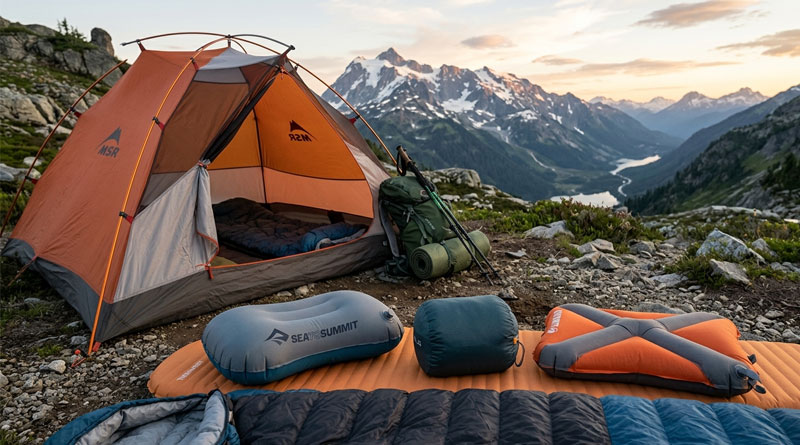
Best Ultralight Camping Pillows of 2026
If you love camping but hate waking up with a sore neck, it’s time to ditch the wadded-up jacket. Ultralight camping pillows pack tiny, weigh next to nothing, and give you real cushioned support for a good night’s sleep under the stars. In this guide, we’ve picked the best options that balance comfort, weight, and value—so you can rest easy on the trail.
1. NEMO Fillo

- Dimensions: 17 x 11 x 4.0 inches
- Weight: 9.2 ounces
- Material: Polyester jersey
- Fill: Baffled air cell with foam layer
The NEMO Fillo is a hybrid inflatable camping pillow that blends air support with a plush foam exterior, giving you a sleep experience closer to home than most camp pillows can offer. It inflates quickly with just a few breaths and deflates just as fast, making it a no-fuss addition to any backpacking or camping kit. The polyester jersey cover feels soft against skin and holds up well across multiple trips.
At 9.2 ounces, it sits in the mid-range for weight, which is a fair trade for the foam-cushioned comfort it delivers. The compact stuff sack keeps things tidy in your pack. Whether you’re a side or back sleeper, the 4-inch loft provides reliable head and neck support throughout the night.
- Pros: Luxurious foam-and-air combo, quick inflate/deflate, soft cover material
- Cons: Heavier than pure inflatable options, packs bulkier than ultralight alternatives
2. TREKOLOGY ALUFT 2.0

- Dimensions: 16 x 12 x 4 inches (inflated); 5 x 2 inches (packed)
- Weight: 3.9 ounces
- Material: Durable elastic TPU fabric
- Features: Anti-slip dots, latch strap, quick deflate valve
The TREKOLOGY ALUFT 2.0 is one of the most compact inflatable pillows on the market, packing down smaller than a soda can at just 5 x 2 inches. Despite its tiny packed size, it inflates to a generous 16 x 12 x 4 inches in just 3–5 breaths. The upgraded TPU fabric offers impressive water resistance and durability compared to its predecessor, making it a dependable choice for camping, backpacking, or travel.
What sets the ALUFT 2.0 apart is its thoughtful anti-slip design — rubber dots on the back and a latch strap keep the pillow firmly in place on your sleeping pad overnight. Adjustable firmness allows you to customize support for back, side, or stomach sleeping. At 3.9 oz, it’s a featherlight option that doesn’t sacrifice comfort.
- Pros: Ultra-compact, anti-slip design, adjustable firmness, water-resistant
- Cons: Pure air feel may not suit those preferring foam softness
3. Klymit Pillow X Luxe SUMMIT

- Dimensions: 22 x 12.5 x 5 inches
- Weight: 7 ounces
- Material: Polyester
- Best Use: Camping and backpacking
The Klymit Pillow X Luxe SUMMIT is a generously sized inflatable pillow designed to cradle your head with plush, supportive comfort. At 22 x 12.5 x 5 inches inflated, it offers more surface area and loft than many competitors, making it an excellent choice for campers who move around during sleep or simply prefer a roomier pillow. The soft polyester fabric feels smooth against skin and maintains its comfort across chilly nights.
Weighing in at just 7 ounces, the Luxe SUMMIT strikes a solid balance between packable convenience and on-site comfort. The included stuff sack keeps it organized in your gear. Whether you’re camping at a developed site or deep in the backcountry, this pillow delivers dependable, cushioned rest that makes waking up refreshed far more likely.
- Pros: Large inflated size, generous loft, soft fabric, lightweight for its size
- Cons: Packs larger than ultralight options, limited color choices
4. NEMO Fillo King Luxury

- Dimensions: 17 x 14 x 6 inches
- Weight: 13.6 ounces
- Material: Open-cell foam with jersey cover
- Fill: Baffled air cell with foam layer
The NEMO Fillo King Luxury is the go-to camping pillow for those who refuse to compromise on comfort. Its wider 14-inch width and 6-inch loft make it a standout choice for broad-shouldered sleepers or anyone who simply wants an experience that mirrors sleeping at home. The open-cell foam layered over a baffled air cell creates a plush, supportive feel that outperforms standard inflatable pillows.
At 13.6 ounces, it’s on the heavier end, so it’s best suited for car camping or base camp setups rather than ultralight backpacking. The jersey cover is soft and breathable, while the stuff sack compresses it down to a manageable size for transport. For car campers who prize sleep quality above all else, this is a hard pillow to beat.
- Pros: King-size dimensions, superior loft, luxury foam-air combo, great for broad shoulders
- Cons: Heavier and bulkier, not ideal for ultralight trips
5. Exped Mega

- Dimensions: 20.5 x 12.6 x 4.7 inches
- Weight: 9 ounces
- Material: Texpedloft microfiber nylon top; stretch tricot polyester main; Texpedloft synthetic fleece insulation
- Certification: Oeko-Tex 100 certified fabric
The Exped Mega pillow is purpose-built to pair with the Exped MegaMat sleeping pad, offering edge-to-edge plush comfort that mimics the feel of a real bed pillow. Its Texpedloft microfiber nylon top layer is incredibly soft against the face, while the stretch tricot polyester body conforms naturally to your head and neck. The synthetic fleece insulation adds a cozy warmth layer that’s especially welcome on cool nights.
Designed to fit snugly into most sleeping bag hoods, the Exped Mega stays in place through the night without constant readjustment. At 9 ounces, it’s a reasonable weight for the level of comfort it provides. The Oeko-Tex 100 certification is a nice touch for eco-conscious campers who care about fabric safety standards.
- Pros: Premium materials, sleeping bag hood compatible, insulated, Oeko-Tex certified
- Cons: Best paired with Exped pads, pricier than basic inflatables
6. Klymit Pillow X BASE XL

- Dimensions: 18 x 13 x 2.5 inches
- Weight: 3.9 ounces
- Material: 30-denier stretch polyester
- Best Use: Camping and backpacking
The Klymit Pillow X BASE XL proves that ultralight and comfortable are not mutually exclusive. Weighing just 3.9 ounces, it’s one of the lightest pillows in its size class, yet it inflates to a wide 18 x 13 inches — more than enough real estate for most sleepers. The 30-denier stretch polyester fabric conforms softly to your head while providing a durable shell that resists punctures and general wear from the trail.
Compared to the standard Pillow X BASE, this XL version is wider, thicker, and noticeably softer — a meaningful upgrade for those who found the original too minimal. The 2.5-inch loft is on the lower side, so back sleepers will likely enjoy it more than side sleepers who need additional height. Still, for a pillow under 4 ounces, it delivers exceptional value and comfort.
- Pros: Extremely lightweight, wider and thicker than standard BASE, packable, durable fabric
- Cons: Lower loft may not suit side sleepers, minimal padding feel
7. NEMO Fillo Wide

- Dimensions: 20 x 11 x 4 inches
- Weight: 12 ounces
- Material: Luxury foam
- Feature: Shockcord lacing for adjustable height support
The NEMO Fillo Wide expands on the original Fillo’s winning formula with a broader 20-inch profile that gives sleepers more room to settle in comfortably. What makes it particularly standout is the integrated shockcord lacing system, which allows you to cinch the pillow tighter for a higher loft — a feature that side sleepers in particular will genuinely appreciate. The luxury foam exterior maintains that premium, cushioned feel that the Fillo line is known for.
At 12 ounces, it’s not designed for ultralight travel, but campers who prioritize sleep quality over pack weight will find it well worth carrying. The stuff sack compresses it reasonably well for transport, and the inflatable core means setup takes only seconds. It’s a smart pick for those who frequently wake up with neck discomfort from traditional camp pillows.
- Pros: Wide profile, adjustable shockcord lacing, side-sleeper friendly, luxury foam comfort
- Cons: Heavy for backpacking, bulkier packed size
8. COCOON AirCore

- Dimensions: 15 x 11 inches
- Weight: 3.8 ounces
- Material: Polyester microfiber/nylon
- Fill: Polyester hollow fibers with air
The COCOON AirCore Hood/Camp pillow is cleverly engineered to slip directly into the hood of a sleeping bag, keeping it right under your head all night without slipping or repositioning. This design alone makes it a standout for backpackers and light travelers who’ve struggled with pillows that drift off their sleeping pad overnight. The hybrid fill — combining polyester hollow fibers with air — creates a softer, more forgiving feel than pure inflatable designs.
At just 3.8 ounces, it’s among the lightest pillows on this list, yet the polyester microfiber cover adds a plush surface touch that feels noticeably nicer than bare TPU or nylon. It’s compact enough to tuck into a jersey pocket and durable enough to handle multi-season adventures. For backpackers who sleep in a bag with a hood, this pillow is a practical and comfortable choice.
- Pros: Sleeping bag hood compatible, ultra-lightweight, hybrid fill for softness, compact
- Cons: Smaller dimensions, less loft than full-size camping pillows
The Quest for Rest: A Comprehensive Guide to Ultralight Camping Pillows
For many backpackers, the weight of their pack is a constant source of calculation and compromise. We trim toothbrush handles, swap heavy stoves for titanium burners, and invest in high-tech shelters. However, one of the most common mistakes a novice ultralight hiker makes is sacrificing sleep in the name of weight savings. The “luxury” of a dedicated pillow is often the first thing to be cut from the packing list, replaced by a lumpy pile of spare clothes or a rolled-up rain shell. But as seasoned trekkers know, a poor night’s sleep leads to fatigue, decreased cognitive function, and physical exhaustion on the trail. This is where the ultralight camping pillow comes into play—a specialized piece of gear designed to provide maximum neck support with minimum weight.
Why a Dedicated Pillow Matters
In the past, the choice was binary: carry a heavy, bulky foam pillow from home or suffer with a makeshift “stuff-sack pillow.” The latter usually consists of a dry bag filled with whatever spare clothing isn’t being worn to sleep. While this saves weight, it is notoriously uncomfortable. Zippers, buttons, and damp socks create an uneven surface that shifts throughout the night. An ultralight camping pillow, by contrast, is engineered to hold its shape, provide consistent loft, and cradle the head in a way that aligns the spine.
Types of Ultralight Pillows
When diving into the world of ultralight sleep systems, pillows generally fall into three main categories: inflatable, hybrid, and foam/synthetic. Each has distinct advantages depending on your sleep style and weight threshold.
Inflatable Pillows
Inflatable pillows are the gold standard for weight-conscious hikers. Constructed from lightweight TPU or polyester fabrics, these pillows can weigh as little as 1.5 to 2.5 ounces. Their primary advantage is packability; when deflated, they often shrink to the size of a deck of cards or even a pack of gum. They also allow for adjustable firmness. By adding or releasing air, you can customize the height and support level to your preference. The downside is that they can sometimes feel “bouncy” or like sleeping on a balloon, and they are susceptible to punctures.
Hybrid Pillows
Hybrid pillows attempt to bridge the gap between the weight of an inflatable and the comfort of a traditional pillow. These typically feature an inflatable bladder topped with a layer of synthetic insulation, down, or a thin sheet of memory foam. This top layer provides a soft, quiet surface and helps regulate temperature, preventing that clammy feeling often associated with pure plastic or nylon surfaces. While slightly heavier and bulkier than pure inflatables, they are often the preferred choice for side sleepers who need more cushion.
Compressible Foam Pillows
While less common in the “extreme” ultralight community, compressible foam pillows are the champions of comfort. They use off-cuts of high-quality foam wrapped in a soft fabric shell. They don’t require inflation and feel the most like a “real” pillow. However, even the lightest foam pillows are significantly heavier (often 6-10 ounces) and take up considerably more room in a backpack than their inflatable counterparts.
Key Features to Consider
Choosing the right pillow requires looking beyond just the weight. Several design features can make or break your sleeping experience in the backcountry.
Fabric and Texture
The material that touches your face is crucial. Many ultralight pillows use 20D or 30D polyester. Some high-end models feature a “brushed” or “flocked” finish that feels like suede. This texture prevents the pillow from sliding out from under your head and reduces the “crinkling” noise that occurs when you move. If you find the fabric of your pillow too plastic-like, a common ultralight hack is to wrap it in a clean buff or a spare t-shirt.
Baffle Design and Shape
A flat, rectangular inflatable pillow will often result in your head rolling off during the night. Look for pillows with an ergonomic shape. Some have a curved bottom edge to fit over your shoulder (essential for side sleepers), while others have internal baffles that create a “cradle” for your head. These contours keep the head centered and reduce the pressure on your ears.
Valves and Inflation
Modern pillows often feature one-way valves that allow you to blow air in without it escaping between breaths. A “dump valve” or a micro-adjustment button is also helpful, allowing you to fine-tune the pressure while lying down. Avoid pillows with old-school twist valves, as they are harder to operate with cold fingers and are more prone to leaking over time.
The Importance of Pillow Height
One of the most overlooked aspects of camping pillows is the height (or “loft”). Your ideal height depends entirely on your primary sleeping position.
Side Sleepers
Side sleepers generally need the thickest pillows. The goal is to fill the gap between the ear and the shoulder to keep the neck straight. A pillow that is too thin will cause the neck to bend downward, leading to “tech neck” symptoms and headaches in the morning. For side sleepers, a pillow with 3.5 to 4.5 inches of loft is usually ideal.
Back Sleepers
Back sleepers require a much lower profile. A pillow that is too high will push the chin toward the chest, which can restrict airways and cause snoring or neck strain. A pillow with a contoured center that allows the back of the head to sit lower than the neck support is the best option here.
Stomach Sleepers
Stomach sleepers often need the least amount of support. In many cases, a very lightly inflated pillow or even just a thin layer of clothing is sufficient. If you sleep on your stomach, look for an inflatable pillow that can be used at very low pressure without the internal structures becoming uncomfortable.
Tips for Using an Ultralight Pillow
Even the best pillow can be frustrating if it doesn’t stay in place. Because ultralight sleeping pads and pillows are often made of smooth nylon, they tend to slide around like air hockey pucks.
The Pillow-to-Mat Attachment
Some manufacturers include straps or “pillow lock” systems (usually hook-and-loop patches) to secure the pillow to the sleeping mat. If yours doesn’t have this, you can DIY a solution using a piece of shock cord or even a large t-shirt pulled over the top of your mat to act as a sleeve that holds the pillow in place.
Managing Inflation
A common mistake is over-inflating the pillow. A rock-hard pillow is rarely comfortable. Aim for about 70-80%% capacity. This allows the pillow to deform slightly around your head and neck, providing a more stable and supportive base. Also, keep in mind that air density changes with temperature. A pillow inflated in a warm tent may feel slightly softer as the temperature drops overnight.
Maintenance and Longevity
To keep your pillow in top shape, always store it deflated with the valve open. This allows any moisture from your breath to evaporate, preventing mold growth inside the bladder. Periodically wipe the exterior with a damp cloth and mild soap. If you use a down-topped hybrid pillow, ensure it is completely dry before compressing it for long periods.
Conclusion
In the world of ultralight backpacking, comfort is often viewed as a luxury. However, quality sleep is a biological necessity. By selecting an ultralight pillow that aligns with your sleeping style and physical needs, you can ensure that you wake up refreshed and ready for the miles ahead. Whether you choose a 2-ounce inflatable or a slightly heavier hybrid, the investment in your recovery is well worth the few extra grams in your pack.