Best Ultralight 3-Person Tents of 2026
Looking for a tent that’s easy to carry but fits three people? Ultralight 3-person tents are the answer. They ditch extra weight without losing space or protection, making them perfect for backpacking trips with friends or family. In this article, we’ve rounded up the best options on the market—comparing weight, durability, and value—so you can sleep comfortably under the stars without breaking your back or your budget.
1. Big Agnes Tiger Wall UL3
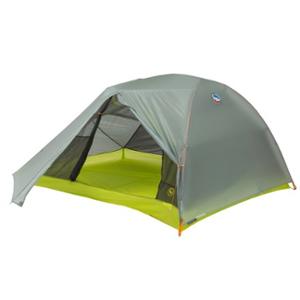
- Minimum Trail Weight: 2 lbs. 10 oz.
- Floor Area: 38 sq. ft.
- Design Type: Semifreestanding
- Fabric Technology: HyperBead ripstop nylon
The Big Agnes Tiger Wall UL3 is a dream come true for minimalist backpackers who refuse to compromise on weather protection. Built with proprietary HyperBead fabric, this ultralight shelter delivers impressive strength and a reliable 1,500 mm waterproof rating without adding unnecessary bulk to your pack. Its dual side-entry doors and dual vestibules make it incredibly convenient for shared backcountry living.
While the weight is incredibly low, the tapered floor design requires campers to sleep head-to-toe to maximize the interior layout. It strikes an excellent balance between structural integrity and weight savings for three people.
Pros: Extremely lightweight; dual side-entry doors; toxic chemical-free waterproofing.
Cons: Tapered foot area restricts space; semifreestanding setup requires staking.
See the Big Agnes Tiger Wall UL3
2. NEMO Hornet OSMO

- Minimum Trail Weight: 2 lbs. 13 oz.
- Floor Area: 39.7 sq. ft.
- Design Type: Semifreestanding
- Peak Height: 44 inches
The NEMO Hornet OSMO manages to pull off a tough balancing act by providing notable vertical clearance and volumetric space while keeping its pack weight remarkably low. Utilizing proprietary OSMO ripstop fabric, this tent boasts excellent water repellency and minimal stretch when wet, keeping the structure taut through stormy weather.
The interior layout benefits heavily from a generous peak height that ensures you do not feel claustrophobic while sitting up. It serves as an optimal solution for weight-conscious hikers who prioritize livability over bare-bones minimalism.
Pros: Great peak height; water-resistant OSMO fabric; dual vestibules.
Cons: Tapered floor layout; needs careful staking to maximize volume.
3. Big Agnes Copper Spur UL3

- Minimum Trail Weight: 3 lbs. 6 oz.
- Floor Area: 41 sq. ft.
- Design Type: Freestanding
- Vestibule Area: 9 + 9 sq. ft.
The Big Agnes Copper Spur UL3 stands out as a premier freestanding option engineered to handle unpredictable backcountry squalls with total ease. This updated version incorporates advanced HyperBead fabric technology to offer superior waterproofing alongside a solution-dyed canopy that stands up remarkably well against harsh UV degradation.
Two massive vestibules expand your storage capabilities, ensuring muddy boots and heavy packs stay protected outside the sleeping zone. The freestanding framework simplifies setup on rocky, root-filled, or hard-packed terrain where stakes are tough to drive.
Pros: Fully freestanding design; generous vestibule storage; eco-friendly solution-dyed fabric.
Cons: Heavier than semifreestanding alternatives; higher premium price point.
See the Big Agnes Copper Spur UL3
4. NEMO Dragonfly OSMO

- Minimum Trail Weight: 3 lbs. 6 oz.
- Floor Area: 41.2 sq. ft.
- Design Type: Freestanding
- Pole Material: DIAPOLE aluminum
The NEMO Dragonfly OSMO is an excellent choice for outdoor enthusiasts searching for uncompromising durability and protection from severe wind and rain. Supported by an advanced hubbed DIAPOLE aluminum pole system, this structure maintains its shape perfectly when confronting heavy gusts on exposed ridges.
The high-performance OSMO fabric ensures the canopy resists sagging when saturated with rain, maintaining interior volume. Its large gear storage zones and thoughtful interior pockets make organizing your essential trail items straightforward and efficient.
Pros: Exceptionally sturdy pole structure; sag-resistant rainfly; ample floor area.
Cons: Bulkier packed size; slightly heavier minimum trail weight.
5. REI Co-op Flash 3

- Minimum Trail Weight: 3 lbs. 7.6 oz.
- Floor Area: 40.9 sq. ft.
- Design Type: Freestanding
- Fabric Material: 20-denier recycled nylon
The REI Co-op Flash 3 targets dedicated ounce-counters who still crave the breezy convenience of a fully freestanding layout. Constructed from sustainable, bluesign-approved materials, this tent delivers great internal livability via a steep-wall structure that maximizes shoulder room for all three occupants.
The robust 4-pole configuration yields a highly rigid structure that handles moderate crosswinds beautifully. While the vestibules are smaller than some rivals, the inner canopy mesh keeps the interior feeling airy and completely condensation-free.
Pros: True freestanding versatility; sustainable bluesign materials; excellent interior ventilation.
Cons: Vestibules are small; slightly heavier pole structure.
6. Big Agnes Copper Spur UL3 XL

- Minimum Trail Weight: 3 lbs. 9 oz.
- Floor Area: 48 sq. ft.
- Design Type: Freestanding
- Peak Height: 45 inches
The Big Agnes Copper Spur UL3 XL is the ultimate upgrade for backpackers demanding maximum sprawling room on extended trips. It completely skips the standard tapered floor format in favor of a massive rectangular base, offering plenty of space for three adults or extra gear storage.
The tall 45-inch peak height combined with HyperBead fabric means you stay safe, dry, and comfortable during prolonged downpours. It represents a premium tier of backcountry luxury where extra interior space is valued over absolute minimum weight.
Pros: Massive rectangular floorplan; highest peak height; outstanding weather defense.
Cons: Heaviest option listed; largest packed size.
See the Big Agnes Copper Spur UL3 XL
7. Marmot Limelight

- Minimum Trail Weight: 3 lbs. 4.8 oz.
- Floor Area: 40.9 sq. ft.
- Design Type: Freestanding
- Peak Height: 46.5 inches
The Marmot Limelight focuses heavily on internal headroom, boasting an impressive 46.5-inch peak height that makes it easy to move around. Its uniform rectangular floor ensures that everyone sleeping inside gets an equal share of space without feeling squeezed at the feet.
The nylon mesh canopy keeps fresh air circulating to prevent stuffiness through warm summer nights. Although the vestibules offer minimal exterior gear protection, the sheer volume of the interior space makes up for it during long-haul trips.
Pros: Tallest peak height; uniform non-tapered floor; highly breathable mesh canopy.
Cons: Very limited vestibule storage; polyester rainfly is bulky.
How to Choose the Perfect Ultralight 3-Person Tent
For backpackers who hit the trail with a small group, a partner, or a furry companion, finding the right shelter is a balancing act. You need something spacious enough to keep everyone comfortable during a midnight downpour, yet light enough that it will not feel like a boulder in your pack. A 3-person ultralight tent strikes the perfect sweet spot for pairs who want extra “livable luxury” or trios aiming to split weight efficiently.
However, selecting the right model requires navigating a sea of technical jargon, fabric densities, and structural designs. This comprehensive guide breaks down exactly what you need to look for so you can invest in a shelter that keeps you protected, comfortable, and moving fast on the trail.
Understanding the Trade-Off: Weight vs. Space vs. Durability
In the ultralight gear world, there is a classic rule: you can choose low weight, high durability, or low cost, but you rarely get all three. When looking specifically at 3-person tents, this dynamic becomes even more apparent because of the sheer volume of fabric required to cover that much floor space.
To evaluate a tent’s true weight, ignore the “packaged weight,” which includes extra stakes, repair kits, and product tags. Instead, focus entirely on the Minimum Trail Weight. This metric measures only the essentials: the tent body, rainfly, and poles. For a modern ultralight 3-person tent, a stellar trail weight lands anywhere between 2.5 and 3.5 pounds. Anything lighter usually demands a massive compromise on space or durability, while anything heavier begins to stretch the definition of “ultralight.”
Choosing Your Structure: Freestanding vs. Semifreestanding
How a tent holds itself up impacts where you can camp, how quickly you can set up, and how much the total package weighs. Ultralight 3-person tents generally fall into two primary design categories.
Freestanding Tents
A fully freestanding tent utilizes a comprehensive pole system that allows the structure to stand entirely on its own without needing a single stake driven into the ground. You can pitch it, pick it up, shake out the dirt, and move it around until you find the flattest spot.
These tents are incredibly user-friendly and excel on rocky ridges, wooden tent platforms, or hard-packed desert soils where stakes are nearly impossible to use. The downside is that the extra pole segments and hubs required to make a tent completely freestanding add noticeable weight and bulk to your pack.
Semifreestanding Tents
Semifreestanding designs offer an ingenious compromise. They use a partial pole framework—often a single ridge pole with a hub that splits into a “Y” shape at one end. This keeps the head of the tent standing up on its own, but leaves the foot end reliant on two well-placed corner stakes to pull the walls outward and create interior volume.
By eliminating half of the pole structure at the feet, manufacturers shave off critical ounces. The trade-off is a slightly more tedious setup process. If you cannot get a firm stake placement into the ground at the foot corners, the tent will sag, significantly reducing your internal legroom and foot space.
Decoding the Footprint: Dimensions and Layout
Do not let the “3-person” designation fool you. In the backpacking industry, tent capacities are calculated assuming occupants will sleep side-by-side like sardines on standard 20-inch wide sleeping pads. If you actually plan to fit three adults inside, you must look closely at the floor layout.
Tapered vs. Rectangular Floors
To cut weight, many ultralight tents feature a tapered floor design. This means the tent is wide at the head end (where your shoulders need room) and significantly narrower at the foot end. For two people, this is rarely an issue. However, if three adults try to sleep in a tapered tent, the person in the middle will likely have to sleep head-to-toe with their tentmates to avoid a massive tangle of feet.
If true three-person livability is your priority, look for a rectangular floorplan. Tents with a uniform width from head to foot provide far more stretching room and allow all three occupants to sleep facing the same direction comfortably.
Peak Height and Steep Wall Architecture
Floor space is only one part of the comfort equation; vertical volume matters just as much. Look at the peak height, which dictates whether you can sit up straight without brushing your hair against a damp ceiling mesh. A peak height between 42 and 45 inches is standard for good headroom.
Furthermore, pay attention to tents that utilize specialized pole clips or pre-bent pole geometries. These design elements pull the canopy walls nearly vertical, opening up maximum shoulder room so multiple people can sit up, play cards, or change clothes simultaneously without bumping elbows.
Materials and Weatherproofing
The fabrics used in ultralight tents are marvels of modern engineering, but they require a gentle hand and careful selection depending on the climates you frequent.
The Denier Dilemma
Denier (D) measures the thickness and weight of individual threads in a fabric. Standard backpacking tents often use rugged 68D or 75D fabrics. Ultralight tents, conversely, drop down to incredibly thin 15D, 20D, or even 10D fabrics to save weight. While these thin fabrics are remarkably strong for their weight, they are susceptible to punctures from sharp rocks, sticks, or pine needles. Using a footprint or being meticulous about site selection is critical when dealing with ultra-low denier counts.
Nylon vs. Polyester and Proprietary Blends
Traditionally, high-end ultralight tents relied heavily on silicone-coated nylon (Silnylon). Silnylon is incredibly strong and packs down tiny, but it has a frustrating habit of absorbing water and stretching when wet. This causes your rainfly to sag during a midnight storm, requiring you to get out and re-tension the guidelines.
To combat this, look for modern tents utilizing advanced polyester blends or proprietary fabrics (like NEMO’s OSMO or Big Agnes’s HyperBead). These fabrics resist sagging when wet, dry out much faster, and maintain structural tension through heavy downpours, all while omitting harmful PFAS chemicals from their waterproofing coatings.
Doors, Vestibules, and Storage Ventilation
When sharing a tent with others, the small details quickly dictate your overall happiness on the trail.
- Two Doors Are Mandatory: Never buy a 3-person tent with a single front door if you actually plan to camp with partners. Crawling over two sleeping trail mates in the middle of the night to answer nature’s call is a recipe for frustration. Dual side doors ensure independent entry and exit.
- Vestibule Space: Because a 3-person tent leaves very little room inside for muddy backpacks and wet boots, large exterior vestibules are vital. Look for tents with dual vestibules that offer at least 8 to 9 square feet of storage per side so your gear stays protected from the elements without blocking your exit.
- Ventilation Control: Three human bodies generate an immense amount of warm, humid breath over an eight-hour night. Without proper airflow, that moisture condenses on the cold rainfly, resulting in an interior rain shower by morning. Ensure the tent body features plenty of breathable polyester mesh and the rainfly includes adjustable vents at the peak to pull damp air up and out.
The Final Verdict
To choose the ultimate ultralight 3-person tent, start by auditing your typical camping crew. If you are a duo looking for a luxurious palace with plenty of room to spare, a lightweight, tapered, semifreestanding tent will save you maximum weight while offering massive comfort. However, if you are a true trio of backcountry adventurers tackling rocky terrains, prioritize a freestanding structure with a uniform rectangular floor and dual vestibules. By matching your structural needs to your trail style, you will guarantee a warm, dry, and weightless night under the stars.