
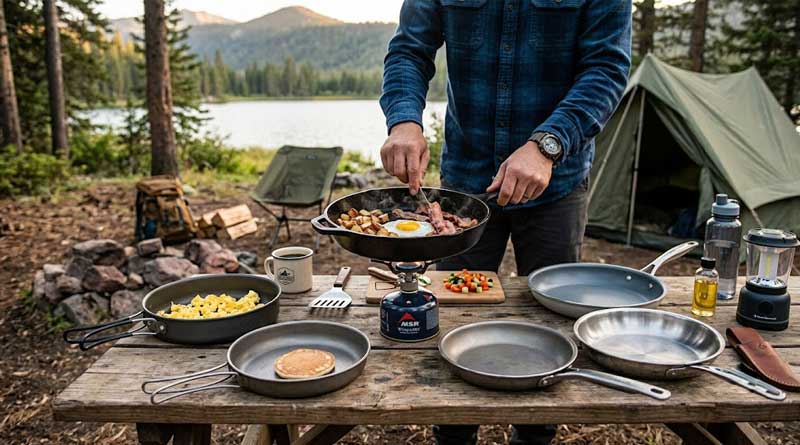
Best Camping Frying Pans of 2026
When you’re out in the wild, a good meal can make your whole trip better, and the right frying pan is key. Camping frying pans need to be tough, heat up fast, and pack down small, but not all are created equal. Whether you’re flipping eggs over a fire or searing fish on a stove, the best pan saves space and cooks evenly. In this guide, we’ll help you find a durable, lightweight option that turns any campsite into your outdoor kitchen.
1. Fire-Maple Camping Frying Pan

- Material: Hard anodized aluminum with nonstick coating
- Weight: 9.2 oz
- Folded Size: 7.8 × 7.6 × 2.2 inches
- Handle: Self-locking FIREMAPLE Feast heat-resistant handle
The Fire-Maple Camping Frying Pan is purpose-built for backpackers who refuse to sacrifice cooking quality on the trail. Its hard anodized aluminum construction with a thicker base delivers noticeably more even heat distribution compared to standard camp pans, making it reliable for everything from crispy bacon to perfectly seared steaks. The unique self-locking Feast handle provides a secure, stable grip that reduces the risk of accidents over a camp stove or open flame.
Weighing just 9.2 oz and folding to a compact profile, this pan slides into any pack without hassle. It works across all heat sources — stove, burner, or campfire — though keeping flames low and beneath the pan base is recommended to protect the handle. Cleanup is equally effortless thanks to the quality nonstick surface.
- Pros: Ultralight, even heating, versatile heat source compatibility, easy to clean
- Cons: Requires careful flame management over open fire, smaller cooking surface
See the Fire-Maple Camping Frying Pan
2. Bodkar Frying Pan Skillet

- Material: Aluminum with nonstick coating
- Size: 8-inch diameter
- Capacity: 1 liter
- Handle: Detachable wooden handle
The Bodkar 8-inch Frying Pan Skillet is a smart choice for outdoor cooks who value both function and convenience. Its aluminum construction keeps the pan lightweight and responsive to heat changes, while the nonstick coating ensures food releases cleanly with minimal oil. At 1-liter capacity, it handles single-serving meals and side dishes with ease, making it a practical companion for solo campers and weekend adventurers alike.
The standout feature is its detachable wooden handle, which allows the pan to pack down flat for space-efficient storage in a bag or cookset. The handle attaches securely during use and provides a comfortable, heat-resistant grip. It’s a no-fuss, well-priced skillet for those who want reliable outdoor cooking without carrying extra weight.
- Pros: Compact with detachable handle, nonstick surface, lightweight aluminum build
- Cons: Smaller 8-inch size limits batch cooking, limited detailed specifications available
See the Bodkar Frying Pan Skillet
3. CAROTE Nonstick Frying Pan
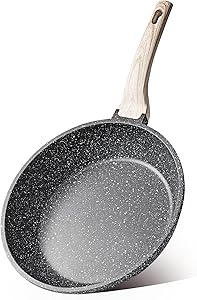
- Coating: Eco-friendly granite nonstick, PFOS and PFOA free
- Base: High magnetic conductive stainless steel for all cooktops
- Compatibility: All stoves including induction
- Design: Extended bottom for quick, even heat distribution
The CAROTE Nonstick Frying Pan combines eco-conscious design with everyday practicality. Its classic granite coating is free from PFOS and PFOA, delivering a healthier, safer cooking surface without compromising performance. The extended bottom heats up quickly and evenly, eliminating hot spots that can burn food, while the high magnetic stainless steel base ensures compatibility with all cooktops — including induction — making it as useful at the campsite as it is at home.
Cooking with less oil is a genuine benefit here; the granite nonstick requires minimal fat to prevent sticking and produces less smoke in the process. Cleanup is as simple as a quick wipe or rinse. CAROTE backs each pan with a strict multi-inspection quality process and offers a full refund or replacement for any delivery damage, adding real purchase confidence.
- Pros: Induction compatible, eco-friendly coating, low-oil cooking, easy cleanup
- Cons: Granite coating requires gentle care to preserve longevity, not ideal for high-heat searing
See the CAROTE Nonstick Frying Pan
4. Utopia Cast Iron Skillet

- Material: Cast iron, pre-seasoned with vegetable oil
- Compatibility: Stovetops, ovens, grills, and campfires
- Handle: Ergonomic dual handles for secure grip
- Care: Hand wash only, not dishwasher safe
The Utopia Cast Iron Skillet is a workhorse that earns its place both indoors and outdoors. Pre-seasoned with vegetable oil right out of the box, it’s ready for immediate use and only improves with each cook. The thick cast iron construction retains and distributes heat with impressive consistency — ideal for searing steaks, frying eggs, baking cornbread, or cooking over a campfire where flame control is less precise.
Its ergonomically designed handles provide a confident grip, even through oven mitts, and the pan transitions seamlessly between stovetop, oven, grill, and open flame. Maintenance is simple: a light coat of vegetable oil after washing keeps the seasoning in excellent condition. For those who want a long-lasting, chemical-free cooking surface, this skillet is a sound investment.
- Pros: Exceptional heat retention, campfire ready, pre-seasoned, versatile cooking uses
- Cons: Heavy for backpacking, requires hand washing and periodic re-seasoning
See the Utopia Cast Iron Skillet
5. SENSARTE Nonstick Frying Pan Skillet

- Coating: Swiss ILAG nonstick, PFOA free
- Body: Cast aluminum interior for durability
- Base: High magnetic conductive stainless steel, induction compatible
- Handle: Woodgrain Bakelite, oven safe to 302°F
The SENSARTE Nonstick Frying Pan Skillet stands out with its premium Swiss ILAG coating — a safety-certified, PFOA-free surface that performs reliably across daily cooking tasks. The cast aluminum body adds meaningful structural strength over thinner competitors, giving this pan a solid, long-lasting feel without excessive weight. Its flat, thick stainless steel base heats quickly and evenly, and works across all cooktops, including induction.
The woodgrain Bakelite handle is a thoughtful design detail — it stays cool during cooking, provides a comfortable grip, and is oven safe up to 302°F for finishing dishes. Cleanup is effortless; a paper towel wipe or quick rinse is usually all it takes, and it’s also dishwasher safe for convenience. For home cooks and campers who want certified quality at an accessible price, SENSARTE delivers.
- Pros: Swiss-certified coating, induction compatible, dishwasher safe, stay-cool handle
- Cons: Oven safe only to 302°F, woodgrain handle is aesthetic rather than functional upgrade
See the SENSARTE Nonstick Frying Pan Skillet
6. Armorbear Carbon Steel Frying Pan

- Material: Carbon steel with nitriding rustproof treatment
- Weight: 30% lighter than cast iron
- Compatibility: Gas, electric, and induction stovetops
- Handle: Heat-resistant ergonomic wooden handle
The Armorbear Carbon Steel Frying Pan bridges the gap between lightweight convenience and cast iron-level durability. Its advanced nitriding treatment creates a rustproof surface that resists the heavy use of outdoor and daily cooking, while the textured interior naturally bonds with cooking oils over time, developing a chemical-free nonstick layer that genuinely improves the more you cook with it. Arriving pre-oiled and ready to use after a quick rinse, the onboarding process is refreshingly straightforward.
Being 30% lighter than cast iron makes a real difference when maneuvering or packing the pan, and the ergonomic wooden handle with its thoughtfully angled grip reduces wrist strain during tasks like flipping and sautéing. The handle stays cool across gas, electric, and induction stovetops. Armorbear backs it with responsive customer support and a no-risk guarantee.
- Pros: Lighter than cast iron, develops nonstick over time, rustproof, ergonomic handle
- Cons: Requires gradual seasoning build-up, wooden handle not oven safe at high temperatures
See the Armorbear Carbon Steel Frying Pan
7. Lodge Seasoned Cast Iron Skillet

- Material: Cast iron, naturally pre-seasoned
- Origin: Made in the USA
- Compatibility: Oven, stovetop, campfire
- Handle: Easy-grip teardrop design
Lodge has been making cast iron cookware in the USA for generations, and the Lodge Seasoned Cast Iron Skillet is the standard by which others are measured. It arrives naturally pre-seasoned and ready to cook, with a smooth surface that releases food cleanly and improves with every use. The superior heat retention of cast iron means this skillet holds temperature through high-demand tasks like searing thick steaks or frying chicken without dropping heat when food hits the surface.
Its campfire-ready versatility is a genuine strength — this pan works just as well over glowing coals as it does in a kitchen oven or on a stovetop burner. The teardrop handle is ergonomically shaped for comfortable control, and the pan’s heavy-duty construction is built to last decades. For a reliable, time-tested skillet that only gets better with age, Lodge remains the benchmark.
- Pros: USA made, improves with use, excellent heat retention, campfire compatible
- Cons: Heavy for backpacking, requires hand washing and periodic re-seasoning
See the Lodge Seasoned Cast Iron Skillet
8. NeoForge Cast Iron Skillet

- Material: Engineered cast iron, naturally seasoned
- Health: 100% PFOA and PFAS free
- Handle: Teardrop design for superior balance and grip
- Sizes: Available in multiple sizes for varied cooking needs
The NeoForge Cast Iron Skillet takes the trusted fundamentals of cast iron cooking and refines them with an engineered construction focused on eliminating hot spots. After proper seasoning, it delivers consistent, uniform heat distribution across the entire surface — a meaningful advantage when precision matters for searing, sautéing, or frying. Completely free from PFOA, PFAS, and other synthetic chemicals, it cooks on a naturally seasoned surface that also contributes trace dietary iron.
The teardrop handle design provides excellent balance when lifting and maneuvering the pan from stovetop to oven or campfire, with a secure grip that inspires confidence under load. Available in multiple sizes — from mini individual portions to large family-sized options — NeoForge fits a range of cooking scenarios. Simple hand-washing and occasional re-seasoning keep it performing for years to come.
- Pros: Uniform heat distribution, chemical-free surface, multiple size options, teardrop handle
- Cons: Requires hand washing and re-seasoning, heavier than aluminum or carbon steel alternatives
See the NeoForge Cast Iron Skillet
How to Choose the Perfect Camping Frying Pan
Cooking in the great outdoors is one of the most rewarding parts of any camping trip. After a long day of hiking, paddling, or simply relaxing by the lake, nothing beats the smell of a sizzling meal cooking over an open flame or a camp stove. While multi-piece cooksets are popular, a dedicated camping frying pan (or skillet) is often the most versatile and frequently used piece of cookware in a camp kitchen. From morning eggs and bacon to evening stir-fries and seared steaks, a good frying pan handles it all. However, choosing the right one requires balancing weight, durability, heat distribution, and ease of cleaning. This comprehensive guide breaks down everything you need to know to select the perfect camping frying pan for your outdoor adventures.
Understanding Materials and Construction
The material of your frying pan dictates how well it cooks, how much it weighs, how durable it is, and how difficult it will be to clean. There is no single “best” material; the right choice depends on your style of camping.
Aluminum: The Lightweight All-Rounder
Aluminum is the most popular material for camp cookware, especially for backpackers and casual campers. It is incredibly lightweight and conducts heat exceptionally well, meaning it heats up quickly and distributes warmth evenly across the cooking surface, minimizing hot spots that can burn your food.
Standard aluminum is relatively soft and can scratch or dent easily. To combat this, many manufacturers use hard-anodized aluminum. This chemical process hardens the metal, making it significantly more durable, scratch-resistant, and non-reactive to acidic foods like tomatoes. Most aluminum camp pans also feature a non-stick coating, which makes cooking and cleanup effortless, though these coatings require gentle care and plastic or wooden utensils to avoid scratching.
Cast Iron: The Backcountry Heavyweight
For car campers, overlanders, and Dutch oven enthusiasts, cast iron is the gold standard. It is virtually indestructible, can be placed directly onto glowing coals or an open campfire, and retains heat better than any other material. Once a cast iron skillet gets hot, it stays hot, allowing for beautiful searing and even cooking.
The primary drawback of cast iron is its immense weight, making it entirely unsuitable for backpacking. It also requires regular maintenance, known as seasoning, to maintain its natural non-stick surface and prevent rust. You cannot wash it with harsh detergents or leave it wet, but for many, the incomparable flavor and longevity of cast iron are well worth the extra effort.
Stainless Steel: The Durable Workhorse
Stainless steel is favored by camp chefs who want the durability of cast iron without the extreme weight or maintenance. It is highly resistant to scratching, rust, and denting, and you can scrub it aggressively with metal scouring pads without worrying about damaging a delicate coating.
However, stainless steel is a poor conductor of heat on its own, which can lead to severe hot spots directly over a narrow camp stove flame. To fix this, high-quality stainless steel pans often feature a multi-clad design, sandwiching an aluminum core between layers of stainless steel. This provides excellent heat distribution while maintaining a rugged exterior. Keep in mind that food sticks easily to stainless steel, so you will need to use plenty of cooking oil or butter.
Titanium: The Ultra-Minimalist Option
Titanium is the holy grail for ultralight backpackers where every single ounce counts. It is incredibly strong, feather-light, and entirely corrosion-resistant. It allows you to boil water rapidly due to its thin walls.
Despite its strength, titanium is a terrible heat conductor. It creates intense, localized hot spots directly above the burner, making actual frying or simmering incredibly difficult without burning your food. Titanium frying pans are best reserved for simple tasks like warming up pre-cooked meals, searing small items quickly, or for minimalist hikers who view cooking as a utility rather than a culinary hobby.
Carbon Steel: The Chef’s Secret
Carbon steel bridges the gap between cast iron and stainless steel. It offers the heat retention and natural non-stick capabilities of cast iron but at roughly half the weight. Like cast iron, it must be seasoned to prevent rust and improve its non-stick properties over time. It responds quickly to temperature changes, making it excellent for precise cooking, but it can still be a bit heavy for dedicated backpacking trips.
Key Features to Consider
Once you have selected the material that fits your camping style, evaluating specific design features will help narrow down your options to the perfect pan.
Handle Design and Packability
In a camp kitchen, space and packability are premium commodities. Unlike residential pans with fixed, long handles, camping frying pans utilize clever handle configurations:
- Folding Handles: These fold flat against the side or bottom of the pan when not in use, making the pan easy to slide into a backpack or storage bin. Look for robust locking mechanisms that ensure the handle stays secure while flipping food.
- Detachable Handles: Some systems use a separate gripper or a handle that completely unclips. This is excellent for packing multiple nested pots and pans together, but you must be careful not to misplace the handle.
- Fixed Short Handles: Common on cast iron and heavy steel pans, these are durable but make packing more awkward.
Size and Capacity
The size of your pan should match your group size and your stove’s burner capacity. A pan that is too small will force you to cook in tedious batches, while a pan that is too large might tip over on a small backpacking stove or fail to heat evenly at the edges.
- Solo Backpackers: Look for a compact 6 to 7-inch pan. It is compact enough to fit into a pack and matches the small flame diameter of lightweight canister stoves.
- Couples (2 People): An 8 to 9-inch pan provides enough surface area for two steaks or a decent-sized scramble without adding excessive bulk.
- Group/Family Camping (3+ People): A 10 to 12-inch pan is necessary to cook full meals for families. These are best used on stable, two-burner propane camp stoves.
Pan Depth and Shape
Consider what types of meals you intend to cook. Skillets with flared, shallow sides are perfect for flipping eggs, searing meats, and tossing ingredients. However, if you like to make saucy dishes, stews, or deep-dish scrambles, look for a frying pan with higher, vertical walls. This added depth transforms the pan into a hybrid skillet-pot, preventing spills and increasing overall versatility.
Matching Your Pan to Your Camping Style
To finalize your decision, let’s categorize which frying pans excel in specific outdoor scenarios.
Car Camping and Base Camps
When your vehicle does all the heavy lifting, weight is no longer a constraint. Prioritize cooking performance, durability, and capacity. A 10 or 12-inch seasoned cast iron skillet or a premium multi-clad stainless steel pan is ideal here. They can handle large meals over rugged camp stoves or open wood fires, providing a home-cooked meal experience in nature.
Backpacking and Through-Hiking
When everything you need is on your back, weight and space are everything. Opt for an 8-inch hard-anodized aluminum pan with a folding handle and a reliable non-stick coating. This setup gives you enough cooking versatility to enjoy real food on the trail without overloading your pack. If you are a strict ultralight minimalist, a tiny titanium pan will suffice, though your menu will likely be limited to rehydrating meals and boiling water.
Overlanding and Boundary Scouting
If you are traveling via motorcycle, canoe, or 4×4 rig, you need a balance of rugged durability and moderate packability. Carbon steel pans are excellent for this style of camping. They handle the rough vibrations of travel, cook beautifully over open fires or compact liquid-fuel stoves, and pack away tighter than traditional cast iron.
Maintenance and Care Tips
To ensure your camping frying pan lasts for years of outdoor adventures, proper care is essential. For non-stick and aluminum pans, never use metal utensils; stick to silicone, plastic, or wood to preserve the coating. Avoid thermal shock by letting your pan cool down before plunging it into cold river water, which can warp the metal or crack the coating. For cast iron and carbon steel, dry them thoroughly immediately after washing and apply a light coat of oil before storing them away to prevent rust during the off-season. Always pack your pans with a protective liner, like a bandana or a cloth sleeve, to prevent them from scratching against other gear inside your camp kitchen bin.