

Best Baseayers for Winter Hiking of 2026
Winter hiking can be exciting, but staying warm and dry is the key to enjoying the adventure. The first layer of clothing, known as a base layer, plays a big role in keeping your body comfortable. A good base layer helps trap heat, wick away sweat, and prevent chills when the weather turns cold. Whether you’re hiking on snowy trails or climbing icy hills, the right base layer can make a huge difference in your comfort and safety. In this guide, we’ll explore the best base layers for winter hiking to keep you warm and ready for the outdoors.
1. REI Co-op Midweight Long-Sleeve

- Fabric: 92% recycled polyester, 8% spandex (220 g/m2)
- Sun Protection: UPF 50+ rating
- Construction: Flatseam build with rolled-forward shoulder seams
- Features: Underarm gussets and thumbholes for mobility
The REI Co-op Midweight Long-Sleeve base layer is a fantastic all-around option that excels in a variety of outdoor pursuits. Designed to be warm yet highly wicking, this top effectively manages moisture during high-exertion activities like hiking, skiing, and climbing, keeping you dry and comfortable. The outer face is smooth, which makes it easy to layer with other jackets or mid-layers, while the soft, brushed inner fleece provides warmth and a cozy feel against your skin. The design is thoughtful, with underarm gussets and a stretchy recycled polyester and spandex blend that ensures you have a full range of motion without feeling restricted. It’s a dependable base layer that performs well across different seasons and activities.
Beyond its technical performance, this base layer also stands out for its strong commitment to sustainability. It’s made in a Fair Trade Certified™ factory and uses bluesign® approved, recycled materials, so you can feel good about your purchase. The brand’s dedication to environmental responsibility is further highlighted by its “Climate Label” initiative and funding for carbon emission reduction projects. With its blend of comfort, technical features, and a clear focus on ethical and sustainable manufacturing, the REI Co-op Midweight Long-Sleeve is a high-quality, durable choice for the eco-conscious adventurer looking for gear that aligns with their values.
Pros & Cons
- Pros: Excellent moisture wicking, great mobility and stretch, strong UPF 50+ sun protection, and made from sustainable, ethically sourced materials.
- Cons: Can be too warm for high-intensity summer activities; may not feel as soft as merino wool.
See the REI Co-op Midweight Long-Sleeve See the Women’s Midweight Long-Sleeve
2. Helly Hansen Lifa

- Fabric: 100% Polypropylene (LIFA®), 120g weight
- Construction: Flatlock seams to prevent chafing
- Dyeing Process: Solution Dyed Main Fabric
- Sustainability: bluesign® approved product
The Helly Hansen LIFA base layer is the result of decades of technical innovation from a brand trusted by professional athletes. This long-sleeve crew neck is designed for high-aerobic activities like hiking, climbing, and skiing. Its main advantage is the 100% polypropylene LIFA® fabric, which provides incredible moisture management. Unlike many other materials that absorb sweat, LIFA® instantly moves moisture away from your skin, ensuring you stay dry and comfortable even during intense physical exertion. This process helps to regulate your body temperature and prevents the chilling effect that can happen when wet fabric clings to your body. It’s a reliable choice for anyone who needs to stay dry on the move.
While the design, inspired by classic sailor stripes, gives it a timeless look, the true value of the shirt is in its functionality. Crucial details like the flatlock seams are key, as they prevent chafing and irritation during long periods of wear. With its lightweight construction, this base layer is a great option for activities where you need a breathable, non-bulky layer. The use of bluesign® approved and solution-dyed fabric also shows Helly Hansen’s dedication to sustainable manufacturing, reducing water and energy use. For those who prioritize high performance and comfort in a variety of athletic pursuits, the Helly Hansen LIFA is a top contender.
Pros & Cons
- Pros: Exceptional moisture wicking due to 100% polypropylene, very lightweight and breathable, durable flatlock seams, and a classic, stylish design.
- Cons: Not as warm as a midweight layer; polypropylene fabric may hold odors more than merino wool.
3. Smartwool Classic All-Season

- Fabric: 88% merino wool, 12% nylon blend
- Technology: Core-spun technology for durability
- Sustainability: ZQ-certified merino wool
- Construction: Smooth, stretch-merrow stitching and raglan sleeves
The Smartwool Classic All-Season Merino long-sleeve base layer is a highly versatile garment that can handle a wide range of climates and activities. Made from a lightweight jersey fabric, it’s comfortable enough to be worn on its own during a summer backpacking trip but also provides the necessary warmth and moisture management to be a foundational layer for skiing in winter. The secret to its versatility is the core-spun technology, which wraps soft merino wool around a tough nylon core. This unique blend gives you all the natural benefits of merino—like odor resistance and temperature regulation—while the nylon core adds enhanced durability, making it more resistant to wear and tear than garments made with 100% merino wool.
Smartwool’s commitment to quality and ethical sourcing is clear with its use of ZQ-certified merino wool, which guarantees environmental, social, and economic sustainability. The shirt’s design features, such as the smooth stretch-merrow stitching and raglan sleeves, are not just for looks; they are functional choices that improve comfort, enhance your range of motion, and prevent chafing from backpack straps. The slim fit is designed to hug the body, creating an efficient next-to-skin layer that works effectively. For anyone who needs a do-it-all base layer that is soft, durable, and responsibly made, the Smartwool Classic All-Season is an excellent choice that delivers on all fronts.
Pros & Cons
- Pros: Highly versatile for multi-season use, excellent odor resistance, enhanced durability with core-spun nylon technology, and ethically sourced wool.
- Cons: More expensive than synthetic alternatives; requires more careful washing to maintain fabric integrity.
See the Smartwool Classic All-Season See the Women’s Classic All-Season
4. Outdoor Research Echo Hoodie

- Fabric: Recycled polyester with ActiveFresh™ technology
- Weight: 4 ounces
- Sun Protection: UPF 15 (light colors) to UPF 20 (dark colors)
- Features: Thumbholes, reflective logo, and a 3-panel hood
The Outdoor Research Echo Hoodie is a high-performance base layer designed for active use, especially in warmer conditions. Weighing only 4 ounces, its soft, ultralight fabric makes it an ideal choice for summer hiking, running, or any activity where breathability and moisture management are essential. The fabric is not only quick-drying and moisture-wicking but also features AirVent™ mesh, which improves airflow to keep you cool and dry. A notable innovation is the ActiveFresh™ technology, a bio-based, silver-free, non-antimicrobial treatment that effectively controls odors without relying on traditional chemical treatments. This makes it a great choice for multi-day trips where you might not have the chance to wash your gear.
In addition to its technical fabric, the Echo Hoodie is packed with features that enhance comfort and functionality. The movement-mirroring stretch fabric ensures you have complete freedom of movement, a critical factor for climbing or dynamic sports. The flatseam construction reduces bulk and prevents chafing, while raglan sleeves eliminate shoulder seams, increasing comfort when wearing a backpack. The hood is an especially useful addition, providing excellent sun protection for your head and neck. With its combination of a lightweight design, sun protection, and superior odor control, the Outdoor Research Echo Hoodie is a standout piece for warm-weather adventures and a great base for layering in cooler conditions.
Pros & Cons
- Pros: Extremely lightweight and breathable, excellent odor control with innovative ActiveFresh™ technology, great sun protection from the hood, and made from recycled materials.
- Cons: Lower UPF rating compared to other base layers; fabric is very thin and may not be as durable for intense abrasion.
See the Outdoor Research Echo Hoodie See the Women’s Echo Hoodie
5. Cuddl Duds Women’s Base Layer
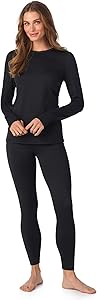
- Fabric: Brushed fleece with spandex stretch
- Features: Thumbhole sleeves and tag-free label
- Sun Protection: 50+ UV protection rating
- Weight: Heavyweight for cold-weather use
The Cuddl Duds Women’s Base Layer is an affordable option for anyone who needs warmth and comfort in a versatile package. This thermal set is designed for cold weather, featuring a cozy brushed fleece interior that feels incredibly soft against the skin, and a sleek matte exterior that makes layering a breeze. The fabric is not only warm but also moisture-wicking, helping to absorb and evaporate sweat to keep you dry and comfortable. The inclusion of spandex provides a generous stretch, allowing for a comfortable fit that moves with you, whether you’re heading out for a brisk walk or just lounging at home. Its seamless transition from a functional base layer to a standalone piece of lounge wear is a major selling point, providing great value and flexibility.
Cuddl Duds emphasizes “complete comfort” and this set delivers. The sleek design ensures you can wear it under your regular clothes without adding bulk, while the thumbhole sleeves and tag-free label add to the overall comfort and functionality. A significant and welcome feature is the 50+ UV protection, which adds an extra layer of safety when exposed to the sun. With a history spanning over 50 years, Cuddl Duds has built a reputation for providing comfy thermal wear, and this set continues that legacy. It’s a great choice for those who need a reliable, warm, and comfortable base layer that works equally well for outdoor activities and indoor relaxation.
Pros & Cons
- Pros: Very warm with brushed fleece interior, great spandex stretch for comfort, highly versatile for layering or lounging, and provides 50+ UV protection.
- Cons: Fabric composition is not specified; may be too warm for milder temperatures or high-intensity exercise.
See the Cuddl Duds Women’s Base Layer
6. Thermajohn Long Johns
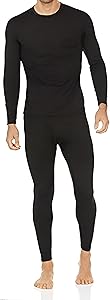
- Fabric: Fleece-lined with 4-way stretch
- Features: Soft fleece interior for comfort
- Construction: Designed for maximum heat retention
- Functionality: Moisture-wicking and breathable
The Thermajohn Long Johns are a go-to choice for anyone prioritizing warmth and comfort during cold weather. This men’s thermal underwear set is engineered specifically for heat retention, designed to keep you protected from the elements. The ultra-soft fleece lining is a standout feature, providing a cozy and comfortable feel against the skin all day. This plush interior makes them an excellent choice for not only layering under clothes for outdoor activities but also for wearing as comfortable pajamas on chilly nights. The breathable fabric is also moisture-wicking, a critical function that prevents sweat from building up and leaving you feeling cold and clammy.
Functionality is key for the Thermajohn set. The 4-way stretch material provides full freedom of movement, ensuring that the thermals won’t chafe or bunch up during any activity. This makes them ideal for a wide range of uses, from winter sports to everyday errands. The focus on practicality is evident in their design, which makes layering simple and effective. By trapping body heat and moving moisture away, these long johns serve as a crucial first step in any cold-weather layering system. They offer a no-frills, dependable solution for staying warm and comfortable, making them a popular and effective choice for winter wear.
Pros & Cons
- Pros: Excellent heat retention with fleece lining, very soft and comfortable, great 4-way stretch for mobility, and an affordable price point.
- Cons: Fabric composition is not specified; may not be as durable as higher-end technical fabrics; basic design lacks advanced features like thumbholes.
7. WEERTI Thermal Underwear
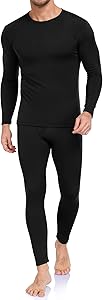
- Fabric: Moisture-wicking and breathable
- Construction: Snug fit to minimize heat loss
- Features: 4-way stretch for full mobility
- Functionality: Designed for insulation and moisture management
The WEERTI Thermal Underwear set is an essential component of any cold-weather wardrobe, designed to provide a foundational layer of warmth and comfort. The brand highlights that proper layering is key, and these long johns serve as the perfect starting point. They are built to provide insulation by effectively trapping body heat while also wicking away moisture. This dual-action functionality ensures you stay both warm and dry, which is critical for comfort and safety in cold climates. The fabric is designed to fit snugly, almost like a second skin, which is ideal for minimizing heat loss without feeling restrictive or bulky under your main clothing.
One of the key selling points of the WEERTI set is its focus on all-day comfort and mobility. Made with a 4-way stretch fabric, the thermal underwear allows for a full range of motion, so you can engage in any activity without feeling constrained. The strong seams are built to be durable and resistant to premature tearing, giving you confidence in the garment’s longevity. Whether you plan to wear it under formal or casual attire for a day out, or simply as a cozy pair of pajamas for a cold night, this set offers a blend of practicality and comfort. Its ability to disappear under other clothes while providing a significant boost in warmth makes it a reliable choice for staying warm and cozy in any cold environment.
Pros & Cons
- Pros: Strong moisture-wicking and breathability, excellent 4-way stretch for mobility, durable seams, and versatile for various uses.
- Cons: Fabric composition is not specified; may lack some of the advanced features found in higher-end technical wear.
See the WEERTI Thermal Underwear
The Essential Guide to Choosing Base Layers for Winter Hiking
Venturing out for a winter hike is a uniquely rewarding experience. The crisp air, the quiet stillness of a snow-covered landscape, and the dazzling sunlight reflecting off the white ground create a sense of peace and beauty that summer can’t match. However, to truly enjoy it, you need to be properly dressed. The most critical component of any winter hiking outfit isn’t your jacket or your boots—it’s your base layer. This first layer of clothing, worn directly against your skin, is your first line of defense against the cold and, most importantly, against sweat. Choosing the right base layer is the difference between a comfortable, exhilarating hike and a miserable, potentially dangerous one. This guide will walk you through everything you need to know to make the right choice.
The primary job of a base layer is to manage moisture. When you’re hiking, your body generates heat and sweats to cool itself down. In cold weather, this sweat can be a major problem. If it soaks into your clothing and stays there, it will quickly cool down and make you feel chilled to the bone—a condition known as the “chilling effect.” This can lead to hypothermia, even in relatively mild winter conditions. A good base layer wicks sweat away from your skin and moves it to the outer layers, where it can evaporate. This keeps you dry, warm, and comfortable. Beyond moisture management, base layers also provide insulation, helping to trap your body heat and maintain a stable temperature. Understanding these two core functions is the first step to making a smart choice.
Understanding Base Layer Materials
The material of your base layer is arguably the most important factor to consider. Different fabrics offer different benefits in terms of moisture wicking, warmth, odor resistance, and durability. Here’s a breakdown of the most popular options for winter hiking.
Merino Wool
Merino wool is the gold standard for many serious hikers and backpackers, and for good reason. It’s a natural fiber known for its incredible performance qualities. Its fibers have a unique structure that wicks moisture away from your skin while still providing excellent insulation. Even when it gets damp, merino wool continues to feel warm, which is a major advantage on the trail. It’s also naturally odor-resistant, meaning you can wear it for multiple days without it starting to smell. This is a huge plus for multi-day trips. Merino wool is also soft and comfortable against the skin, and it’s a renewable resource. The main downsides are that it’s typically more expensive than synthetic options and can be less durable, especially if it’s a very lightweight knit.
Synthetic Fabrics (Polyester and Polypropylene)
Synthetic base layers, most commonly made from polyester or polypropylene, are the workhorses of the outdoor apparel world. They are highly effective at wicking moisture away from the skin and are often quicker to dry than merino wool. Synthetics are also generally very durable, standing up well to repeated washing and hard use. They are typically less expensive than merino wool, making them a great budget-friendly option. However, their major drawback is odor retention. Synthetics are notorious for holding onto body odors, especially after a few hours of high-exertion activity. Many modern synthetic fabrics now include anti-odor treatments (often silver-based) to combat this, but they may not be as effective as merino wool’s natural properties.
Silk
Silk base layers are known for being incredibly soft and comfortable. They provide a surprising amount of warmth for their weight, making them a popular choice for low-intensity activities or as a luxury layer. However, they are not ideal for high-exertion hiking. Silk does not wick moisture as effectively as wool or synthetics and takes a long time to dry. If you were to sweat heavily in a silk base layer, it would likely leave you feeling cold and clammy, defeating the purpose of a base layer. For this reason, silk is best reserved for casual, cold-weather use rather than active winter sports.
Weight and Layering
Base layers come in different weights, which refers to the thickness of the fabric. Choosing the right weight depends on the temperature, your activity level, and your personal metabolism. Base layer weights are generally categorized as lightweight, midweight, and heavyweight.
Lightweight
Lightweight base layers are thin and designed for high-intensity activities in mild winter conditions. They offer a great deal of breathability and focus primarily on moisture wicking rather than insulation. They are perfect for fast-paced hiking, trail running, or cross-country skiing when you are generating a lot of body heat.
Midweight
Midweight base layers strike a balance between insulation and moisture management. They are the most versatile option for general winter hiking and are suitable for a wide range of temperatures and activity levels. A midweight base layer can be worn on its own during a moderate hike or as a core part of a layering system on colder days.
Heavyweight
Heavyweight base layers are the thickest and warmest option. They are designed for very cold conditions and low-intensity activities where you need maximum insulation. Think ice fishing, sitting around a campfire, or very slow, deliberate hiking in sub-zero temperatures. They provide excellent warmth but can be too hot and bulky for high-exertion activities.
Fit and Features
Once you’ve decided on a material and weight, consider the fit and a few key features that can improve your comfort on the trail.
Fit
A base layer should fit snugly against your skin. This is crucial for its moisture-wicking properties to work effectively. If the fabric is too loose, there will be air pockets between the layer and your skin, which prevents sweat from being wicked away efficiently. Look for a fit that is “next-to-skin” but not so tight that it restricts your movement. The best base layers are designed with stretch to allow for a full range of motion.
Seams and Construction
Flatlock seams are a must-have feature for any quality base layer. This type of stitching lies flat against the fabric, which prevents chafing and irritation, especially when you’re wearing a backpack. Rolled-forward shoulder seams or raglan sleeves are also great for comfort, as they eliminate seams from a high-friction area.
Neck and Cuff Design
Many base layers come with different neck styles, such as crew neck, zip-neck, or mock turtleneck. A zip-neck is particularly useful for regulating temperature; you can zip it up for extra warmth or unzip it to dump heat quickly. Thumbholes are another small but highly useful feature. They keep your sleeves from riding up and add a bit of warmth to your hands, which can be a lifesaver on a cold day.
A Note on Cotton
A common mistake for new winter hikers is wearing cotton. Cotton is an absolute no-go. The saying “cotton kills” is a classic piece of outdoor wisdom for a reason. Cotton absorbs moisture and holds onto it, acting like a sponge. When it gets wet from sweat, it loses all of its insulating properties and pulls heat away from your body, making you feel dangerously cold. Always choose a technical fabric like merino wool or synthetics for your base layer.
Putting It All Together
Choosing the right base layer for winter hiking is about balancing three key factors: material, weight, and fit. For most winter hikes, a midweight merino wool or synthetic layer is a fantastic choice, as it offers the best combination of warmth and moisture wicking. For high-exertion activities or milder days, a lightweight synthetic base layer will keep you dry and comfortable. By understanding how these layers function and choosing the right one for your specific needs, you’ll be well on your way to enjoying the beauty of the winter trail, no matter the weather.