Best Budget Camping Stoves of 2026
Heading out to the great outdoors shouldn’t cost a fortune. A good, hot meal after a day of hiking is essential, but finding an affordable stove to cook it on can be tricky. We’ve tested the top models to bring you our guide to the best budget camping stoves. From simple backpacking burners to compact propane grills, here are our top picks for cooking tasty campsite meals without emptying your wallet.
1. Coleman Xcursion

- Heat Output: 9,560 BTUs
- Fuel Type: Butane Canister
- Weight: 3 lbs. 5.92 oz.
- Burn Time: 1 hour (Max Flame)
The Coleman Xcursion is a dedicated single-burner solution designed for those who want to elevate their outdoor cooking without hauling heavy equipment. It strikes a great balance between portability and power, making it a reliable companion for quick stadium tailgates or weekend camping trips. The sleek design fits easily onto picnic tables while providing enough heat to handle diverse recipes.
Constructed for convenience, this stove includes a matchless auto-ignition system that saves time in breezy conditions. While it is lightweight, the build remains sturdy enough to support standard-sized pans. It is an excellent choice for solo travelers or couples who prioritize a clean-burning fuel source and a fast setup time during their adventures.
Pros: Lightweight and highly portable; includes a dedicated carrying case; reliable matchless ignition.
Cons: Limited to butane fuel only; one-hour burn time requires carrying extra canisters for longer trips.
2. ODSD 2 Burner Stove

- Heat Output: 20,000 BTUs (Total)
- Fuel Type: Propane
- Dimensions: 10.63 x 9.06 x 5.12 in. (Folded)
- Weight: 3.98 lbs.
The ODSD 2 Burner Stove stands out for its innovative magnetic closure and compact folding design. Despite its small footprint when packed, it unfolds to provide two independently adjustable burners that deliver significant cooking power. This makes it a versatile tool for multitasking, allowing you to boil water on one side while frying breakfast on the other.
Safety and durability are central to this model, featuring a 304 stainless steel coffee stand and a built-in windproof shield. The shield not only stabilizes the flame but also protects the user from oil splashes. Its lightweight nature and included carry bag make it a top contender for hikers and campers who need dual-burner functionality without the typical bulk.
Pros: High BTU output for its size; windproof safety shield; includes a rust-resistant stainless steel coffee stand.
Cons: Compact size may limit the use of two large pans simultaneously; magnetic closure requires careful alignment.
3. Coleman Cascade Classic

- Heat Output: 10,000 BTUs (per burner)
- Fuel Type: Propane Canister
- Burner Spacing: 11 inches
- Weight: 11 lbs. 14.4 oz.
The Coleman Cascade Classic is a traditional powerhouse designed for group camping and family meals. With two burners spaced 11 inches apart, it provides ample room to cook with two pans at once. The propane-fueled system ensures consistent heat even in colder temperatures, which is a major advantage for those who enjoy camping across different seasons.
While it is heavier than some portable units, the added weight translates to a very stable cooking surface. The recessed burners and windshield panels offer excellent protection against the elements, ensuring your flame stays lit. This stove is a reliable workhorse for anyone who views the campsite kitchen as the heart of their outdoor experience.
Pros: Spacious burner distance for large cookware; durable construction; precise temperature control for simmering.
Cons: Significantly heavier than other models; takes up more storage space in a vehicle.
See the Coleman Cascade Classic
4. Coleman Cascade 18

- Heat Output: 8,000 BTUs
- Fuel Type: Propane Canister
- Burn Time: 2.5 hours (Max Flame)
- Weight: 5.5 lbs.
The Coleman Cascade 18 is a streamlined, single-burner propane stove that excels in fuel efficiency and endurance. Boasting a runtime of up to 2.5 hours on a single canister, it is ideal for longer trips where fuel conservation is important. Its compact 15-inch frame makes it easy to pack while still offering a stable platform for cooking.
This stove is perfect for the minimalist camper who prefers propane over butane for its availability and cold-weather performance. It features a simple auto-ignition system and a rugged design that handles the bumps of the trail with ease. If you only need to cook for one or two people, this model offers a great balance of size and longevity.
Pros: Exceptional burn time for its class; works well in various weather conditions; easy to transport.
Cons: Lower BTU output compared to larger models; single burner limits meal complexity.
5. Gas One Portable Stove

- Heat Output: 7,650 BTUs
- Fuel Type: 8oz Butane Canister
- Safety Standard: CSA Approved
- Ignition: Piezo-Type Electric
The Gas One Portable Stove is widely recognized for its high fuel efficiency and quiet operation. It is designed specifically for use with 8oz butane canisters and is an excellent choice for home emergency kits or casual outdoor picnics. The stove features a specialized fuel cartridge injection safety system that automatically ejects the canister if irregular pressure is detected.
Ease of use is the hallmark of this model, as the Piezo-electric starter removes the need for matches or lighters. It provides a clean, even burn that is perfect for boiling water quickly or simmering delicate sauces. Because it is so lightweight and comes with a carrying case, it is incredibly simple to store and transport for any occasion.
Pros: Advanced safety ejection features; extremely quiet operation; very budget-friendly and efficient.
Cons: For outdoor use only; lower heat output than propane competitors.
See the Gas One Portable Stove
6. Coleman Classic

- Heat Output: 7,650 BTUs
- Fuel Type: 8.8 oz Butane
- Cookware Size: Fits 10-inch pan
- Burn Time: 1.25 hours
The Coleman Classic Butane Stove is a tabletop staple that focuses on stability and precision. It features a large base that prevents tipping while stirring and an adjustable burner that allows for fine temperature control. The porcelain-coated grate is a thoughtful addition, as it can be removed for effortless cleanup after a messy meal at the campsite.
To ensure performance in outdoor settings, this stove includes an integrated wind baffle to protect the flame. The Instastart ignition provides a reliable way to get cooking instantly without fumbling for a lighter. It is a solid, straightforward option for those who want a portable stove that feels like a permanent kitchen range during their picnics or road trips.
Pros: Easy to clean porcelain grate; stable wide base; rust-proof aluminum burner.
Cons: Limited to a 10-inch pan size; butane fuel performs poorly in sub-freezing temperatures.
7. Coleman BottleTop
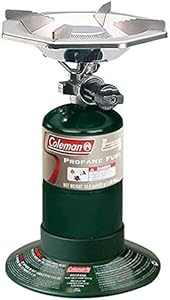
- Heat Output: 10,000 BTUs
- Fuel Type: Propane
- Burn Time: 2.5 hours (High)
- Warranty: 3-year limited
The Coleman BottleTop is a unique, space-saving stove that attaches directly to the top of a propane cylinder. This design is highly efficient for backpackers or campers with limited trunk space, as the burner and base can be separated for compact storage. Despite its small size, it delivers a powerful 10,000 BTUs of heat, rivaling much larger units.
Equipped with a pressure regulator, this stove maintains consistent performance even in extreme weather or high altitudes. The PerfectHeat design ensures you get the most out of every ounce of fuel. It is an ideal choice for those who need a rugged, no-nonsense burner that can handle wind and cold without sacrificing portability or cooking speed.
Pros: Highly compact and space-saving; excellent performance in cold weather; long runtime on a single cylinder.
Cons: Can be top-heavy with large pots; requires a flat surface for stability.
8. Gas One Dual Fuel Stove
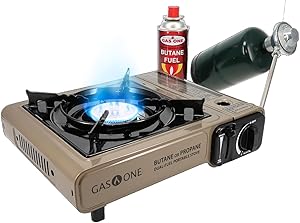
- Fuel Compatibility: Butane and Propane
- Ignition: Automatic Piezo Electric
- Safety Feature: Pressure Sensor Ejection
- Included Gear: Propane Converter Regulator
The Gas One GS-3400P is the ultimate choice for versatility, offering dual-fuel compatibility that allows it to run on either butane or propane. This flexibility is a lifesaver if you run out of one fuel type or are traveling to areas where one is easier to find than the other. It includes a converter regulator to make switching between fuel sources seamless.
Safety is a priority with this model, as it features a built-in gas flow cut-off mechanism and a cartridge ejection system for butane use. The heat dial is easy to adjust, providing a range of temperatures for different cooking needs. This stove is a great investment for those who want a dependable backup stove for home emergencies and camping.
Pros: Can use two different fuel types; comes with propane adapter; excellent safety mechanisms.
Cons: Slightly larger than single-fuel butane stoves; propane tank must sit off to the side with a hose.
See the Gas One Dual Fuel Stove
9. Zempire Stealth-Jet Solo

- Heat Output: 10,000 BTUs
- Boil Time: 4.5 minutes (1L)
- Burn Time: 120 minutes
- Weight: 5 lbs. 10 oz.
The Zempire Stealth-Jet Solo is built for the camper who values speed and efficiency. With a fast boil time of just four and a half minutes for a liter of water, it is perfect for getting coffee or dehydrated meals ready in a flash. The propane fuel source provides a strong, consistent flame that remains reliable throughout its two-hour max burn time.
The low-profile design and thin dimensions make it incredibly easy to slide into a packed vehicle. Despite its slim 2-inch height, it feels substantial and durable on the table. This stove is specifically catered to solo adventurers or those who need a high-performance secondary burner that won’t take up much vertical space in their gear bin.
Pros: Very slim and easy to pack; fast boil times; long burn duration for a propane unit.
Cons: Heavier than many other single-burner options; limited cooking surface area.
See the Zempire Stealth-Jet Solo
10. Snow Peak Butane Stove

- Burn Time: 110 minutes
- Fuel Type: Butane Canister
- Weight: 3 lbs.
- Dimensions: 13.6 x 11.8 x 4.7 in.
Snow Peak is known for elegant engineering, and this butane stove is no exception. It features a unique design that allows it to fold into a compact cylindrical shape for storage, making it one of the most aesthetically pleasing and space-efficient stoves on the market. It provides a generous 110-minute burn time, which is impressive for a lightweight 3-pound unit.
The stove is as much a piece of modern design as it is a functional tool, fitting perfectly into a minimalist camping setup or even a sleek home patio. While it lacks some of the rugged shielding of traditional camp stoves, its stability and ease of storage make it a favorite for “glampers” and urban explorers who appreciate high-quality craftsmanship.
Pros: Stunning folding design; very lightweight for its size; long burn time per canister.
Cons: Lacks an integrated windshield; more expensive than basic utilitarian models.
See the Snow Peak Butane Stove
How to Choose Budget Camping Stoves
Identify Your Primary Camping Activity
The first step in choosing an affordable camping stove is defining how you will use it. Car camping allows for larger, heavier tabletop stoves like the Coleman or Gas One butane models. These offer stability and the ability to use standard household pans. However, if you are backpacking, weight and packability become your primary concerns. In those cases, miniature canister stoves like the BRS-3000T or Fire-Maple Torch are better because they weigh just a few ounces and nest inside your cooking pot. Tailgating and picnics might require a balance of power and portability, often leading users toward single-burner tabletop units.
Fuel Types: Propane vs. Butane vs. Isobutane
Understanding fuel is critical for stove performance. Butane is cheap and clean-burning, but it struggles in temperatures below 40 degrees Fahrenheit. It is the standard for tabletop camping stoves. Propane is more rugged and performs exceptionally well in freezing temperatures and at high altitudes, though the canisters are much heavier. Isobutane-propane mixes are the standard for backpacking; they are lightweight and perform better than pure butane in cool weather. If you want the best of both worlds, a “dual fuel” stove allows you to switch between butane and propane depending on the weather and fuel availability.
BTUs and Cooking Power
BTU (British Thermal Unit) measures the heat output of a stove. A higher BTU count typically means faster boiling times. For basic camping, 7,000 to 10,000 BTUs is usually sufficient for a single burner. However, raw power isn’t everything. A stove with 10,000 BTUs might be less efficient if it lacks wind protection. Always look for stoves with built-in wind baffles or “honeycomb” nets that help direct the heat toward the pot rather than letting it escape into the air. Efficiency can save you money over time by requiring fewer fuel canisters for the same amount of cooking.
Ignition Systems: Manual vs. Piezo
Many budget stoves feature a “Piezo” ignition, which is a push-button or twist-dial electric starter. This is incredibly convenient as it eliminates the need for matches or lighters. However, piezo igniters can sometimes fail at high altitudes or in very damp conditions. Manual ignition stoves require you to use a lighter or ferro rod. Even if your stove has a built-in igniter, it is a “best practice” to always carry a backup lighter in your gear. For ultralight backpacking stoves, skipping the piezo igniter is a common way to shave off extra grams of weight.
Simmer Control and Temperature Precision
Not all camping meals involve just boiling water for dehydrated food. If you plan on cooking eggs, pancakes, or stews, you need “simmer control.” This refers to how well the valve can adjust the flame to a low setting without blowing out. Tabletop butane stoves generally offer excellent simmer control because they have larger, more precise valves. Miniature backpacking stoves are often either “all or nothing,” making them better for boiling but harder for delicate cooking. Check user reviews to ensure the valve stays consistent at low settings.
Stability and Weight Capacity
The stability of your stove is a major safety factor. Tabletop stoves have a wide footprint that can support 10-inch pans and heavy pots. Canister-top stoves (backpacking style) are much more “top-heavy.” Using a large pot on a tiny BRS-3000T can be dangerous and prone to tipping. If you are cooking for a group, a tabletop stove or a “remote” canister stove with its own legs is safer. For solo hikers using small 750ml pots, a canister-top stove is perfectly stable. Always ensure your cooking surface is flat before lighting your stove.
Portability and Storage Features
Inexpensive stoves vary wildly in portability. Some come with custom-molded plastic hard cases, which protect the stove from getting crushed in your gear bin and keep any grease from getting on your other equipment. For backpackers, the best stoves are those that “nest.” Nesting means the stove is small enough to fit inside your mug or pot along with a fuel canister and a spork. This saves a massive amount of volume in your pack. Consider if you prefer a self-contained case or a stove that contributes to a nesting system.
Safety Features to Look For
Cooking with gas always carries risks. High-quality cheapest stoves include safety mechanisms like pressure sensors. These will automatically eject the fuel canister if the internal pressure becomes too high, preventing potential accidents. Look for CSA or similar safety certifications. For butane stoves, ensure the “lock” lever is sturdy and that the fuel compartment is well-ventilated. Proper stove maintenance, like checking O-rings for leaks and keeping the burner head clean of debris, will extend the life of your cheaper stove and keep your campsite safe.
Durability and Build Materials
Cheap stoves are often made of aluminum, stainless steel, or titanium. Aluminum is lightweight and affordable but can be prone to denting. Stainless steel is much more durable and rust-resistant, making it great for tabletop stoves. Titanium is the gold standard for backpacking because it is lighter than steel but just as strong, though it is usually slightly more expensive. Avoid stoves with too many plastic parts near the burner, as high heat can eventually cause them to warp or melt over years of repeated use.
Ease of Cleaning and Maintenance
Spills happen, especially when cooking in the great outdoors. Stoves with removable grates or drip trays are much easier to keep clean. Porcelain-coated surfaces are also a plus because food doesn’t stick as easily. For backpacking stoves, the maintenance is simpler; usually, you just need to ensure the jet isn’t clogged with soot or dirt. Choosing a stove with a simple design ensures that if something does go wrong in the field, you might be able to fix it with basic tools rather than having to end your trip early.