Best Diesel Heaters for Camping of 2026
Staying warm can make or break a camping trip. When the temperature drops, a reliable heat source is essential for comfort. Diesel heaters have become a popular choice for campers because they are efficient, safe, and provide steady warmth all night. Unlike bulky wood stoves, these compact units run quietly and sip fuel. Here is our guide to the best diesel heaters for camping to keep your tent or van cozy.
1. VEVOR 8KW Diesel Heater

- Heating Power: 8 KW
- Voltage: 12 V
- Altitude Compensation: Up to 18,045 ft
- Fuel Consumption: 0.16-0.62 L/h
The VEVOR 8KW Diesel Heater is an exceptional all-in-one solution for those seeking immediate warmth without the headache of a complex installation. Its sandblasting aluminum heat exchanger is a standout feature, capable of significantly raising the interior temperature of a vehicle or boat in just ten minutes. This makes it an ideal companion for spontaneous camping trips or marine use.
Control is a breeze thanks to the integrated Bluetooth app, which allows you to preheat your space from up to 98 feet away. This modern convenience is paired with robust safety features, including an automatic overheat protection system that triggers at 518°F. Whether you are at sea level or high in the mountains, the automatic altitude compensation ensures the unit runs smoothly without manual adjustments.
Pros:
- Three-way control via App, remote, or LCD
- Rapid 10-minute heat-up time
- Excellent high-altitude performance
Cons:
- Strictly 12V DC power limit
- Requires 5L tank refills every 8 hours
See the VEVOR 8KW Diesel Heater
2. HCALORY 8KW Diesel Heater

- Fuel Efficiency: 0.032-0.095 Gal/h
- Max Runtime: Up to 50 hours
- Noise Level: 65 dB (Air Outlet)
- Remote Sensor: Built-in thermostat
The HCALORY 8KW unit prioritizes precision and efficiency, boasting a redesigned combustion chamber that claims a 36% increase in fuel economy. What sets this model apart is the “True Indoor Sensing” remote; the thermostat is located inside the remote itself rather than the heater body. This ensures the unit maintains the temperature where you are actually sitting or sleeping.
This heater is particularly well-suited for light sleepers. While the air exhaust remains audible, the upgraded silent fuel pump eliminates the rhythmic ticking sound that plagues cheaper diesel heaters. With its ability to run for up to 50 hours on a low setting, it offers one of the longest runtimes in its class, making it perfect for extended off-grid stays in vans or cabins.
Pros:
- Thermostat built into the remote control
- Incredibly low fuel consumption
- Silent fuel pump technology
Cons:
- Slightly higher noise from air duct
- App setup can be finicky for some
See the HCALORY 8KW Diesel Heater
3. RDXTIK 8KW Diesel Heater

- Voltage Support: 12V and 24V
- Tank Capacity: 5 L
- Heat Output: 8000 W
- Max Temperature: 96.8 °F
The RDXTIK 8KW Diesel Heater is a versatile all-in-one unit designed for the rugged outdoors. One of its most unique selling points is the “3-IN-1 Installation” kit, which includes specialized metal bases for both freestanding use and permanent vehicle mounting. This flexibility makes it a favorite for users who need a heater that can transition between a workshop floor and a truck bed.
Durability is at the forefront of this 2025 upgraded design, specifically regarding its anti-oil leakage features. The internal thread design and rubber ring seals provide peace of mind during bumpy transit, preventing messy fuel spills. While it consumes about one gallon per night, the advanced low-noise pump keeps the operation subtle enough for a restful night of sleep during your outdoor adventures.
Pros:
- Dual 12V/24V voltage compatibility
- Leak-proof internal thread design
- Includes multiple mounting bases
Cons:
- Limited to 5L fuel capacity
- No 110V AC adapter included
See the RDXTIK 8KW Diesel Heater
4. LF Bros 5KW Diesel Heater
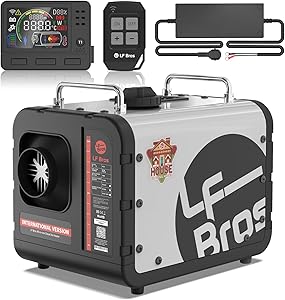
- Heat Output: 4,700 – 17,000 BTU
- Voltage: 12V, 24V, and 110V
- Operating Temp: -40 °F to 104 °F
- Remote Range: 100 ft
The LF Bros 5KW Diesel Heater is arguably the most versatile unit for home and shop use. Unlike many competitors, it includes a 110V transformer right in the box. This allows you to plug it directly into a standard wall outlet in your garage or basement without any DIY electrical work. It is a true “plug-and-play” system that bridges the gap between vehicle and residential heating.
Safety and cleanliness are highlighted by the “car-style” gas cap, which uses internal threading to prevent spills on rough roads. The 5KW output is perfectly balanced for smaller RVs or rooms, providing consistent warmth without the “on-off” cycling often seen in overpowered 8KW units. The packaging is also notably high-quality, ensuring the unit arrives protected and is easy to store during the summer.
Pros:
- Includes 110V wall outlet adapter
- Superior leak-proof fuel cap design
- Very detailed instructions and QR tutorials
Cons:
- Lower peak power (5KW vs 8KW)
- Standard ticking pump sound
See the LF Bros 5KW Diesel Heater
5. Aoteda 8500W Diesel Heater

- Power Rating: 8500 W
- Fuel Use: 0.03-0.11 Gal/h
- Heating Area: Up to 286 ft²
- Compatibility: 12V/24V/110V
The Aoteda 8500W stands out as one of the most powerful and efficient heaters on the list. By utilizing a ceramic glow plug and a precision oil pump, it achieves near-complete combustion, which translates to a 35% reduction in fuel usage. This high-efficiency design allows the heater to cover nearly 300 square feet, making it suitable for larger cabins or workshops.
Ease of use is facilitated by the included 110V adapter and a 98-foot long-distance remote. The unit is designed for silent operation, featuring a built-in muffler that eliminates the distracting ticking noise of the pump. This makes it a great choice for areas where you might be listening to music or sleeping. The 1.32-gallon tank is sized perfectly for full-day operation without needing a refill.
Pros:
- Extremely high 8500W output
- Silent operation with included muffler
- Versatile 3-way power switching
Cons:
- Overheat protection threshold is lower (440°F)
- Bulkier than 5KW alternatives
See the Aoteda 8500W Diesel Heater
6. Orion Motor Tech 5kW Diesel Heater

- Temperature Range: -49 °F to 122 °F
- Safety Feature: Integrated CO Alarm
- Altitude: Up to 18,045 ft
- Casing: Flame-retardant
Orion Motor Tech has produced a heater that prioritizes user safety above all else. This unit is one of the few that comes standard with a Carbon Monoxide (CO) alarm to monitor air quality in real-time. Wrapped in a flame-retardant casing and featuring an automatic shut-off at 518°F, it is designed for those who want total peace of mind while sleeping in an enclosed RV or sedan.
Performance-wise, it is built for extreme environments, operating reliably in temperatures as low as -49°F. This makes it a top-tier choice for winter expeditions in the furthest northern climates. Like other modern units, it offers smartphone app control and automatic altitude adjustment, ensuring that as you climb steep mountain passes, your heat remains consistent and the air-to-fuel ratio stays perfectly balanced.
Pros:
- Includes built-in CO monitor
- Operates in extreme sub-zero cold
- Flame-retardant safety housing
Cons:
- 5KW may be insufficient for large RVs
- App connectivity can vary by phone model
See the Orion Motor Tech 5kW Diesel Heater
7. HCALORY 8KW Diesel Heater
- Fuel Consumption: 0.12-0.36 L/h
- Smart Features: App & Bluetooth control
- Altitude: 18,000 feet auto-adapt
- Efficiency: 36% higher than standard
The HCALORY 8KW heater is a repeat favorite for a reason: its intelligent algorithm optimization. By focusing on the combustion cycle, it achieves significant fuel savings, running for up to 50 hours on its minimum setting. This makes it one of the most cost-effective heaters to operate over a long winter season. The real-time altitude data display on the LCD screen is a helpful touch for mountain travelers.
The silent fuel pump is the real hero here, solving the most common complaint about diesel heaters. Coupled with multi-layer safety protections against short-circuits and flame failure, it offers a high-end experience at a competitive price. Whether you are controlling it via the HCALORY app or the thermostat-equipped remote, you have total control over your environment from the comfort of your bed.
Pros:
- Longest runtime in the 8KW category
- Ticking-free silent fuel pump
- Real-time altitude data display
Cons:
- Requires Bluetooth for full app features
- Air duct noise is still present at 65dB
See the HCALORY 8KW Diesel Heater
8. RDXTIK Heater for Campers

- Tank Capacity: 8 L
- Max Runtime: 24 hours
- Voltage: 12V / 24V / 110V-240V
- Fuel Consumption: 0.16-0.62 L/h
This RDXTIK model is an upgraded variant specifically tailored for campers who need extended runtimes. With a massive 8L fuel tank—larger than most competitors—this heater can provide up to 24 hours of continuous warmth on a single fill. It is a comprehensive kit that supports 12V, 24V, and even includes a 110-240V transformer for global home or garage use.
The 2025 upgrade focuses heavily on hardware reliability, featuring an anti-oil leakage design with internal threads and specialized rubber rings. It also comes with two different mounting bases—one with a rubber bottom for stability and one metal bottom for permanent fixing. For campers who value a “set it and forget it” approach, the large tank and multi-voltage flexibility make this unit a standout performer.
Pros:
- Large 8L tank for full-day use
- Comes with 110-240V transformer
- Dual-base mounting options included
Cons:
- Larger footprint due to 8L tank
- Higher fuel consumption at max settings
See the RDXTIK Heater for Campers
Choosing the Right Diesel Heater for Camping: A Comprehensive Guide
For outdoor enthusiasts, the transition from mild autumn evenings to freezing winter nights often marks the end of the camping season. However, with the rising popularity of portable diesel air heaters, campers are finding that they can extend their adventures well into the depths of winter. Unlike propane heaters, which can add significant moisture to the air and create condensation, diesel heaters provide a dry, consistent warmth that keeps your tent, van, or campervan comfortable and condensation-free. Choosing the right unit, however, involves understanding a few technical nuances to ensure safety, reliability, and warmth.
Understanding the Basics of Diesel Air Heaters
At its core, a diesel air heater is a small, combustion-based furnace. It draws air from outside, mixes it with a tiny amount of diesel fuel, ignites it within a combustion chamber, and uses the resulting heat to warm fresh air drawn through a heat exchanger. The combustion gases are then safely exhausted outside, meaning the air inside your living space remains clean and separate from the exhaust fumes.
Because these heaters are essentially “set and forget,” they are ideal for long-term camping. They are highly efficient, often sipping fuel at a rate that allows them to run all night on just a few liters of diesel. When selecting one for camping, you aren’t just buying a heater; you are investing in a system that needs to be compatible with your power setup, your vehicle size, and the environments in which you plan to travel.
Key Factors to Consider Before Buying
1. Heat Output: The 2kW vs. 5kW Debate
One of the most common mistakes campers make is buying an oversized heater. Diesel heaters are most efficient when they are running at a medium-to-high duty cycle. If you install an 8kW heater in a small, well-insulated van, the heater will spend most of its time in “low” mode. This can lead to incomplete combustion, causing soot and carbon buildup inside the combustion chamber, which eventually leads to failure. For most campervans, rooftop tents, or small trailers, a 2kW or 5kW heater is more than sufficient. Choose based on the cubic volume of the space you intend to heat.
2. Installation Style: All-in-One vs. Split Systems
You will generally find two types of heater configurations: “All-in-One” units and “Split” systems.
- All-in-One Portable Units: These units come pre-mounted in a plastic casing with the fuel tank, heater, and control board integrated. They are ideal for tents, truck bed campers, or temporary setups because they require minimal installation—often just routing the exhaust and intake hoses outside.
- Split Systems: These are the traditional style where the heater unit is mounted under a floor or inside a cabinet, with the fuel tank located elsewhere. These offer a cleaner, more professional look and are better for permanent van builds, but they require drilling holes in your vehicle floor and more complex plumbing.
3. Power Consumption and Voltage
Most portable diesel heaters operate on 12V DC power. Before purchasing, verify your power source. If you are using a portable power station, ensure it has a 12V cigarette lighter output that can handle the initial startup current. During the glow plug phase—which lasts for the first few minutes of operation—the heater draws significantly more power (often 8-10 amps) to ignite the fuel. Once running, the power draw drops to a negligible amount (1-2 amps). If you plan to run the heater for long periods, factor this into your battery capacity calculations.
The Importance of Altitude Compensation
If you plan to camp in the mountains, altitude is a critical factor. At higher elevations, the air is thinner, which means there is less oxygen available for the combustion process. Traditional diesel heaters without altitude compensation will receive the standard amount of fuel, leading to an overly “rich” mixture. This results in heavy smoke, foul smells, and rapid carbon buildup that can “choke” the heater within a few hours.
Modern heaters now feature “Automatic Altitude Compensation,” which uses an internal barometer to sense the thin air and automatically adjust the fuel pump speed. If you are a high-altitude camper, this feature is not optional—it is a requirement for a functional heater.
Safety Considerations: Non-Negotiables
While diesel heaters are inherently safer than propane heaters (due to the external combustion and dry heat), they require strict adherence to safety protocols.
1. Exhaust Routing
The exhaust pipe gets extremely hot and contains carbon monoxide. It must be routed safely outside your tent or vehicle. Ensure that the exhaust outlet is positioned away from any intake vents or windows where fumes could be sucked back into the living space. If you are using an all-in-one unit in a tent, consider using a specialized “tent pass-through” plate to keep the exhaust hot metal away from fabric.
2. Carbon Monoxide Alarms
Never operate a diesel heater without a dedicated, functional Carbon Monoxide (CO) detector installed in your sleeping area. While the heater is designed to keep exhaust separate, malfunctions, pipe leaks, or improper installation can lead to CO ingress. A CO alarm provides the necessary redundancy to ensure you stay safe while you sleep.
3. Intake Air Quality
Ensure the combustion air intake is clear of debris, mud, or snow. A blocked intake will starve the burner of oxygen, leading to the same soot issues mentioned earlier. Most manufacturers provide a small intake filter, which should be inspected regularly if you are camping in dusty or sandy environments.
Maintenance and Longevity
Diesel heaters are mechanical devices that require periodic maintenance. The most common point of failure is the glow plug or a “coked-up” combustion chamber. You can significantly extend the life of your heater by adopting a simple habit: run the heater on its “high” setting for at least 15 to 20 minutes before shutting it down. This high-temperature cycle helps burn off any accumulated soot or carbon deposits from the internal chamber. If you only ever run the heater on the lowest setting, it will eventually fail due to carbon buildup. Additionally, keep your fuel tank clean and use high-quality diesel to ensure the fuel pump and lines remain free of contaminants.
Final Thoughts on Your Selection
Ultimately, the best diesel heater for your camping setup is one that matches your specific power capacity, provides the right heat output for your vehicle size, and includes the modern safety and altitude features that prevent the most common headaches. Whether you choose a portable all-in-one unit for your tent or a permanent split-system for a van build, taking the time to understand these technical specifications will ensure you spend your camping nights toasty, dry, and safe.