Best Electric Coolers for Camping of 2026
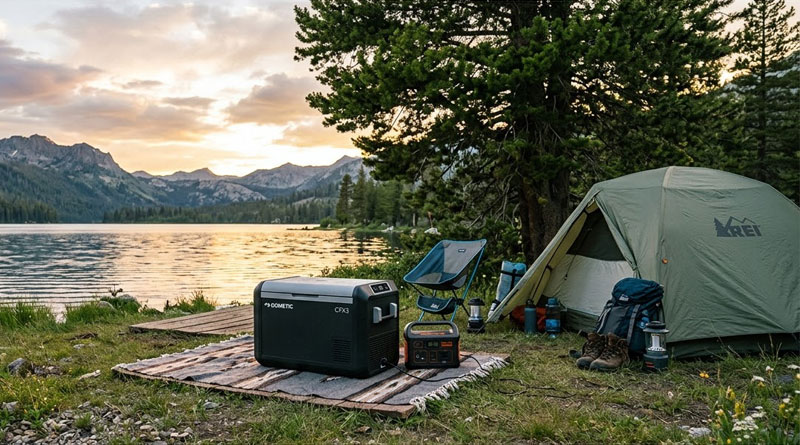
Heading out on a camping trip doesn’t mean you have to survive on warm sodas and spoiled food. A good electric cooler can keep your drinks icy and your ingredients fresh for days, offering a convenient upgrade from the old ice chest. With so many options available, finding the right one can be tricky. This guide breaks down the best electric coolers for camping to help you choose a reliable model for your next adventure.
1. Dometic CFX5 45

- Gear Capacity: 45 liters (67 cans)
- Dimensions: 27.3 x 18.7 x 15.7 inches
- Weight: 41 lbs. 3.2 oz.
- Material: Metal, plastic, and vacuum-insulated panels
The Dometic CFX5 45 is a premium ice-free cooling solution built for those who take their outdoor adventures seriously. Its rugged construction and vacuum-insulated panels ensure that your food and beverages stay at the perfect temperature even in harsh conditions. With a 45-liter capacity, it provides ample space for extended camping trips without the hassle of melting ice.
This powered cooler is designed for durability and high-performance efficiency. While it is heavier than some budget alternatives, the build quality and reliable compressor technology make it a top-tier choice for overlanding and RV use. It offers a professional-grade experience for users who prioritize longevity and consistent cooling power in remote locations.
Pros: Exceptional insulation, rugged build, large capacity.
Cons: Heavier than competitors, premium price point.
2. BougeRV 12 Volt Refrigerator

- Cooling Speed: 77°F to 32°F in 15 minutes
- Power Consumption: 45W Max (less than 36W ECO)
- Noise Level: 45dB low-noise operation
- Battery Protection: 3-level voltage monitor
The BougeRV CR22 is an impressively fast-cooling portable fridge that caters to car travelers and weekend campers. Utilizing advanced compressor technology, it can reach freezing temperatures in under an hour, ensuring your groceries remain fresh without requiring ice. Its lightweight 22-pound frame makes it one of the more portable options for SUVs and small vans.
Safety is a priority with this model, featuring a three-level battery protection system to prevent your vehicle from being stranded. The unit is also designed to handle off-road conditions, functioning perfectly at up to a 30-degree tilt. It is a cost-effective and energy-efficient choice for those needing reliable cooling on the move.
Pros: Rapid cooling, lightweight design, energy-efficient ECO mode.
Cons: Sensitive to direct sunlight, smaller internal volume.
See the BougeRV 12 Volt Refrigerator
3. EUHOMY 12 Volt Refrigerator

- Control Options: LCD panel and Bluetooth App control
- Storage: Dual-zone design with removable basket
- Certification: UL certified for energy efficiency
- Internal Light: Built-in LED for night access
The EUHOMY electric cooler stands out for its modern convenience and smart integration. With Bluetooth connectivity, users can manage temperature settings and modes directly from their smartphone, which is ideal for monitoring the fridge from the driver’s seat. The dual-zone layout helps organize food effectively while preventing the mixing of odors between different items.
Performance is robust, featuring a variable frequency compressor that hits freezing points quickly while maintaining low power draw. The inclusion of both AC and DC adapters makes it a versatile tool for both home backup and road trips. It balances user-friendly features like the LED interior light with professional safety standards and efficient cooling.
Pros: Smart app control, dual-zone storage, easy-to-clean basket.
Cons: App setup can be finicky, handles take up extra space.
See the EUHOMY 12 Volt Refrigerator
4. BougeRV 12 Volt Car Refrigerator (Dual Zone)

- Capacity: 43 Quart (Dual Zone)
- Mobility: Built-in wheels and telescopic handle
- Temperature Range: -4°F to 68°F per zone
- Solar Support: Integrated 60W solar charging port
This 43-quart BougeRV model is a powerhouse for long-distance travel, offering true independent temperature control for its two separate zones. This allows you to use it as a fridge/freezer combo or even a dual freezer depending on your specific needs. The inclusion of wheels and a telescopic handle makes transporting this unit significantly easier than stationary models.
A standout feature is the solar charging port, allowing for extended off-grid use when paired with a solar panel and external battery. The app control and internal lights add layers of convenience for modern campers. It is a highly versatile unit that bridges the gap between a standard portable cooler and a full-time mobile appliance.
Pros: Independent zone control, excellent mobility, solar compatible.
Cons: Larger footprint, requires more power for dual-zone freezing.
See the BougeRV 12 Volt Car Refrigerator
5. Igloo Iceless Thermoelectric Cooler

- Technology: Thermoelectric cooling and heating
- Cooling Range: Up to 36°F below ambient temperature
- Heating Range: Heats interior up to 135°F
- Motor: Quiet brushless motor
The Igloo Iceless cooler offers a different approach by utilizing thermoelectric technology rather than a compressor. This allows it to function as both a cooler and a heater, making it just as useful for keeping winter meals warm as it is for keeping summer drinks cold. The modular lid design and quiet motor make it a staple for road trips.
Because it relies on ambient temperature, this cooler is best suited for controlled environments like vehicle interiors rather than extreme outdoor heat. The durable wheels and tow handle ensure that moving it from the car to the hotel room is effortless. It is a simple, reliable choice for those who do not need sub-zero freezing capabilities.
Pros: Dual heat/cool function, no compressor noise, very portable.
Cons: Cooling limited by ambient temp, cannot freeze food.
See the Igloo Iceless Thermoelectric Cooler
6. OLIXIS Portable Car Refrigerator

- Capacity: 42 Quart with customizable partitions
- Safety: LED panel with child-lock function
- Noise: Ultra-quiet operation at ≤40dB
- Utility: Built-in cutting board and pull-rod wheels
The OLIXIS portable refrigerator is designed with the outdoor chef in mind, featuring a clever built-in cutting board for meal prep on the go. Its 42-quart capacity is highly customizable thanks to removable partitions, allowing you to configure the internal space for various food and drink sizes. It runs quietly, ensuring it won’t disrupt sleep during overnight trips.
This unit includes smart Bluetooth control and a child-lock feature on the LED panel, preventing accidental setting changes during bumpy rides. The combination of a telescopic handle and rugged wheels makes it suitable for moving across uneven campsites. It is a well-rounded option that adds extra utility through its thoughtful design details.
Pros: Integrated cutting board, child-lock safety, very quiet.
Cons: Partitions can be tricky to seat, slightly bulky exterior.
See the OLIXIS Portable Car Refrigerator
7. Feelfunn 12 Volt Car Fridge

- Cooling Speed: 77°F to -4°F in 45 minutes
- Stability: 40° anti-shaking with 4 fixing holes
- Energy Use: Under 30W in ECO mode
- Maintenance: Bottom drain plug for quick cleaning
The Feelfunn 12 Volt fridge is a rugged companion for off-road enthusiasts, featuring a design that remains stable even on 40-degree inclines. It is built to withstand bumpy conditions, with four dedicated fixing holes for securing the unit with ropes. Its rapid cooling performance is impressive, dropping to sub-zero temperatures in less than an hour.
Efficiency is a high point for this cooler, as it consumes very little power in ECO mode, making it ideal for solar-powered setups. The inclusion of a bottom drain plug simplifies the cleaning process after a long trip. It provides a great balance of durability and user convenience for those who frequently travel off the beaten path.
Pros: Off-road stability, drain plug for cleaning, very efficient.
Cons: Industrial aesthetic, handles are basic.
See the Feelfunn 12 Volt Car Fridge
8. Setpower Portable Refrigerator

- Form Factor: Narrow 13.8″ width for tight spaces
- Capacity: Holds 44 cans (355 ml)
- Warranty: 3 years on compressor, 1 year on parts
- Temp Range: 0°F to 50°F
The Setpower AJ30 is specifically engineered for tight spaces, featuring a slim 13.8-inch width that fits easily into trucks, small vans, or between seats. Despite its narrow profile, it still offers enough room for 44 cans, making it a favorite for professional drivers and solo campers. The compressor is notably reliable and backed by a three-year support plan.
This model excels in energy management, consuming less than 1kWh per day. It features the standard three levels of battery protection and an anti-shake design to handle steep inclines and declines. While it doesn’t reach the deepest freezing levels of some competitors, its consistent performance and space-saving design make it a practical everyday tool.
Pros: Slim space-saving design, strong compressor warranty, energy-efficient.
Cons: Narrow interior limits larger items, no app control.
See the Setpower Portable Refrigerator
How to Choose Electric Cooler for Camping
Transitioning from a traditional ice chest to an electric cooler is a game-changer for outdoor enthusiasts. No longer do you have to worry about soggy sandwiches, draining melted ice, or finding a gas station in the middle of nowhere to replenish your cooling supply. However, the market for electric coolers—often called portable refrigerators—has exploded with options ranging from budget-friendly thermoelectric units to high-end compressor-based freezers.
Choosing the right model requires an understanding of your power setup, your vehicle space, and your typical trip duration. This guide breaks down everything you need to know to make an informed investment for your next adventure.
Understanding the Two Main Types of Electric Coolers
Before looking at brands or sizes, you must decide between the two primary technologies used in portable cooling: Thermoelectric and Compressor-based systems.
Thermoelectric Coolers
Thermoelectric coolers work on the Peltier effect, using electricity to transfer heat from the inside of the box to the outside. They are generally much lighter and significantly cheaper than compressor models. However, they have a major limitation: they can usually only cool about 30°F to 40°F below the ambient air temperature. If it is 90°F outside, your cooler will only reach 50°F—which is not safe for meat or dairy for long periods. These are best for short day trips or as a supplement for drinks.
Compressor Coolers
Compressor coolers are essentially portable versions of your kitchen refrigerator. They use a refrigerant and a pump to actively remove heat. These units are powerful enough to reach sub-zero temperatures regardless of the outside heat. If you plan on camping for more than a couple of days or need to keep frozen goods, a compressor cooler is the only viable option. They are more expensive and heavier but offer precise temperature control.
Key Factors to Consider When Buying
Once you’ve decided on the technology, you need to evaluate the physical and technical specifications that will impact your daily use at the campsite.
Capacity and Internal Layout
Cooler capacity is usually measured in liters or quarts. To visualize this, many manufacturers also list how many 12oz cans the unit can hold.
- 25–35 Liters: Ideal for solo travelers or overnight trips.
- 40–50 Liters: The “sweet spot” for a couple or a small family for a long weekend.
- 65+ Liters: Best for week-long trips or large groups, but requires significant space in the vehicle.
Consider whether the unit has a “Dual Zone” feature. This allows you to set one side as a freezer and the other as a fridge simultaneously. Check for internal baskets as well; they make organizing and unloading food much easier.
Power Consumption and Efficiency
Since you’ll likely be running your cooler off a vehicle battery or a portable power station, efficiency is paramount. Most modern compressor coolers are designed to be energy-efficient, often drawing between 40W and 60W when the compressor is running. Look for models with an “ECO” mode, which reduces the compressor speed to save energy once the target temperature is reached.
Battery Protection Settings
A crucial feature for any 12V cooler is a multi-stage battery protection system. This prevents the cooler from completely draining your car’s starter battery. These systems usually have High, Medium, and Low settings, allowing the cooler to automatically shut off when it senses the input voltage has dropped below a certain threshold. This ensures you always have enough power left to start your engine.
Portability and Build Quality
Camping gear takes a beating. Look for rugged exteriors made of high-impact plastic or stainless steel. Pay close attention to the handles—are they spring-loaded, recessed, or removable? If the cooler is large, wheels and a telescopic handle are almost essential for moving the unit from the car to the picnic table. Additionally, check if the lid is reversible or can be opened from either side, which is a massive help when packing tight vehicle trunks.
Noise Levels
If you plan to sleep in your van or SUV with the cooler, noise becomes a factor. Most high-quality compressor coolers operate at around 40dB to 45dB—roughly the sound of a quiet library or a hum. Budget models can be significantly louder, which might be irritating during the quiet hours of the night.
Advanced Features to Look For
App Connectivity
Many modern electric coolers come with Bluetooth or Wi-Fi connectivity. This allows you to monitor the internal temperature and change settings via a smartphone app. It’s incredibly convenient to check if your freezer is still at 0°F from the driver’s seat while you’re on a long highway stretch.
Drain Plugs and Lighting
Small details often make the biggest difference. A drain plug makes cleaning out the cooler after a trip much easier. Similarly, internal LED lights are a lifesaver when you’re looking for a midnight snack in a dark campsite.
Integrated Solar Charging
Some high-end models now feature ports specifically for solar panels or built-in slots for detachable batteries. This allows the cooler to run independently of your car’s electrical system, making it perfect for basecamp setups where the vehicle remains stationary for days.
Maintenance and Best Practices
To get the most out of your electric cooler, follow these tips:
- Pre-cool: Plug your cooler into a wall outlet at home 24 hours before your trip. Loading it with already-cold food will significantly reduce the strain on your car battery.
- Keep it Full: A full cooler maintains its temperature better than an empty one. If you have extra space, fill it with water bottles.
- Ventilation: Compressors need air to breathe. Ensure the vents on the side of the cooler aren’t blocked by bags or blankets in your trunk.
- Level Ground: While many modern units can handle a 30° to 40° incline, try to keep the cooler as level as possible to ensure the oil in the compressor stays where it belongs.
Conclusion
Choosing the right electric cooler is about balancing your storage needs with your power availability. If you are a casual tailgater, a thermoelectric cooler might suffice. But for the dedicated camper, a compressor-based fridge/freezer is an investment that pays for itself through food safety and convenience. By focusing on capacity, power efficiency, and build quality, you can ensure your “ice-free” life is a successful one.