Best Hiking Boots for Wide Feet of 2026
Finding the perfect hiking boots can be tough, but it’s even harder if you have wide feet. Regular boots often pinch and cause blisters, turning a fun hike into a painful experience. That’s why we’ve found the best hiking boots for wide feet. Our top picks offer a comfortable, roomy fit without sacrificing support or durability, so you can focus on the trail ahead.
1. Merrell Moab 3 Mid Waterproof

- Waterproofing: Merrell DRY waterproof membrane
- Upper: Pig suede leather and mesh
- Outsole: Vibram TC5+
- Weight (Pair): 2 lbs. 2.9 oz.
The Merrell Moab 3 Mid Waterproof remains a reliable choice for hikers who want comfort straight out of the box. The pig suede and mesh upper balances durability and breathability, while the Merrell DRY membrane keeps water out during wet trail days. The recycled mesh lining adds comfort inside, making it suitable for long miles without hotspots.
Underfoot, the Super Rebound Compound midsole absorbs impact well, reducing fatigue on rocky terrain. The molded nylon arch shank provides solid stability, especially when carrying a loaded pack. Paired with the Vibram TC5+ outsole, traction is dependable on dirt, gravel, and slick surfaces. It is a dependable midweight boot for day hikes and light backpacking trips.
- Pros: Excellent traction, comfortable fit, reliable waterproofing
- Cons: Slightly heavier than some competitors
See the Merrell Moab 3 Mid See the Women’s Moab 3 Mid
2. NORTIV 8 Waterproof Hiking Boots
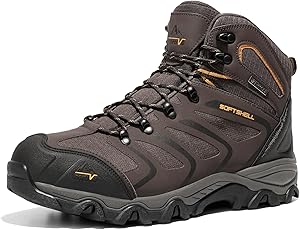
- Midsole: Lightweight EVA
- Outsole: Slip-resistant rubber
- Insole: Removable cushioned insole
- Use: Multi-activity outdoor design
The NORTIV 8 Waterproof Hiking Boots are designed for hikers who want comfort without spending a fortune. The removable cushioned insoles provide noticeable shock absorption, making long walks and workdays easier on your feet. The EVA midsoles feel lightweight and flexible, helping reduce fatigue over extended hikes.
The rubber outsole delivers solid grip on muddy trails and wet surfaces. Traction feels dependable for moderate terrain and casual outdoor use. While not as technical as premium backpacking boots, they perform well for day hikes, camping, and general outdoor activities. They are a versatile, budget-friendly option for beginners and occasional hikers.
- Pros: Affordable price, comfortable cushioning, versatile use
- Cons: Not ideal for heavy backpacking
See the NORTIV 8 Hiking Boots See the Women’s NORTIV 8 Boots
3. Columbia Transverse
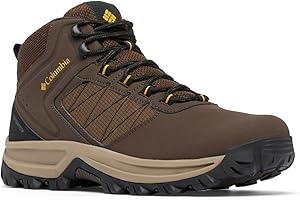
- Waterproofing: OMNI-TECH seam-sealed construction
- Midsole: TECHLITE cushioning
- Outsole: OMNI-GRIP rubber
- Upper: Leather and mesh
The Columbia Transverse is built for hikers who need reliable waterproof protection in mixed weather. The OMNI-TECH membrane keeps moisture out while allowing breathability, making it suitable for moderate rain and damp trails. The leather and mesh upper strikes a balance between durability and airflow.
The TECHLITE midsole offers lightweight cushioning with good energy return. Underfoot comfort remains consistent across varied terrain. OMNI-GRIP rubber ensures dependable traction on rock, gravel, and dirt, whether conditions are dry or wet. This boot is well suited for weekend hikers looking for dependable all-around performance.
- Pros: Reliable waterproofing, good traction, durable build
- Cons: Moderate support for heavy loads
See the Columbia Transverse See the Women’s Transverse
4. Salomon X Ultra 5 Mid GORE-TEX

- Waterproofing: GORE-TEX membrane
- Midsole: EnergyCell
- Outsole: All Terrain Contagrip
- Weight (Pair): 1 lb. 15 oz.
The Salomon X Ultra 5 Mid GORE-TEX is designed for hikers who prioritize agility and lightweight performance. The synthetic and textile upper keeps weight low while maintaining durability. GORE-TEX waterproofing ensures your feet stay dry in rain and shallow stream crossings.
The EnergyCell midsole provides responsive cushioning without feeling bulky. Stability remains impressive thanks to its supportive design, especially on uneven trails. The All Terrain Contagrip outsole grips confidently on loose dirt and rocky paths. This boot feels fast and precise, ideal for hikers who prefer a more athletic style.
- Pros: Lightweight, excellent grip, responsive cushioning
- Cons: Less cushioning for heavy loads
See the Salomon X Ultra 5 See the Women’s X Ultra 5
5. Altra Lone Peak Hiker 3

- Midsole: Altra EGO foam
- Outsole: MaxTrac rubber
- Upper: Suede
- Weight (Pair): 1 lb. 7.8 oz.
The Altra Lone Peak Hiker 3 offers a lightweight alternative to traditional boots. The suede upper feels flexible and comfortable, while the design promotes natural foot positioning. The Altra EGO foam midsole provides soft yet responsive cushioning for long trail days.
The MaxTrac rubber outsole grips well on dirt and rocky terrain. Its lighter build reduces fatigue, especially for fast-paced hiking. While it lacks the stiffness of heavier backpacking boots, it excels for day hikes and lightweight trips. It is ideal for hikers who value comfort and natural movement.
- Pros: Extremely lightweight, comfortable cushioning, flexible feel
- Cons: Less ankle support for heavy packs
See the Altra Lone Peak Hiker 3 See the Women’s Lone Peak Hiker 3
6. La Sportiva Nucleo High II GTX

- Waterproofing: ePE GORE-TEX SURROUND
- Upper: Nubuck leather
- Outsole: Vibram Nano XS-Trek
- Weight (Pair): 2 lbs. 1.6 oz.
The La Sportiva Nucleo High II GTX blends durability with advanced waterproof performance. The nubuck leather upper feels robust, while the GORE-TEX SURROUND membrane enhances breathability around the foot. It keeps moisture out without trapping heat inside.
The compression-molded EVA midsole provides stable cushioning for longer treks. A 2.5 mm polypropylene stiffener adds support under load, making it suitable for backpacking. The Vibram Nano XS-Trek outsole grips confidently on mixed terrain. It is a premium boot built for serious hikers seeking comfort and longevity.
- Pros: Excellent waterproofing, durable build, supportive under load
- Cons: Higher price point
See the La Sportiva Nucleo High II See the Women’s Nucleo High II
7. Asolo Falcon EVO GV

- Waterproofing: GORE-TEX Extended Comfort
- Upper: Suede and nylon
- Outsole: Vibram Megagrip
- Weight (Pair): 2 lbs.
The Asolo Falcon EVO GV is designed for hikers who want lightweight performance with technical stability. The water-resistant suede and nylon upper offers durability without excess bulk. GORE-TEX Extended Comfort lining keeps feet dry while maintaining breathability.
The dual-density EVA midsole absorbs impact effectively, and the AsoFlex support system enhances torsional stability. Vibram Megagrip rubber delivers outstanding traction on rock and loose terrain. It is suitable for demanding trails and moderate backpacking trips where grip and precision matter most.
- Pros: Excellent traction, supportive design, breathable waterproofing
- Cons: Slight break-in period required
See the Asolo Falcon EVO GV See the Women’s Falcon EVO GV
8. KEEN Targhee IV

- Waterproofing: KEEN.DRY membrane
- Upper: Nubuck leather
- Midsole: Luftcell polyurethane
- Weight (Pair): 2 lbs. 8.6 oz.
The KEEN Targhee IV is a rugged hiking boot built for durability and comfort. The nubuck leather upper feels tough and supportive, while the KEEN.DRY membrane keeps water out during wet conditions. Inside, the mesh lining improves airflow for added comfort.
The Luftcell polyurethane midsole provides resilient cushioning over long distances. A stability shank enhances underfoot support, especially on uneven terrain. The higher-traction TPU outsole grips reliably on dirt and rocky trails. It is a sturdy option for hikers who prioritize protection and long-term durability.
- Pros: Durable construction, strong support, reliable waterproofing
- Cons: Heavier than lightweight models
See the KEEN Targhee IV Mid See the Women’s Targhee IV Mid
The Great Expansion: A Comprehensive Guide to Choosing Hiking Boots for Wide Feet
For hikers with wide feet, the trail often presents a challenge long before the first incline: the search for a boot that doesn’t feel like a medieval torture device. A poorly fitted boot is more than just a nuisance; it’s a recipe for blisters, bunions, and “hot spots” that can turn a weekend adventure into a painful slog. This guide dives deep into the mechanics of wide-foot footwear, ensuring your next pair feels like a natural extension of your stride.
Understanding the Anatomy of a Wide Foot
Before hitting the gear shop, it’s vital to understand what “wide” actually means. Feet vary in several dimensions, and a “wide” foot could mean a broad forefoot, a high-volume instep, or a square-shaped toe box where the toes don’t taper significantly.
The Difference Between Wide and High Volume
Many hikers confuse “wide” with “high volume.” A wide foot refers to the horizontal measurement across the ball of the foot. High volume, however, refers to how much space your foot takes up inside the boot vertically—the distance from the floor to the top of your instep. If you have a wide foot but low volume, you might find that wide boots feel “sloppy” on top. Knowing your specific foot shape helps narrow down brands that cater to your unique geometry.
Crucial Features to Look For
When scanning the shelves, don’t just look for the “W” label. Specific construction features can make or break the experience for wide-footed hikers.
Anatomical Toe Boxes
Traditional boots often taper to a point at the center. For wide feet, this squishes the pinky toe and forces the big toe inward (hallux valgus). Look for brands that offer an “anatomical” or “foot-shaped” toe box. These designs allow your toes to splay naturally, providing better balance and preventing the friction that causes blisters between the toes.
Supple Upper Materials
Stiff, full-grain leather is incredibly durable but offers very little “give.” If your foot is borderline between widths, consider boots made with synthetic mesh or split-grain leather. These materials break in faster and have enough elasticity to contour around the widest parts of your foot without creating pressure points.
The Last Shapes
In shoemaking, a “last” is the 3D mold used to shape the boot. Some manufacturers use a “straight last,” which is often better for wide, flat feet, while others use a “curved last.” Researching a brand’s specific last can give you a head start; for example, some European brands are known for narrower lasts, while certain American brands lean toward a more generous “D” or “EE” standard.
Top Brands Known for Wide Options
While many companies offer a wide version of their flagship models, some brands have built their entire reputation on accommodating broader feet.
- Altra: Famous for their “FootShape” toe box and Zero Drop platform. They are a favorite for those who want maximum toe splay.
- Keen: Known for a “comfort fit” that is naturally wider in the forefoot than the industry average, even in their standard widths.
- Oboz: They offer specific wide (EE) versions of almost all their models and are praised for their supportive, high-volume insoles.
- Lowa and Meindl: These European brands offer specific “Wide” and “Comfort Fit” lines that utilize sophisticated leatherwork for a precise yet roomy fit.
The Fitting Process: A Step-by-Step Strategy
Never buy hiking boots in the morning. Your feet naturally swell throughout the day, especially during physical activity. To get an accurate fit, head to the store in the late afternoon or evening.
The Insole Test
A quick way to check width is to pull the insole (sockliner) out of the boot and stand on it. If your foot overflows the edges of the insole significantly, the boot is too narrow. While the upper material will provide some containment, your foot shouldn’t be hanging off the structural base of the shoe.
The Finger Test
Slide your foot forward until your toes touch the front. You should be able to slide one finger between your heel and the back of the boot. This ensures that as your feet swell on the trail, you won’t be jamming your toes against the front during steep descents.
The Sensation of the “Hug”
A wide boot should feel like a firm handshake—not a vice grip. You want security across the midfoot and heel to prevent slipping, but complete freedom for your toes to wiggle. If you feel any tingling or numbness while walking around the store, the width is restricting your circulation.
Lacing Techniques for Extra Room
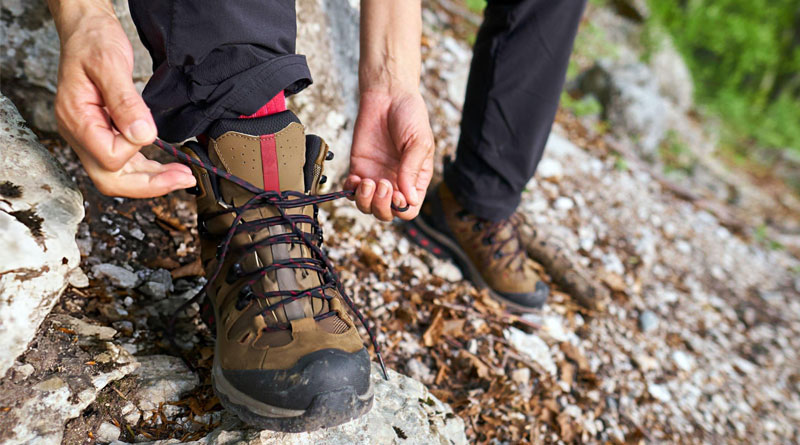
Sometimes, the boot is almost perfect, but just a bit snug in one area. You can use “window lacing” (or box lacing) to alleviate pressure. By skipping a set of eyelets over the widest part of your foot, you allow the upper material to expand outward, providing immediate relief without sacrificing ankle support.
Maintenance and Long-Term Care
Wide feet put more lateral stress on the seams of a boot. To ensure your boots last, keep them clean and conditioned. If you’re using leather boots, regular conditioning keeps the material supple, allowing it to continue accommodating your foot shape rather than becoming brittle and prone to cracking at the flex points.
Conclusion
Choosing hiking boots for wide feet requires patience and a refusal to settle for “good enough.” By focusing on anatomical toe boxes, understanding the difference between width and volume, and utilizing late-day fittings, you can find a pair that protects your feet rather than punishes them. The right boot shouldn’t just fit your foot; it should empower your journey.