Best Winter Camping Tents of 2026
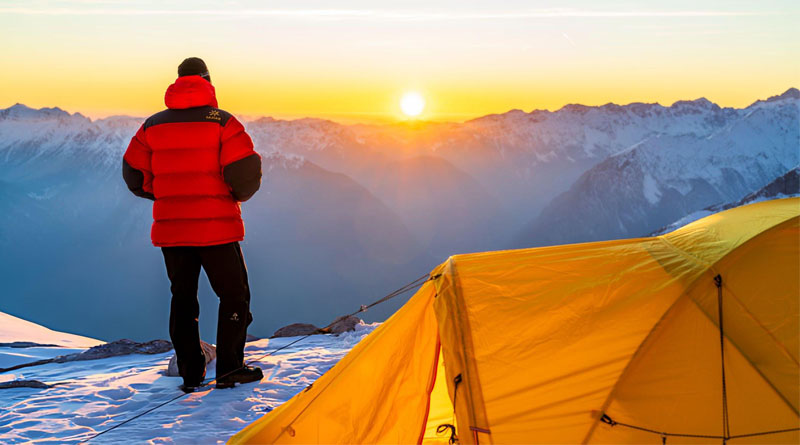
When the cold season arrives, camping doesn’t have to end. A good winter tent is your warm, safe shelter against snow, wind, and freezing temperatures. Unlike summer tents, these are built stronger to handle harsh weather, keeping you dry and protected. This guide will help you find the best winter camping tent for your adventures. We’ll look at key features like strength, warmth, and ease of setup, so you can enjoy the quiet beauty of the outdoors all year long.
1. OneTigris STELLA Camping Tent

- Capacity: 2 Person
- Weight: 5.07 lb / 2.3 kg
- Waterproof Rating: 3000 mm
- Material: 20D Nylon fly, 40D Nylon floor
The OneTigris STELLA Camping Tent is designed for campers who want a reliable, lightweight shelter without sacrificing durability. Its 20D nylon outer fabric with a silicone coating keeps weight low while offering impressive resistance to wear and tear. This makes it a strong choice for backpackers, bushcrafters, and everyday campers who need dependable protection in changing conditions. The dome-style structure provides good headroom and a stable shape that performs well in wind.
What sets the STELLA apart is its removable blackout outer tent, allowing flexibility depending on weather and personal comfort. The inner mesh tent promotes airflow, helping reduce condensation during humid nights, while the reinforced 40D nylon floor adds confidence on damp ground. Setup is refreshingly simple, with flexible poles crossing at the top and anchoring securely at all four corners. For solo trips or weekend adventures with a partner, this tent balances convenience, weather protection, and packability very well.
- Pros: Lightweight and compact, good waterproofing, easy setup, flexible blackout fly
- Cons: Limited interior space for taller users, stakes could be stronger
See the OneTigris STELLA Camping Tent
2. BISINNA 4 Season Tent
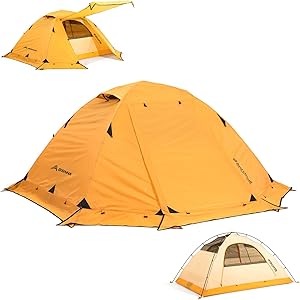
- Capacity: 2 Person
- Weight: 6.4 lb
- Waterproof Rating: 3000 mm
- Material: 210T Polyester
The BISINNA 4 Season Tent is built for campers who need year-round performance at a reasonable weight. Its 210T tear-resistant polyester fabric and PU coating offer solid protection against rain, snow, and UV exposure. The integrated snow skirt helps retain warmth in cold weather, while the rollable design allows comfortable use during warmer months. This versatility makes it suitable for everything from winter camping to summer backpacking trips.
Inside, the tent provides enough room for two people and their gear, with a waterproof front foyer that adds useful storage space. Dual doors and windows improve airflow, reducing condensation when properly pitched. Despite its four-season design, setup remains quick and beginner-friendly thanks to its freestanding structure and aluminum poles. For backpackers, cyclists, or motorbike travelers looking for dependable all-weather shelter, the BISINNA delivers a practical mix of comfort, protection, and portability.
- Pros: True four-season use, good ventilation, spacious for two, snow skirt included
- Cons: Slightly heavier than ultralight tents, condensation requires careful setup
3. Clostnature Lightweight Tent

- Capacity: 2 Person
- Weight: 6.28 lb
- Waterproof Rating: 5000 mm
- Packed Size: 16.5 x 5.9 x 5.9 in
The Clostnature Lightweight Tent is designed for campers who want strong weather protection without paying premium prices. With a PU 5000 mm coated rainfly and bathtub-style floor, it performs confidently in rain, wind, and cold conditions. Factory-sealed seams help keep moisture out, making this a dependable option for four-season use, including winter camping and shoulder-season trips.
Despite its solid construction, the tent remains relatively lightweight and easy to carry. The interior offers generous space for two adults and even a small dog, making it a practical choice for longer trips. Two aluminum poles allow fast, freestanding setup, while dual doors and vestibules add convenience and gear storage. Snow flaps and well-designed ventilation help balance warmth and airflow, giving this tent impressive versatility for hiking, backpacking, and mountaineering adventures.
- Pros: Excellent waterproofing, roomy interior, good value, four-season capable
- Cons: Slightly heavier than minimalist tents, basic interior pockets
See the Clostnature Lightweight Tent
4. Forceatt Tent

- Capacity: 2 Person
- Weight: 5.5 lb
- Waterproof Rating: 3000 mm
- Pole Material: 7001 Aluminum
The Forceatt Tent is a solid option for campers who want quick setup and reliable weather protection. Its welded floor and full-coverage rainfly help keep water out during heavy rain, while the sturdy aluminum poles provide confidence in windy conditions. The overall structure feels stable and well-balanced, making it suitable for both campsite use and lightweight backpacking.
Inside, the tent offers comfortable space for two people, supported by two vestibules that help manage gear storage. Ventilation is handled well through a large mesh window and ceiling vents, reducing condensation buildup overnight. Smooth zippers and a simple pole design make setup fast, often taking just a few minutes. For campers who value ease of use, durability, and a clear night-sky view, the Forceatt Tent delivers dependable performance.
- Pros: Fast setup, stable in wind, good ventilation, durable materials
- Cons: Limited winter insulation, vestibules are modest in size
5. GEERTOP 4 Person Tent

- Capacity: 4 Person
- Weight: 9.1 lb
- Waterproof Rating: 3000 mm fly / 5000 mm floor
- Season Rating: 4 Season
The GEERTOP 4 Person Tent is designed for families or small groups who want a dependable four-season shelter without excessive bulk. Built using durable 210T polyester and a heavy-duty Oxford fabric floor, this tent provides strong resistance against rain, snow, and ground moisture. Fully sealed seams and reinforced stitching further improve its weather performance, making it suitable for year-round camping and light mountaineering trips.
Despite its larger capacity, the tent remains relatively lightweight and packable for backpacking or travel-based adventures. The interior offers enough room for four people to sleep comfortably or for a smaller group to relax with gear inside. Two entrances and ventilation windows help maintain airflow, while the vestibule can be converted into an awning on sunny days. Setup is simple and quick with just two aluminum poles, even for solo campers. Overall, this tent balances space, durability, and seasonal versatility very well.
- Pros: Spacious interior, strong weather protection, family-friendly design, good ventilation
- Cons: Heavier than 2-person tents, large footprint needs space
6. Geertop Portable 2 Person Tent

- Capacity: 2 Person
- Weight: 6.27 lb
- Waterproof Rating: 8000 mm fly / 5000 mm floor
- Season Rating: 4 Season
The Geertop Portable 2 Person Tent is built for harsh environments and high-altitude adventures. Its 20D nylon outer tent with an impressive PU 8000 mm waterproof rating offers excellent protection against heavy rain, snow, and strong winds. Combined with taped seams and a reinforced polyester floor, this tent is well suited for winter camping and unpredictable mountain weather.
Inside, the tent provides enough room for two adults while maintaining good heat retention during cold nights. The integrated snow skirt and breathable mesh help regulate temperature across different seasons. Setup is straightforward once familiar with the outer-first pitching method, which is especially useful in wet conditions. While slightly heavier than ultralight tents, it remains compact enough for backpacking. For campers who prioritize durability and extreme weather performance, this Geertop tent is a reliable choice.
- Pros: Excellent waterproofing, strong wind resistance, true four-season use, compact pack size
- Cons: Outer-first setup takes practice, limited headroom
See the Geertop Portable 2 Person Tent
7. Bessport Camping Tent
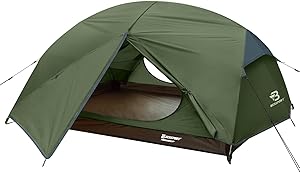
- Capacity: 2 Person
- Weight: 5.5 lb
- Waterproof Rating: 3000 mm
- Pole Diameter: 8.5 mm Aluminum
The Bessport Camping Tent focuses on simplicity, strength, and comfort for backpackers and casual campers alike. Its fully taped seams and 3000 mm waterproof rating help keep the interior dry during rainstorms, while the welded floor adds extra protection from ground moisture. The frame is designed to respond well to wind, offering reassuring stability in exposed conditions.
With two doors and vestibules, the tent provides easy access and useful storage space for gear. Ventilation is handled effectively through mesh panels and ceiling vents, helping prevent condensation buildup overnight. Setup is quick thanks to the single-pole clip system, making it ideal for beginners or solo campers. Lightweight yet durable, the Bessport Camping Tent is a practical option for those who want dependable performance without complicated setup.
- Pros: Easy setup, good ventilation, stable frame, smooth zippers
- Cons: Not designed for heavy winter use, modest interior space
8. OneTigris Rock Fortress Hot Tent

- Capacity: Up to 6 Person
- Weight: 9.2 lb
- Season Rating: 4 Season Hot Tent
- Height: 7.8 ft / 2.4 m
The OneTigris Rock Fortress Hot Tent is designed for cold-weather camping where warmth and space matter most. Featuring a built-in stove jack and snow skirt, it allows safe use of a tent stove while retaining heat efficiently. The tipi-style structure offers excellent wind resistance and a tall interior that lets users stand and move comfortably inside.
With space for up to six people, this tent is ideal for family camping, hunting trips, or group adventures. Dual doors and adjustable ventilation make it usable even in warmer seasons, adding versatility beyond winter use. Despite its size, it remains surprisingly portable and quick to set up with a single center pole. For campers seeking a spacious, stove-compatible shelter for year-round use, the Rock Fortress Hot Tent is a strong and practical choice.
- Pros: Stove compatible, spacious interior, strong winter performance, versatile ventilation
- Cons: No included stove, requires more setup space
See the OneTigris Rock Fortress Hot Tent
How to Choose a Winter Camping Tent
Winter camping transforms the landscape into a serene, crystalline world, offering solitude and beauty unlike any other season. However, this adventure demands respect for the elements, and your choice of shelter is the most critical piece of gear you’ll select. A standard three-season tent simply won’t suffice against heavy snow, howling winds, and freezing temperatures. You need a true winter camping tent, often called a four-season tent. This guide will walk you through the key features and considerations to help you choose the right fortress for your cold-weather expeditions.
Understanding the Basics: What Makes a Tent a “Winter” Tent?
Before diving into specifics, it’s crucial to understand the core philosophy behind winter tent design. While summer tents prioritize ventilation and lightweight materials, winter tents are engineered for one primary goal: protection. They are built to withstand significant snow load, resist relentless wind, and minimize heat loss, creating a secure, stable microclimate inside. This results in a tent that is typically stronger, slightly heavier, and less breathable than its three-season cousins—a worthwhile trade-off for safety in harsh conditions.
Key Features to Look For in a Winter Camping Tent
When evaluating tents, pay close attention to these non-negotiable structural and design elements.
1. Durability and Pole Structure
The tent’s skeleton determines its strength. Look for tents with aluminum poles, as they offer the best balance of strength, flexibility, and weight. Fiberglass poles are more common in budget tents but can snap in extreme cold. The pole geometry is also vital. Dome or geodesic designs (with poles that cross multiple times) are excellent for shedding snow and stabilizing against wind. More crossing points generally mean greater stability. A good rule of thumb: a 3-season tent might have 2 poles crossing once; a true 4-season tent will have 3 or 4 poles crossing several times.
2. Weatherproofing: Fabric, Rainfly, and Seams
Winter tents use tougher materials. The denier rating (a measure of fabric thickness) will be higher for both the tent floor and canopy. Look for floors rated at least 70D. The rainfly should be made of a durable, waterproof material with a high hydrostatic head rating (e.g., 3000mm+). Most importantly, the rainfly must extend close to the ground on all sides to block wind-driven snow and rain. All seams should be fully taped or sealed to prevent leaks and drafts.
3. Ventilation and Condensation Management
This is a critical challenge. Your breath contains moisture that will freeze on the inside of the tent if not managed. Effective winter tents provide adjustable high and low vents. High vents allow warm, moist air to escape, while low vents let drier air in. A good rainfly design will create a gap for airflow between it and the inner tent, even in snow. Some tents feature breathable fabric panels near the top to help mitigate condensation buildup.
4. Livability and Interior Space
You will spend more time inside your tent in winter. Consider a tent with a vestibule—an extended covered area outside the main door. This space is invaluable for storing bulky, snowy gear like boots and packs, keeping the sleeping area dry and clean. Interior volume is also key; a steeper wall angle helps shed snow and creates more usable space. Remember, “capacity” ratings are often optimistic; consider a tent rated for one more person than your group size for comfort with winter gear.
Types of Winter Tents and Their Best Uses
Not all winter tents are created for the same mission. Your intended activity should guide your choice.
Expedition or Mountaineering Tents
These are the ultimate shelters, built for survival in extreme conditions like high-altitude climbs or polar expeditions. They are incredibly strong, with robust pole structures and minimal mesh for maximum wind and snow protection. They are also the heaviest and most expensive. Choose this type only if you are facing severe, prolonged storms and extreme winds.
Four-Season Backpacking Tents
This is the most versatile category for most winter campers and backpackers. They balance strength, weight, and livability, making them suitable for backpacking into snowy forests, alpine zones, and enduring typical winter storms. They often have more mesh for ventilation in milder conditions but can be battened down when needed.
Convertible or 3+ Season Tents
These tents are designed to be adaptable. They may come with a full-coverage winter rainfly and a more ventilated summer one, or have zip-out mesh panels. They are a good choice for campers who venture out in late fall and early spring but avoid the deepest winter conditions or heavy snow.
Important Considerations Before You Buy
Beyond the tent’s specifications, think about these practical factors.
Weight and Packed Size
Are you hiking miles into the backcountry, or car camping near your vehicle? Weight matters immensely for backpacking. Expedition tents can weigh 10+ pounds, while lighter four-season backpacking models may be 5-7 pounds. Packed size also affects how it fits on your backpack.
Ease of Setup
Practice setting up your tent at home. Struggling with complex poles and frozen guylines in a blizzard with numb fingers is dangerous. Color-coded poles and clips, intuitive designs, and free-standing structures (which can be assembled then moved) are major advantages in winter.
Guy Lines and Snow Stakes
Winter tents come with numerous guy-out points to enhance stability. You must use them. Standard tent stakes are useless in snow. You will need snow stakes (wide, plastic platforms) or know how to create deadman anchors using stuff sacks filled with snow or buried sticks.
Final Checklist for Your Winter Tent Purchase
Use this list as a final review before making your decision:
- Geodesic/Dome Design: Multiple crossing poles for stability.
- Durable Materials: High-denier fabric, waterproof rainfly.
- Full-Coverage Rainfly: Extends close to the ground.
- Effective Ventilation: Adjustable high and low vents.
- Adequate Vestibule: Space for gear storage.
- Appropriate Type: Matched to your activity (expedition vs. backpacking).
- Weight & Packability: Suitable for your travel method.
- Setup Practice: Familiarize yourself with it before your trip.
Conclusion
Choosing a winter camping tent is an investment in your safety and comfort. It’s about finding the right balance between bombproof protection and manageable weight for your specific adventures. By prioritizing a strong pole structure, full weatherproofing, smart ventilation, and thoughtful livability, you can select a shelter that will stand firm against the winter elements. Remember, the best winter tent is the one that allows you to weather the storm safely, so you can wake up to the breathtaking silence and beauty of a winter morning outside. Do your research, invest in quality, and always test your gear in a safe environment before relying on it in the backcountry.