Best Budget Ultralight Sleeping Bags of 2026
Sleeping bags are one of the heaviest items if you are backpacking or thru-hiking. For ultralight backpacking, every ounce matters and a heavy sleeping bag can ruin your whole weight management. With technological innovation, new materials, and manufacturing methods, sleeping bags have become much lighter. There is even an ultralight category these days but these bags come with a hefty price tag. However, if you are a budget-conscious backpacker and looking for an ultralight bag, here is the list of top models that you can get without breaking the bank.
1. Kelty Cosmic 20 Down

- Insulation: 550-fill-power down
- Temperature Rating: 20°F (-7°C)
- Weight: 2 lbs. 7 oz. (Regular)
- Shape: Mummy
The Kelty Cosmic 20 Down is a versatile 3-season superstar designed for backpackers who want the benefits of down without a massive price tag. Featuring a trapezoidal baffle construction, it maximizes thermal efficiency to keep you warm when the temperature drops toward its 21°F lower limit. The shell is crafted from recycled polyester taffeta, making it an eco-conscious choice for the trail.
While it is slightly heavier than high-end ultralight bags, its packability and comfort are excellent for most adventures. The right-side zipper and soft lining provide a cozy interior environment. It offers a great balance of durability and warmth, making it a reliable staple for hikers who encounter varying mountain conditions throughout the spring and autumn months.
Pros: Affordable down option, great thermal efficiency, recycled materials.
Cons: Heavier than premium down bags, 550-fill is less compressible.
2. Kelty Cosmic 20 Synthetic

- Insulation: Cirroloft synthetic
- Weight: 2 lbs. 13 oz. (Regular)
- Shell: 380T nylon taffeta
- Special Feature: Built-in stash pocket
The Kelty Cosmic 20 Synthetic is the rugged sibling of the down version, specifically designed to handle damp and cold conditions. Utilizing Cirroloft insulation, this bag maintains its loft and warmth even if it gets wet, which is a major advantage for campers in humid or rainy climates. The natural fit footbox ensures you have plenty of room to move your feet comfortably during the night.
Despite being synthetic, it remains relatively packable thanks to the included compression stuff sack. It features Kelty’s signature craftsmanship, ensuring the nylon shell can withstand the rigors of the trail. This bag is ideal for those who prioritize reliability and easy maintenance, as synthetic fill is often easier to clean and more resilient over long-term use in various environments.
Pros: Performs well when wet, spacious footbox, durable construction.
Cons: Bulkier than down, slightly heavier total weight.
See the Kelty Cosmic 20 Synthetic
3. Naturehike Sleeping Bag
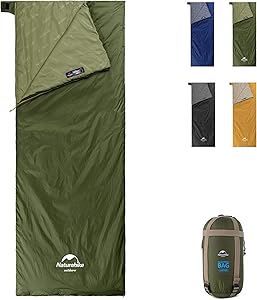
- Weight: 1.68 lbs (0.76 kg)
- Dimensions: 80.7″L x 33.5″W
- Fill: 80g/m² imitation silk cotton
- Storage Size: 5 x 12 inches
Naturehike offers an ultralight and compact solution for summer travelers and minimalist backpackers. This sleeping bag is impressively light at just 1.68 lbs, making it almost unnoticeable in a pack. The imitation silk cotton filling provides a thin but comfortable layer of insulation that is perfect for indoor use, hostels, or warm summer nights under the stars where heavy gear isn’t required.
The rectangular shape provides significantly more room than a traditional mummy bag, allowing users to turn around easily. While it isn’t designed for cold mountain nights, its double-reinforced seams and durable fabric ensure it lasts through many trips. It is a highly portable option for those who prioritize space-saving and need a simple, breathable cover for mild weather trekking or casual travel.
Pros: Extremely lightweight, very affordable, roomy rectangular cut.
Cons: Not suitable for cold weather, minimal padding.
See the Naturehike Sleeping Bag
4. QEZER Backpacking Sleeping Bag
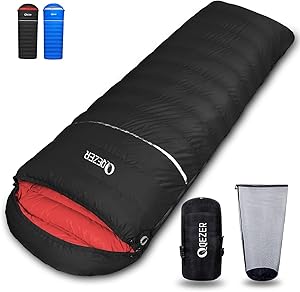
- Fill: 600 FP duck down (1.1 lbs)
- Weight: 2.54 lbs
- Shell: 400T high-density nylon
- Comfort Range: 41°F – 54°F
The QEZER Backpacking Sleeping Bag utilizes 600-fill-power duck down to provide a warm yet lightweight experience for outdoor enthusiasts. Its semi-rectangular shape is a clever compromise, offering the head-hugging warmth of a mummy bag with the leg freedom of a rectangular one. The 400T nylon shell is moisture-proof and tear-resistant, which helps protect the delicate down clusters inside from external elements.
A standout feature is the double zipper design, which allows for custom ventilation at the feet and even permits two bags to be zipped together. This makes it a great choice for couples or individuals who feel claustrophobic in tighter bags. It balances portability and warmth well, serving as a reliable companion for late spring through early autumn adventures where temperatures remain moderate.
Pros: Can zip two together, moisture-proof shell, spacious head area.
Cons: Down can shift if not shaken, limited to mild temperatures.
See the QEZER Backpacking Sleeping Bag
5. Naturehike Down Sleeping Bag

- Fill: 650 FP RDS duck down
- Weight: 2 lbs (910g)
- Shell: 20D ripstop nylon
- Zippers: YKK
This Naturehike Down Sleeping Bag features a hybrid “warmer design” that combines a snug mummy hood with a spacious rectangular lower body. This allows for excellent heat retention around the head and chest while giving the user the freedom to move their legs or vent their feet. The 650-fill-power duck down is RDS certified, ensuring ethical sourcing and high-quality insulation for chilly nights.
Constructed with 20D ripstop nylon and premium YKK zippers, the bag is built for durability while remaining incredibly light at only 2 lbs. It compresses down to a very small size, making it perfect for mountaineering or long-distance backpacking where every ounce counts. The inclusion of both a storage bag and a compression sack shows a thoughtful approach to maintaining the down’s loft over time.
Pros: High-quality YKK zippers, ethical RDS down, lightweight hybrid shape.
Cons: Tapered top might feel snug for large-framed sleepers.
See the Naturehike Down Sleeping Bag
6. NewDoar Ultralight Sleeping Bag

- Weight: 1.5 lbs
- Temp Range: 50°F – 70°F
- Material: 380T ripstop nylon
- Lining: Breathable cotton
The NewDoar Ultralight Sleeping Bag is a prime choice for summer camps and bike touring where weight is the primary concern. At just 1.5 lbs, it is one of the lightest options available, focusing on breathability with its cotton lining. The bag features a unique spliceable design, allowing two units to be zipped together, or it can be fully opened to serve as a large picnic blanket or quilt.
The anti-clip zipper design and bottom ventilation make it user-friendly, preventing the snags that often plague thinner bags. While it is strictly a warm-weather gear item, its ability to compress to one-third of its original size makes it incredibly easy to fit into small daypacks or panniers. It’s a low-maintenance, machine-washable option for casual weekend getaways and summer adventures.
Pros: Extremely packable, machine washable, converts to a blanket.
Cons: Not for cold weather, cotton lining dries slowly if wet.
See the NewDoar Ultralight Sleeping Bag
7. SYWSKW Sleeping Bag

- Fill: 680 FP duck down
- Shoulder Width: 33.5 inches
- Zipper: YKK with internal pocket
- Special Feature: Detachable 80g pillow
The SYWSKW Sleeping Bag is a high-performance 3-4 season bag that stands out due to its impressive 680-fill-power duck down and widened shoulder design. Unlike many restrictive mummy bags, this model provides 33.5 inches of width, making it much more comfortable for side sleepers or those with broader builds. The box baffle construction is a premium touch that prevents cold spots by keeping the down evenly distributed.
This bag is a complete sleep system, featuring a detachable pillow and reflective drawcords for safety at night. The high fill power allows it to achieve a 23°F limit while staying under 3 lbs. Whether you are winter hiking or embarking on a long expedition, the combination of YKK zippers and internal security pockets makes this a secure and warm sanctuary for harsh outdoor conditions.
Pros: Excellent warmth-to-weight ratio, extra wide, includes pillow.
Cons: Requires time to loft after compression, higher price point.
8. TETON Sports Sleeping Bag

- Insulation: Microfiber synthetic
- Shell: Durable water-resistant fabric
- Storage: Included stuff sack
- Feature: Zipper draft tube
The TETON Sports Sleeping Bag focuses on comfort and ease of use, featuring innovative microfiber insulation that mimics the loft of down while remaining budget-friendly. One of its best features is the roomy footbox and the integrated zipper draft tube, which works to block out cold air from leaking through the teeth of the zipper. The soft liner provides a skin-friendly feel that is much more comfortable than standard plastic-feeling bags.
TETON encourages a “stuff and go” approach, providing a durable sack that eliminates the need for tedious rolling. This bag is designed for durability and is supported by a strong product promise from the brand. It is an excellent entry-level bag for backpackers and campers who want a reliable, lofty sleeping environment without spending a fortune on high-end down products.
Pros: Very comfortable liner, easy to stuff, effective draft tube.
Cons: Heavier than down alternatives, bulkier when packed.
See the TETON Sports Sleeping Bag
Critical Ultralight Sleeping Bag Considerations
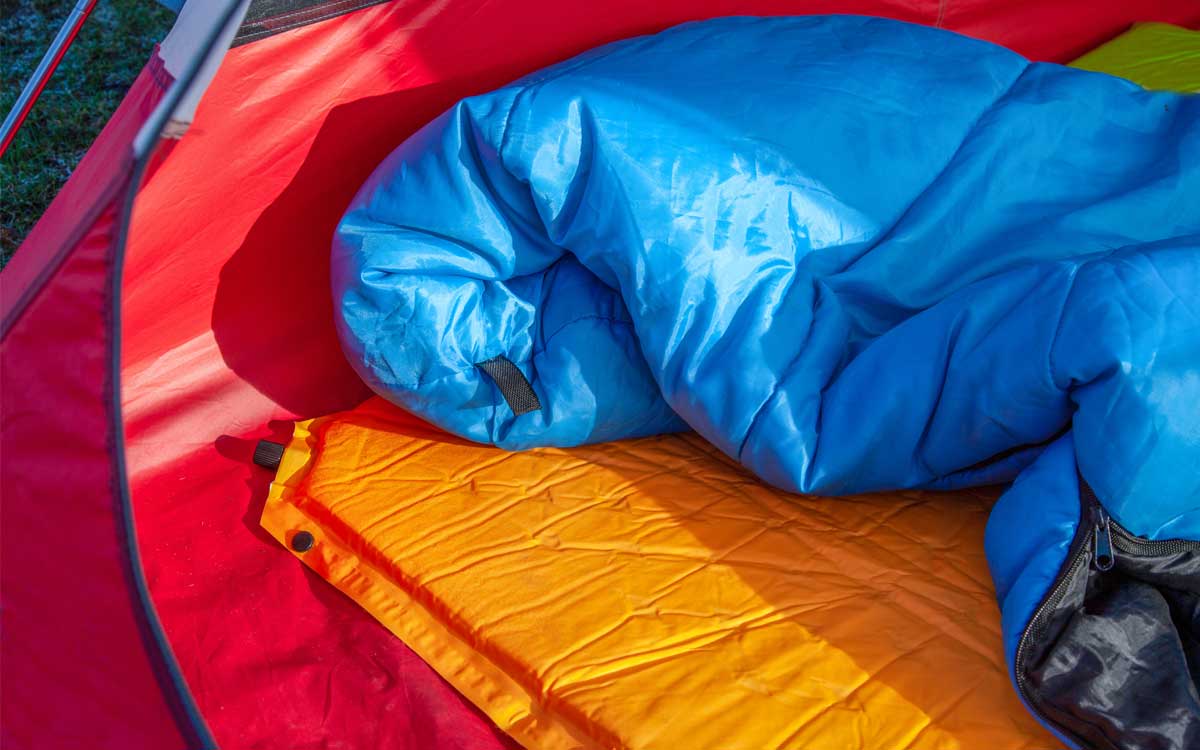
Keep in mind, to cut weight, it is essential to use premium materials. The sleeping bag not only has to be light, but it also has to be warm. The bag also has to be durable to last a long time. The more durable, warmer, and lighter the bag, the more it will cost. As the cost comes down, the performance also comes down.
In general, there are guides on the internet containing information on how to choose a sleeping bag and these guides all tell you to look at the weight in the product description and choose the lightest one but it’s not that simple.
An ultralight sleeping bag also has to be warm. It also has to be comfortable. The balance between warmth, weight, and comfort should be adequate enough to not leave you in the middle. Those guides don’t tell you that. But with certain features, you can make your choice lightweight and perform well.
This guide won’t tell you about choosing the lightest weight but it will point you toward certain factors that increase the weight-to-warmth ratio of the sleeping bag making it light as well as warm. They are not mentioned clearly but can be observed.
Insulation Type
The type of insulation that is used in the sleeping bag is a dominant factor in determining the overall weight and packing size. The quality of insulation also determines the weight-to-warmth ratio of the bag. There are two types of insulation in sleeping bags; down and synthetic.
Synthetic Insulation
Synthetic insulation is cheap and for good reason. First, it is not as warm as down insulation. The bag would need more ounces of synthetic insulation to produce the same level of warmth that fewer ounces of down fill would produce.
Secondly, synthetic insulation, like polyester, is made of fibers. They don’t pack tight and take up a lot of space in your backpack. The only advantage of synthetic insulation is that it doesn’t lose its insulation when it gets wet. But synthetic insulation is cheaper to manufacture and so it is found commonly in the budget to mid-level options.
Down Insulation
Down insulation is made of goose or duck feathers and the advantage of having feathers as insulation is that feathers have air pockets in them. Air is a bad conductor of heat. These pockets work as insulators that don’t allow heat to escape from the sleeping bag.
So, instead of solid fibers, it’s the air that is actually keeping you warm. As you can tell, the down fill is going to be much lighter than synthetic fill. Secondly, the quality of the down fill also determines the warmth-to-weight ratio of the sleeping bag. The higher the quality of the down fill, the less of it would be required to produce a certain level of warmth.
Because there are air pockets in between the feathers, a down-fill bag can be compressed to take up only a small amount of space in the backpack. However, down fill is expensive to manufacture and is found commonly only in the high-end category.
But down fill has a downside. As soon as it gets wet, it loses all its insulation and it takes a lot of time to dry. So you would have to be extremely cautious while camping in wet weather. Down fill in sleeping bags are treated with hydrophobic chemicals to repel water. But these treatments are not entirely dependable.
Now that you know the differences between the two types of insulation, it should be obvious what fill your sleeping bag should have if you want it to be ultralight. Down fill bags are usually expensive. But if you want crazy weight savings, you would have to go for the best quality down fill. Crazy weight savings also mean crazy costs.
Sleeping Bag Category
The sleeping bag category also determines how much your sleeping bag would weigh. There are single-season, 3-season, and winter sleeping bags. The category of sleeping bags determines the amount of insulation that the bag would have. The heavier the insulation, the heavier the bag gets.
Obviously, winter sleeping bags are the heaviest. They require the most amount of insulation to keep you warm in sub 14°F temperatures. 3-season bags are light but they are not ultralight because they still have to be insulated enough to be used in cool weather – around 200F. But certain premium 3-season sleeping bags – with high-quality down fill – still manage to be extremely lightweight.
Single-season or summer sleeping bags are the lightest because they only have to be insulated to withstand a single season. They are usually hot weather sleeping bags. They have the least amount of insulation and so, are light enough.
If you are looking for an ultralight bag, then single-season is the obvious choice. If you want a 3-season ultralight bag, you would have to pay up.
Shape
The sleeping bag’s shape is a small factor in determining the weight-to-warmth ratio of a sleeping bag. But during ultralight packing, it counts. Sleeping bags usually have three types of shapes:
- Rectangular
- Semi-rectangular
- Mummy
Among the three shapes, the mummy retains the most body heat and has the least volume. That is why you would find lightweight bags to be mostly mummy-shaped. They are lighter and warmer.
Layering
Lastly, you would have to consider layering to some extent. Summer and lightweight bags are usually not warm enough. You can add a layer of insulation to make them warm in case of a temperature dip.
Sleeping bag liners are available for all kinds of sleeping bags. But most people would argue that it defeats the whole purpose of packing an ultralight bag. The argument is valid mostly. But in that case, sleeping with your day clothes on can add a layer to your sleeping bag to extend its temperature range.