Best Winter Camping Stoves of 2026
Winter camping can be an exciting adventure, but staying warm and cooking food in freezing temperatures can be challenging. Choosing the right winter camping stove is essential to make your trip safe and enjoyable. The best stoves perform well in cold, windy, and snowy conditions, allowing you to boil water, cook meals, and even melt snow for drinking. In this article, we will explore some of the top winter camping stoves available, highlighting their features, reliability, and ease of use so you can pick the perfect stove for your cold-weather adventures.
1. Fire-Maple Stove
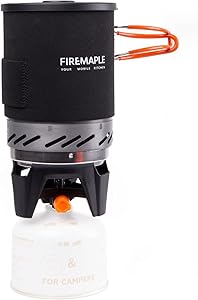
- Efficiency: Heat exchange technology reduces boiling times by up to 30%
- Weight: Only 18 oz, compact for backpacking
- Integrated System: Stove and 1L pot with built-in piezo ignitor
- Durability: Hard anodized aluminum pot with neoprene cover
The Fire-Maple Stove is a compact and highly efficient option for winter camping. Its heat exchange technology ensures quick boiling even in windy conditions, while the lightweight design makes it easy to carry on any outdoor adventure. The integrated stove and cooking pot system simplifies setup and cooking, with a built-in piezoelectric ignitor for instant flame. This stove is ideal for solo campers or small groups looking for a reliable, fast-heating option that fits neatly into a single pack.
Safety and durability are standout features. The hard anodized aluminum pot combined with a stainless steel locking handle and insulated neoprene cover ensures secure handling and long-term use. While a fuel canister is not included, it is compatible with most standard canisters. Using a windscreen will further improve performance in harsh weather. Overall, Fire-Maple delivers a dependable and lightweight stove for outdoor cooking in cold conditions.
Pros: Fast boiling, lightweight, integrated system, durable
Cons: Fuel canister not included, not compatible with Coleman canisters
2. AVOFOREST Hot Tent Stove

- Design: Detachable 7-section chimney for easy portability
- Material: High-quality iron body with stainless steel chimney
- Visual Glass: Observe flame and control burning rate
- Accessories: Comes with tongs, brushes, gloves, and drain screens
The AVOFOREST Hot Tent Stove is perfect for campers seeking warmth and convenience in cold environments. Its modular design allows easy assembly of the chimney to the desired height, while the visual glass window lets you monitor the fire inside the stove. Made from high-quality iron with stainless steel accents, this stove is built to last. Practical accessories like tongs, brushes, and gloves make it easy to manage and maintain the stove safely.
Setting up this stove in a winter tent provides both warmth and cooking capabilities. With adjustable dampers under the glass, you can control flame size and conserve wood. Before indoor use, ensure a thorough outdoor burn for safety. Once ready, this stove can help you enjoy hot drinks and meals during frigid nights, making it a reliable companion for cold-weather tent camping.
Pros: Modular design, durable materials, visual flame monitoring, useful accessories
Cons: Requires initial outdoor burn, assembly needed
See the AVOFOREST Hot Tent Stove
3. Coleman Triton
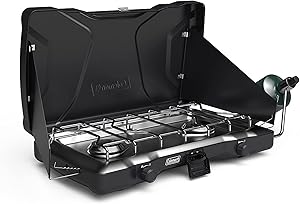
- Power: 22,000 BTU total output
- Burners: Two independently adjustable for precise cooking
- Wind Protection: Two wind guards for stable flame
- Portability: Compact with heavy-duty latch for easy transport
The Coleman Triton is a powerful and versatile stove ideal for winter camping. Its dual burners provide precise temperature control, letting you simmer, boil, or fry with ease. The stove produces 22,000 BTU, ensuring fast cooking even in cold conditions. With wind guards protecting the flame, you can cook outdoors without interruption. Its durable chrome-plated grate is easy to clean and maintain, making it convenient for repeated use.
This stove is lightweight and portable, designed for easy setup at campsites, picnics, or roadside adventures. The heavy-duty latch keeps it securely closed during transport. One 16 oz. propane cylinder provides up to an hour of high-heat cooking, although propane is sold separately. Coleman Triton combines power, reliability, and convenience, making it a trusted option for winter campers who need a consistent cooking solution.
Pros: Powerful burners, wind protection, precise control, easy to clean
Cons: Propane sold separately, slightly bulky for backpacking
4. BIG HORN OUTDOORS Butane Camping Stove
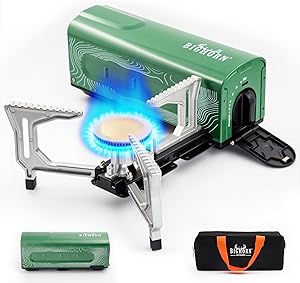
- Power Output: 2200W (7500 BTU) for rapid cooking
- Portability: Foldable, bucket-style compact design
- Flame Control: One-touch ignition with adjustable flame
- Durable Burner: Cast iron, copper, and aluminum for even heat
The BIG HORN OUTDOORS Butane Camping Stove is ideal for campers seeking a portable and powerful cooking solution. Its foldable bucket design allows easy storage and transport, making it perfect for backpacking, hiking, or emergency use. The stove delivers a strong 2200W output, capable of boiling 1 liter of water in just 3-5 minutes, reducing wait times during cold outdoor trips. The precise flame control allows simmering or high-heat cooking to suit various recipes.
The stove is designed for durability and safety, with a sturdy burner and non-slip pads for stable placement. Its high-quality materials ensure even heat distribution, and the SGS certification guarantees safe outdoor use. Lightweight yet powerful, this butane stove is a must-have for campers who need reliable, fast cooking in winter conditions without compromising on portability or efficiency.
Pros: Powerful output, portable design, durable burner, adjustable flame
Cons: Butane canisters sold separately, small cooking surface
See the BIG HORN OUTDOORS Butane Camping Stove
5. REDCAMP Wood Burning Folding Camp Stove
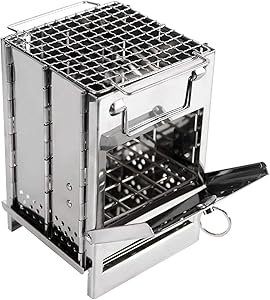
- Material: High-quality stainless steel construction
- Stability: Cuboid design with grid backing plate
- Fuel: Accepts twigs, leaves, and other natural fuel
- Portability: Foldable, lightweight, includes carry bag
The REDCAMP Wood Burning Folding Camp Stove is perfect for campers who prefer using natural fuels. Its stainless steel construction ensures stability and durability, while the cuboid design provides a reliable cooking platform. The stove accepts leaves, twigs, and small branches, making it easy to cook in the wilderness without carrying fuel. The foldable, lightweight design allows you to pack it easily for backpacking or car camping trips.
This stove is simple to use and maintain, providing a warm, functional cooking option for outdoor enthusiasts. It allows you to enjoy a traditional wood-burning experience while cooking meals on the go. The included carry bag enhances portability, making it a convenient addition to your winter camping gear. REDCAMP offers a reliable and efficient solution for cooking in remote areas where fuel access may be limited.
Pros: Uses natural fuel, stable design, foldable, durable
Cons: Requires wood, takes longer to start
See the REDCAMP Wood Burning Folding Camp Stove
6. YCDMLJC Portable Camping Stove

- Material: High-precision aluminum alloy
- Heat Output: 3000W for fast cooking
- Fuel Compatibility: Butane, propane, isobutane (EN 417 standard)
- Ignition: Piezoelectric method for easy start
The YCDMLJC Portable Camping Stove is an ultra-lightweight option for outdoor enthusiasts. Weighing only 0.24 pounds, it is easy to carry and fits neatly into a backpack. The stove produces a high heat output of 3000W, making it ideal for quick cooking in cold weather. It is compatible with various fuel types, giving you flexibility when camping in different locations. Its piezoelectric igniter ensures fast and easy startup without the need for matches or lighters.
Durability and safety are key features. The aluminum alloy construction is resistant to high temperatures and water, while the dual safety system secures the connection between gas cylinders and the stove. Its expandable cooking surface supports pots up to 8 inches in diameter, providing enough room for small meals. This portable stove is a reliable companion for camping, hiking, or emergency situations, offering convenience without compromising performance.
Pros: Lightweight, high heat output, multi-fuel compatible, easy ignition
Cons: Small cooking surface, not for large groups
See the YCDMLJC Portable Camping Stove
7. ODSD 2 Burner Camping Stove

- Burners: Two independently adjustable burners, 20,000 BTU total
- Portability: Folds to 10.63 × 9.06 × 5.12 in, 3.98 lbs
- Windproof: Built-in wind shield for stable flame
- Durability: Stainless steel burners with rust-resistant shell
The ODSD 2 Burner Camping Stove is a versatile option for campers who need dual-burner cooking in winter conditions. With 20,000 BTU output, it allows you to boil, fry, or grill efficiently. The built-in windproof shield protects the flame, ensuring consistent cooking even in breezy environments. Its dual burners offer flexibility, enabling simultaneous cooking of multiple dishes. The stove is ideal for family or group camping trips where quick, reliable outdoor cooking is essential.
This stove is lightweight and portable, with a folding design and included carry bag for easy transport. Its magnetic closure simplifies setup, while the coffee stand adds extra convenience. Durable stainless steel construction ensures longevity, making it a dependable stove for winter camping. Overall, the ODSD 2 Burner combines power, safety, and portability for efficient outdoor cooking.
Pros: Dual burners, windproof, portable, durable
Cons: Slightly heavier than single-burner stoves, propane sold separately
See the ODSD 2 Burner Camping Stove
8. SHINESTAR Portable Camping Stove

- Burners: Dual burners with 17,000 BTU total output
- Ignition: Two-step manual system, safe and reliable
- Construction: Stainless steel and aluminum, detachable grates
- Portability: Folds to 10.2″ × 9″ × 5″, includes carry bag
The SHINESTAR Portable Camping Stove is perfect for winter campers needing a compact yet powerful stove. Its dual burners deliver 17,000 BTU of heat, allowing simultaneous cooking of multiple dishes. The two-step manual ignition ensures safe and easy operation, while the stainless steel and aluminum build provides durability and easy cleaning. Detachable grates simplify maintenance after outdoor cooking sessions, making it a convenient and reliable option for extended trips.
This stove is highly portable, folding down into a compact size and including a carrying bag for easy transport. Its complete outdoor cook kit setup allows campers to quickly prepare meals, coffee, or hot drinks in cold conditions. The SHINESTAR stove combines efficiency, safety, and portability, making it an essential part of winter camping gear for both casual and experienced outdoor enthusiasts.
Pros: Dual burners, compact and foldable, durable, easy to clean
Cons: Requires propane canisters, slightly limited cooking surface
See the SHINESTAR Portable Camping Stove
How to Choose a Winter Camping Stove
Winter camping offers a serene, crystalline world few ever experience. But with the beauty comes a critical dependence on reliable gear, and perhaps nothing is more vital than your stove. Your summer backpacking stove will likely fail you in the cold. Choosing the right winter camping stove isn’t just about boiling water; it’s about safety, morale, and survival. This guide will walk you through the key considerations, fuel types, and features to ensure you stay hydrated and warm in the deepest freeze.
Understanding the Core Challenge: Cold vs. Stove Performance
Before comparing models, you must understand the enemy: physics. Most stoves are designed to operate in a range just above freezing. In winter, three major issues arise:
1. Fuel Vaporization Problems
Liquid-fuel stoves (like white gas) need to vaporize the fuel to burn. Canister stoves (using propane/isobutane mixes) rely on the vapor pressure inside the canister. Extreme cold drastically reduces vaporization and pressure, leading to weak flames or complete failure.
2. Reduced Canister Pressure
The popular isobutane canister stoves suffer immensely here. As temperatures drop, the pressure inside the canister plummets, making it hard to maintain a simmer and eventually impossible to light.
3. Freezing Winds and Heat Loss
Wind steals heat from your pot, making boiling times astronomically long and wasting precious fuel. A stove that can’t handle a breeze is useless in a winter landscape.
Fuel Type: The Fundamental Choice
Your fuel choice dictates nearly everything about your stove system. For winter, the options narrow significantly.
Liquid Fuel (White Gas) Stoves
These are the gold standard for serious winter camping. Models from MSR (like the XGK-EX or WhisperLite Universal) and Optimus are classics.
Pros: Unbeatable cold-weather performance. White gas burns hot and clean down to -40°F/-40°C. You can pump the fuel bottle to increase pressure, and the fuel itself is less affected by cold. You can also use other fuels like kerosene or auto gasoline in many models.
Cons: More complex operation: requires priming (pre-heating the stove), pumping, and occasional maintenance. Heavier and bulkier than canister stoves.
Isobutane Canister Stoves with Winter Workarounds
Standard canister stoves are not recommended for deep winter, but with specific strategies, they can be used near freezing or in milder winter conditions.
Pros: Extreme ease of use: no priming, fast setup, lightweight.
Cons: Severe performance drop below freezing. The fuel left in the canister can be wasteful.
Winter Tricks: Use a 4-season fuel mix (with more propane). Keep the canister warm in your jacket before use. Use a canister stove with a remote fuel line so you can invert the canister, allowing liquid fuel to flow to the burner (this requires a pre-heat tube). Never use a lightweight upright canister stove in true winter conditions.
Alcohol Stoves
Simple, silent, but generally impractical for core winter use due to very low heat output, long boil times, and high fuel consumption. Best left for summer or emergency backups.
Multi-Fuel Stoves
A subcategory of liquid fuel stoves that can burn a wide array of fuels (white gas, kerosene, diesel, unleaded gasoline). This is a major advantage for expedition-style trips or international travel where white gas may not be available.
Key Features for Winter Performance
Beyond fuel type, look for these essential features.
Pressure Regulator (for Liquid Fuel)
A good built-in pressure regulator maintains a consistent flame output regardless of fuel level or temperature, offering better simmer control and fuel efficiency.
Pre-Heat Tube (Critical for Canisters & Some Liquid)
This is a loop of metal tubing that passes the fuel line through the flame. For liquid stoves, it vaporizes the fuel. For remote-canister stoves, it allows you to run the canister inverted, feeding liquid fuel to the burner, which is essential for operation in the cold.
Stable Pot Support
Winter pots are often larger for melting snow. Look for wide, sturdy pot supports that can handle a large, heavy pot without tipping. A low center of gravity is crucial.
Wind Resistance
An integrated windshield or a stove designed to work with one is non-negotiable. It conserves fuel, reduces boil time, and prevents flame blowout. Never use a flimsy foil windshield with a canister stove, as it can reflect heat back and cause an explosion.
Reliable Ignition
While a built-in piezo igniter is convenient, always carry a backup mini lighter or waterproof matches in your pocket (not your pack) to ensure you can light the stove with numb fingers.
The Winter Camping Stove System: It’s More Than the Burner
Your stove is just one component. Think in terms of a system.
Pot and Heat Exchanger
A pot with a heat exchanger (like those from Jetboil or MSR Reactor) wraps fins around the pot to capture more heat. This dramatically increases efficiency and speed, which is critical when melting snow (a very fuel-intensive process).
Insulated Canister Sleeve
If using a canister system, a simple neoprene sleeve helps retain a bit of the canister’s warmth, slightly improving performance.
Stable Cooking Surface
Pack down a hard, level snow platform or use a insulated pad/piece of plywood to prevent your stove from sinking into the snow, which can cause tipping and will cool the canister or fuel bottle rapidly.
Making Your Decision: A Summary
To choose, honestly assess your winter camping goals.
For Occasional Trips Near Freezing (20-32°F / -7 to 0°C)
A remote-canister stove (like the MSR WindBurner or Soto WindMaster with remote adapter) used with a 4-season fuel mix and careful canister warming can suffice. Prioritize a system with excellent wind resistance.
For Dedicated Winter & Mountaineering (Below 20°F / -7°C)
A liquid fuel stove is the reliable choice. The MSR WhisperLite Universal or XGK-EX, or the Optimus Polaris Optifuel, are workhorses. Embrace the slight learning curve for unmatched dependability.
For Snow Melting and Basecamp Cooking
Efficiency is key. Consider a dedicated heat-exchanger system like the MSR Reactor (for canisters, best above 10°F) or a powerful liquid fuel stove paired with a large pot. Fuel consumption will be high, so plan accordingly.
Final Safety Checklist
Ventilation is Vital: Never cook in a sealed tent. Use a vestibule with vents open, or cook outside under a tarp. Carbon monoxide poisoning is a silent, deadly risk.
Test at Home: Practice assembling, priming, and lighting your stove in a safe environment before your trip.
Bring Extra Fuel: Melting snow uses 2-3 times more fuel than boiling water. Always overestimate.
Keep Fuel and Lighters Warm: Sleep with your fuel canister/bottle and ignition source in your sleeping bag (in a sealed bag, outside your inner tent for safety).
Choosing your winter stove is a balance of weight, convenience, and absolute reliability. When the temperature plummets and you’re relying on that stove for your next hot drink or meal, the investment in the right tool becomes priceless. Prioritize performance over grams, understand your system, and you’ll unlock the profound rewards of the winter wilderness.