
Best 50L Hiking Backpacks of 2026
Searching for the perfect hiking companion? A great 50L backpack balances space for multi-day trips with comfortable, easy-to-carry design. Our guide cuts through the clutter to bring you the top picks for every kind of hiker, from weekend adventurers to long-distance trekkers. We’ve done the heavy lifting, comparing features, fit, and value so you can find your ideal pack and hit the trail with confidence.
1. REI Co-op Flash Air

- Weight: 1 lb. 14 oz. (Medium)
- Frame Type: Internal Spring Steel
- Material: UHMWPE ripstop nylon
- Gear Capacity: 50 liters
The REI Co-op Flash Air 50 is a masterclass in ultralight engineering, designed for hikers who want to shed every possible ounce without sacrificing structure. By utilizing a spring steel frame and high-tech UHMWPE ripstop nylon, this pack remains incredibly light while providing the support needed for multi-day trips. It features a clean, top-loading design supplemented by eight exterior pockets for quick access to essentials.
On the trail, the Flash Air excels in efficiency. The material is bluesign approved, reflecting a commitment to sustainability alongside performance. While it lacks an included raincover, its specialized fabric offers decent initial resistance. It is best suited for seasoned backpackers who have already refined their kit down to a minimalist weight and require a streamlined, reliable vessel for their journey.
Pros: Extremely lightweight, durable ripstop fabric, sustainable materials.
Cons: No raincover included, limited padding for very heavy loads.
See the REI Co-op Flash Air See the Women’s Flash Air
2. Loowoko 50L Hiking Backpack
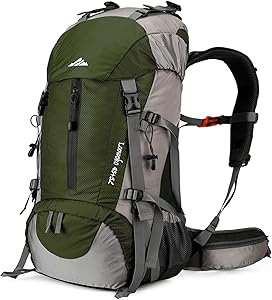
- Weight: 2.1 pounds
- Frame Type: No Internal Frame
- Capacity: 50 Liters
- Included: Waterproof Rain Cover
The Loowoko 50L is a versatile and budget-friendly option for outdoor enthusiasts who prefer a frameless, flexible carry. This upgraded version features reinforced straps and durable zippers, making it a reliable companion for 3-5 day adventures. The focus here is on comfort and ventilation, utilizing S-type shoulder straps and breathable mesh padding to help manage the load during steep climbs or long treks.
Organization is a standout feature of this pack, boasting a dedicated shoe compartment and six external pockets to keep your gear separated. The inclusion of a rain cover in the bottom pouch ensures that your valuables stay dry during unexpected downpours. It is an excellent choice for hikers who value organizational freedom and need a lightweight bag that meets most airline carry-on requirements.
Pros: Integrated rain cover, dedicated shoe compartment, very affordable.
Cons: Lacks rigid frame support, less ideal for heavy technical gear.
See the Loowoko 50L Hiking Backpack
3. Osprey Rook

- Weight: 3 lbs. 9.6 oz.
- Frame Material: Aluminum peripheral hoop
- Torso Fit: 18-22 inches (Adjustable)
- Material: 600D Recycled Polyester
The Osprey Rook 50 offers a straightforward, high-quality backpacking experience with a focus on ease of use and ventilated comfort. Featuring a suspended mesh back panel, it allows for maximum airflow between your back and the pack, which is vital for hiking in warmer climates. The aluminum frame provides a sturdy structure that transfers weight efficiently to the hips, making 50-liter loads feel much more manageable.
Durability is at the forefront with its 600-denier recycled polyester construction. The pack includes a dedicated sleeping bag compartment and a built-in raincover, ensuring you are prepared for varied terrain and weather conditions. It is a fantastic entry-point or reliable workhorse for backpackers who want the legendary Osprey carry quality without the complexity or high price tag of more technical models.
Pros: Highly breathable back panel, adjustable torso, robust durability.
Cons: Heavier than ultralight competitors, fewer exterior pockets.
See the Osprey Rook See the Women’s Renn
4. Esup 50L Hiking Backpack
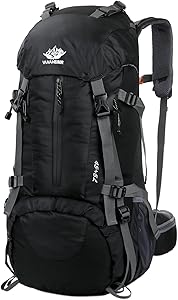
- Capacity: 50 Liters
- Material: Tear-resistant Polyester and Nylon
- Special Feature: Sleeping bag compartment
- Included: Waterproof Rain Cover
The Esup 50L Hiking Backpack is designed for multi-functional travel and short-duration wilderness adventures lasting between two and four days. Its design emphasizes external attachment flexibility, allowing users to easily secure sleeping mats, tents, or hammocks via adjustable straps. The high-quality tear-resistant fabric ensures that the pack can withstand the scratches and abrasions common on overgrown trails or rocky outcrops.
Comfort is maintained through the use of thickened S-type shoulder straps and sponge padding that helps distribute pressure. The pack includes a rain cover for added protection against moisture. While it serves well as a general-purpose outdoor bag, its strength lies in the variety of compartments that help beginners keep their gear organized and accessible throughout their trek.
Pros: Multiple gear attachment points, includes rain cover, budget-friendly.
Cons: Basic suspension system, limited information on frame rigidity.
See the Esup 50L Hiking Backpack
5. Osprey Atmos AG

- Weight: 4 lbs. 5 oz. (S/M)
- Frame: Aluminum peripheral hoop
- Access: Top, Side, and Bottom
- Technology: Anti-Gravity (AG) suspension
The Osprey Atmos AG 50 is widely regarded as one of the most comfortable heavy-load haulers on the market. The centerpiece is the Anti-Gravity suspension system, which uses a continuous piece of lightweight mesh from the top of the back panel down to the hipbelt. This creates a seamless fit that wraps the body, effectively making the weight of the gear feel significantly lighter and more balanced.
This pack is feature-rich, offering multiple access points including side zippers and a bottom sleeping bag compartment. The materials are high-tenacity recycled nylon, ensuring the pack can survive years of rugged use. For hikers who prioritize carrying comfort and organizational features over absolute weight savings, the Atmos AG remains the gold standard for mid-sized trekking packs.
Pros: Superior weight distribution, excellent ventilation, extremely durable.
Cons: Heaviest pack on the list, higher price point.
See the Osprey Atmos AG See the Women’s Aura AG
6. Osprey Atmos AG LT

- Weight: 4 lbs. (S/M)
- Frame Type: Lightwire Internal Frame
- Material: 210D Recycled Nylon
- Access: Top and Side
The Atmos AG LT 50 is the streamlined, “Light” version of the classic Atmos, designed for hikers who love the Anti-Gravity suspension but want a slightly simpler and lighter package. It retains the revolutionary suspended mesh back panel that provides an incredible fit and ventilation but reduces weight by simplifying the pocket configuration and utilizing lighter-weight materials where possible.
Despite being lighter, it doesn’t skimp on utility, offering side-zip access to the main compartment and an included raincover. The Lightwire frame provides excellent structure for 50-liter loads, making it a perfect middle ground between a heavy-duty hauler and a minimalist ultralight pack. It is ideal for those who want technical performance without the extra bulk of unnecessary straps or pockets.
Pros: Lighter than the standard Atmos, great ventilation, recycled materials.
Cons: No dedicated bottom compartment access, fewer exterior pockets.
See the Osprey Atmos AG LT See the Women’s Aura AG LT
7. Gregory Paragon

- Weight: 3 lbs. 9.6 oz. (M/L)
- Frame Material: Alloy steel and fiberglass
- Torso Fit: 18-22 inches (Adjustable)
- Access: Top, Bottom, and Side-zipper
The Gregory Paragon 50 is a highly versatile pack that balances a relatively low weight with a sophisticated suspension system. Using an alloy steel frame with a fiberglass cross-stay, it prevents “barreling” when overstuffed and ensures the load stays close to your center of gravity. The adjustable torso length and AirCushion mesh provide a customized fit that breathes well during high-exertion climbs.
This pack is an organizer’s dream, featuring seven exterior pockets and three different ways to access the main compartment. While it does not include a raincover, its build quality with high-density nylon makes it exceptionally rugged. It’s an excellent choice for backpackers who need a pack that can handle heavy loads comfortably while remaining light enough for fast-paced trips.
Pros: Excellent frame stability, multiple access points, highly adjustable.
Cons: Raincover not included, suspension can feel stiff to some.
See the Gregory Paragon 50 See the Women’s Kalmia
8. Maelstrom Hiking Backpack

- Capacity: 50 Liters
- Material: 210D Rip-stop Nylon
- Safety: Reflective signs and survival whistle
- Feature: Waterproof wet pocket
The Maelstrom Hiking Backpack is a feature-packed daypack designed for the modern adventurer who values organization and safety. Built from water-resistant 210D nylon, it includes unique touches like a waterproof wet pocket inside the main compartment for sweaty clothes and a chest buckle that doubles as a survival whistle. The ergonomic design focuses on reducing fatigue through thick padded back support.
This pack stands out for its unique functional designs, such as a headphone hole for music and specific fasteners for trekking poles. It is lightweight for its size and includes a reflective rain cover for visibility and protection. For hikers who enjoy having a specific place for every piece of gear, from water bladders to electronics, the Maelstrom provides exceptional value and utility.
Pros: Unique wet/dry separation, reflective safety features, affordable price.
Cons: Padding may be too bulky for some, less structural than framed packs.
See the Maelstrom Hiking Backpack
The Ultimate Guide to Choosing a 50L Hiking Backpack
Selecting the right backpack is perhaps the most critical decision a hiker can make. A 50-liter (50L) backpack occupies the “Goldilocks” zone of outdoor gear: it is large enough for a multi-day wilderness trek but compact enough to remain agile on technical terrain. Whether you are planning a weekend trip in the mountains or a week-long light-and-fast expedition, understanding the nuances of pack design will ensure your gear supports you rather than hinders you.
Understanding the 50L Capacity: Is It Right for You?
Before diving into technical specs, you must determine if 50 liters fits your hiking style. Typically, a 50L pack is designed for 2 to 4 nights in the backcountry. If you are an “ultralight” hiker with a highly compressible sleeping bag and a tiny stove, you might stretch a 50L pack to last a full week. Conversely, if you carry bulky winter layers or heavy photography equipment, 50L might feel tight even for a single overnight.
The beauty of the 50L size is its versatility. It forces a certain level of discipline in packing—encouraging you to leave unnecessary items behind—while providing enough volume to carry essential safety gear, food, and water. It also functions well as a heavy-duty daypack for winter summits where extra safety gear is mandatory.
The Foundation: Frame Types and Support
The frame is the skeleton of your backpack. Its primary job is to transfer the weight of your gear from your shoulders down to your hips, which are much better suited for carrying heavy loads over long distances.
Internal Frame Packs
Most modern 50L backpacks use internal frames. These usually consist of aluminum stays, a peripheral wire hoop, or a plastic framesheet hidden inside the back panel. Internal frames keep the load close to your center of gravity, making them ideal for “scrambling” or hiking on uneven trails where balance is paramount.
Frameless and Ultralight Designs
Some 50L packs are “frameless.” These are designed for hikers whose total gear weight (excluding food and water) is under 15 pounds. Without a rigid structure, these packs rely on your sleeping mat being rolled up inside to provide shape. While incredibly light, they require expert packing techniques and offer very little comfort if overloaded.
Suspension and Fit: The Key to Comfort
A backpack can have the best features in the world, but if it doesn’t fit your torso, it will be a source of constant pain. Comfort in a 50L pack is determined by three main components: the torso length, the hipbelt, and the shoulder straps.
Torso Length vs. Height
It is a common mistake to choose a pack based on your height. Instead, you must measure your torso length—the distance from your C7 vertebra (the bump at the base of your neck) to your iliac crest (the top of your hip bones). Many premium 50L packs offer adjustable torso lengths, allowing you to slide the harness up or down to find the perfect fit.
The Hipbelt: Your Primary Load Bearer
In a properly fitted 50L pack, roughly 80% of the weight should rest on your hips. Look for a hipbelt with dual-density foam—firm enough to support weight but soft enough to prevent “hot spots” or bruising. Some packs feature “pivoting” hipbelts that move with your natural gait, reducing the friction caused by the pack swaying as you walk.
Ventilation Systems
Sweaty backs are the bane of hikers. Many manufacturers now use suspended mesh back panels (often called “trampoline” backs). This design creates a gap between your back and the pack, allowing air to circulate. While excellent for cooling, these can sometimes shift the center of gravity slightly backward, so choose based on your local climate.
Materials and Durability
The fabric of your pack determines its weight and how well it stands up to abrasion from rocks and branches. Backpack materials are usually measured in “Denier” (D), which indicates the thickness of the fibers.
- Nylon and Ripstop: Standard for most packs. Ripstop nylon uses a special reinforcement technique that makes it resistant to tearing.
- Dyneema/UHMWPE: Found in high-end ultralight packs. It is incredibly strong and waterproof but comes with a much higher price tag.
- Polyester: Often used in budget-friendly packs. While heavy, it is durable and holds its shape well when wet.
Organizational Features and Access
How you get your gear out of the pack is just as important as how you put it in. A 50L pack usually offers one or more of the following access points:
Top Loading
The most traditional design. It features a “shroud” at the top secured by a lid (often called a “brain”). This is the most water-resistant and durable design because it has fewer zippers, which are common failure points. However, it can make finding items at the bottom of the pack difficult.
Front and Side Access
Many modern 50L packs include a U-shaped zipper on the front (panel loading) or a side zipper. This allows you to reach into the middle of your pack without dumping everything out on the ground—a lifesaver during a sudden rainstorm when you need your shell jacket quickly.
External Pockets and Attachment Points
External storage is vital for items you need throughout the day. Look for large mesh “shove-it” pockets on the front for wet rain flies or snacks. Hipbelt pockets are essential for phones, sunscreen, or a compass. Additionally, ensure the pack has “daisy chains” or tool loops if you plan on carrying trekking poles or an ice axe.
Hydration Compatibility
Almost all modern 50L backpacks are “hydration compatible,” meaning they have an internal sleeve for a water reservoir (bladder) and a port for the drinking tube. However, check the side water bottle pockets as well. They should be deep enough to hold a 1L bottle securely but positioned at an angle so you can reach them without taking the pack off.
Weight-to-Volume Ratio
When comparing 50L packs, look at the “base weight” of the pack itself.
- Heavy Duty (4+ lbs): Often features plush padding, many pockets, and a robust frame. Best for carrying 35+ lbs of gear.
- Standard (2.5 – 3.5 lbs): The sweet spot for most hikers. Good balance of comfort and weight.
- Ultralight (Under 2 lbs): Minimalist designs. Best for experienced hikers with very light gear.
Final Checklist Before Purchasing
Once you have narrowed down your choices, perform a “test drive.” If shopping in a store, load the pack with 20-25 pounds of weight. Walk around, go up and down stairs, and check for any pinching or rubbing.
Check the warranty. Brands like Osprey and Gregory offer excellent lifetime or long-term warranties. Since a backpack is an investment that should last a decade or more, having the peace of mind that a broken buckle or ripped seam can be repaired is invaluable.
Choosing the perfect 50L hiking backpack is a balance of science and personal preference. By focusing on your torso measurement, the weight of the gear you intend to carry, and the specific organizational features you need, you will find a companion that makes every mile on the trail feel a little bit lighter.