Best Budget Waterproof Hiking Boots of 2026
When hitting the trail, you shouldn’t have to drain your wallet to keep your feet dry. The best budget waterproof hiking boots prove that comfort, grip, and protection don’t require a hefty price tag. We’ve rounded top-rated options that balance affordability with reliable performance, ensuring you stay focused on the adventure ahead—not on soggy socks or a tight budget.
1. Merrell Moab 3 Mid

- Waterproofing: Merrell DRY membrane
- Outsole: Vibram TC5+
- Upper: Pig suede leather and mesh
- Weight: 2 lbs. 2.9 oz. (pair)
The Merrell Moab 3 Mid continues the legacy of being the “Mother of All Boots” by providing legendary out-of-the-box comfort. This latest generation features a more supportive insole and a softer, more cushioned midsole that reduces impact on rugged trails. The mid-height design offers reliable ankle protection for varied terrain.
Equipped with a Vibram TC5+ outsole, these boots deliver exceptional grip whether you are navigating wet rocks or dusty paths. The blend of pig suede and breathable mesh ensures durability without sacrificing ventilation. It remains a top choice for hikers seeking a reliable, waterproof companion that requires virtually no break-in period.
Pros: Immediate comfort, excellent traction, durable suede upper.
Cons: Slightly heavier than synthetic competitors.
See the Merrell Moab 3 See the Women’s Moab 3
2. Columbia Transverse Hike

- Waterproofing: Omni-Tech seam-sealed
- Midsole: Techlite lightweight cushioning
- Outsole: Omni-Grip non-marking rubber
- Construction: Leather and mesh upper
The Columbia Transverse Hike is engineered for hikers who face unpredictable weather and varied surfaces. Utilizing Omni-Tech technology, these boots provide a multilayered waterproof barrier that remains breathable, ensuring your feet stay dry during moderate rain or snow. The high-energy return of the Techlite midsole helps minimize foot fatigue during long treks.
Traction is handled by the Omni-Grip system, which features a strategic lug pattern designed for stability on rock, dirt, and gravel. The combination of durable leather and metal hardware suggests a build meant to last for many seasons. It is a versatile option for those who prioritize a lightweight feel and reliable wet-weather performance.
Pros: Excellent energy return, breathable waterproofing, durable hardware.
Cons: May require some break-in time for the leather.
See the Columbia Transverse Hike See the Women’s Transverse Hike
3. Salomon X Ultra 5 Mid GTX

- Waterproofing: GORE-TEX membrane
- Midsole: EnergyCell technology
- Outsole: All Terrain Contagrip
- Weight: 1 lb. 15 oz. (pair)
Salomon’s X Ultra 5 Mid GTX is a powerhouse designed for hikers who enjoy a fast pace on technical trails. The GORE-TEX lining provides industry-leading waterproof protection while allowing moisture to escape. These boots are specifically built to handle both steep ascents and tricky descents with a chassis that stabilizes the foot without restricting movement.
The EnergyCell midsole offers high-performance shock absorption, while the All Terrain Contagrip outsole ensures you stay upright on slippery or loose surfaces. Despite the rugged protection, the boots remain impressively lightweight. This model is perfect for those who want the agility of a trail runner with the stability and protection of a mid-height boot.
Pros: Very lightweight, superior GORE-TEX protection, aggressive grip.
Cons: Narrower fit may not suit all foot shapes.
See the Salomon X Ultra 5 See the Women’s X Ultra 5
4. NORTIV 8 Waterproof Hiking Boots
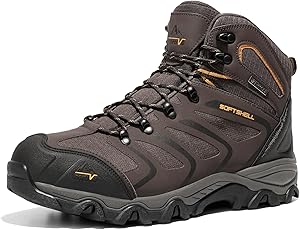
- Insole: Removable shock-absorbent cushioned
- Midsole: Lightweight flexible EVA
- Outsole: Non-slip rubber with advanced traction
- Style: Multi-activity outdoor design
NORTIV 8 delivers a highly versatile hiking boot that focuses on all-day comfort for a variety of outdoor activities. The combination of a shock-absorbent insole and a flexible EVA midsole works to reduce foot fatigue during long miles. These boots are designed to be a budget-friendly option for everything from mountain climbing to casual camping trips.
The high-quality rubber soles are engineered to be fully slip-proof, providing firm stability on challenging terrains like mud or wet rock. While they lean toward a more traditional outdoor style, their lightweight construction makes them suitable for daily work as well. This boot is an excellent entry-level choice for those seeking protection and comfort across multiple disciplines.
Pros: Highly affordable, flexible midsole, versatile for daily use.
Cons: Less technical features for extreme mountaineering.
See the NORTIV 8 Hiking Boots See the Women’s NORTIV 8 Boots
5. Altra Lone Peak 9 Mid

- Waterproofing: Waterproof bootie construction
- Midsole: Altra EGO foam
- Outsole: MaxTrac rubber
- Upper: Recycled polyester mesh
The Altra Lone Peak 9 Mid is a favorite among thru-hikers who value a natural foot shape and a lightweight feel. Featuring Altra’s signature wide toe box, these boots allow your toes to splay naturally, which is crucial for comfort on long-distance treks. The waterproof bootie construction ensures that your feet stay dry through creek crossings and rainy weather.
Underfoot, the Altra EGO foam provides a responsive yet cushioned ride, while the MaxTrac outsole offers the “sticky” grip needed for technical trails. Despite being a mid-height boot with ankle support, it maintains a nimble, trail-runner-like performance. It is an ideal choice for hikers who want environmental consciousness paired with high-performance features on the trail.
Pros: Natural foot shape toe box, eco-friendly materials, very responsive foam.
Cons: Zero-drop design may require an adjustment period.
See the Altra Lone Peak 9 See the Women’s Lone Peak 9
6. Columbia Newton Ridge Plus II

- Upper: Full-grain leather and mesh
- Midsole: Lightweight durable Techlite
- Outsole: Omni-Grip non-marking traction
- Hardware: Adjustable lace-up closure
The Columbia Newton Ridge Plus II combines a classic mountaineering aesthetic with modern waterproof technology. Built with full-grain leather and a breathable mesh tongue, it offers a secure and dry environment for your feet in treacherous conditions. The Techlite midsole is designed for long-lasting comfort, providing superior cushioning and high energy return for all-day adventures.
This boot excels in winter conditions thanks to its dual-zone tread pattern that ensures solid footing on ice and snow. The lace-up closure is highly adjustable, allowing for a customized fit that prevents slipping within the boot. It is a stylish yet durable option that transitions easily from a rugged trail to casual mountain town environments.
Pros: Classic leather look, excellent winter traction, very durable build.
Cons: Can feel warmer than full-mesh boots in summer.
See the Columbia Newton Ridge Plus II See the Women’s Newton Ridge Plus
7. Timberland White Ledge Mid
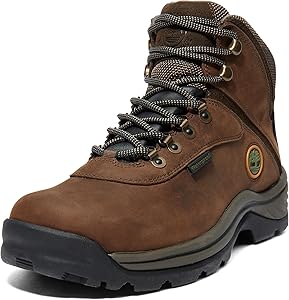
- Material: Waterproof Premium Timberland Leather
- Hardware: Rustproof speed lace hooks
- Lining: ReBOTL fabric
- Footbed: EVA midsole and footbed
The Timberland White Ledge Mid is a perennial favorite for those who prefer the protection and feel of a full-leather hiking boot. The premium leather upper is completely waterproof, and the gusseted tongue ensures that debris and water stay out of the boot. The rustproof speed lace hardware allows for quick adjustments and long-term durability in wet environments.
Inside, the ReBOTL fabric lining adds an eco-friendly touch, while the EVA footbed provides essential cushioning for the sole. These boots offer a rugged, timeless look without sacrificing the technical needs of a modern hiker. They are particularly well-regarded for their durability and their ability to keep feet dry in consistently muddy or wet trail conditions.
Pros: Premium leather quality, rustproof hardware, easy speed-lacing system.
Cons: Heavier than modern synthetic hiking boots.
See the Timberland White Ledge See the Women’s White Ledge
8. KEEN Targhee 2 Mid

- Waterproofing: KEEN.DRY breathable membrane
- Outsole: KEEN ALL-TERRAIN with 4mm lugs
- Support: External Support Shank
- Toe Protection: High abrasion rubber toe guard
The KEEN Targhee 2 Mid is built for hikers who need extra room and maximum protection. The iconic rubber toe guard protects against trail debris, while the KEEN.DRY membrane ensures your feet stay dry while still allowing sweat vapor to escape. Its wide, original fit gives toes plenty of space to spread out, which is ideal for preventing blisters on long hikes.
Stability is a core feature here, provided by an external support shank and a contoured heel that keeps the foot locked in place. The 4mm multi-directional lugs offer aggressive traction in mud and on rocky slopes. This boot is a heavy-duty choice for serious adventurers who require a stable platform and long-lasting, resilient cushioning on technical terrain.
Pros: Exceptional toe protection, roomy fit, very stable on rocky terrain.
Cons: Bulkier profile than some modern slim-fit hikers.
See the KEEN Targhee 2 See the Women’s Targhee 2
How to Choose Budget Waterproof Hiking Boots
Embarking on a wilderness adventure shouldn’t require a second mortgage. While high-end mountaineering boots can easily climb above $300, the modern outdoor market is saturated with high-quality, budget-friendly options that offer exceptional protection. Choosing the right pair involves balancing cost with technical features like membrane quality, traction, and fit.
When shopping on a budget, the goal is to find “value”—the intersection of durability and price. A $60 boot that falls apart after three hikes is far more expensive than a $120 boot that lasts five years. This guide will break down exactly what to look for to ensure your feet stay dry and comfortable without breaking the bank.
Understanding Waterproof Technology on a Budget
The most expensive component of a premium boot is often the waterproof membrane. While industry leaders like GORE-TEX are the gold standard, many budget brands use proprietary technologies to lower the price point.
Proprietary vs. Name-Brand Membranes
Cheapest boots often utilize “house-brand” waterproof membranes such as Columbia’s Omni-Tech, Merrell’s M-Select DRY, or KEEN.DRY. These are generally highly effective for day hiking and moderate rain. They work on the same principle: a microscopic pore structure that is small enough to block liquid water droplets but large enough to allow sweat vapor to escape.
Construction Matters
Waterproofing isn’t just about the fabric; it’s about the construction. Look for “bootie construction” or “seam-sealed” designs. In these models, the waterproof layer is essentially a sock tucked inside the boot’s outer shell. If a boot is only “water-resistant,” it likely relies on a chemical coating (DWR) rather than a physical barrier, which will eventually fail in heavy rain.
Material Choices: Leather vs. Synthetic
The material of the upper part of the boot dictates its weight, breathability, and how much “break-in” time you will need. In the budget category, you will usually choose between two main types.
Synthetic and Mesh
Most affordable modern hikers are made from polyester, nylon, and “synthetic leather.” These materials are lighter and usually more comfortable right out of the box. Because they are porous, they rely entirely on the internal waterproof membrane to keep water out. The downside is that once the outer fabric gets soaked, the boot can become heavy and slow to dry.
Suede and Nubuck Leather
Budget leather boots are often made from suede or nubuck (sanded leather). Leather is naturally more water-repellent than mesh and offers better protection against “abrasion”—the scrapes from rocks and thorny bushes. However, leather boots are heavier and can feel quite warm in the summer, which may lead to sweaty feet regardless of how waterproof the boot is.
The Importance of Traction and Outsoles
A waterproof boot is useless if you are constantly slipping on wet surfaces. In the budget sector, you may not always see the yellow Vibram logo, but you can still find excellent traction by inspecting the lug pattern.
Lug Depth and Spacing
Check the bottom of the boot. Lugs are the “teeth” of the tread. For hiking on muddy or loose trails, look for lugs that are at least 4mm to 5mm deep. Deep, widely spaced lugs are better at “self-cleaning,” meaning they shed mud as you walk rather than letting it cake into a smooth, slippery surface.
Rubber Compounds
Cheaper boots sometimes use harder rubber compounds to increase the lifespan of the sole. While this makes the boot last longer, hard rubber can be slippery on wet rock. If possible, feel the rubber with your thumb; it should have a slight “tackiness” or “grip” rather than feeling like hard plastic.
Support and Midsole Comfort
Bufget boots often cut costs in the midsole—the layer between the tread and your foot. This is where your comfort and joint health are determined. Most budget boots use EVA (Ethylene Vinyl Acetate) foam.
EVA vs. PU Midsoles
EVA is the lightweight, “squishy” foam found in running shoes. It provides great initial comfort but can compress over time. PU (Polyurethane) is firmer and lasts longer but is typically found in more expensive, heavier boots. On a budget, a thick EVA midsole is usually the best bet for day hiking comfort.
Shanks and Stability
Even a budget boot should have a “shank”—a thin piece of nylon or plastic sandwiched in the midsole. This provides longitudinal stiffness so the boot doesn’t wrap around every rock you step on, which prevents “foot fatigue.” You can test this by trying to bend the boot in half; it should be stiff through the arch and only flex at the ball of the foot.
Finding the Right Fit
No amount of technology can fix a boot that doesn’t fit your foot shape. When shopping for budget options, keep these three rules in mind:
- The Thumb Rule: There should be about a thumb’s width of space between your toes and the front of the boot. Your feet will swell during a long hike, and you need that extra room to prevent your toes from hitting the front on steep descents.
- Heel Lock: Your heel should not lift significantly when you walk. If your heel rubs up and down, you will develop blisters, regardless of how “cushioned” the boot is.
- Try them on late: Always try on boots in the afternoon or evening when your feet are at their largest.
Maintenance: Making Budget Boots Last
To get the most out of an inexpensive waterproof boot, you must maintain the “Direct Water Repellency” (DWR) coating on the outside. Even if the boot has a waterproof membrane, if the outer fabric becomes “wetted out” (saturated), the boot loses its breathability, and your feet will get wet from your own sweat.
Cleaning and Proofing
After a muddy hike, rinse your boots with plain water and a soft brush. Once or twice a season, apply a spray-on waterproofing treatment specifically designed for footwear. This keeps water “beading” off the surface, protecting the internal membrane and keeping the boots lightweight.
Conclusion: Setting Realistic Expectations
When choosing cheap waterproof hiking boots, recognize that you are often trading off some breathability and long-term durability for a lower price. However, for the average weekend hiker, a $80 to $120 boot from a reputable brand like Merrell, Columbia, or Timberland is more than enough to handle the trail. Focus on the lug depth for safety, the membrane for dryness, and the fit for comfort. By following these guidelines, you can hit the trails with confidence, knowing your gear is up to the task without having overspent on features you might not need.