Best Hiking Boots for Ankle Support of 2026
Finding the right boots can make or break your hike, especially if you have weak ankles. We tested the top hiking boots designed specifically for ankle support. Our goal was to find the best balance of stability, comfort, and durability. Whether you are planning a short day trip or a long backpacking adventure, here are our top recommendations for boots that will keep you steady and protected on the trail.
1. Merrell Moab 3 Mid

- Waterproofing: Merrell DRY membrane
- Upper: Pig suede leather and mesh
- Outsole: Vibram TC5+ rubber
- Weight: 2 lbs. 2.9 oz. per pair
The Merrell Moab 3 Mid stays true to its reputation as a reliable, comfort-focused hiking boot. Right out of the box, it feels broken in, with a supportive insole and a cushioned midsole that absorbs impact well on rocky or uneven terrain. The Super Rebound Compound helps reduce fatigue over long miles, making it a dependable choice for day hikes and light backpacking trips.
The pig suede and mesh upper balances durability with breathability, while the Merrell DRY membrane keeps moisture out during wet hikes. Underfoot, the Vibram TC5+ outsole provides confident traction on dirt, gravel, and light mud. Although slightly heavier than some modern synthetic options, it offers a stable, supportive ride that many hikers appreciate for moderate trails and mixed conditions.
Pros: Excellent step-in comfort, strong arch support, dependable traction.
Cons: Slightly heavy, suede needs care after muddy hikes.
See the Merrell Moab 3 Mid See the Women’s Moab 3 Mid
2. NORTIV 8 Waterproof Hiking Boots
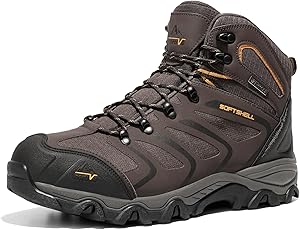
- Midsole: Flexible EVA foam
- Insole: Removable cushioned insert
- Outsole: Non-slip rubber
- Design: Outdoor and work ready
The NORTIV 8 Waterproof Hiking Boots are built for hikers who want solid performance at an affordable price. The lightweight EVA midsole offers flexibility and comfort, helping reduce foot fatigue during long walks or workdays. Combined with a cushioned, shock-absorbent insole, the overall feel is supportive enough for casual hikes and everyday outdoor use.
The rubber outsole provides reliable grip on dirt paths, light mud, and uneven ground. While the waterproofing handles light rain and damp trails, it may struggle in heavy downpours or deep puddles. The versatile styling makes them suitable for hiking, yard work, or travel. They are not as rugged as premium brands, but they deliver good value and comfort for beginners or budget-conscious hikers.
Pros: Budget-friendly, lightweight feel, versatile use.
Cons: Moderate durability, waterproofing best for light moisture.
See the NORTIV 8 Hiking Boots See the Women’s NORTIV 8 Boots
3. Columbia Transverse
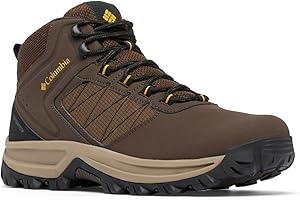
- Waterproofing: Omni-Tech seam-sealed
- Midsole: Techlite lightweight foam
- Outsole: Omni-Grip rubber
- Upper: Leather and mesh
The Columbia Transverse combines classic hiking style with modern waterproof technology. Its Omni-Tech construction provides breathable protection in wet weather, making it suitable for rainy trails or damp conditions. The leather and mesh upper offers a balance of durability and airflow, while the padded collar adds comfort around the ankle.
Underfoot, the Techlite midsole absorbs shock effectively, helping reduce strain during long descents. The Omni-Grip outsole performs well on mixed terrain, including gravel and packed dirt. The fit can feel slightly narrow for some hikers, but overall it delivers a lightweight and responsive ride. It is a dependable three-season boot for day hikes and light backpacking adventures.
Pros: Good breathability for waterproof boot, lightweight cushioning, solid grip.
Cons: Narrow fit, outsole lugs wear faster on pavement.
See the Columbia Transverse See the Women’s Transverse
4. Salomon X Ultra 5 Mid GORE-TEX

- Waterproofing: GORE-TEX membrane
- Outsole: All Terrain Contagrip
- Midsole: EnergyCell EVA
- Weight: 1 lb. 15 oz. per pair
The Salomon X Ultra 5 Mid GORE-TEX is designed for hikers who move fast and demand agility on technical trails. It feels closer to a trail running shoe than a traditional boot, offering flexibility and a lightweight build without sacrificing ankle support. The updated chassis improves lateral stability, helping you stay confident on uneven ground and steep descents.
The GORE-TEX membrane keeps water out while allowing internal moisture to escape, making it suitable for wet climates and unpredictable weather. Underfoot, the EnergyCell midsole absorbs shock effectively, while the All Terrain Contagrip outsole grips well on rock, dirt, and loose gravel. The fit runs snug, especially for wider feet, but for many hikers, the precise feel enhances control on challenging terrain.
Pros: Lightweight and agile, excellent waterproofing, strong traction.
Cons: Snug fit, synthetic upper feels stiff at first.
See the Salomon X Ultra 5 See the Women’s X Ultra 5
5. Altra Lone Peak Hiker 3

- Upper: Suede construction
- Midsole: Altra EGO foam
- Outsole: MaxTrac rubber
- Weight: 1 lb. 7.8 oz. per pair
The Altra Lone Peak Hiker 3 is built for hikers who prioritize natural foot positioning and lightweight performance. Its zero-drop platform promotes a balanced stride, while the roomy toe box allows toes to spread comfortably on long descents. The Altra EGO midsole feels responsive yet cushioned, offering enough protection for rocky trails without feeling overly stiff.
The suede upper adds durability and a clean look that transitions easily from trail to town. Despite its mid-height design, it remains impressively light, making it a great option for fast hikers or weekend backpackers. The MaxTrac outsole provides reliable grip on dirt and rock, though it is not waterproof. Those new to zero-drop footwear may need time to adjust.
Pros: Wide toe box, very lightweight, responsive cushioning.
Cons: Not waterproof, adjustment period for zero-drop design.
See the Altra Lone Peak Hiker 3 See the Women’s Lone Peak Hiker 3
6. La Sportiva Nucleo High II GTX

- Waterproofing: GORE-TEX SURROUND
- Upper: Nubuck leather
- Outsole: Vibram Nano XS-Trek
- Support: Polypropylene stiffener
The La Sportiva Nucleo High II GTX is aimed at serious backpackers who need durability and technical performance. Its GORE-TEX SURROUND technology offers impressive breathability while maintaining full waterproof protection, making it suitable for long treks in changing mountain conditions. The nubuck leather upper resists abrasion from rocks and rough terrain.
A supportive midsole with a polypropylene stiffener provides stability when carrying heavier packs. The Vibram Nano XS-Trek outsole grips confidently on varied surfaces, from rocky trails to muddy sections. The boot feels sturdy and protective, though it requires a break-in period. With resoling capability, it is a long-term investment for dedicated hikers.
Pros: Excellent breathability, premium materials, resolable design.
Cons: Expensive, stiff until broken in.
See the La Sportiva Nucleo High II See the Women’s Nucleo High II
7. Asolo Falcon EVO GV

- Waterproofing: GORE-TEX Extended Comfort
- Upper: Suede and nylon
- Outsole: Vibram Megagrip
- Weight: 2 lbs. per pair
The Asolo Falcon EVO GV blends traditional craftsmanship with modern performance. The suede and high-tenacity nylon upper keeps weight manageable while maintaining durability for rugged trails. Its GORE-TEX Extended Comfort lining works well in warm conditions, offering breathable waterproof protection during three-season hikes.
The Vibram Megagrip outsole stands out for traction on wet rock and loose terrain. A dual-density EVA midsole cushions impact, and the supportive frame enhances stability without adding bulk. The fit leans narrow, which may not suit all foot shapes. However, for hikers seeking precision and quality construction, it delivers reliable performance.
Pros: Excellent grip, lightweight feel, quality build.
Cons: Narrow fit, premium price.
See the Asolo Falcon EVO GV See the Women’s Falcon EVO GV
8. KEEN Targhee IV

- Waterproofing: KEEN.DRY membrane
- Midsole: Luftcell polyurethane
- Outsole: High-traction TPU
- Weight: 2 lbs. 8.6 oz. per pair
The KEEN Targhee IV is built for hikers who value durability and extra room in the toe box. Its wide forefoot design allows natural toe splay, which can reduce pressure during long hikes. The Luftcell midsole provides cushioning that resists compression over time, maintaining comfort on extended trips.
The KEEN.DRY membrane keeps feet protected from rain and muddy trails, while the aggressive TPU outsole grips well on loose soil and gravel. It is heavier than many modern boots, but the sturdy build and protective design make it suitable for carrying heavier loads. The bulkier feel may limit precision on technical terrain.
Pros: Wide toe box, durable cushioning, strong protection.
Cons: Heavier build, less precise on rocky terrain.
See the KEEN Targhee IV Mid See the Women’s Targhee IV Mid
The Ultimate Guide to Choosing Hiking Boots for Ankle Support
For many outdoor enthusiasts, the difference between a triumphant summit and a painful trek back to the trailhead lies in a single piece of gear: the hiking boot. While weight, waterproofing, and traction are vital, ankle support remains one of the most discussed and sought-after features in outdoor footwear. Ankle injuries are among the most common mishaps on the trail, often caused by rolling the foot on loose scree or uneven roots. Choosing the right boot involves understanding the mechanics of your own stride, the demands of the terrain, and the specific structural components that turn a simple shoe into a protective fortress for your joints.
Understanding the Mechanics of Ankle Support
It is a common misconception that ankle support is solely about “locking” the ankle in place. In reality, effective support is about providing stability and feedback. High-cut boots create a physical barrier that prevents the joint from reaching an extreme angle during a roll, but they also provide proprioceptive feedback. This means the pressure of the boot against your skin alerts your brain to your ankle’s position, allowing your muscles to react faster to a slip.
Proprioception and Stability
Proprioception is your body’s ability to sense its movement and position in space. When you wear a boot that wraps snugly around the ankle, the constant sensory input helps you maintain balance. A stiff sole also contributes to this stability; if the bottom of the boot doesn’t twist (torsional rigidity), the ankle is less likely to be forced into a compromising position. Therefore, support is a holistic combination of the upper material and the internal structure of the sole.
Key Features to Look For
When shopping for boots specifically for ankle stability, you must look beyond the height of the collar. Several internal and external components work in tandem to protect your lower leg.
The Height of the Collar
Hiking footwear is generally categorized into low, mid, and high cuts. For maximum ankle support, high-cut boots are the standard. These extend well above the ankle bone, providing a physical brace and protection against debris. Mid-cut boots offer a compromise, providing some lateral stability while allowing for more agility and a lighter overall weight. If you are prone to rolling your ankles or carrying a heavy pack, the high-cut design is usually the safest bet.
Torsional Rigidity and Shanks
Turn a boot upside down and try to twist the toe and heel in opposite directions. A boot with good ankle support should resist this twisting. This is achieved through “shanks”—long, thin inserts made of nylon or steel hidden in the midsole. By preventing the boot from twisting on uneven rocks, the shank ensures that your foot remains on a level plane, which in turn prevents the ankle from being tugged to the side.
The Heel Counter
The heel counter is the stiff plastic or composite insert inside the rear of the boot that cups your heel. A firm heel counter is essential for ankle support because it locks the back of the foot in place. If your heel is sliding around inside the boot, your ankle is significantly more vulnerable to injury. When testing a boot, ensure there is no “heel lift” when you walk up an incline.
Matching Boots to Your Terrain
Not every hiker needs the stiffest, tallest boot available. The level of support required depends heavily on where you plan to walk and what you plan to carry.
Moderate Trails and Day Hiking
If you primarily stick to well-maintained dirt paths with occasional roots, a mid-cut boot with moderate flexibility may be sufficient. These boots are often made of synthetic materials or split-grain leather, offering a shorter break-in period and better breathability. They provide enough “awareness” for the ankle without being restrictive.
Technical Terrain and Off-Trail Exploration
For those who venture into “scree fields,” talus slopes, or muddy backcountry routes, a heavy-duty backpacking boot is necessary. These boots usually feature full-grain leather uppers and high collars. The stiffness is a benefit here, as it allows the boot to take the brunt of the impact rather than your tendons and ligaments.
Load-Bearing Considerations
The weight of your backpack is a major factor. Every pound you add to your back increases the downward force on your ankles. If you are a multi-day backpacker carrying 30 pounds or more, the increased stability of a high-cut, rigid boot is non-negotiable. It helps compensate for the fatigue that naturally sets in after miles of carrying a heavy load.
The Importance of Proper Fit and Lacing
The best boot in the world will fail to support your ankle if it doesn’t fit correctly or isn’t laced properly. A gap between the boot collar and your leg renders the “support” useless.
Volume and Width
Your foot should feel snug but not pinched. Pay attention to the “volume” of the boot—the amount of space inside. If there is too much room, your foot will slide, leading to instability. Conversely, if the boot is too tight, it can restrict blood flow and lead to cold feet or cramping. Always shop for boots in the afternoon, as feet tend to swell throughout the day.
Lacing Techniques for Stability
Most supportive boots feature “locking hooks” at the top of the foot. These allow you to tension the lower part of the boot differently than the ankle. To maximize support, use a “heel lock” or “surgeon’s knot” to pull your heel into the back of the boot. When you reach the ankle collar, ensure the laces are tight enough to provide a firm wrap, but flexible enough to allow for the forward lean required for climbing hills.
Common Myths About Ankle Support
There are several misconceptions that can lead hikers to make the wrong purchase. Addressing these helps in making a more informed decision.
Myth: Stiff Boots Weaken Your Ankles
Some argue that wearing supportive boots will make your muscles “lazy.” While it is true that trail runners allow for more natural muscle engagement, boots are protective equipment. On a long trek with a heavy pack, your muscles will inevitably fatigue; the boot acts as a secondary support system when your body can no longer stabilize itself. You can strengthen your ankles through exercises at home while still wearing protective boots on dangerous terrain.
Myth: Only Heavy Boots Provide Support
Modern materials have changed the game. Many contemporary boots use TPU (thermoplastic polyurethane) frames and high-tenacity synthetics to provide incredible stiffness without the weight of old-school leather “clunkers.” Do not judge a boot’s support solely by its weight on the scale.
Conclusion and Final Tips
Choosing hiking boots for ankle support is a personal journey that requires a balance between protection, comfort, and the specific demands of your adventures. Always prioritize a boot that locks your heel in place and offers torsional rigidity. Remember that a boot is part of a system; pairing it with high-quality wool socks and perhaps even aftermarket insoles can further enhance the fit and stability.
Before committing to a long-distance trip, wear your new boots around the house and on short local walks. This allows the materials to soften slightly and ensures that the support system aligns with your unique anatomy. By investing the time to find the right footwear, you aren’t just buying a pair of boots—you are buying the confidence to explore the rugged beauty of the great outdoors safely.