Best Tents for Hot Weather of 2026
When the sun is blazing, camping can feel more like an oven if you don’t have the right shelter. That’s why picking a tent made for hot weather is a game changer. The best models use lots of mesh for airflow, special fabrics to block UV rays, and dark materials that keep sunlight out. In this article, we’ll break down the top tents that stay cool, breezy, and comfortable, so you can actually enjoy sleeping outdoors on warm summer nights.
1. REI Co-op Trailmade 2

- Sleeping Capacity: 2-person
- Minimum Trail Weight: 4 lbs. 10 oz.
- Floor Dimensions: 88 x 52 inches
- Pole Material: Aluminum
The REI Co-op Trailmade 2 is an excellent entry point for aspiring backpackers who want a reliable, user-friendly shelter. This 3-season tent features a straightforward two-pole aluminum design that makes setup a breeze, even for beginners. It provides a comfortable interior for two people and includes a footprint, which is a significant value add that extends the life of the floor.
With two doors and two vestibules, each camper has their own dedicated entry and gear storage space, preventing the need to crawl over a partner. The 75-denier polyester construction offers solid durability against the elements. It strikes a great balance between weight and livability, making it a dependable choice for those looking to explore the backcountry without breaking the bank.
Pros: Includes footprint, durable aluminum poles, and dual-door convenience.
Cons: Slightly heavier than premium ultralight models.
See the REI Co-op Trailmade 2 See the REI Co-op Trailmade 1
2. Kelty Wireless 2

- Sleeping Capacity: 2-person
- Floor Area: 30.2 square feet
- Number of Doors: 2 doors
- Pole Material: Fiberglass
The Kelty Wireless 2 is a sturdy freestanding tent designed for 3-season camping with a focus on interior space and air circulation. Its standout dual-door and dual-vestibule layout ensures that both occupants have their own entrance and plenty of room to store boots and packs. The no-see-um mesh canopy provides exceptional ventilation, making it ideal for warm summer nights.
Built with 68-denier polyester, this tent offers a great balance of durability and value for the price. While the fiberglass poles make it a bit heavy for long-distance backpacking, the intuitive three-pole design creates a consistent peak height for comfortable sitting. It is a reliable choice for car camping or short weekend treks where a bit of extra weight is a fair trade for comfort.
Pros: Great ventilation, dual entry points, and generous storage.
Cons: Fiberglass poles are heavier and less durable than aluminum.
See the Kelty Wireless 2P 4P 6P 8P
3. UNP Tents 6 Person

- Sleeping Capacity: 6-person
- Floor Area: 90 square feet
- Peak Height: 78 inches
- Packaged Weight: 18 lbs
The UNP 6-Person tent is a massive family shelter designed for maximum comfort at the campsite. With a massive 90 square foot floor plan, it easily accommodates two queen air mattresses with room to spare. The most impressive feature is the 78-inch peak height, which allows most adults to stand fully upright throughout the interior, making changing clothes much easier.
Stability is handled by four steel leg poles that create a windproof, rectangular roof design. The tent excels in airflow, featuring five mesh windows and a large mesh door to keep the interior cool. Despite its size, a team of two can have it pitched in about five minutes. It is an ideal home base for family car camping trips where vertical space is a top priority.
Pros: Tall standing height, massive floor space, and superior ventilation.
Cons: Large packed size and weight make it unsuitable for hiking.
4. Kelty Daydreamer 4P

- Sleeping Capacity: 4-person
- Floor Area: 56.7 square feet
- Peak Height: 61 inches
- Rainfly Fabric: 75-denier polyester/5,000 mm
The Kelty Daydreamer 4P is a high-quality 3-season tent that emphasizes weather protection and long-term durability. It features a robust rainfly with a 5,000 mm Twilight Tech coating, which is significantly higher than many entry-level models. This ensures your group stays dry even during heavy downpours. The 61-inch peak height provides a nice sense of openness for a four-person group.
The tent uses 75-denier floor fabric, which is particularly rugged and resistant to punctures. While it only has a single door, the nearly 18 square foot vestibule provides a dedicated space for muddy gear. This freestanding shelter is a fantastic middle-ground for families who want a durable tent that can handle more serious rain conditions than a standard budget dome.
Pros: High waterproof rating, durable floor, and good peak height.
Cons: Single door can be inconvenient for four occupants.
5. Coleman Skydome 4

- Sleeping Capacity: 4-person
- Floor Area: 56 square feet
- Vestibule Area: 28 square feet
- Packaged Weight: 13 lbs. 2.4 oz.
The Coleman Skydome 4 is designed for campers who want easy setup and massive storage capacity. The Skydome architecture features nearly vertical walls, providing 20% more headroom than traditional dome tents. Its most notable feature is the huge 28 square foot vestibule, which creates a covered porch area perfect for keeping gear dry or storing shoes outside the sleeping area.
This tent is built with flame-retardant materials and uses PFAS-free water repellents, making it a safer and more eco-friendly choice. The pre-attached poles allow for a faster setup than many competitors in its class. While it is relatively heavy, it is a sturdy and dependable option for weekend campers who value extra space and a quick, frustration-free pitching process.
Pros: Massive vestibule, increased headroom, and very simple setup.
Cons: Heavy weight and lower waterproof rating on the fly.
6. Kelty Discovery Basecamp 4

- Sleeping Capacity: 4-person
- Floor Area: 53 square feet
- Packaged Weight: 8 lbs. 8 oz.
- Number of Poles: 3
The Kelty Discovery Basecamp 4 is an excellent entry-level tent for those who need a lightweight 4-person shelter. At just 8 lbs. 8 oz., it is significantly lighter than many of its peers, making it easy to carry from the car to the campsite. The 58-inch peak height and three-pole configuration provide a stable structure with enough room for a small family.
Constructed with durable 68-denier polyester, it offers a reliable balance of weight and toughness. A specialized brow pole helps pull the side walls outward, maximizing the usable interior living space. This tent is best suited for fair-weather campers who want a straightforward, no-frills setup that provides reliable protection without adding excessive bulk to their camping gear collection.
Pros: Very lightweight for a 4-person tent and easy to pack.
Cons: Lacks a vestibule and only features one door.
See the Kelty Discovery Basecamp 4
7. Amazon Basics 3-Season Dome Camping Tent

- Capacity: 2-Person dome design
- Material: 100% Water-resistant coated polyester
- Setup Time: Approximately 4 minutes
- Storage: Interior mesh pocket
The Amazon Basics 3-Season Dome Tent is an entry-level powerhouse for hikers seeking simplicity and affordability. Its free-standing structure utilizes shock-corded poles with snag-free sleeves, allowing for a stress-free setup that takes less than four minutes. The welded seams and water-resistant polyester coating provide a reliable barrier against light rain during fair-weather camping trips.
Ventilation is handled by a removable rainfly and a dedicated cool-air port that maintains airflow even when the fly is attached. The interior includes a mesh storage pocket to keep essentials organized, and the compact carry bag ensures easy portability. While it can fit two people, it functions best as a spacious solo shelter with plenty of room for gear.
Pros: Very fast assembly, effective cool-air port, and very affordable.
Cons: Tight fit for two large adults; best for light rain.
See the Amazon Basics 3-Season Dome Camping Tent
8. BISINNA Lightweight Backpacking Tent
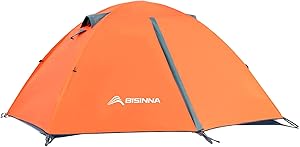
- Pole Material: 7001 Space aluminum alloy
- Waterproofing: PU2000mm rainfly
- Number of Doors: 2 D-shaped doors
- Design: Double-layer backpacking tent
The BISINNA backpacking tent stands out for its high-quality 7001 aluminum poles, which offer a superior strength-to-weight ratio compared to fiberglass. This double-layer tent is perfect for 3-season use, featuring a breathable mesh inner tent and a PU2000mm waterproof rainfly. The two-door design is a major convenience, allowing occupants to exit without disturbing their partner.
Setup is incredibly intuitive, and even a solo traveler can have it pitched in under ten minutes. The inclusion of ten alloy pegs and wind ropes ensures the structure remains stable during breezy conditions. Its small packed size makes it an ideal companion for hiking or bikepacking expeditions where every inch of pack space is vital for a successful trip.
Pros: Durable aluminum poles, dual-door access, and excellent condensation control.
Cons: Aluminum stakes can bend; limited vestibule storage.
See the BISINNA Lightweight Backpacking Tent
9. Happy Travel 4-Person Dome Tent

- Peak Height: 61-inch center height
- Material: 190T Polyester with PU3000mm
- Features: Electrical access port
- Ventilation: Large mesh top
The Happy Travel dome tent is built with vertical space in mind, offering 20% more headroom than standard domes. This makes it a fantastic choice for small families who want to fit a queen-size air mattress without feeling cramped. The PU3000mm waterproof coating on the rainfly provides impressive protection, while the thickened PE bottom ensures a dry floor.
Beginners will appreciate the clip-style setup, which allows two people to pitch the tent in about three minutes. An integrated electrical access port is a thoughtful touch for those using outdoor fans or chargers. The massive mesh ceiling provides excellent views for stargazing when the fly is removed, ensuring heat is quickly vented during warm summer nights.
Pros: Spacious 61-inch height, high waterproof rating, and easy clip setup.
Cons: Fiberglass poles are slightly heavy; mesh can be chilly in fall.
See the Happy Travel 4-Person Dome Tent
10. Coleman Sundome 2
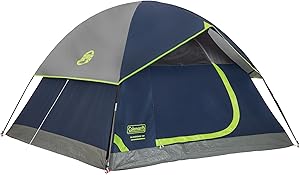
- Frame: Wind-responsive fiberglass
- System: WeatherTec welded floors
- Dimensions: 7 x 5 feet
- Ventilation: Ground vent and large windows
This version of the Coleman Sundome is optimized for couples or solo travelers who need a compact, navy-colored shelter. It features the proprietary WeatherTec system to keep moisture at bay during passing storms. The 7×5 foot floor plan fits a single queen air mattress, while the ground vent works with large windows to maintain a comfortable interior temperature.
The snag-free, continuous pole sleeves mean you won’t struggle with the fabric during assembly, allowing for a 10-minute setup. It is built to withstand winds up to 35 MPH, making it more rugged than many other budget options. This tent is a staple for weekend warriors who need a dependable, easy-to-carry shelter for casual camping and summer festivals.
Pros: Good wind resistance, ground vent for airflow, and durable floor.
Cons: Fits one queen mattress tightly; fly only covers the top.
11. Golabs CT1 2-Person Lightweight Tent

- Weight: Ultralight 4.4 lbs
- Fabric: 190D Polyester with PU1500mm
- Setup Time: 3-minute assembly
- Extras: Lantern hook and two pockets
The Golabs CT1 is a standout choice for those looking to keep their pack weight down without high costs. Weighing just 4.4 pounds, it is incredibly portable and sets up in a lightning-fast three minutes. The PU1500mm waterproof coating provides adequate protection for standard conditions, while the 190D polyester taffeta resists the usual wear and tear of nature.
Interior organization is simplified by a built-in lantern hook and two storage pockets to keep headlamps within reach. The mesh skylight and large door allow for a natural breeze to flow through, preventing the tent from becoming stuffy. This is an ideal partner for weekend hiking or beach days where ease of use and portability are the primary concerns.
Pros: Extremely lightweight, fast 3-minute setup, and great airflow.
Cons: Lower waterproof rating; fiberglass poles require careful handling.
See the Golabs CT1 2-Person Lightweight Tent
12. Night Cat One-Person Tent

- Safety: Protected fiberglass poles
- Rating: Heavy rainproof PU3000mm
- Dimensions: 7.0 x 3.8 x 3.6 feet
- Weight: 4.4 lbs
The Night Cat 1P tent is uniquely designed with fiberglass poles fully covered in protection cases to prevent splinters during assembly. Despite its single-layer design, it boasts a massive PU3000mm waterproof rating and sealed seams, making it capable of handling heavy storms. It is perfectly sized for one person plus gear, or an adult and a small child.
Setup is straightforward, requiring just two poles inserted into diagonal sleeves. The compact package size is ideal for motorcyclists and hikers with limited storage space. With a mesh door and roof window, it provides excellent ventilation while keeping insects out. It serves as a fantastic, budget-friendly gift for solo adventurers looking for a rugged, storm-ready shelter.
Pros: Superior storm protection, splinter-free poles, and very compact.
Cons: Single-layer design may have condensation; tight for two adults.
See the Night Cat One-Person Tent
How to Choose the Best Tents for Hot Weather: A Comprehensive Guide
When most people envision camping, they think of crisp autumn air or the fresh chill of spring. However, summer camping presents a unique set of challenges. Without the right gear, a tent can quickly transform from a sanctuary into a nylon oven. Choosing a tent specifically designed for hot weather is the difference between a restless, sweaty night and a rejuvenating outdoor experience. This guide explores the engineering, materials, and features you need to prioritize to stay cool when the mercury rises.
The Physics of Summer Camping
To choose the right tent, it is important to understand why tents get hot. Heat transfer occurs through radiation, conduction, and convection. During the day, the sun’s UV rays hit the tent fabric (radiation), heating the air trapped inside. Because heat rises and traditional tent fabrics are designed to retain warmth, that energy becomes trapped. Furthermore, human bodies release moisture and heat; in a cramped, poorly ventilated space, this leads to the “greenhouse effect.”
Key Features for Ventilation
Ventilation is the single most important factor in a hot-weather tent. You aren’t just looking for “some” airflow; you are looking for a design that facilitates a constant exchange of indoor and outdoor air.
Mesh Architecture
In cold-weather tents, fabric panels are used to block wind. In hot weather, you want the opposite. Look for “double-wall” tents that feature an inner canopy made almost entirely of mesh. This allows for 360-degree airflow. When the rainfly is removed, a mesh-heavy tent provides a clear view of the stars and ensures that even the slightest breeze can reach you.
Floor-Level Vents
Because hot air rises, many campers forget that cool air needs a way to enter. Premium hot-weather tents often include ground-level vents. These pull cooler air from the shaded area beneath or beside the tent, creating a chimney effect that pushes hot air out through the mesh ceiling.
Material Matters: Fabric and Coatings
The material of your tent dictates how much heat is absorbed and how much is reflected. While most modern tents are synthetic, the specifics of the weave matter immensely.
Polyester vs. Nylon
Nylon is lightweight and durable, but it can sag when humid and often retains more heat. Polyester is generally better for hot, sunny environments because it is more resistant to UV degradation and tends to stay more taut, allowing integrated vents to remain open and functional. However, the most “breathable” (though heavy) option is canvas. Polycotton canvas tents are exceptional for desert camping because the fabric is naturally breathable and provides superior insulation against radiant heat.
Color Selection
It may seem like a minor aesthetic choice, but the color of your tent significantly impacts internal temperature. Dark colors (navy, forest green, charcoal) absorb the full spectrum of light and convert it into heat. Light colors (white, tan, light grey, or yellow) reflect a larger portion of the sun’s rays, keeping the interior noticeably cooler during the afternoon hours.
The Role of the Rainfly
The rainfly is your primary defense against weather, but in the heat, it can be your worst enemy if designed poorly. In hot climates, you need a “partial” or “versatile” rainfly.
Full-Coverage vs. Partial Fly
A full-coverage fly reaches all the way to the ground. While great for storms, it stifles airflow. For hot weather, look for a fly that can be rolled up or one that sits high off the ground to allow air to circulate underneath. Some tents offer “stargazing” fly designs that allow you to retract half of the waterproof cover from inside the tent.
Vestibules and Shading
A large vestibule (the “porch” created by the rainfly) provides a shaded area outside the tent body. This prevents the sun from hitting the inner tent walls directly. Keeping the “footprint” of the tent in the shade is the most effective way to prevent the interior from reaching extreme temperatures.
Size and Ceiling Height
In cold weather, a small tent is easier to keep warm with body heat. In hot weather, the opposite is true. Volume is your friend.
Vertical Walls and Peak Height
Tents with “near-vertical” walls and high peak heights allow hot air to rise well above your sleeping level. If you are hunched over in a low-profile backpacking tent, you are trapped in the warmest zone of the structure. Cabin-style tents are often preferred for summer car camping because they provide a massive overhead buffer for heat to collect.
Specialized Technology: Dark Room and Reflective Coatings
In recent years, manufacturers have introduced “Dark Room” or “Lights Out” technology. These are special coatings applied to the fabric that block up to 90% of sunlight. While originally designed to let campers sleep in past sunrise, they have a secondary benefit: they keep the tent significantly cooler by preventing solar radiation from penetrating the fabric.
Reflective Top-Coats
Some high-end basecamp tents utilize a silver or reflective coating on the rainfly. This acts like a space blanket, bouncing solar energy away from the structure. If you are camping in a desert environment with zero natural shade, these specialized coatings are worth the investment.
Operational Tips for Cooling Your Tent
Even the best tent requires smart operation. Choosing the right gear is only half the battle; how you use it determines your comfort.
Orientation to the Wind
Before staking down your tent, determine the direction of the prevailing breeze. Align your tent’s largest mesh windows or the door to face the wind. This creates a “wind tunnel” effect. Avoid placing the solid “back” of the tent against the wind, as this creates a stagnant pocket of air inside.
The “Early Setup” Trap
If you set up your tent at 2:00 PM in the direct sun and zip it closed, it will act as a heat trap all day. If the area is secure, wait until the sun begins to set to put up the tent, or leave all doors and vents wide open during the day to prevent heat soak.
Summary Checklist for Buyers
When you are at the outdoor retailer or browsing online, use this quick checklist to evaluate a potential hot-weather tent:
- Is the inner tent mostly mesh? (Aim for at least 50% mesh coverage).
- Are there ground-level vents? (Essential for chimney-effect cooling).
- Is the fly versatile? (Can it be rolled back or pitched high?).
- Is the color light? (Avoid dark blues, greens, and blacks).
- Is there enough headward space? (Higher ceilings equal cooler sleeping).
Conclusion
Camping in the heat doesn’t have to be an exercise in endurance. By prioritizing ventilation, selecting light-colored and UV-reflective materials, and choosing a design that maximizes airflow through mesh and vertical height, you can create a comfortable retreat. The best hot-weather tent is one that breathes with the environment, allowing you to enjoy the beauty of the summer wilderness without the discomfort of the summer sun.