
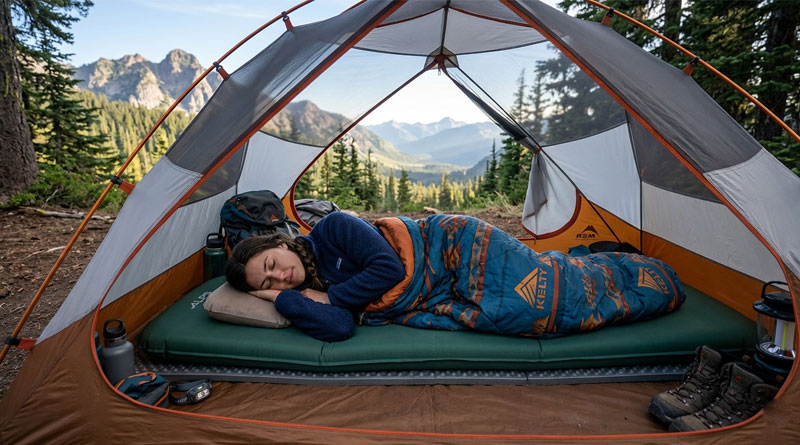
Best Memory Foam Sleeping Pads of 2026
If you struggle to sleep on hard ground while camping or hosting guests, a memory foam sleeping pad can be a game-changer. Unlike thin mats, these pads mold to your body, easing pressure on your hips and shoulders for true rest. In this guide, we’ve rounded up the best memory foam sleeping pads for comfort, durability, and value—so you can wake up feeling refreshed, not sore.
1. CYMULA Memory Foam Pad

- Material: High-density memory foam
- Safety Certification: CertiPUR-US certified
- Bottom Surface: Waterproof and non-slip fabric
- Portability: Includes storage bag and adjustable straps
The CYMULA Memory Foam Pad is designed for campers who prioritize comfort above all else. By utilizing high-density memory foam, this mattress contours to your body shape and weight, providing significant shock absorption compared to standard air mattresses. This makes it an excellent choice for side sleepers or those who struggle with pressure points while sleeping on the ground. The CertiPUR-US certification ensures the materials are safe for users and less harmful to the environment.
In terms of practicality, the non-slip waterproof bottom makes it resilient against damp tent floors or uneven rocky terrain. While it is too bulky for backpacking, it excels as a car camping bed or a temporary floor mattress for guests at home. The included travel bag and buckle straps help compress the foam, making it relatively easy to transport and store when not in use. It is a versatile and cozy upgrade for any mobile sleeping setup.
Pros: Superior comfort with memory foam, eco-friendly safety certification, and a durable waterproof base.
Cons: Bulky when rolled up and not suitable for long-distance hiking.
See the CYMULA Memory Foam Pad
2. HEST Foamy

- R-Value: 8.8 (Extreme insulation)
- Insulation Type: Open-cell foam
- Thickness: 3.9 inches
- Weight: 11 pounds (Regular size)
The HEST Foamy is a premium sleeping pad that aims to replicate the feel of a home mattress in the great outdoors. It features a generous 3.9-inch thickness of open-cell memory foam, providing a plush surface that requires no pumping or manual inflation. With an impressive R-value of 8.8, this pad is built for four-season camping, ensuring that even on frozen ground, your body heat is retained and cold is effectively blocked from reaching you.
While the weight is substantial at 11 pounds for the regular size, the comfort trade-off is worth it for car campers who value quality sleep. The pad is available in different widths and lengths to accommodate various body types and vehicle sizes. It is a rugged, adventure-ready form that simply unrolls and is ready for use immediately. The rectangular shape provides a wide sleeping surface, making it ideal for those who tend to move around during the night.
Pros: Incredible insulation for cold weather, home-like comfort, and no-pump setup.
Cons: Very heavy and has a large packed size compared to air pads.
3. Wevelel Memory Sleeping Pad

- Foam Density: Hi-Tech 50D memory foam
- R-Value: 9.5 (ASTM tested)
- Inflation Time: 30-second fast self-inflation
- Weight Capacity: Supports up to 800 lbs
The Wevelel Memory Sleeping Pad stands out with its high-tech 50D foam density, which is significantly more resilient than standard 19D pads. This density ensures that your weight is distributed evenly across the 3.1-inch thick surface, preventing you from touching the ground. One of the best features is the dual-use valve system, which allows for rapid inflation in just 30 seconds and specialized deflation where air can only exit, making the rolling process much easier.
Constructed with luxury 50D stretch knit fabric, the surface is quiet, breathable, and soft against the skin. With an R-value of 9.5, it is one of the most insulated pads available, making it a powerhouse for winter camping. Despite its heavy-duty performance and high weight capacity, it remains relatively manageable at 6.59 pounds. It is a fantastic choice for those who want a mix of high-end durability, thermal protection, and a quick, frustration-free setup for family trips.
Pros: Extremely high insulation rating, ultra-dense supportive foam, and advanced easy-deflate valves.
Cons: Heavier than traditional air pads and takes up trunk space.
See the Wevelel Memory Sleeping Pad
4. HomeMate CertiPUR-US

- Core Design: Memory foam and support foam hybrid
- Outer Cover: Removable and washable fabric
- Special Features: Velcro connectors for joining pads
- Size Options: Range from Kid to Twin XL
- Thickness: 3 inches
The HomeMate CertiPUR-US pad offers a dual-layer approach to comfort, combining memory foam for softness with high-density support foam for stability. This hybrid design is specifically engineered for shock absorption on rugged terrain, making it a reliable companion for car or truck camping. A standout feature is the inclusion of Velcro connectors, which allow you to join multiple pads together to create a larger sleeping area for couples, families, or even pets.
Maintenance is simplified thanks to the removable, machine-washable cover and a waterproof, anti-slip bottom. This ensures the pad stays clean and fresh even after being used in dusty or damp environments. It is available in a wide variety of sizes, ensuring a perfect fit for specific needs like cots or SUV trunks. While it requires 72 hours to fully expand after being unboxed, the resulting support provides a high-quality sleep environment that effectively reduces travel fatigue.
Pros: Washable cover for easy hygiene, connectable design, and multiple size availability.
Cons: Requires long initial expansion time and is fairly bulky for storage.
5. CYMULA Memory Foam Mattress
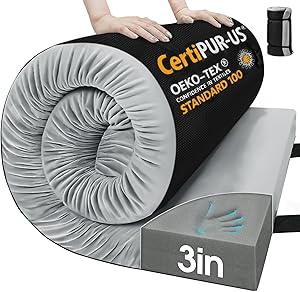
- Material: Carbon fiber high-elasticity memory foam
- Dimensions: 72 x 24 x 3 inches (Cot size)
- Bottom: Rubberized non-slip dots and straps
- Care: Machine washable breathable cover
This version of the CYMULA mattress utilizes carbon fiber infused memory foam, which is designed to provide high elasticity and effectively absorb odors. This makes it particularly useful for long-term camping trips or as a semi-permanent guest bed. The 3-inch thickness is supported by a high-density sponge layer that works well on hard floors or camping cots. The cover is breathable and zipper-removable, allowing for easy machine washing after outdoor use.
One of the most practical additions to this model is the integrated strap system combined with rubberized non-slip dots. The straps allow you to secure the mattress directly to a cot or sofa, preventing it from sliding around during the night. It is marketed as a multi-situation solution, functioning equally well as a yoga mat, play mat, or car mattress. With various sizes available, users can customize their purchase to fit their specific height and sleeping space requirements.
Pros: Odor-absorbing carbon fiber foam, secure cot attachment straps, and versatile multi-use design.
Cons: Needs 24 to 72 hours to fully regain shape after vacuum packing.
See the CYMULA Memory Foam Mattress
6. OGERY Self-Inflating Sleeping Pad

- Structure: Hybrid foam-and-air interior
- Inflation: Self-inflating with built-in foot pump
- Dimensions: 77 x 27 x 3 inches
- Material: Abrasion-resistant nylon
The OGERY Self-Inflating Sleeping Pad offers a unique hybrid design that blends the stability of high-density foam with the adjustable firmness of an air mattress. This combination helps eliminate the “bouncy” feeling often found in pure air pads, providing stable support for side, back, and stomach sleepers. It is particularly effective at relieving pressure on the hips and shoulders. Setting it up is effortless; once the valve is opened, the foam expands, and you can use the built-in foot pump to fine-tune the firmness.
Designed with durability in mind, the pad uses abrasion-resistant nylon and a textured bottom to prevent sliding inside a tent or vehicle. The foam-filled interior also serves to dampen noise, providing a much quieter sleeping experience compared to crinkly air pads. While it is not intended for ultralight backpacking, its compact roll-up design makes it an ideal choice for road trips and RV travel. It provides excellent insulation for cool nights, ensuring a warm and restful sleep.
Pros: No-breath inflation system, quiet foam interior, and adjustable firmness levels.
Cons: Not suitable for backpacking or prolonged water exposure.
See the OGERY Self-Inflating Sleeping Pad
7. Feelnais Sleeping Pad

- Fabric: Heavy-duty 50D breathable fabric
- Inflation: Integrated foot pump (30-60 seconds)
- Features: Built-in 3.15-inch pillow and side buttons
- Weight Capacity: 300 lbs
The Feelnais Sleeping Pad is a highly portable option that focuses on speed and convenience. It features a built-in foot pump that allows for full inflation in under a minute, removing the need for a separate pump or tiring mouth inflation. At 2 inches thick with a 3.15-inch integrated pillow, it provides a medium-firm surface that keeps you off the bumpy ground. The use of 50D fabric ensures that the pad is tough enough to handle rough outdoor terrains like rocks or roots.
One of the most appealing aspects of this pad is its connectable design. Side buttons allow you to snap two or more pads together, instantly transforming individual mats into a larger bed for couples or families. Unlike the heavier memory foam mattresses, this pad is lightweight and compact enough to fit into a backpack, making it suitable for hiking and group backpacking trips. It is a versatile all-season performer that balances comfort with genuine portability for active outdoor enthusiasts.
Pros: Very lightweight and backpack-friendly, built-in pillow, and easy-connect side buttons.
Cons: Thinner 2-inch profile may be less comfortable for heavy side sleepers.
8. Elegear CumbreX

- Pump Type: Built-in electric pump (rechargeable)
- Dimensions: 78 x 51 x 3.1 inches (Double size)
- R-Value: 9.5 (Superior thermal insulation)
- Weight: 14.8 lbs
The Elegear CumbreX is a high-tech double sleeping pad designed for luxury car camping. Its most innovative feature is the built-in electric pump, which provides one-touch inflation in about a minute and vacuum-assisted deflation for easy packing. The pad uses 26D hi-tech memory foam, which is significantly denser than many competitors, ensuring excellent weight distribution for two people. With its 3.1-inch thickness, users are guaranteed to stay well above the cold, hard ground.
The surface is made of 50D stretch knit fabric, which is skin-friendly, sweat-absorbing, and virtually silent when you move. This pad is particularly impressive in extreme conditions, boasting an R-value of 9.5 that keeps you warm in the winter and cool in the summer. Due to its size and 14.8-pound weight, it is strictly for car camping, RVs, or home use. It offers a “five-star hotel” sleep experience in the outdoors, backed by a one-year warranty for peace of mind.
Pros: Effortless electric inflation/deflation, massive size for two people, and elite insulation.
Cons: Very heavy and pump requires battery management.
The Ultimate Guide to Memory Foam Sleeping Pads: Science, Comfort, and Selection
For decades, outdoor enthusiasts and occasional campers alike faced a difficult choice: the portability of a thin foam roll or the relative comfort of a bulky air mattress. However, the introduction of memory foam into the world of sleep systems has revolutionized how we rest in the great outdoors. Memory foam, originally developed by NASA in the 1960s to improve seat cushioning and crash protection for pilots and astronauts, has found its way into our bedrooms and, more recently, into our tents. This article explores the intricacies of memory foam sleeping pads, their benefits, and how to choose the right one for your next adventure.
Understanding Memory Foam Technology
Memory foam is technically known as viscoelastic polyurethane foam. The term “viscoelastic” is a combination of two concepts: viscosity (the ability of a material to resist flow) and elasticity (the ability to return to its original shape). When you lie on a memory foam sleeping pad, the material reacts to your body heat and pressure, softening and contouring to your specific shape. Once the pressure is removed, the foam slowly “remembers” its original flat state and returns to it.
The Role of Density in Support
Density is perhaps the most critical factor in memory foam quality. It is measured in pounds per cubic foot. In sleeping pads, higher density generally translates to better support and a longer lifespan. Low-density foams feel soft initially but may “bottom out,” meaning your heavy points (hips and shoulders) push all the way through the foam to the hard ground. High-density pads provide a more consistent “floating” sensation, distributing body weight across a larger surface area.
Why Choose Memory Foam Over Air or Closed-Cell Foam?
When comparing sleeping pads, the three main contenders are closed-cell foam (CCF), inflatable air pads, and memory foam (often found in self-inflating hybrids). Memory foam offers several distinct advantages that neither of the other two can fully replicate.
Superior Pressure Point Relief
Standard air pads can sometimes feel like a bouncy castle; as you move, the air shifts, often leaving your joints unsupported. Memory foam eliminates this “oscillation” effect. By conforming to the curves of your spine, it ensures that your weight is evenly distributed. This is particularly beneficial for side sleepers, who often suffer from sore hips and shoulders on traditional camping mats.
Silent Sleep Surface
One of the most common complaints regarding high-end lightweight air pads is the “crinkle” factor. Many ultralight materials sound like a potato chip bag every time the sleeper turns over. Memory foam is inherently silent. Because it is a solid (albeit porous) structure, there is no rustling fabric or shifting air chambers to disturb your partner or your own sleep.
Insulation and the R-Value
A sleeping pad’s primary job isn’t just comfort; it is insulation. The ground is a massive heat sink that will pull warmth away from your body through conduction. This is where memory foam excels. The dense cell structure of the foam acts as a powerful barrier against the cold.
Understanding R-Values in Foam Pads
The R-value measures a material’s resistance to heat flow. Memory foam pads typically boast higher R-values than basic air mattresses. Because memory foam is often used in “self-inflating” pads—where a foam core is sandwiched between airtight fabric—the combination of trapped air and dense foam provides an exceptional thermal barrier, making them ideal for four-season camping.
Portability vs. Comfort: The Memory Foam Trade-off
While memory foam is a champion of comfort, it does have its drawbacks, primarily regarding weight and bulk. Traditional memory foam is heavy and does not compress as well as air-only pads. This makes it a polarizing choice depending on the type of camping you intend to do.
Car Camping: The Ideal Use Case
If you are driving to a campsite and setting up a tent within twenty feet of your trunk, a memory foam pad is a no-brainer. In this scenario, weight is irrelevant, and the priority is a good night’s sleep. Many car-camping specific pads use thick, multi-layered memory foam that rivals the feel of a home mattress.
Backpacking: The Hybrid Solution
For those carrying their gear on their backs, a solid memory foam slab is impractical. However, manufacturers have developed “zoned” pads or “punched” foam pads. By cutting holes in the foam in areas where support is less critical (like under the legs), they reduce weight and allow the pad to be rolled tighter, offering a compromise for the comfort-oriented backpacker.
Maintenance and Longevity
To ensure your memory foam sleeping pad lasts for years, proper care is essential. Unlike closed-cell foam, which is nearly indestructible, memory foam is sensitive to moisture and compression sets.
Storage Best Practices
The biggest mistake campers make is storing their pads rolled up tight in a stuff sack. This can cause the foam to lose its “memory” and its ability to loft. Ideally, you should store your pad unrolled with the valves open in a cool, dry place. This allows the foam to remain expanded and ensures any residual moisture from your breath (if you topped it off by blowing into the valve) can evaporate.
Cleaning and Hygiene
Memory foam can be difficult to dry if it gets soaked. Most sleeping pads feature a waterproof or water-resistant outer shell. To clean it, use a damp cloth with mild soap. Avoid submerging the pad entirely, as water entering the foam through the valve can lead to mold and mildew growth inside the pad.
How to Choose the Right Pad for You
Selecting a memory foam pad requires balancing your physical needs with your logistical constraints. Consider the following factors before making a purchase.
Dimensions and Thickness
Memory foam pads come in various thicknesses, typically ranging from 1.5 inches to 4 inches. If you are a back sleeper, you can get away with a thinner pad. Side sleepers should aim for at least 2.5 to 3 inches to prevent their hip bone from touching the ground. Also, consider the width; standard pads are 20 inches wide, but many find a “wide” version (25 inches) much more comfortable for restless sleeping.
The Cover Material
Since memory foam is often used in luxury pads, the outer fabric is usually “brushed” or “velvety” to the touch. Look for “stretch-knit” fabrics. These allow the foam to contour to your body more effectively than stiff, high-denier nylon. A stretch-knit surface enhances the “memory” effect of the foam, providing a more seamless cradling sensation.
Conclusion
The transition from “roughing it” to “resting well” often comes down to the quality of your sleeping pad. Memory foam sleeping pads offer a level of orthopedic support and thermal insulation that traditional camping gear simply cannot match. While they may be bulkier than their ultralight counterparts, the payoff in sleep quality can define the success of a trip. Whether you are a car camper looking for a portable bed or a backpacker seeking a hybrid solution for better recovery, memory foam technology provides a reliable, silent, and incredibly comfortable foundation for your nights under the stars.