
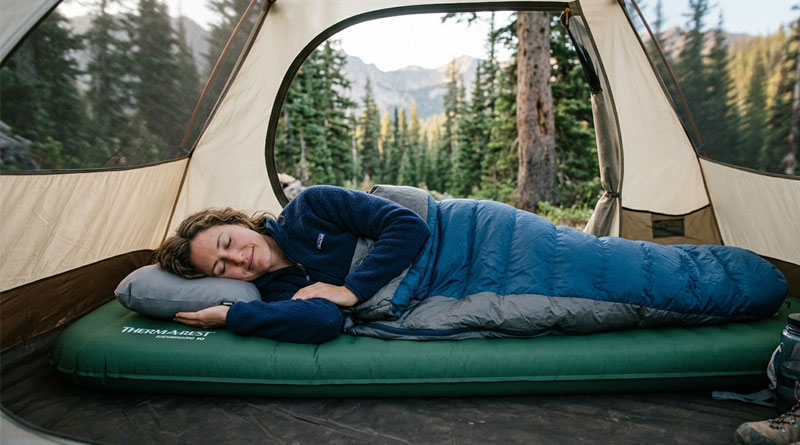
Best Camping Sleeping Pads for Bad Backs of 2026
If you have a bad back, camping can feel like a punishment instead of an escape. Sleeping on hard, uneven ground often means waking up stiff, sore, and exhausted. But the right sleeping pad changes everything. A good pad supports your spine’s natural curve, relieves pressure points, and provides firm, even comfort all night long. In this guide, we’ve picked the best camping sleeping pads for bad backs—easy to carry, simple to set up, and built to help you wake up pain‑free.
1. REI Co-op Campwell

- R-Value: 7
- Thickness: 2.5 inches
- Pad Type: Self-inflating
- Insulation: Open-cell foam
The REI Co-op Campwell doesn’t try to be flashy — it tries to keep you warm and horizontal, and at that job it succeeds admirably. The open-cell foam core pulls air in on its own the moment you crack the valve, and the resulting surface irons out uneven terrain with a quiet authority. That R-value of 7 punches well above the price tag, making cold-weather outings feel far less threatening than they should.
Where it earns its spot on this list is in the details nobody talks about: the valve is intuitive, the foam doesn’t sag by morning, and the whole setup takes under two minutes. It’s heavier than anything you’d bring on a backpacking trip, but camping isn’t a weight contest. If your idea of a good campsite involves coffee, a fire, and eight hours of actual sleep, the Campwell quietly delivers all three.
Pros:
- Impressive insulation for the price point
- Self-inflation means no lungwork at midnight
- Foam maintains shape and support through the night
Cons:
- Too heavy for anything beyond car camping
- Thinner profile than higher-end competitors
2. Exped MegaMat

- R-Value: 8.1
- Thickness: 4 inches
- Pad Type: Self-inflating
- Dimensions: Up to 77.6 x 30.3 inches
There’s a point at which a sleeping pad stops being camping gear and starts being a mattress that happens to live outdoors. The Exped MegaMat crossed that line years ago. Four inches of pressure-relieving foam sit between you and whatever the ground is doing below, and an R-value of 8.1 means even frozen soil doesn’t stand a chance. Side sleepers who have spent years waking up with hip pain will notice an immediate difference.
The MegaMat is unambiguously expensive and bulky when packed — two facts that matter more to some people than others. But for campers who measure trip quality by sleep quality, this is the closest thing to an honest answer. The surface stays flat, doesn’t wobble, and holds its shape from first light until morning. Think of it as the investment you make once so you stop buying mediocre pads every two seasons.
Pros:
- Nearest thing to a home mattress in a field
- R-value of 8.1 handles serious cold
- Generous dimensions suit all sleep positions
Cons:
- Premium price is a real barrier
- Packed size requires significant trunk space
3. OGERY Self-Inflating Sleeping Pad

- Thickness: 3 inches
- Material: Abrasion-resistant nylon
- Features: Built-in foot pump
- Base: Non-slip textured bottom
The OGERY earns attention by doing something most budget pads don’t bother with: marrying a foam interior with air pockets in a hybrid structure that eliminates the spongy bounce you get from cheap inflatables. The result is a sleeping surface that holds you steady regardless of which way you roll, with high-density foam cushioning joints that tend to protest after a few nights on hard ground.
The built-in foot pump is the detail that elevates this pad above the noise. Instead of hunting for a pump or blowing yourself lightheaded, you simply step through the inflation in minutes and dial in the firmness to your liking. The non-slip base means the pad stays exactly where you put it — no 3am readjustments. This is a thoughtfully assembled package at a price that doesn’t require a long conversation with your bank account.
Pros:
- Built-in foot pump removes all inflation frustration
- Hybrid structure prevents bouncy, unstable sleep surface
- Non-slip base holds position through the night
Cons:
- Weight rules it out for trail use
- Foot pump requires sustained effort on full inflation
See the OGERY Self-Inflating Sleeping Pad
4. Klymit Insulated Static V Luxe

- Weight: 32 oz
- R-Value: 5
- Fabric: 75D polyester
- Packed Size: 10 x 5 inches
The Static V Luxe solves a problem most camping pad manufacturers ignore: why does width always get sacrificed when a pad needs to pack small? Klymit’s V-chamber baffle system restricts lateral air movement so the pad contours to your body rather than letting you float on a shifting air bubble. Combined with Klymalite synthetic insulation, it delivers four-season warmth in a package that weighs just two pounds.
The raised side rails act like subtle guardrails, keeping restless sleepers from drifting toward the edge without the pad feeling constrictive. This dual identity — camping comfort in a backpacking-friendly format — makes it an unusually versatile investment. Pay for it once and take it everywhere. At R-5, it handles three solid seasons without argument, and the 75D polyester shell shrugs off the kind of abuse that ruins cheaper pads within a summer.
Pros:
- Compact enough for trail use, roomy enough for the campsite
- Side rails prevent edge roll-off for active sleepers
- Durable 75D polyester shell holds up over seasons
Cons:
- Manual inflation only — no self-inflating mechanism
- Thinner than foam-dominant camping pads
See the Klymit Insulated Static V Luxe
5. REI Co-op Westward Dreamer

- R-Value: 6.7
- Thickness: 4 inches
- Insulation: Open-cell foam
- Weight: Up to 5 lbs. 11 oz.
The name is not accidental. REI built the Westward Dreamer for people who camp specifically because they love sleeping — not just those who sleep because they’re camping. Four inches of open-cell foam creates a buffer zone between your body and whatever the terrain is doing, and the R-value of 6.7 means cold ground doesn’t factor into the equation until temperatures drop seriously hard.
The self-inflating mechanism is efficient enough that setup isn’t a project, and the rectangular shape means there’s genuine real estate to move around in. This matters more than people expect — narrow pads force an unnatural rigidity on your body, especially when you’re spending several nights out. The Westward Dreamer removes that constraint entirely. It’s heavy by any objective measure, but the morning-after difference in how your back feels makes the trunk space worth protecting.
Pros:
- Four-inch loft produces genuine overnight support
- R-6.7 handles cold nights across three seasons
- Rectangular shape allows natural movement during sleep
Cons:
- Nearly six pounds — strictly for camping use
- Packed dimensions demand deliberate packing strategy
See the REI Co-op Westward Dreamer
6. Coleman Silver Springs

- R-Value: 5
- Thickness: 3 inches
- Weight: 5 pounds
- Insulation: Synthetic
Coleman has been making camping gear long enough to understand what first-time campers actually need: something that works, doesn’t confuse them, and doesn’t cost as much as the tent. The Silver Springs lands exactly there. Three inches of synthetic foam offers honest cushioning for tent floors, and the R-5 rating covers chilly spring and fall nights without asking anything extra of you.
It won’t win a comparison against the MegaMat, and it isn’t trying to. What it offers is consistency — the same reliable setup, the same firm support, the same easy self-inflation, trip after trip. First-time campers who don’t yet know their sleep preferences will appreciate not having to think about it. For casual weekend outings where the goal is fresh air and campfire meals rather than maximum comfort optimization, the Silver Springs handles everything asked of it.
Pros:
- Entry-level price without sacrificing core function
- Straightforward self-inflation with no learning curve
- Reliable three-season insulation for typical conditions
Cons:
- Narrower width than premium-tier competitors
- Synthetic foam feels basic compared to foam-hybrid designs
See the Coleman Silver Springs
7. Therm-a-Rest MondoKing 3D

- R-Value: 7.0
- Thickness: 4.25 inches
- Weight: Up to 5 lbs. 8 oz.
- Shape: Rectangular
The “3D” in the name is doing real descriptive work. Most sleeping pads slope toward the edges, shrinking your usable sleep surface and encouraging the involuntary slide toward the tent wall. The MondoKing builds vertical sidewalls instead, keeping the sleeping surface flat and generous all the way to the perimeter. At 4.25 inches of loft, it’s among the tallest self-inflating pads made, and every one of those inches contributes meaningfully to side-sleeper comfort.
Therm-a-Rest’s R-7.0 rating positions this as a serious cold-weather tool — not just a comfort pad but an insulation system. The stuff sack inclusion helps manage a pad that is, by necessity, large and heavy. This is a purchase for campers who have been through enough mediocre nights outdoors to understand exactly what they’re paying for. It’s priced at the top of the market because it performs there.
Pros:
- Vertical 3D sidewalls maximize the actual usable sleep area
- 4.25-inch loft is among the deepest available
- R-7.0 performs through genuine cold-weather conditions
Cons:
- One of the more expensive options on this list
- Storage footprint requires planning around it
See the Therm-a-Rest MondoKing 3D
8. Klymit Klymaloft SUMMIT

- R-Value: 2.4
- Thickness: Up to 5 inches
- Weight: Up to 3 lbs. 3.2 oz.
- Type: Air pad with foam topper
Klymit’s engineers asked an honest question: what if instead of forcing people to choose between the height of air and the comfort of foam, you gave them both? The Klymaloft SUMMIT answers it with an air-chamber base topped by a soft foam layer that shapes itself around your body. The air provides the five inches of loft; the foam provides the contouring that makes it feel less like floating and more like sinking into something that knows your shape.
The tradeoff is thermal performance — R-2.4 is a summer number, not a shoulder-season number. Bring this pad to a July campout and you’ll sleep extraordinarily well. Bring it to an October trip in the mountains and the ground will win the temperature argument by midnight. For warm-weather campers who have always wanted more loft without the foam weight penalty, the SUMMIT is a genuinely clever solution to a problem the industry mostly ignored.
Pros:
- Five-inch loft is the deepest on this list
- Hybrid design delivers body-conforming comfort air alone can’t match
- Lighter than full-foam pads of equivalent thickness
Cons:
- R-2.4 limits use to summer and mild conditions only
- Not a viable choice for cold-weather camping
See the Klymit Klymaloft SUMMIT
How to Buy the Right Sleeping Pad for Camping
Buying a sleeping pad sounds straightforward until you’re standing in a gear store staring at eight options that look nearly identical and cost between $40 and $400. The differences are real, they matter at 2am on cold ground, and understanding them before you spend money is worth more than any single review. Here’s what actually drives the decision.
Start With Temperature, Not Thickness
Most buyers start with thickness because it’s visible. That’s understandable, but it’s the wrong first filter. A four-inch pad with a low R-value will still let cold ground drain your body heat, leaving you shivering on the most plush surface money can buy. Thermal resistance — measured as R-value — is the single most important specification on a sleeping pad, and it should be the first number you look at.
R-value is standardized across the industry, which means a 7.0 from Therm-a-Rest and a 7.0 from Exped are genuinely comparable numbers. Summer camping in mild temperatures only requires an R-value of 1 to 3. Three-season camping through spring and fall needs something in the 3 to 5 range. If you camp in winter or run cold as a general rule, start looking at R-6 and above. The Exped MegaMat’s R-8.1 and the Therm-a-Rest MondoKing’s R-7.0 sit at the top of the market for a reason — they’re built for nights that would defeat everything cheaper.
Match the Pad Type to How You Actually Sleep
Self-inflating pads use an open-cell foam core that draws air in automatically when the valve opens. They feel more like a traditional mattress because the foam provides structural support independent of air pressure. If you want a stable, non-bouncy sleep surface that holds its shape all night, self-inflating is the category to shop.
Air pads inflate manually — by mouth, pump sack, or foot pump — and rely entirely on pressurized air for support. High-end versions use baffle systems to reduce wobble, but the feel is fundamentally different from foam. The upside is loft: air pads can achieve five-plus inches of height at a fraction of the weight of foam pads. If maximum cushion with minimum mass is the goal, air pads deliver. The Klymit Klymaloft SUMMIT bridges both categories with a foam topper over an air base, capturing the contouring softness of foam and the height of air in a single design.
Understand What Width Actually Means
Standard sleeping pads are commonly 20 inches wide. On paper, that’s enough for an average adult. In practice, at 2am when you roll over, 20 inches is a tightrope. Premium camping pads run 25 to 30 inches wide, and that extra five to ten inches is the difference between sleeping and performing a controlled balancing act. The Exped MegaMat measures 30.3 inches across. The REI Westward Dreamer and the Therm-a-Rest MondoKing offer similar width. If you are a side sleeper, a restless sleeper, or simply a larger adult, prioritize width with the same seriousness you give R-value.
Rectangular shape matters too. Backpacking pads taper toward the foot to reduce weight, but that taper means your lower legs and feet rest on a narrower, less supportive surface. Camping pads are rectangular by design — consistent width from shoulders to ankles, consistent support throughout the night. Never compromise on this for camping.
Factor In Your Sleep Position
Back sleepers distribute weight broadly and generally do fine on thinner pads. Side sleepers concentrate their body weight on two points — the hip and the shoulder — and those points will compress a low-loft pad until bone meets ground. If you sleep on your side, a minimum of three inches of foam is the entry point, and four inches is significantly better. The Exped MegaMat and MondoKing 3D are specifically recommended for side sleepers because their loft depth genuinely absorbs that concentrated pressure without bottoming out.
Stomach sleepers need a firmer, more even surface. An overly plush pad that contours aggressively around the torso can create an arched spine position that causes lower back pain by morning. Self-inflating pads with denser foam cores tend to suit stomach sleepers better than hybrid air-foam designs.
Think About Setup Time and Inflation Method
At the end of a long drive to a campsite, the last thing most people want is a 15-minute inflation project. Self-inflating pads reduce that burden substantially — open the valve, wait, add a few topping breaths if needed. The OGERY’s built-in foot pump removes the need to carry any additional gear. Pump sacks, which come included with several Klymit models, let you inflate without pushing moisture from your breath into the foam core.
That moisture point is not trivial. Breath contains significant humidity, and humidity trapped inside foam creates conditions for mold over repeated use. If you’re blowing up your pad by mouth regularly, consider using a small manual pump instead. The small inconvenience protects a pad you may own for a decade.
Look at Noise Before You Commit
If you’ve ever shared a tent with someone on a crinkling air pad, you understand this point immediately. Budget air pads commonly use high-tenacity nylon that produces a loud crunching sound with every movement. At home, this would be annoying. In a quiet campsite at 3am, it is a shared misery. Look for pads that specify “brushed” or “stretch” fabric on the sleep surface. These materials are quieter and feel more like actual bedding. The OGERY uses a textured base layer specifically to eliminate pad-sliding noise against the tent floor — a small detail that reveals a thoughtful design process.
Evaluate Packed Size Against Your Vehicle
Camping removes weight as a concern but replaces it with volume. A rolled Exped MegaMat is a substantial object. A pair of MondoKings for a two-person trip occupies genuine trunk territory. Before buying, consider how the packed dimensions interact with the rest of your gear. Most premium self-inflating pads list their packed dimensions on the product page — take those numbers seriously and compare them against what you actually have available.
If trunk space is genuinely tight, the Klymit Insulated Static V Luxe packs down to 10 x 5 inches — backpacking dimensions — while still offering camping levels of comfort and a four-season R-value. It’s the exception to the rule that comfort and packability trade off against each other.
Where to Buy and What to Pay
REI is the most reliable destination for camping sleeping pads, carrying its own Co-op line alongside Therm-a-Rest, Exped, and Klymit. REI members receive a dividend on purchases and access to used gear through REI Used, where returned and lightly used pads appear regularly at meaningful discounts. Amazon carries the full Klymit range and budget options like the OGERY with fast shipping and straightforward return policies. Manufacturer websites — particularly Exped and Therm-a-Rest — occasionally run direct sales and are the most reliable source for warranty information.
Expect to pay $60 to $100 for entry-level three-season pads, $120 to $200 for mid-tier self-inflating options with solid R-values, and $250 to $400 for premium pads like the Exped MegaMat and Therm-a-Rest MondoKing. The premium segment is not aspirational pricing — it reflects materials and construction that last a decade or more when properly maintained. Buying a $70 pad every three years costs more over time than buying a $300 pad once.
Storage After the Trip Matters As Much As the Pad Itself
Self-inflating pads depend on foam memory to do their job. Foam that gets compressed in a stuff sack for months loses that memory and inflates less effectively each season. Store your pad unrolled, flat, with the valve open. Under a bed or along a closet wall works perfectly. If the pad came with a stuff sack, use that sack only for transport — not year-round storage. Following this one rule will extend the functional lifespan of even a budget pad significantly, and it costs nothing.