Best Electric Kettles for Camping of 2026
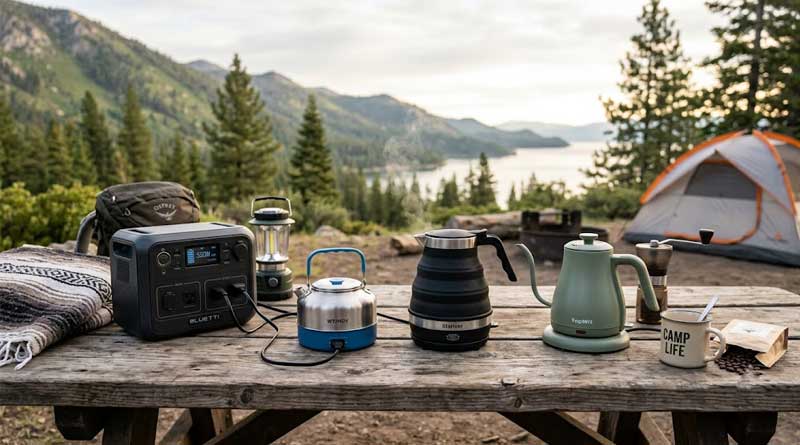
When you’re out in the wild, a hot cup of coffee or tea can make your morning feel just right. That’s where a good camping kettle comes in. But you don’t want a bulky one that takes up too much space or drains your power. You need something light, fast, and tough. The best electric kettles for camping are small, boil water quickly, and work well with portable power stations. This guide will help you pick the perfect one to keep you warm on your next adventure.
1. T-magitic Electric Kettle
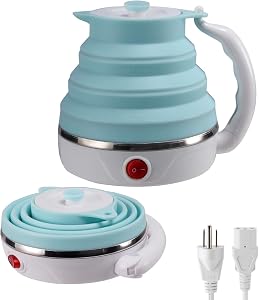
- Dimensions: Folded size: 6.5″X6.3″x2.1″; Unfolded size: 6.5″x6.3″x5.1″
- Weight: 1.42 lbs
- Voltage Compatibility: 110V/220V~ dual voltage configuration
- Boil Time: 3 to 5 minutes with automatic reheating below 75°C
The T-magitic Electric Kettle stands out as an exceptionally innovative choice for global travelers who prioritize packing space. Featuring a clever ultra-thin collapsible design, this unit shrinks down significantly in height when folded, allowing it to slip effortlessly into crowded backpacks or suitcases. Its simple one-button interface makes operation completely foolproof for quick mornings on the go.
Equipped with a manual switch at the bottom, this versatile appliance handles dual voltage systems smoothly across different countries. It features a smart self-heating safety cycle that automatically kicks back on if the water temperature drops below 75 degrees. However, international users must remember to bring their own wall adapter plugs to match local outlets.
Pros:
- Space-saving ultra-thin collapsible design
- Global dual voltage versatility
Cons:
- Conversion plug is not included
See the T-magitic Electric Kettle
2. WTJMOV Electric Tea Kettle

- Capacity: 0.6 Liters
- Power Rating: 600 Watts
- Weight: 1.34 lbs
- Material: Food-grade 304 Stainless Steel interior
The WTJMOV Electric Tea Kettle is tailored perfectly for solo campers or couples seeking an efficient, low-consumption boiling solution. Weighing very little, this featherweight appliance is remarkably easy to lift and pack into any travel bag. Its modest energy draw makes it highly compatible with portable power stations or limited campsite electrical hookups.
Health-conscious users will appreciate that all internal surfaces contacting water are crafted from premium stainless steel, ensuring a pure beverage flavor free of plastic taints. The separate lid completely detaches to make filling and interior scrubbing a simple chore. It also incorporates essential boil-dry protection alongside a cool-touch exterior wall.
Pros:
- Energy-saving low wattage consumption
- Fully detachable lid for easy cleaning
Cons:
- Small capacity limited to one or two people
See the WTJMOV Electric Tea Kettle
3. Stariver Portable Travel Kettle

- Capacity: 600 Milliliters
- Dimensions: Height 6.1″ x Diameter 4.72″
- Material: 304 Stainless Steel lining and inner lid
- Dual Modes: Boil & Keep Warm and Constant Heating
The Stariver Portable Travel Kettle brings excellent culinary flexibility to outdoor adventures and hotel stays alike. It is intelligently built with a foldable space-saving handle and includes a bonus non-woven tote bag for streamlined packing. The standout feature is its dual-mode capability, allowing users to switch tasks easily depending on their immediate dining needs.
While the standard boiling mode keeps water piping hot by cycles, the constant heating setting transforms the unit into a miniature stove perfect for preparing quick meals like noodles or oatmeal. The independent power base provides great boiling stability, and it can even be stored inside the kettle body during transit to maximize luggage efficiency.
Pros:
- Constant heating mode suitable for cooking food
- Power base stores inside the kettle body
Cons:
- Requires manual shutdown in constant heating mode
See the Stariver Portable Travel Kettle
4. Gooseneck Electric Kettle

- Capacity: 0.8 Liters
- Spout Style: Slender S-curve precision gooseneck
- Safety Hardware: JiaTai thermostat with auto shut-off
- Material: 100% BPA-free 304 Stainless Steel interior
The Gooseneck Electric Kettle caters beautifully to camp coffee connoisseurs who refuse to compromise on their brewing technique while traveling. Its elegant S-curve spout gives users incredible pouring control at a sharp ninety-degree angle, making it easy to saturate coffee grounds evenly. This minimalist sage green appliance eliminates complicated digital dials in favor of fast, simple boiling.
Safety is managed reliably by an integrated thermostat that shuts off power automatically when a rolling boil is achieved. The cordless serving body detaches completely from its electrical base for easy pouring anywhere around the picnic table. Maintenance is simplified thanks to an included specialized cleaning brush designed to clear out narrow spout lines.
Pros:
- Precision gooseneck spout for optimal pour-over control
- Includes a specialized spout cleaning brush
Cons:
- Bulkier shape compared to collapsible alternatives
See the Gooseneck Electric Kettle
5. WTJMOV Electric Kettle

- Capacity: 0.8 Liters
- Power Rating: 600 Watts / 110V
- Dimensions: 7.4″ x 3.9″ compact body
- Base Design: 360-degree swivel base with retractable cord
This WTJMOV Electric Kettle model balances capacity and portability perfectly, making it an excellent companion for small group camping trips or RV counters. With its fast five-minute boiling cycle, users do not have to wait long to enjoy their favorite hot drinks or prepare instant ramen. The double-layer insulated structure ensures the outer skin stays safe to touch.
An advanced steam switch provides reliable double protection against dry boiling, giving you total peace of mind in confined spaces. Serving is seamless due to the cordless body design and an integrated cord management system underneath. The wide mouth opening and seamless steel interior ensure cleaning remains a quick and painless task.
Pros:
- Generous capacity while remaining luggage-friendly
- Double-wall construction stays cool to the touch
Cons:
- Only available in single voltage configurations
See the WTJMOV Electric Kettle
6. RHD Small Electric Kettle

- Capacity: 0.5 Liters
- Power Rating: 600 Watts / 110V
- Opening Diameter: 4 inches (10 cm) wide mouth
- Power Cord Length: 60 centimeters
The RHD Small Electric Kettle is a robust, straightforward boiling companion built to withstand the rigors of frequent travel and outdoor excursions. Featuring an ultra-compact footprint, it slips into small spaces without overcrowding campsite tables or counters. The simple one-touch button setup allows anyone to get a rapid boil going with zero learning curve required.
The interior is completely free of plastic components, keeping your hot water smelling fresh and tasting pure. A major advantage is the wide four-inch top opening, which allows users to fit their entire hand inside for thorough cleaning. The insulated cool-touch body shell helps protect fingers from accidental burns during busy mornings.
Pros:
- Extra wide mouth opening for easy hand washing
- Completely plastic-free interior water contact zone
Cons:
- Short electrical power cord limits placement options
See the RHD Small Electric Kettle
7. TopWit Electric Kettle
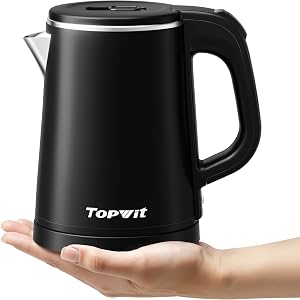
- Capacity: 0.8 Liters
- Power Rating: 800 Watts rapid heating
- Material: 100% BPA-free 304 Stainless Steel
- Safety Features: Auto shut-off and boil-dry protection
The TopWit Electric Kettle stands out for its impressive heating speed, utilizing a strong eight-hundred-watt element to boil water faster than many competitors. This makes it an outstanding option for campers or travelers who want their coffee or instant soup prepared without delay. A clear, bright LED indicator light keeps you updated on its operating status.
The handle is ergonomically sculpted to give users a steady, comfortable grip while pouring boiling water. For neat storage, the power base features built-in cord management to keep workspaces tidy. Its pure stainless steel lining guarantees a healthy beverage taste, though the higher wattage draw requires a robust camp power source.
Pros:
- High wattage delivers exceptionally fast boiling times
- Comfortable ergonomic handle design for steady pouring
Cons:
- Higher power draw may overload weak solar inverters
See the TopWit Electric Kettle
8. Rzlinn Portable Electric Kettle

- Capacity: 450 Milliliters (15 ounces)
- Power Rating: 300 Watts / 120V
- Material: Premium 316 Stainless Steel inner tank
- Temperature Control: NTC control with 4 preset levels
The Rzlinn Portable Electric Kettle represents the cutting edge of personal travel brewers, utilizing premium marine-grade stainless steel for its water tank. This advanced material handles diverse water pH levels flawlessly, making it exceptionally safe for preparing delicate beverages like baby milk or lemon water. Its ultra-low power draw is ideal for avoiding short circuits in RVs.
This high-tech unit features an NTC display screen offering four distinct digital temperature presets to suit various tea varieties perfectly. Safety is a top priority, featuring a smart one-way pressure valve that vents steam safely while keeping the lid locked tight during the boiling cycle. Users must remember to remove the cord stored inside before initial use.
Pros:
- Premium 316 stainless steel offers superior corrosion resistance
- Four precise digital temperature presets with LED display
Cons:
- Takes longer to boil due to low wattage
See the Rzlinn Portable Electric Kettle
How to Choose Electric Kettles for Camping
Camping has evolved far beyond roughing it with a tin cup over an open fire. Today, many campers enjoy the comforts of home while surrounded by nature, and one of the most appreciated conveniences is a hot cup of coffee, tea, or instant soup without waiting for a fire to build. Electric kettles for camping have become increasingly popular, especially for car campers, van lifers, RV enthusiasts, and those who camp at powered campsites. However, choosing the right electric kettle for camping is not as simple as grabbing the first one you see online. You need to consider power sources, portability, durability, heating speed, safety features, and capacity. This article will guide you through every critical factor so you can make an informed decision and enjoy hot water wherever your adventures take you.
Why Use an Electric Kettle for Camping?
Before diving into selection criteria, it helps to understand why an electric kettle might be a better choice than a traditional stovetop kettle or a campfire kettle. Electric kettles offer several advantages:
- Speed: Most electric kettles boil water in 3 to 7 minutes, far faster than waiting for a fire to reach cooking temperature.
- Safety: No open flame means reduced risk of burns, especially around children or in dry, fire-prone areas.
- Convenience: You can use them inside a tent vestibule, campervan, or RV without ventilation concerns (though you should still be cautious).
- Consistency: Electric kettles bring water to a rolling boil and often shut off automatically, so you never scorch the water or overboil.
- Versatility: Beyond hot drinks, you can use them for rehydrating meals, washing dishes, or even warming water for a sponge bath.
That said, electric kettles require a power source. If you are backpacking deep into the wilderness, a lightweight gas stove may still be your best bet. But for car camping, RV trips, or glamping, an electric kettle is a game-changer.
Key Factors to Consider When Choosing an Electric Kettle for Camping
1. Power Source and Voltage
The single most important factor is how you will power the kettle. Electric kettles draw a lot of wattage—typically between 600 and 1500 watts. This high draw is necessary to heat water quickly, but it limits your options.
| Power Source | Typical Voltage | Wattage Range | Suitable Kettle Type |
|---|---|---|---|
| Standard campsite hookup (120V AC) | 120V | 1000–1500W | Standard household electric kettle |
| RV / Campervan 12V DC system | 12V | 120–300W | 12V travel kettle (slow heating) |
| Portable power station (e.g., Jackery, Goal Zero) | 120V AC output | 600–1000W | Low-wattage electric kettle |
| Car cigarette lighter (12V) | 12V | 120–180W | 12V car kettle (very slow) |
| USB power bank (5V) | 5V | 10–20W | Not practical for boiling water |
If you camp at sites with electrical hookups, a standard 120V kettle works perfectly. If you rely on a portable power station, check its continuous AC output wattage. A 500W power station cannot run a 1500W kettle. You will need a low-wattage kettle (often labeled “travel kettle” or “compact kettle”) that draws 600W or less. For 12V systems, dedicated 12V kettles exist, but they are notoriously slow—often taking 20 to 30 minutes to boil 0.5 liters. They are best for keeping water hot rather than boiling from cold.
2. Capacity
How much water do you need at once? Camping kettles range from 0.5 liters to 1.7 liters. Consider your typical usage:
- 0.5–0.8 liters: Ideal for one or two people having a hot drink. Lightweight and compact.
- 1.0–1.2 liters: Good for a small family or group of three. Still portable.
- 1.5–1.7 liters: Best for larger groups or when you also need hot water for washing dishes. Bulkier and heavier.
Remember that a larger kettle takes longer to boil and draws more power. For camping, a 0.8 to 1.0-liter kettle is often the sweet spot.
3. Material and Durability
Camping gear takes a beating. The kettle you choose should withstand being tossed into a car trunk, dropped on rocks, or exposed to moisture. Common materials include:
- Stainless steel: Durable, rust-resistant, and retains heat well. Slightly heavier but excellent for rugged use.
- Plastic (BPA-free): Lightweight and inexpensive, but can crack or warp over time. Not ideal for heavy camping.
- Glass: Looks elegant and lets you see the water level, but fragile. Not recommended for camping unless you are extremely careful.
- Silicone: Collapsible kettles are space-saving and lightweight, but they often have lower capacity and may impart a slight taste if not high quality.
For most campers, a stainless steel kettle with a sturdy handle and a tight-fitting lid is the best balance of durability and performance.
4. Heating Speed and Wattage
Heating speed depends on wattage and water volume. A 1500W kettle boils 1 liter in about 4–5 minutes. A 600W kettle takes 10–12 minutes for the same amount. If you are using a portable power station, higher wattage drains the battery faster. Calculate your needs:
| Kettle Wattage | Time to Boil 0.5L | Time to Boil 1.0L | Power Station Drain (approx.) |
|---|---|---|---|
| 1500W | 2–3 min | 4–5 min | High (needs 1000Wh+ station) |
| 1000W | 3–4 min | 6–7 min | Moderate (needs 700Wh+ station) |
| 600W | 5–7 min | 10–12 min | Low (works with 500Wh station) |
| 300W (12V) | 15–20 min | 30+ min | Very low but very slow |
If you prioritize speed and have a strong power source, go for higher wattage. If you are limited by battery capacity, choose a lower-wattage kettle and accept slower boil times.
5. Safety Features
Safety is paramount when camping. Look for these features:
- Automatic shut-off: Turns off when water reaches boiling point or when the kettle is empty. Prevents overheating and fire hazards.
- Boil-dry protection: Cuts power if there is no water inside, protecting the heating element.
- Cool-touch handle: Essential to avoid burns, especially if you are using the kettle in a confined space like a tent.
- Non-slip base: Keeps the kettle stable on uneven campsite surfaces.
- Locking lid: Prevents spills when carrying hot water.
- Indicator light: Shows when the kettle is heating, so you do not accidentally leave it on.
Some kettles also have a keep-warm function, but this drains power quickly and is rarely useful for camping.
6. Portability and Storage
Space is at a premium when camping. Consider these portability factors:
- Weight: Stainless steel kettles weigh 1.5–2.5 lbs (0.7–1.1 kg). Plastic or collapsible silicone models can be under 1 lb.
- Dimensions: A tall, narrow kettle may fit better in a backpack side pocket, while a squat kettle is more stable on a table.
- Collapsibility: Silicone kettles collapse flat, saving up to 50% space. However, they often have lower capacity and may not boil as quickly.
- Cord storage: A cord wrap or compartment prevents tangles and damage.
- Carry handle: A sturdy handle makes it easy to move from power source to table.
7. Ease of Cleaning
Camping often means limited water for washing. A kettle with a wide opening is easier to clean and descale. Look for:
- Removable lid or wide mouth for access.
- Non-stick interior or smooth stainless steel that resists mineral buildup.
- No hidden crevices where mold or bacteria can grow.
- Dishwasher-safe parts (though you may not have a dishwasher at camp).
If you use your kettle for anything other than water (like soup or oatmeal), clean it immediately to avoid odors and stains.
8. Noise Level
Electric kettles can be noisy, especially as they approach boiling. Some models have a quiet boil feature, but these are rare. If you are camping in a quiet campground or sharing a van, a noisy kettle might disturb others. Stainless steel kettles tend to be louder than plastic ones. Consider a kettle with a whistle-free design and a dampened base if noise is a concern.
9. Price and Value
Camping electric kettles range from $20 to over $100. Budget models are often plastic and less durable. Mid-range ($40–$70) stainless steel kettles offer the best value for most campers. High-end models may include precise temperature control, keep-warm settings, or premium materials. For occasional campers, a basic 1000W stainless steel kettle is sufficient. For frequent van lifers or RVers, investing in a durable, low-wattage kettle with safety features is worthwhile.
Types of Electric Kettles for Camping
Standard Electric Kettle
These are the same kettles you use at home. They require 120V AC power and draw 1000–1500W. Best for campsites with electrical hookups or RVs with generators. They are fast but bulky and power-hungry.
Low-Wattage Travel Kettle
Designed for hotel rooms and dorms, these draw 600W or less. They work with portable power stations but take longer to boil. Often made of plastic or stainless steel, with capacities of 0.5–1.0 liters.
12V Car Kettle
These plug into a car cigarette lighter or 12V socket. They draw 120–180W and are extremely slow—often 30 minutes for 0.5 liters. They are best for keeping water warm on long drives, not for rapid boiling.
Collapsible Silicone Kettle
These are lightweight and space-saving. They usually draw 600–800W and have capacities of 0.5–0.8 liters. They are great for backpacking or minimalist camping, but the silicone may retain odors and the heating element is often less powerful.
USB-Powered Kettle
These are a gimmick for the most part. USB power (5V) cannot deliver enough wattage to boil water in a reasonable time. Some models can heat water to 60–70°C, but not boil. Avoid these for camping unless you only need warm water.
How to Match Your Kettle to Your Camping Style
| Camping Style | Recommended Kettle Type | Key Features |
|---|---|---|
| Car camping with electrical hookup | Standard 120V stainless steel kettle | 1.0–1.5L, 1500W, auto shut-off |
| RV / Campervan with 12V system | 12V travel kettle or low-wattage 120V with inverter | 0.5–1.0L, 300–600W, boil-dry protection |
| Portable power station (500–1000Wh) | Low-wattage travel kettle | 0.5–0.8L, 600W, cool-touch handle |
| Backpacking / minimalist camping | Collapsible silicone kettle (with power bank) | 0.5L, 600W, lightweight, compact |
| Group camping (4+ people) | Large stainless steel kettle | 1.5–1.7L, 1500W, wide lid for cleaning |
Tips for Using an Electric Kettle While Camping
- Check power availability: Never assume a campsite has electricity. Verify before you go.
- Use a surge protector: Campground power can be dirty. A surge protector protects your kettle.
- Do not run high-wattage kettles on low-wattage inverters: You will blow a fuse or damage the inverter.
- Boil only what you need: Heating extra water wastes power and time.
- Clean and dry before storage: Prevent mold and mineral buildup.
- Store in a padded bag: Protects the kettle and prevents rattling in transit.
- Never leave a kettle unattended: Even with auto shut-off, accidents happen.
Common Mistakes to Avoid
- Buying a 1500W kettle for a 500W power station: It simply will not work.
- Choosing glass for rugged camping: It will break.
- Ignoring boil-dry protection: A kettle without it can melt or catch fire if it runs dry.
- Assuming all 12V kettles are fast: They are not. Read reviews for real-world boil times.
- Forgetting to check the plug type: If camping internationally, you may need an adapter.
- Overfilling: Causes boiling water to spill and can damage the kettle.
Final Thoughts
Choosing an electric kettle for camping comes down to balancing power availability, portability, capacity, and durability. If you have access to AC power, a standard stainless steel kettle is the fastest and easiest option. If you rely on a portable power station or 12V system, a low-wattage travel kettle is your best bet, even if it takes longer. Collapsible silicone kettles are great for space savings but compromise on speed and capacity. Always prioritize safety features like automatic shut-off and boil-dry protection. Measure your typical water needs, check your power source’s limits, and read reviews from other campers. With the right kettle, you can enjoy a hot cup of coffee at sunrise, a warm bowl of soup at dusk, and the simple comfort of hot water no matter where you pitch your tent. Happy camping, and may your water always boil.