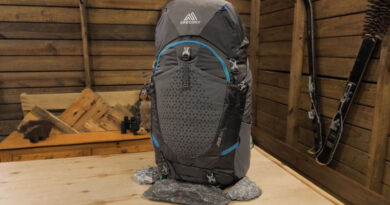

Best 40L Hiking Backpacks of 2026
Looking for the perfect 40-liter hiking backpack? This size is a favorite for multi-day trips, balancing generous space with a manageable carry. With so many options, finding the right one for your adventures can be tricky. Our guide cuts through the noise. We’ve tested and compared the top models to help you find a comfortable, durable, and well-organized pack that fits both your gear and your budget, mile after mile.
1. REI Co-op Trail

- Frame Type: Spring steel internal frame
- Gear Capacity: 40 – 41 Liters
- Weight: 2 lbs. 12 oz. – 3 lbs.
- Exterior Pockets: 7 + main compartment
The REI Co-op Trail 40 is a versatile workhorse designed for hikers who prioritize organization and accessibility. Featuring a unique perimeter spring steel frame, it provides excellent load support while maintaining a slim profile. The inclusion of a dedicated raincover and reservoir compatibility makes it a reliable choice for variable mountain weather and long days on the trail.
What sets this pack apart is the massive array of exterior pockets, allowing you to stash gear quickly without digging through the main compartment. The materials are rugged and bluesign approved, ensuring durability and environmental responsibility. It bridges the gap perfectly between a heavy-duty daypack and a lightweight overnight bag for minimalist backpackers.
Pros: Excellent organization with 7 pockets, includes raincover, sustainable materials.
Cons: Slightly heavier than ultralight competitors, fixed torso sizing per model.
View Men’s at REI View Women’s at REI
2. MOUNTAINTOP Hiking Backpack

- Material: 400D Water repellent polyester
- Capacity: 40 Liters
- Hardware: YKK zippers
- Laptop Sleeve: Fits up to 16-inch laptop
The MOUNTAINTOP Hiking Backpack is a budget-friendly option that does not skimp on essential features. Constructed from durable 400D polyester and fitted with reliable YKK zippers, it is built to withstand the rigors of travel and light hiking. The design includes a breathable mesh back panel and sponge padding to ensure comfort during extended wear.
This pack is particularly well-suited for users who need a hybrid bag for both outdoor adventures and daily commuting. With a dedicated compartment for a 16-inch laptop and an internal water bladder sleeve, it transitions seamlessly from the office to the woods. The chest clip with an integrated whistle adds a nice safety touch for solo explorers.
Pros: Highly affordable, laptop and hydration compatible, durable YKK zippers.
Cons: Not a true internal frame for heavy loads, water bladder not included.
See the MOUNTAINTOP Hiking Backpack
3. Osprey Talon Pro

- Frame Material: Aluminum peripheral hoop
- Material: 210D Nylon UHMWPE ripstop
- Adjustable Torso: Yes
- Weight: 3 lbs. 2.9 oz. – 3 lbs. 5.1 oz.
The Osprey Talon Pro 40 is a premium technical pack designed for fast-and-light missions where durability is still a requirement. It utilizes a sophisticated NanoFly fabric that incorporates ultra-high-molecular-weight polyethylene ripstop for incredible strength-to-weight performance. The adjustable torso length allows for a precision fit that keeps the load stable during technical scrambles or mountain biking.
While it is one of the heavier 40L packs in this list, the weight is justified by its robust suspension system and comfortable hipbelt. The top-loading access is traditional and secure, making it ideal for those who prefer a classic alpine style. It is a high-performance tool for serious outdoor enthusiasts who demand longevity and technical precision from their gear.
Pros: Extremely durable NanoFly fabric, highly adjustable fit, premium suspension.
Cons: Most expensive option, raincover not included.
See the Osprey Talon Pro See the Women’s Tempest Pro
4. REI Co-op Ruckpack

- Material: Recycled nylon and polyester
- Laptop Size: Up to 15 inches
- Weight: 2 lbs. 13 oz.
- Raincover: Included
The REI Co-op Ruckpack 40 is the ultimate travel-meets-trail companion. It features a sleek, clean aesthetic that doesn’t look out of place in an airport terminal, yet it possesses a hidden spring steel internal frame for actual hiking capability. The stowable harness and hipbelt are standout features, allowing you to convert the pack into a clean duffel-style bag for overhead bins.
Functionality is the core of this design, offering a 15-inch laptop sleeve and a built-in raincover for unpredictable travel days. The use of recycled, bluesign-approved materials makes it a great choice for eco-conscious travelers. It provides a balanced experience for someone who wants one bag to handle a week in Europe and a weekend in the state park.
Pros: Excellent travel/trail hybrid, stowable straps, included raincover.
Cons: Fewer exterior pockets than technical packs, limited torso adjustment.
View Men’s at REI View Women’s at REI
5. Hyperlite Mountain Gear Unbound

- Weight: 1 lb. 14.8 oz. – 2 lbs. 0.8 oz.
- Material: Dyneema Composite Hybrid 3.8
- Frame: Aluminum stay
- Classification: Ultralight
The Unbound 40 represents the pinnacle of ultralight thru-hiking technology from Hyperlite Mountain Gear. Built with Dyneema Composite Hybrid fabric, this pack is virtually waterproof and incredibly light, yet tough enough for thousands of miles. It features a streamlined design with a large external mesh pocket and a bottom “snack pocket” that allows hikers to access gear on the move without stopping.
This pack is specifically engineered for long-distance hikers who have their kit weight dialed in. It lacks many traditional “comfort” features like heavy padding, choosing instead to focus on efficiency and moisture resistance. While it doesn’t include a raincover, the material itself is naturally water-resistant, protecting your gear from the elements during high-mileage days on the trail.
Pros: Top-tier weight-to-strength ratio, innovative pocket access, highly water-resistant.
Cons: No hydration reservoir compatibility, very expensive.
See the Hyperlite Mountain Gear Unbound
6. Hyperlite Mountain Gear Southwest

- Weight: 1 lb. 13.1 oz. – 1 lb. 15 oz.
- Material: Dyneema Woven Composite 3.9
- Frame: 2 Aluminum stays
- Access: Top / Roll-top
The Southwest 40 is a legendary ultralight pack known for its “bombproof” construction. Unlike the mesh-heavy Unbound, the Southwest features solid Dyneema external pockets, making it the better choice for bushwhacking through dense brush or navigating rocky canyons where mesh would tear. It is built for the rugged conditions of the American Southwest but excels in any environment where durability is paramount.
With dual aluminum stays and a roll-top closure, it offers a secure and customizable volume. It is one of the lightest packs available that still offers a genuine internal frame, making it comfortable for loads up to 35 pounds. It is hydration reservoir compatible, providing a practical advantage over its Unbound sibling for those who prefer bladders over bottles.
Pros: Extremely durable solid exterior pockets, ultralight, reservoir compatible.
Cons: Industrial aesthetic, high price point.
See the Hyperlite Mountain Gear Southwest
7. Maelstrom Hiking Backpack

- Material: Rip-stop 210D nylon
- Capacity: 40 Liters
- Safety: Reflective signs and survival whistle
- Special Feature: Waterproof wet pocket
The Maelstrom Hiking Backpack is an feature-rich option designed for day hikers and campers who love organization. It stands out with a unique waterproof wet pocket within the main compartment, perfect for separating sweaty gym clothes or wet swimsuits. The ergonomic design includes a breathable back panel and a padded ring handle that makes grabbing the pack effortless.
Safety and convenience are clearly prioritized here, with a built-in survival whistle, headphone port, and reflective markers for low-light visibility. It also includes a silver reflective raincover stored in a dedicated bottom pocket. While it fits the size requirements for most airlines, it remains a dedicated outdoor tool with trekking pole attachments and a water pipe hole for hydration systems.
Pros: Dedicated wet/dry separation, feature-heavy for the price, included raincover.
Cons: Not as durable for heavy expedition use, nylon is thin compared to premium brands.
See the Maelstrom Hiking Backpack
8. FENGDONG Hiking Pack
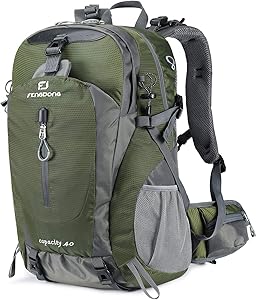
- Weight: 1.9 lbs.
- Dimensions: 20.5 x 13 x 7.1 inches
- Material: Tear-resistant polyester fiber
- Capacity: 40 Liters
The FENGDONG Hiking Pack is an ultra-lightweight entry-level backpack that focuses on breathability and simplicity. Weighing in at just 1.9 pounds, it is one of the lightest non-technical packs in its class. The ventilated mesh padding on the shoulder straps and back panel is designed to maximize airflow, making it an excellent choice for hot summer hikes or casual travel.
The internal organization is straightforward, featuring a main zipped compartment with a separator and a smaller security pocket for valuables. While it is water-resistant, it is not designed for prolonged exposure to heavy rain. This pack is best suited for college students, casual day hikers, or travelers who need a lightweight, high-capacity bag that won’t break the bank.
Pros: Very lightweight, highly breathable back system, extremely affordable.
Cons: No internal frame for heavy loads, not fully waterproof.
How to Choose the Perfect 40L Hiking Backpack: A Comprehensive Guide
Selecting the right backpack is perhaps the most critical decision any hiker can make. Among the various sizes available, the 40-liter (40L) backpack occupies a “sweet spot” in the outdoor world. It is large enough for ambitious day hikes and minimalist overnight trips, yet compact enough to serve as a carry-on for most airlines. However, with hundreds of options ranging from ultralight Dyneema shells to heavy-duty internal frame haulers, finding the right one requires an understanding of your body, your gear, and your environment.
Understanding the 40L Capacity
A 40L pack typically offers between 2,400 and 2,500 cubic inches of space. This volume is versatile but demands disciplined packing. For a day hiker, 40L is generous, allowing room for the “Ten Essentials,” extra layers, a bulky camera, and plenty of water. For a backpacker, 40L is the standard for the “light and fast” philosophy. To successfully use a 40L pack for an overnight or multi-day trip, your sleep system (tent, quilt, and pad) must be relatively compressible.
Step 1: Determine Your Primary Use Case
Before looking at technical specs, define where the pack will spend most of its time. Different environments require different features.
Technical Day Hiking
If you are tackling “fourteeners” or rugged peaks in a single day, you need a pack with a robust suspension system. Because you aren’t carrying overnight gear, the pack may feel light, but as you add three liters of water and safety gear, weight adds up. Look for high breathability in the back panel and easy-access pockets for snacks and maps.
Minimalist Overnight Backpacking
For those transitioning into ultralight backpacking, a 40L pack is the goal. In this scenario, weight distribution is key. You need a pack that can comfortably carry 20 to 30 pounds. Frame stiffness and hipbelt padding become much more important here than they are for a casual walker.
Travel and Commuting
If your 40L pack needs to double as a travel bag, look for features like a laptop sleeve, stowable straps, and a panel-loading (clamshell) design. Brands like REI and Osprey often create hybrid packs that look professional enough for a train station but perform well on a dirt trail.
Step 2: Assessing Frame Types and Suspension
The frame is the skeleton of your pack. It determines how weight is transferred from your shoulders to your hips.
Internal Frame Packs
Most modern 40L packs use an internal frame. This usually consists of aluminum stays or a peripheral spring steel hoop. These frames provide structure and ensure the pack doesn’t sag when loaded. They are ideal for beginners and those carrying more than 15 pounds.
Frameless and Ultralight
Ultralight enthusiasts often opt for frameless 40L packs. These are essentially durable sacks with shoulder straps. They rely on the hiker’s folded foam sleeping pad to provide structure. While they save significant weight (often weighing under 2 pounds), they are uncomfortable if your total load exceeds 20 pounds.
Step 3: Finding the Perfect Fit
A pack that doesn’t fit your torso will cause shoulder pain and lower back strain, regardless of how expensive the brand is. Unlike clothing, pack fit is based on your bone structure, not your height.
Measuring Your Torso Length
To find your torso length, have a friend measure from the C7 vertebra (the bump at the base of your neck) down the curve of your spine to the iliac crest (the top of your hip bones). Most 40L packs come in sizes (Small, Medium, Large) or offer an adjustable harness that allows you to slide the shoulder straps up or down.
The Importance of the Hipbelt
In a well-fitted 40L pack, 80% of the weight should rest on your hips. The hipbelt should wrap around the top of your iliac crest. If the belt is too high, it will squeeze your stomach; if it’s too low, it will impede your leg movement. Check for “load lifters”—the small straps on top of the shoulder pads—which pull the weight closer to your back to prevent the pack from tipping backward.
Step 4: Material Durability and Weight
The fabric of your pack dictates its lifespan and how much it weighs before you even put gear inside.
Nylon and Polyester
Most standard packs use Ripstop Nylon measured in “Denier” (D). A 210D nylon is standard and provides a good balance of weight and abrasion resistance. Lower denier (70D) is lighter but easier to tear on rocks or branches.
Dyneema and X-Pac
Premium ultralight packs use Dyneema Composite Fabric (DCF) or X-Pac. These materials are waterproof and incredibly strong for their weight. However, they are significantly more expensive and less breathable than traditional nylon.
Step 5: Key Features to Look For
Once the fit and frame are settled, look at the “bells and whistles” that make life on the trail easier.
Access Points: Top vs. Panel Loading
Top-loading packs are the gold standard for hiking; they are simple, durable, and weather-resistant. Panel-loading packs zip open like a suitcase, providing instant access to everything inside. For 40L packs, a “hybrid” access (a top loader with a side zipper) is often the best of both worlds.
Hydration Compatibility
Check for an internal sleeve and a port for a hydration bladder hose. If you prefer water bottles, ensure the side mesh pockets are reachable while wearing the pack. Being able to grab a bottle without taking the pack off is a major convenience.
Exterior Storage
A large front “shove-it” pocket is essential for stashing a wet rain jacket or a trowel. Hipbelt pockets are also highly recommended for items you need frequently, such as lip balm, a phone, or snacks.
Step 6: Weather Protection
No backpack is truly waterproof because of the seams and zippers. If you hike in rainy climates, check if the pack includes a raincover (often hidden in a bottom pocket). If it doesn’t, you will need to purchase a separate cover or use a “pack liner” (a heavy-duty plastic bag inside the pack) to keep your gear dry.
Conclusion: The Final Test
When you have narrowed down your choices, the final step is a “weighted test.” Never buy a pack based on how it feels empty. Put 15 to 20 pounds of gear (or sandbags at the store) into the pack and walk around for at least 15 minutes. Pay attention to any rubbing on the neck, pinching in the hips, or “hot spots” on the shoulders.
A 40L hiking backpack is an investment in your comfort and your ability to explore the outdoors. By focusing on torso fit, frame integrity, and your specific gear needs, you will find a companion that lasts for hundreds of miles of adventure.
Summary Checklist
- Measure your torso length before shopping.
- Decide between a structured internal frame or a lightweight frameless design.
- Verify that your tent and sleeping bag will actually fit in a 40L volume.
- Look for reachable side pockets and a comfortable hipbelt.
- Test the pack with weight before committing to a long trip.
Whether you are climbing a peak or traveling across a continent, the right 40L pack will feel like a natural extension of your body rather than a burden on your back.