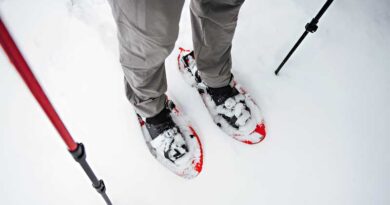

Best Snowshoes for Big Guys of 2027
If you are a big guy, finding snowshoes that fit well and hold up can be hard. Standard models often lack the size and support you need. This article reviews the best snowshoes for big guys, focusing on wide decks, strong frames, and higher weight limits. We will help you find a comfortable, durable pair so you can enjoy winter trails with confidence.
1. MSR Evo Trail

- Best Use: Rolling Terrain
- Frame and Crampon Material: Martensitic steel
- Deck Material: Polypropylene
- Weight and Load: 3 lbs. 9.5 oz. per pair; 180 lbs. maximum load
The MSR Evo Trail snowshoes are a dependable choice for winter hikers who enjoy exploring snowy trails and rolling terrain. They combine a simple design with comfortable performance, making them suitable for regular recreational snowshoeing. Their polypropylene decking provides a durable platform, while the martensitic steel frame offers a sturdy construction for outdoor use. The rubber strap closure provides a straightforward way to secure your boots without dealing with complicated adjustments.
These snowshoes also feature toe and heel crampons, along with side traction, to help maintain grip on changing snow conditions. Their 22 x 8 x 4-inch dimensions provide a practical balance between flotation and maneuverability. At 3 lbs. 9.5 oz. per pair, they are reasonably manageable for trail adventures. With a recommended maximum load of 180 pounds, they are best suited to users within that limit. Overall, the MSR Evo Trail is a practical option for comfortable winter walks and everyday snow-covered trail exploration.
Pros:
- Durable polypropylene decking.
- Toe, heel, and side traction.
- Simple rubber strap closure.
Cons:
- Maximum recommended load is limited to 180 pounds.
- Designed primarily for rolling terrain.
2. Retrospec Drifter

- Frame Design: Lightweight aluminum frame
- Binding System: Double-ratchet bindings
- Walking System: Full-floating pivot system
- Additional Feature: Built-in heel lifters and mesh carrying bag
The Retrospec Drifter snowshoes are designed for men and women who want lightweight equipment for exploring snowy trails. Their aluminum frames provide sturdy support without adding unnecessary weight, helping make longer winter walks more comfortable. The construction is intended to provide reliable flotation in deep powder while maintaining stability on icy trails. Whether you are heading out for a casual snowshoeing trip or exploring more challenging winter paths, these snowshoes offer several practical features for outdoor adventures.
The double-ratchet binding system makes securing your boots quick and convenient, reducing the time spent adjusting straps in cold weather. Built-in heel lifters help reduce leg strain when climbing uphill, while the full-floating pivot system follows your natural walking movement for smoother strides. A mesh carrying bag is also included, making storage and transportation easier between trips. Overall, the Retrospec Drifter is a convenient option for recreational winter hikers who want straightforward bindings, climbing assistance, and dependable support on snowy terrain.
Pros:
- Lightweight aluminum frame.
- Quick-adjust double-ratchet bindings.
- Heel lifters support uphill climbing.
- Includes a mesh carrying bag.
Cons:
- Specific weight and maximum load are not provided.
- Detailed crampon and traction specifications are unavailable.
3. MSR Lightning Ascent

- Best Use: Mountain Terrain
- Frame Material: Aluminum
- Deck Material: TPU-coated nylon
- Weight: 4 lbs. to 4 lbs. 12 oz. per pair, depending on size
The MSR Lightning Ascent snowshoes are built for winter adventurers who need lightweight performance and reliable traction on challenging mountain terrain. Featuring advanced Paragon bindings, they provide a secure connection between your boots and the snowshoes. The aluminum frame helps keep the overall construction manageable, while the TPU-coated nylon decking provides a durable surface for winter exploration. Their aggressive design makes them suitable for hikers who regularly encounter steep slopes, uneven snow, and demanding backcountry conditions.
These snowshoes feature steel toe and heel crampons, along with side traction, to help maintain grip while traveling across different snow surfaces. The integrated heel lift is particularly useful during uphill climbs because it helps reduce calf strain. They are available in 22, 25, and 30-inch sizes, with recommended maximum loads ranging from 180 to 280 pounds. Pair weights range from 4 pounds to 4 pounds 12 ounces. With their climbing support and traction-focused construction, the Lightning Ascent is a strong choice for serious mountain snowshoeing.
Pros:
- Excellent traction features for mountain terrain.
- Lightweight aluminum frame.
- Integrated heel lift for uphill climbing.
- Three available size options.
Cons:
- Heavier than some basic recreational models.
- Advanced features may be unnecessary for casual trail walking.
View Men’s at REI View Women’s at REI
4. G2 Lightweight Snowshoes

- Deck Material: High-density polyethylene (HDPE)
- Binding System: One-pull fast ratchet buckle
- Crampon Material: Aluminum
- Comfort Features: EVA foam padding, flex pivot bar, and heel lift
The G2 Lightweight Snowshoes are designed for winter hikers looking for comfortable equipment that is easy to adjust in cold weather. Their high-density polyethylene decking provides a lightweight platform that helps users stay afloat in snowy conditions. This construction also helps reduce the effort required to carry and use the snowshoes during longer outdoor adventures. Whether you are exploring snowy trails or enjoying recreational winter hiking, the G2 design focuses on combining convenient handling with practical comfort features.
One of their useful features is the fast ratchet binding system, which allows you to secure your boots using a simple one-pull buckle. This makes adjustments easier, especially when wearing gloves or dealing with freezing temperatures. The aluminum crampons provide traction on snow and ice, while the padded EVA foam helps improve comfort around your feet. A flexible pivot bar supports a more natural walking motion, and the integrated heel lift makes uphill movement easier. Overall, these snowshoes offer a practical combination of lightweight construction, convenient bindings, and climbing support for recreational winter adventures.
Pros:
- Lightweight HDPE decking.
- Easy-to-use one-pull ratchet bindings.
- Aluminum crampons for traction.
- EVA foam padding improves comfort.
Cons:
- Specific weight and load capacity are not provided.
- Detailed dimensions are unavailable.
5. Retrospec Drifter Snowshoes with Poles

- Frame Material: Aircraft-grade alloy
- Deck Material: Polyethylene
- Binding System: Double-ratchet bindings
- Included Accessories: Adjustable trekking poles and carrying case
The Retrospec Drifter Snowshoes with Poles are a convenient winter hiking package for men and women who want essential equipment in one purchase. They feature aircraft-grade alloy frames that provide a lightweight yet durable foundation for snowy adventures. The rugged polyethylene decks help support flotation in deep snow, allowing you to move across winter trails with greater confidence. Their full-floating pivot system follows your natural stride, making walking more comfortable while helping reduce unnecessary leg strain during longer outings.
The double-ratchet bindings make it easy to secure and remove your boots, even when wearing winter gloves. This quick-lock design is particularly useful when temperatures are low and you want to avoid complicated adjustments. The included trekking poles feature adjustable heights and terrain-specific attachments to improve balance on different surfaces. You also receive a carrying case that keeps the equipment organized during transportation and storage. Overall, this package is a practical choice for beginners and recreational hikers who want snowshoes, walking poles, and convenient storage together.
Pros:
- Durable alloy frames and polyethylene decks.
- Convenient double-ratchet bindings.
- Includes adjustable trekking poles.
- Carrying case included.
Cons:
- Specific snowshoe weight and load capacity are not listed.
- Included accessories add equipment to carry.
6. Quorvond Aluminum Snowshoes

- Frame and Deck: Aluminum frame and polyethylene deck
- Available Sizes: 21, 25, and 30 inches
- Binding System: Adjustable double-ratchet straps
- Included Accessories: Two adjustable trekking poles and tote bag
The Quorvond Aluminum Snowshoes are designed for winter hikers who want a complete snowshoeing kit for exploring snowy trails. Their aluminum frames provide a lightweight structure, while the polyethylene decks help distribute your weight across the snow for improved flotation. Available in 21, 25, and 30-inch sizes, they offer different options depending on your combined body weight, equipment load, and expected snow conditions. This makes it easier to select a suitable size for your winter adventures.
The double-ratchet binding system allows separate adjustments around the forefoot and midfoot, while the adjustable heel strap helps secure your boots. Multi-tooth crampons provide grip on packed snow and uneven surfaces, and the flexible pivot design supports a more natural walking stride. This package also includes two adjustable trekking poles with snow baskets and rubber tip covers. Storage clips and a tote bag help keep everything organized between trips. Overall, the Quorvond kit offers useful traction, adjustable fittings, and additional accessories for recreational snowshoeing.
Pros:
- Three available snowshoe sizes.
- Lightweight aluminum frame.
- Adjustable double-ratchet bindings.
- Includes trekking poles and accessories.
Cons:
- Specific weight and maximum load ratings are not provided.
- Requires proper sizing according to total load and snow conditions.
7. Tubbs Wayfinder

- Best Use: Flat Terrain
- Frame Material: Aluminum
- Deck Material: Nytex nylon
- Weight and Load: 3 lbs. 6 oz. per pair; 200–300 lbs. maximum load depending on size
The Tubbs Wayfinder snowshoes are a practical choice for winter walkers who enjoy exploring snow-covered meadows, city parks, and golf courses. Designed for flat terrain, they focus on comfortable movement and easy handling during recreational snowshoeing trips. Their aluminum frames provide a lightweight foundation, while the Nytex nylon decking offers a supportive surface for walking across snowy landscapes. The combination makes them suitable for users who want dependable equipment for casual winter adventures rather than demanding mountain routes.
One of the standout features is the Boa dial-lace closure, which makes tightening and adjusting the bindings straightforward. Instead of dealing with multiple traditional straps, you can use the dial system to achieve a secure fit. Carbon steel toe and heel crampons provide additional grip when walking over packed snow and slippery surfaces. The Wayfinder is available in 25, 30, and 36-inch sizes, with recommended maximum loads ranging from 200 to 300 pounds. Weighing 3 pounds 6 ounces per pair, it offers a convenient balance of manageable weight and everyday trail performance.
Pros:
- Lightweight aluminum frame.
- Convenient Boa dial-lace closure.
- Toe and heel crampons provide traction.
- Multiple sizes and load capacities.
Cons:
- Primarily designed for flat terrain.
- Side traction and heel lift are not listed.
View Men’s at REI View Women’s at REI
8. MSR Evo Ascent

- Best Use: Mountain Terrain
- Frame Material: Aluminum
- Deck Material: Plastic
- Weight and Load: 4 lbs. 1 oz. per pair; 180 lbs. maximum load
The MSR Evo Ascent snowshoes are designed for winter hikers who need dependable support when exploring challenging mountain terrain. Built on a sturdy foundation, they provide a secure alternative to traditional tubular-frame designs. Their construction focuses on stability and confidence during demanding traverses, making them suitable for users who regularly venture beyond easy, flat trails. The aluminum frame helps keep the overall structure manageable, while the plastic decking provides a practical platform for snowy outdoor adventures.
These snowshoes feature steel toe crampons that help provide grip when moving across snow and icy surfaces. Side traction adds extra support during traverses, while the integrated heel lift helps reduce calf strain on uphill sections. The rubber strap closure offers a straightforward way to secure your boots before heading out. Measuring 22 x 8 x 3 inches, they provide a compact design for mountain exploration. At 4 pounds 1 ounce per pair, they are reasonably substantial but offer useful climbing and traction features. Overall, the Evo Ascent is a practical option for hikers seeking reliable mountain-oriented snowshoes.
Pros:
- Designed for demanding mountain terrain.
- Aluminum frame construction.
- Steel toe crampons and side traction.
- Integrated heel lift for climbing.
Cons:
- Maximum recommended load is 180 pounds.
- Heel crampons are not listed in the specifications.
9. Atlas Access

- Best Use: Rolling Terrain
- Frame Material: Aluminum
- Deck Material: Nytex nylon
- Weight and Load: 4 lbs. 8 oz. per pair; 250 lbs. maximum load
The Atlas Access snowshoes are designed for winter walkers who want comfortable and dependable equipment for exploring snowy trails. Their classic tubular frame provides a traditional snowshoe design that supports recreational hiking across rolling terrain. The aluminum construction helps keep the equipment manageable, while the Nytex nylon decking provides a supportive surface for walking through snow. These features make the Atlas Access a suitable option for users who prefer straightforward snowshoes for regular outdoor activities.
The rubber strap closure provides a simple way to secure your boots, while the carbon steel toe and heel crampons help maintain grip on packed snow and icy sections. An integrated heel lift is another useful feature, particularly when tackling uphill portions of a trail. The 30-inch model measures 30 x 9 x 3 inches and supports a recommended maximum load of 250 pounds. Its pair weight is 4 pounds 8 ounces, making it a reasonably sturdy option for recreational winter exploration. Overall, the Atlas Access combines traditional construction with practical traction and climbing support.
Pros:
- Durable aluminum tubular frame.
- Carbon steel toe and heel crampons.
- Integrated heel lift.
- Supports loads up to 250 pounds.
Cons:
- Only the 30-inch size is listed.
- Heavier than some lightweight snowshoe options.
View Men’s at REI View Women’s at REI
10. Shaddock Fishing Cleats Crampons

- Material: Thermoplastic elastomer
- Traction System: Non-slip studs
- Coverage: Full heel and forefoot coverage
- Fit Design: Stretchable construction for different shoes and boots
The Shaddock Fishing Cleats Crampons are designed for outdoor enthusiasts who need additional traction when walking on icy or snow-covered surfaces. Unlike traditional snowshoes, these cleats fit over existing shoes or boots to provide extra grip without requiring a separate pair of winter footwear. Their thermoplastic elastomer construction offers flexibility, making them easier to stretch over compatible footwear. The lightweight design also makes them convenient to carry when you expect to encounter slippery conditions during outdoor activities.
These traction accessories feature non-slip studs that help improve stability on ice, snow-covered pavement, and gravel. Their full-coverage design protects both the heel and forefoot, providing traction across important contact areas. They are suitable for several activities, including ice fishing, hunting, walking, jogging, hiking, running, and snow shoveling. The flexible material is designed to fit over different shoes and boots, making them a versatile addition to winter gear. Overall, the Shaddock cleats are a practical choice for people who need portable traction for everyday winter movement and outdoor work.
Pros:
- Lightweight and flexible construction.
- Non-slip studs improve traction.
- Full heel and forefoot coverage.
- Suitable for multiple outdoor activities.
Cons:
- Not a replacement for full snowshoes.
- Specific sizing and weight details are not provided.
11. Cascade Mountain Tech Snowshoes

- Frame Material: High-strength aluminum
- Decking: Flexible decking
- Binding System: Dual-ratchet bindings
- Traction System: Aggressive dual-cleat crampons
The Cascade Mountain Tech Snowshoes are built for winter hikers who want lightweight equipment with dependable support on snowy trails. Their high-strength aluminum frames provide a sturdy yet manageable structure, helping reduce fatigue during longer outdoor adventures. The flexible decking is designed to handle demanding winter conditions while providing shock absorption underfoot. This combination makes the snowshoes suitable for exploring uneven, snow-covered landscapes where comfort and durability are important.
One of their key features is the aggressive dual-cleat crampon system, which provides additional grip on icy and uneven surfaces. The dual-ratchet bindings allow quick adjustments, helping you secure your boots without complicated fastening procedures. Another useful feature is the reflexive articulating toe band, which adapts to your natural stride and supports more comfortable movement. The flexible decking also contributes to shock absorption while walking across rugged terrain. Overall, these snowshoes combine aluminum construction, practical binding adjustments, and traction-focused features for winter hiking and recreational snowshoeing.
Pros:
- Lightweight and durable aluminum frame.
- Aggressive dual-cleat crampons.
- Quick-adjust dual-ratchet bindings.
- Flexible decking provides shock absorption.
Cons:
- Specific weight and load capacity are not listed.
- Available sizes and dimensions are not provided.
12. Odoland Snowshoes

- Frame Material: Lightweight aluminum
- Available Sizes: 21, 25, and 30 inches
- Weight Recommendations: 80–120 lbs., 120–160 lbs., and 160–250 lbs., respectively
- Included Accessories: Adjustable trekking poles, waterproof leg gaiters, and carrying bag
The Odoland Snowshoes are a convenient option for men and women looking for a complete winter hiking package. Their lightweight aluminum frames provide a manageable structure, while the wide surface design helps distribute body weight across the snow for improved flotation. They are available in 21, 25, and 30-inch sizes, with different recommended weight ranges to help users select an appropriate option. This makes them suitable for families and recreational hikers who want snowshoes in multiple sizes for different users.
Each snowshoe features reinforced sawtooth traction elements that help improve grip on icy and hard-packed surfaces. The ergonomic design focuses on comfortable walking, while the included adjustable trekking poles provide additional balance and support on snowy trails. These poles extend from 25.5 to 54 inches, allowing users to adjust their height according to their needs. The package also includes waterproof pongee-fabric leg gaiters that offer resistance to water, tears, and punctures. With the carrying bag included, the Odoland set provides several useful accessories for organized winter hiking and snow-covered outdoor adventures.
Pros:
- Lightweight aluminum frame.
- Three sizes with different weight recommendations.
- Reinforced sawtooth traction elements.
- Includes adjustable poles and waterproof gaiters.
Cons:
- Specific snowshoe weight is not provided.
- Detailed binding and crampon material specifications are unavailable.
How to Choose Snowshoes for Big Guys
Snowshoeing is one of the easiest winter sports to pick up, but if you are a larger person, the wrong pair of snowshoes can turn a peaceful walk into an exhausting slog. Standard sizing charts often assume an average-sized hiker, and a heavier body, plus the backpack and gear you carry, demands more surface area, stronger materials and better support. This guide explains what to look for so you stay on top of the snow instead of sinking into it.
Why Size and Weight Matter More for Larger Hikers
Snowshoes work through flotation. The larger the surface area, the more your weight is spread out, and the less you sink. A 250-pound hiker pressing down through a small deck will punch through powder quickly, burning energy with every step and risking knee and hip strain.
Heavier users also put more stress on the frame, decking, bindings and hinge. Budget models built for lighter adults can flex, tear or fail under repeated load. Choosing gear rated for your actual weight is both a comfort and a safety decision.
Step 1: Calculate Your Total Load
The most common mistake is looking only at body weight. Manufacturers rate snowshoes by total load, which includes everything you carry.
What to Include in Your Total Weight
- Your body weight in winter clothing
- Hiking boots or winter boots
- A daypack with water, food, layers and safety gear
- Any extra equipment such as a camera, trekking poles or a child carrier
As a rule of thumb, add 10 to 30 pounds to your body weight for a day hike, and more for overnight trips. A 240-pound person with a 20-pound pack should shop for snowshoes rated for at least 260 pounds, and ideally a little higher for a safety margin.
Step 2: Match Snowshoe Size to Your Load and Snow Type
Snowshoe length is usually given in inches, and larger sizes provide more flotation. The table below offers general guidance. Always check the specific manufacturer’s chart, since ratings vary by model.
| Total Load (lbs) | Typical Snowshoe Length | Best For |
|---|---|---|
| Up to 180 | 22 to 25 inches | Packed trails, light loads |
| 180 to 220 | 25 to 27 inches | Mixed trails, day hikes |
| 220 to 250 | 27 to 30 inches | Moderate powder, rolling terrain |
| 250 to 300 | 30 to 36 inches | Deep powder, backcountry |
| 300 and above | 36 inches or extended tails | Heavy loads, deep snow |
Consider the Snow Conditions
Dry, fluffy powder offers little support and calls for larger snowshoes. Dense, wet or packed snow is firmer, so you can often get away with a smaller, more maneuverable pair. If you hike in varied conditions, size up. Having too much flotation is a minor inconvenience, while too little is a constant frustration.
Step 3: Choose the Right Frame and Decking Material
The structure of the snowshoe determines how well it handles your weight over time.
Aluminum Frames
Tubular aluminum frames are the traditional choice for heavier hikers. They are strong, rigid and good at gripping when the terrain gets steep. Look for high-grade aluminum with solid welds or riveted joints.
Molded Plastic Frames
Composite or molded designs are lightweight and often cheaper, but some budget versions flex excessively under heavy loads. If you choose plastic, confirm the model is rated for your total weight and read reviews from other heavier users.
Decking Material
The deck is the surface that floats on the snow. Durable synthetic fabrics and rubberized or thermoplastic decks hold up well. Check that the deck is tensioned tightly and attached with strong fasteners, since a sagging deck reduces flotation and wears out sooner.
Step 4: Look for Strong, Comfortable Bindings
Bindings keep your boots secured to the snowshoes, and for larger users they carry extra stress. Poor bindings cause slipping, blisters and cold feet.
Features Worth Prioritizing
- Wide straps and padding: They spread pressure and reduce pinching around the foot.
- Easy adjustment: Ratchet or quick-pull systems are simple to operate with gloves on.
- Size range: Big guys often wear large boots, so confirm the binding fits boot sizes up to 14 or 15 if needed.
- Secure heel hold: A snug heel strap prevents your foot from sliding forward on descents.
If you wear oversized insulated boots, test the fit before buying, or pick a model with extended binding capacity.
Step 5: Pay Attention to Traction
More body weight means more momentum on slopes, so traction is not something to skimp on. Quality snowshoes include crampons under the foot and often side rails along the frame.
- Forefoot crampons: These provide bite when climbing and walking on icy or hardpacked snow.
- Heel crampons or braking bars: These help control your speed on descents.
- Side rails: They stop you from sliding sideways when crossing slopes.
Steel crampons are more durable than aluminum or plastic teeth, which is valuable if you often hike over rocky or icy ground.
Step 6: Consider Helpful Extras
Heel Lifters
Also called climbing bars, these flip up under your heel to reduce calf strain on steep ascents. They make a big difference over long climbs, especially when you are carrying extra weight.
Tail Extensions
Some models let you attach extra tail sections to increase flotation when conditions get deep. This is a smart option if you do not want to buy a second pair for powder days.
Trekking Poles
Poles improve balance, reduce the load on your knees and help you push up after a fall. Pair them with snowshoes using large snow baskets so they do not sink into soft snow.
Step 7: Match the Snowshoe to Your Terrain
Snowshoes are generally designed for one of three uses, and choosing the right category matters as much as choosing the right size.
| Category | Terrain | Key Features |
|---|---|---|
| Flat Terrain | Parks, golf courses, gentle trails | Simple bindings, lighter crampons, lower cost |
| Rolling Terrain | Hills and forest trails | Better traction, heel lifters, durable frames |
| Mountain Terrain | Steep, deep or icy backcountry | Aggressive crampons, side rails, maximum flotation |
If you are unsure, rolling-terrain models offer the best balance for most heavier hikers, since they handle a wide range of conditions without being overly specialized.
Step 8: Try Before You Buy or Rent First
Fit and feel are personal. If possible, visit an outdoor retailer and try several pairs with the boots and pack you actually use. Walk around the store, check how the bindings hold, and see whether the frame sits wide enough that you are not clipping your own ankles.
Renting is another smart approach. Many ski resorts and outfitters rent snowshoes by the day, which lets you test different sizes before committing to a purchase.
Common Mistakes to Avoid
- Choosing by body weight alone and ignoring pack weight
- Buying the smallest size to save money or reduce bulk
- Ignoring binding compatibility with large boots
- Selecting flat-terrain models for steep or icy routes
- Skipping a safety margin on the weight rating
Care Tips to Extend the Life of Your Snowshoes
Heavier users put more wear on equipment, so good maintenance pays off. After each outing, shake off snow, let the snowshoes dry fully, and store them in a cool, dry place. Inspect straps, rivets and decking regularly, and replace worn parts before they fail on the trail. Avoid walking on bare rock or pavement, which dulls crampons and scratches decking.
Final Thoughts
Choosing snowshoes as a larger hiker comes down to a few key decisions: calculate your full load, size up for better flotation, pick a sturdy frame and secure bindings, and match the traction to your terrain. A slightly larger, stronger pair costs a little more but rewards you with easier walking, less fatigue and more confidence on the trail. With the right gear underfoot, winter hiking is just as accessible and enjoyable for big guys as for anyone else.