
Best Snowshoes for Women of 2026
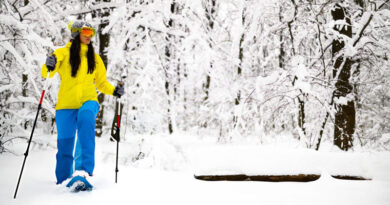
Snowshoeing is a great way to enjoy winter, and having the right gear makes all the difference, especially for women. Women’s snowshoes are designed with features that provide a better fit, lighter weight, and easier handling, so you can walk comfortably on snowy trails without feeling weighed down. The best snowshoes for women combine comfort, balance, and performance.
1. MSR Lightning Ascent

- Terrain: Mountain Terrain
- Frame Material: Aluminum
- Crampon Material: Steel
- Max Load: 180-210 lbs
The MSR Lightning Ascent is a premier choice for technical backcountry explorers who need aggressive traction. Its unique 360-degree traction frames provide edge-to-edge grip, ensuring stability on steep, icy traverses where standard snowshoes might slip. The high-quality steel crampons and TPU-coated nylon decking offer a blend of lightweight performance and extreme durability for harsh conditions.
These shoes feature Ergo Televator heel lifts that significantly reduce calf fatigue during long ascents. The rubber strap closure system remains flexible even in sub-zero temperatures, making them reliable for high-altitude mountaineering. Whether you are navigating deep powder or crusty ice, the Lightning Ascent delivers the confidence needed for peak bagging and challenging winter expeditions.
Pros: Exceptional side traction, lightweight aluminum build, reliable heel lifts for climbing.
Cons: Premium price point, rubber straps can be tedious to align perfectly.
2. Retrospec Drifter Snowshoes
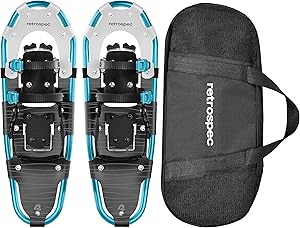
- Closure: Double-ratchet binding
- Frame: Lightweight Aluminum
- Pivot System: Full-floating
- Included: Mesh carrying bag
The Retrospec Drifter is designed for those who value efficiency and ease of use on the trail. The standout feature is the double-ratchet binding system, which allows for a quick setup so you can start your hike without fumbling in the cold. Its lightweight aluminum frame ensures that your steps remain effortless while providing the necessary support for deep powder.
A built-in heel lifter makes this model a great companion for uphill treks, as it helps alleviate strain on your lower legs. The full-floating pivot system is a thoughtful addition, allowing the shoe to move naturally with your gait for a smoother experience. This package is perfect for recreational hikers who want a reliable, easy-to-carry option for weekend adventures.
Pros: Very affordable, includes a carrying bag, fast ratchet system.
Cons: Not ideal for extreme mountain terrain, limited side traction.
See the Retrospec Drifter Snowshoes
3. G2 GO2GETHER Snowshoes
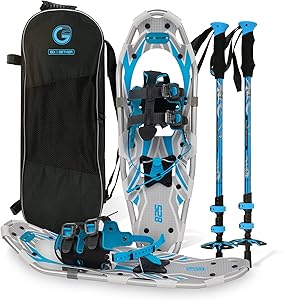
- Decking: High-quality HDPE
- Crampon: Aluminum
- Padding: EVA Foam
- Mechanism: One-pull buckle
The G2 GO2GETHER snowshoes prioritize user comfort with a unique EVA foam padding inside the bindings. This provides an extra layer of warmth and a softer feel against your boots, which is a welcome relief during long winter walks. The HDPE decking is engineered for maximum floatation, helping you stay on top of the snow while conserving your energy.
Equipped with a fast ratchet binding and a one-finger lift buckle, these shoes are incredibly easy to adjust even when wearing thick gloves. The flex pivot bar and heel lift work together to maintain a natural walking motion on both flat paths and inclines. They offer a great balance of technical features and ergonomic design for the casual winter enthusiast.
Pros: Comfortable EVA padding, easy one-finger buckles, lightweight HDPE deck.
Cons: Aluminum crampons are less durable than steel on rocky ice, simple aesthetics.
See the G2 GO2GETHER Snowshoes
4. MSR Evo Trail

- Terrain: Rolling Terrain
- Frame: Martensitic Steel
- Deck: Polypropylene
- Weight: 3 lbs. 9.5 oz.
The MSR Evo Trail is a legendary workhorse known for its incredible durability and simplicity. Unlike many aluminum-framed shoes, these utilize a rugged polypropylene deck that can withstand years of abuse in varying snow conditions. The built-in steel traction rails are molded directly into the deck, providing excellent grip even on slopes that would challenge other recreational models.
The Paraglide binding system is designed to be intuitive and freeze-resistant, using secure rubber straps that fit a wide range of footwear. While they are optimized for rolling terrain, their robust construction makes them a favorite for trail hikers who want a dependable shoe that requires minimal maintenance. They are a solid investment for long-term winter hiking.
Pros: Virtually indestructible deck, excellent side traction rails, made in the USA.
Cons: No heel lift for steep climbs, slightly louder on icy snow.
5. Tubbs Wayfinder

- Terrain: Flat Terrain
- Closure: Dial Lace
- Crampon: Carbon Steel
- Decking: Nytex nylon
The Tubbs Wayfinder is all about convenience and smooth operation on flat to gentle trails. The standout feature is the Dial Lace system, which uses a rotary dial to tighten the binding evenly around your boot with a simple turn. This eliminates the need to pull on frozen straps and ensures a precise, snug fit every time you head out.
With a lightweight aluminum frame and carbon steel toe and heel crampons, the Wayfinder provides stable footing without adding unnecessary bulk. The Nytex decking is quiet and flexible, contributing to a peaceful hiking experience. It is an ideal entry-level shoe for those who enjoy leisurely walks through snow-covered meadows or local parks during the winter season.
Pros: Effortless dial lace system, very lightweight, quiet nylon decking.
Cons: Lacks side traction, not suitable for steep or icy inclines.
6. Atlas Access

- Closure: Rubber Strap
- Heel Lift: Yes
- Max Load: 160-200 lbs
- Deck: Nytex nylon
The Atlas Access is a versatile snowshoe designed to handle rolling terrain with ease. It features a sleek aluminum frame and a robust Nytex deck that provides excellent floatation. The inclusion of a heel lift is a significant benefit, as it allows hikers to maintain a neutral foot position when climbing hills, effectively reducing strain on the calves and Achilles tendons.
The rubber strap closure system is straightforward and secure, ensuring your feet stay locked in regardless of the snow depth. Combined with carbon steel toe and heel crampons, the Access offers reliable grip on packed trails. It is a fantastic mid-range option for hikers who want to transition from flat paths to more varied, undulating landscapes.
Pros: Integrated heel lift, durable nylon deck, comfortable binding system.
Cons: Minimal side traction, can feel a bit wide for narrow gaits.
7. Retrospec Drifter Snowshoes (with Poles)
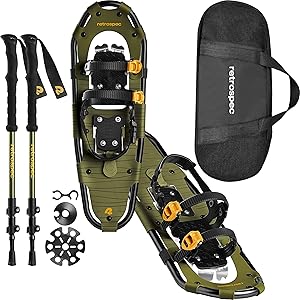
- Frame: Aircraft-grade Alloy
- Closure: Double-ratchet
- Accessories: Adjustable Poles
- Deck: Polyethylene
This version of the Retrospec Drifter comes as a complete adventure-ready package, including adjustable trekking poles. The aircraft-grade alloy frame is exceptionally strong yet light, paired with rugged polyethylene decks that ensure you stay afloat in deep snow. The quick-lock double-ratchet bindings are designed for glove-friendly operation, making transitions at the trailhead fast and painless.
The addition of terrain-specific attachments for the poles provides extra stability on uneven ground, making this a great value for beginners. The full-floating pivot system works to reduce leg strain by allowing the shoe to rotate naturally. It is an all-in-one solution for those looking to jump into snowshoeing without having to purchase gear piece by piece.
Pros: Great value with included poles, strong alloy frame, easy-to-use bindings.
Cons: Poles are basic quality, decking can be noisy on hardpack.
See the Retrospec Drifter Snowshoes
8. Tubbs Panoramic

- Closure: Dial Lace
- Terrain: Rolling Terrain
- Side Traction: Yes
- Weight: 4 lbs. 3.2 oz.
The Tubbs Panoramic is a high-performance snowshoe that combines comfort with serious technical capability. It utilizes the DynamicFit binding with a BOA Dial Lace system, providing an incredibly secure and even fit that can be adjusted on the fly. This model is built for rolling terrain but features side traction and heel lifts, making it much more capable on inclines.
The SoftTec nylon decking is designed for durability and quiet movement, while the carbon steel crampons bite deeply into the snow. While it is slightly heavier than some entry-level models, the added stability and ease of the dial binding justify the weight for serious winter hikers. It is a premium choice for those who want top-tier technology.
Pros: BOA dial system is excellent, good side traction, very comfortable fit.
Cons: Heavier than competitors, higher price point.
9. Atlas Montane

- Terrain: Mountain Terrain
- Crampon: Steel
- Weight: 4 pounds
- Heel Lift: Yes
The Atlas Montane is engineered for the rigors of mountain hiking, offering a sturdy aluminum frame and high-traction steel crampons. It features the Spring-Loaded Suspension system, which keeps the snowshoe close underfoot for easy maneuvering and suspends the foot so it can move naturally. This design is particularly effective when navigating side slopes and uneven mountain trails.
Equipped with heel lifts and aggressive side traction, the Montane excels at vertical ascents where grip is paramount. The Nytex decking is durable and resistant to the elements, ensuring long-lasting performance in cold weather. It is a reliable choice for serious adventurers who require a shoe that can handle steep gradients and icy conditions with ease.
Pros: Excellent suspension system, aggressive mountain traction, durable steel crampons.
Cons: Relatively heavy at 4 lbs, rubber straps can feel bulky.
10. AMBIO Snowshoes

- Material: Aluminum Frame
- Load Range: 30 – 250 lbs
- Binding: Double Ratcheting
- Heel Strap: TPE
AMBIO snowshoes offer a wide variety of sizes, making them accessible for everyone from children to large adults. The lightweight aluminum frame is paired with an ergonomic design to ensure that walking remains natural and comfortable throughout the day. The double ratcheting bindings are a standout for this price range, allowing for a secure fit with most types of footwear.
The one-buckle tightening mechanism is a convenient addition, working alongside the TPE heel strap to provide efficient support. Every pair comes with a carrying bag, which makes transport and storage much simpler. While they are geared toward recreational use, their sturdy construction and ease of adjustment make them a solid choice for families and casual hikers.
Pros: Wide range of sizes available, includes carrying bag, easy-adjust bindings.
Cons: Basic traction for steep ice, TPE straps may stiffen in extreme cold.
A Woman’s Guide to Choosing the Perfect Snowshoes
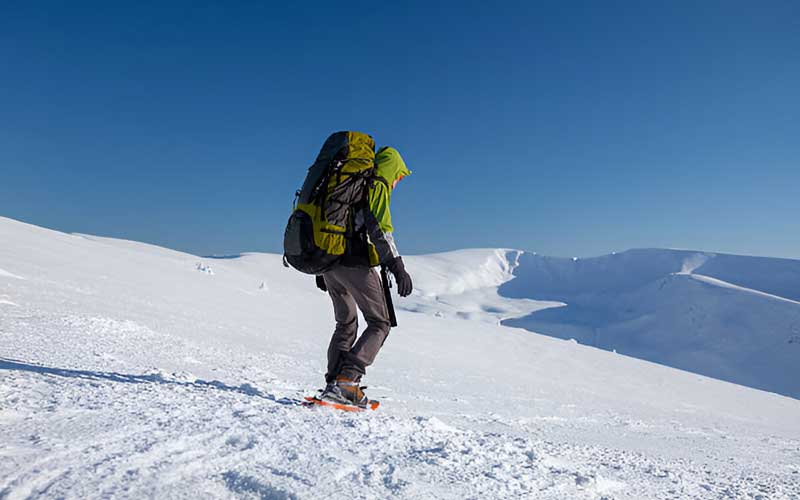
The world doesn’t shut down when the snow falls; it transforms into a quiet, sparkling wonderland waiting to be explored. Snowshoeing is one of the most accessible and rewarding ways to experience this winter magic, turning your favorite summer hiking trails into new adventures. Unlike skiing or snowboarding, the learning curve is gentle, requiring little more than the ability to walk. However, stepping into this sport with the right gear is crucial for comfort, safety, and enjoyment.For women, this often means looking beyond unisex models and considering designs specifically engineered for female biomechanics.
Choosing the right pair can be the difference between a joyful trek through silent, snow-laden forests and a frustrating, uncomfortable slog. This guide will walk you through everything you need to know, from understanding the anatomy of a snowshoe to matching a pair to your specific adventure style, ensuring your winter excursions are everything you dream they can be.
Understanding the Basics: What Makes a Snowshoe?
At first glance, all snowshoes might look similar, but their performance is dictated by the interplay of three fundamental components. Understanding these parts will help you decipher product descriptions and make an informed choice.
Frame and Decking
The frame is the outer edge of the snowshoe, and the decking is the surface material stretched across it. Together, they create the surface area that provides flotation, keeping you from sinking deep into the snow. Frames are typically made from lightweight aluminum tubing or are integrated into a single-piece plastic or composite deck. Aluminum frames are classic and durable, while composite models often offer more advanced traction features and a bit of torsional flex, allowing the snowshoe to conform to uneven terrain.
Bindings
The bindings are what secure your winter boots to the snowshoe deck. This is arguably the most critical component for comfort and control. Bindings should be secure enough to prevent your foot from shifting, yet easy enough to adjust with cold or gloved hands. Modern snowshoes feature a variety of systems, from simple straps with buckles to advanced Boa systems that tighten with the turn of a dial. They also pivot, allowing your foot to move naturally. A rotating (or floating) pivot lets the tail drop to shed snow, while a fixed pivot keeps the snowshoe closer underfoot for a more responsive feel in packed conditions.
Traction (Crampons)
Traction components are the metal teeth that bite into the snow and ice to prevent slipping. At a minimum, every snowshoe has a toe or instep crampon located under the ball of your foot, which provides the primary grip for climbing. Many models also include a heel crampon for braking power on descents and toothed side rails along the frame for stability when traversing slopes. The more aggressive and numerous the crampons, the better the snowshoe will perform on steep, icy, and technical terrain.
Why Choose Women-Specific Snowshoes?
You might wonder if women-specific snowshoes are a genuine performance enhancement or just a marketing tactic. In reality, the design differences are rooted in physiological averages and can significantly improve comfort and efficiency on the trail for many women.
Narrower Frames
On average, women have a narrower gait, meaning their feet are closer together when they walk. Unisex snowshoes, designed for a wider average gait, can force a woman to adopt an unnaturally wide stance, often called “hip splay.” This can lead to discomfort in the hips, knees, and back, especially on longer hikes. Women-specific models are built with a narrower frame, accommodating a natural stride and preventing the annoying and inefficient habit of stepping on your own snowshoe frames.
Lighter Weight
Every ounce matters when you’re lifting your feet thousands of times over the course of a hike. Women’s snowshoes are typically constructed to be lighter, accounting for a lower average body weight. This reduction in weight, however small it seems, translates directly into less fatigue and more energy to enjoy your surroundings.
Ergonomic Bindings
The bindings on women’s models are often designed to fit the typical shape and smaller volume of women’s winter boots. The straps may be placed differently, and the cradle of the binding might be smaller to ensure a snug, secure fit without creating pressure points. This tailored fit provides better control and responsiveness with every step.
Matching Snowshoes to Your Adventure: Types and Terrain
The best snowshoe for you is the one that matches the terrain you plan to explore most often. Snowshoes are generally categorized into three main types based on their intended use.
Flat or Rolling Terrain (Recreational Hiking)
If your idea of a perfect winter day involves walking on packed trails in local parks, gentle forest paths, or across open meadows, a recreational snowshoe is your ideal companion. These are designed for simplicity and comfort. They typically feature user-friendly bindings, moderate traction sufficient for packed snow and small hills, and are often the most affordable option. They provide good flotation for their size and are perfect for beginners and families.
Varied and Mountainous Terrain (Backcountry/Hiking)
For the adventurer who wants to venture off the beaten path, tackle steeper slopes, and explore deep into the backcountry, a hiking or backcountry model is essential. These snowshoes are true all-rounders. They feature more aggressive crampon systems with both toe and heel teeth, as well as side rails for superior traction. Their bindings are more robust and secure to handle uneven ground. The most critical feature in this category is the heel lift, also known as a “televator.” This is a small bar that flips up under your heel during ascents, making steep climbs feel like walking up stairs, which dramatically reduces calf fatigue.
Steep, Icy, and Alpine Terrain (Mountaineering)
When your goals involve summiting icy peaks or navigating treacherous, technical terrain, you need a mountaineering snowshoe. These are the most aggressive and durable models available. They boast formidable traction systems, often with 360-degree traction frames and large, sharp steel crampons designed to bite into ice and hardpack with absolute certainty. Their bindings are built to be bombproof, offering a completely locked-in fit for maximum control. These snowshoes prioritize grip and durability above all else.
Getting the Right Size and Fit
Once you’ve identified the right type of snowshoe, the final step is choosing the correct size. Snowshoe sizing is not based on your boot size but on your total weight.
The Importance of Total Weight
To find your size, you must calculate your “packed weight”—your body weight plus the weight of all the gear you’ll be carrying, including your pack, water, extra layers, and food. Snowshoe manufacturers provide a recommended load for each size. A smaller snowshoe is more maneuverable, while a larger one provides more flotation. Always choose the smallest size that can support your packed weight for the conditions.
Snow Conditions Matter
The type of snow you’ll be in also affects your size choice. If you primarily hike on well-packed trails, you can use a smaller size. If you’ll be breaking trail through deep, light, fluffy powder, you need more surface area for flotation and should consider a larger size or a model with add-on flotation tails. These tails, offered by some brands, allow you to adapt a single pair of snowshoes to a wider range of conditions.
Choosing the right snowshoes is an investment in your winter happiness. By considering the unique benefits of a women-specific design, honestly assessing the type of terrain you’ll explore, and correctly sizing for your packed weight, you can find the perfect pair to unlock a whole new season of outdoor adventure. The silent beauty of a snow-covered landscape is waiting for you.