Best Backpacking Wood Stoves of 2026
For adventurers who crave the freedom of the open trail, a reliable wood stove is more than just gear—it’s the heart of camp. Ditch the heavy fuel canisters and embrace the simplicity of cooking with sticks and twigs. In this guide, we break down the best backpacking wood stoves, highlighting lightweight, durable options that make backcountry meals easy and efficient.
1. TOAKS Titanium

- Material: Grade 1 or 2 Titanium
- Packed Size: 4.13 in. (D) x 4.13 in. (H)
- Combustion: 3-part gasification mechanism
- Compatibility: Nests in TOAKS 1100ml or 1600ml pots
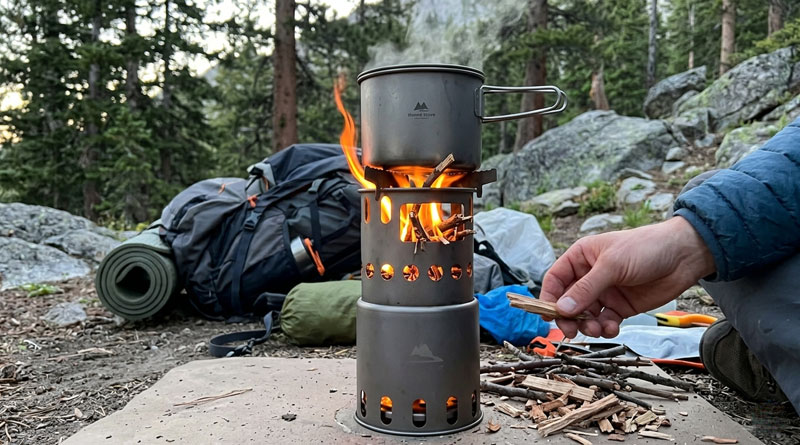
The TOAKS Titanium stove is a marvel of engineering, winning the OutDoor Industry Award for its innovative design. It features a sophisticated three-part cylindrical construction that utilizes flow field calculations to optimize gas intake. This creates a secondary and tertiary combustion process, significantly increasing heat output while reducing smoke.
Despite its high efficiency, the stove remains remarkably light and portable. It is designed to nest perfectly inside TOAKS 1100ml or 1600ml pots, saving critical space in your pack. The included nylon storage sack ensures your other gear stays clean from soot, making it a premier choice for serious ultralight backpackers.
Pros: Extremely lightweight, high thermal efficiency, award-winning design.
Cons: Higher price point, requires specific pot sizes for nesting.
See the TOAKS Titanium See the TOAKS Titanium Small
2. Kuvik Titanium

- Weight: 6.8 oz.
- Folded Thickness: 0.2 inches
- Unfolded Dimensions: 6.25” x 5” x 5”
- Material: Grade-1 Titanium
The Kuvik Titanium stove is built for the minimalist who values strength and space. Crafted from Grade-1 titanium, it offers a strength-to-weight ratio comparable to steel while weighing half as much. Its most impressive feature is the ability to collapse down to a mere 0.2 inches, fitting easily into side pockets or emergency kits.
The setup is intuitive, using a tab-and-slot system that transforms flat plates into a stable, freestanding fire pit. The front opening allows for continuous stoking of twigs and bark without removing your cookware. It is a reliable, corrosion-resistant tool that provides confidence in harsh environments or survival situations.
Pros: Ultra-thin profile when folded, very durable, easy to stoke.
Cons: Tab assembly can be tricky with cold hands, limited fuel capacity.
3. Ohuhu Stove

- Weight: 0.98 lbs
- Material: Stainless Steel
- Heat Control: 2-level adjustable ash catcher
- Fuel Types: Wood, gas tanks, or solid fuel tablets
The Ohuhu camping stove is a versatile powerhouse designed for various outdoor activities. Unlike many wood-only stoves, this model features a detachable plate that allows for the use of solid fuel tablets or gas tanks, making it a hybrid solution for unpredictable conditions. The stainless steel build ensures it can support heavy pots.
A standout feature is the adjustable ash catcher, which offers two different heights for heat management. You can choose intense heat for rapid boiling or a lower setting for simmering and warming coffee. It is a cost-effective, eco-friendly option that balances durability with a user-friendly design for casual campers and hikers.
Pros: Multi-fuel compatibility, adjustable heat levels, very stable base.
Cons: Heavier than titanium models, larger footprint when packed.
4. REDCAMP Folding Stove
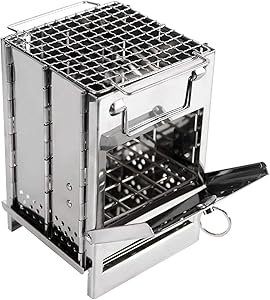
- Unfolded Size: 8.3″ x 5.9″ x 5.5″
- Folded Size: 8.3″ x 5.9″ x 1.5″
- Weight: 1.9 lbs
- Structure: Cuboid stainless steel
The REDCAMP Folding Stove is a rugged, box-style wood burner that prioritizes stability. Its cuboid design provides a large, flat cooking surface that can handle significant weight without wobbling. Constructed from high-quality stainless steel, it is built to withstand high temperatures and frequent use in the wilderness.
This stove is particularly convenient because it arrives with the protective film already removed by the manufacturer, saving you a tedious setup step. It folds down into a compact book-like shape and fits into an included carry bag. It is an excellent choice for those who prefer cooking with larger pans over an open flame.
Pros: Large cooking surface, very stable cuboid shape, easy to fold.
Cons: Heavy for long-distance backpacking, requires more fuel than smaller stoves.
5. Hovico Lightweight Stove

- Material: Hardened Stainless Steel
- Setup Time: Approximately 5 minutes
- Fuel: Wood, twigs, leaves, or branches
- Package: Reusable pouch included
The Hovico Lightweight Stove is a budget-friendly and rugged option for those looking to transition away from bulky gas canisters. Made of hardened stainless steel, it is designed for the rigors of the trail. The cylindrical assembly creates a chimney effect that draws air through the fuel, allowing for a hot fire in minutes.
While basic in design, it excels in simplicity and reliability. It comes with a reusable pouch for easy storage in your backpack. This stove is perfect for emergency preparedness or short weekend trips where saving money and using natural, unlimited fuel sources like dry twigs and leaves is the primary goal.
Pros: Very affordable, simple assembly, sturdy construction.
Cons: Minimalist design lacks features, soot management is required.
See the Hovico Lightweight Stove
6. G4Free Folding Stove
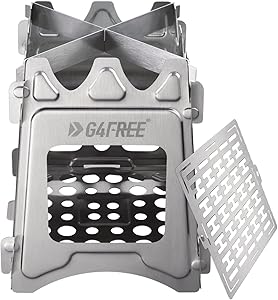
- Design: Fold-flat panel system
- Material: Stainless Steel
- Ventilation: Integral side air vents
- Portability: Pocket-sized when folded
The G4Free Folding Stove is designed for maximum portability and environmental friendliness. Its lightweight panel construction allows it to fold completely flat, making it small enough to slide into a cargo pocket or a side pouch. It is built to create a stable platform for various cookware while using minimal material.
The scientific design includes a dedicated opening for stoking the fire and strategically placed air vents to ensure proper ventilation. This promotes an efficient burn and reduces the carbon footprint of your meal. It is an ideal companion for the eco-conscious hiker who wants a sturdy, no-fuss solution for boiling water.
Pros: Folds extremely flat, eco-friendly, very easy to clean.
Cons: Panels can warp slightly after high heat, smaller cooking area.
7. Lixada Wood Stove
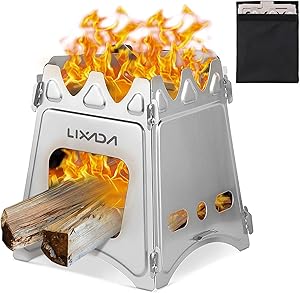
- Weight: 12.6 oz (358g)
- Cooking Platform: Cross-stand trivet
- Assembly: 4-wall panel system
- Material: Rust-proof Stainless Steel
Lixada offers a highly popular folding wood stove that strikes a balance between weight and utility. Weighing only 12.6 ounces, it minimizes the burden on your pack while providing a functional kitchen in the woods. The stainless steel construction is rust-proof, ensuring it remains a staple in your gear for many years.
The inclusion of a cross-stand trivet is a significant benefit, as it creates a stable platform for pots and increases thermal contact with the flames. The wide opening allows for easy fuel management, making it simple to maintain a consistent temperature for grilling or boiling. It is a versatile choice for trekking and mountaineering.
Pros: Cross-stand adds stability, rust-proof, very lightweight.
Cons: Assembly required for every use, can be soot-heavy.
8. Zawasstu Backpacking Stove

- Components: 4 plates and 1 wire mesh
- Fuel: Charcoal, twigs, or leaves
- Assembly: No screws required
- Features: Hollowed-out ventilation design
The Zawasstu Backpacking Stove is a multi-functional tool that doubles as a mini charcoal grill. It consists of four stainless steel plates and a piece of barbecue wire mesh, making it unique for those who enjoy grilling over hot coals in addition to wood flames. It assembles in seconds without the need for tools or screws.
The hollowed-out ventilation design ensures that air flows freely, leading to efficient combustion and even heating. It is safe, stable, and highly portable, fitting into almost any pocket. Whether you are in your backyard or deep in the woods, this stove provides an environmentally friendly way to enjoy a hot meal or a small campfire.
Pros: Includes grill mesh, excellent ventilation, multi-purpose use.
Cons: Multiple loose parts to track, mesh can be difficult to clean.
See the Zawasstu Backpacking Stove
The Ultimate Guide to Choosing the Best Backpacking Wood Stove
For the modern backpacker, the choice of a stove is often a balance between weight, reliability, and fuel availability. While canister stoves are popular for their convenience, backpacking wood stoves have surged in popularity among those who value self-sufficiency and the primal experience of cooking over a real flame. Choosing the right wood stove requires an understanding of materials, combustion designs, and your own typical camping environment.
Unlike traditional stoves that require you to carry heavy fuel canisters, wood stoves allow you to harvest fuel directly from the trail. This “infinite fuel” concept is a game-changer for long-distance hikers and survivalists alike. However, not all wood stoves are created equal. Some are simple folding boxes, while others are high-tech gasification chambers.
Understanding Different Stove Designs
The design of a wood stove determines how efficiently it burns and how much smoke it produces. Generally, these stoves fall into two main categories: flat-pack (folding) stoves and cylindrical gasifiers.
Flat-Pack and Folding Stoves
Flat-pack stoves are the ultimate space-savers. They typically consist of four to five stainless steel or titanium plates that interlock to form a square or hexagonal fire box. These are favored by ultralight hikers because they can slip into the hydration sleeve of a backpack or even a large pocket. Because they are open-air designs, they are easy to feed with twigs, but they can be more susceptible to wind and may produce more smoke than gasifiers.
Gasifier Stoves
Gasifier stoves are more technologically advanced. They usually feature a double-walled construction. As the wood burns, air is drawn in through bottom vents, heated between the walls, and then injected into the top of the combustion chamber. This ignites the wood smoke (wood gas) in a process called secondary combustion. This results in a much hotter flame, less soot on your pots, and significantly less smoke. The trade-off is that they are bulkier and do not fold flat.
[Image of wood gasification process diagram]
Material Matters: Titanium vs. Stainless Steel
When selecting a stove, the material is perhaps the biggest factor influencing price and weight. Most high-end backpacking stoves are made from either stainless steel or titanium.
Titanium Stoves
Titanium is the gold standard for ultralight gear. It is roughly 45% lighter than steel but maintains incredible strength. Titanium is also highly resistant to corrosion and can withstand the extreme heat cycles of a wood fire without warping as easily as thin steel. If you are counting every gram in your pack, titanium is the way to go, though it comes at a premium price.
Stainless Steel Stoves
Stainless steel is the more affordable and common choice. It is rugged, durable, and can handle heavy pots without bending. While heavier than titanium, steel stoves are often preferred by casual campers or those on a budget. They are also slightly more “stable” due to their weight, which can be a benefit when cooking on uneven terrain.
Key Features to Consider
Beyond the basic design and material, several features can make your trail cooking experience much smoother. It is important to look at how the stove handles fuel and how it interacts with your existing cookware.
Fuel Feeding Openings
A well-designed wood stove should have a “feed port” or a side opening. This allows you to slide in long sticks and twigs without having to lift your pot off the flame. Stoves that require you to drop wood in from the top can be frustrating, as they force you to interrupt the cooking process every time the fire needs more fuel.
Stability and Pot Supports
A stove is only as good as its ability to hold your dinner. Look for stoves with serrated pot supports or cross-bars that provide grip. The wider the base of the stove, the less likely it is to tip over. If you use a very small cup (like a 375ml titanium mug), ensure the pot supports are close enough together to hold a narrow diameter vessel.
Packed Size and Nesting
For cylindrical stoves, “nesting” is a critical feature. Many manufacturers design their stoves to fit perfectly inside specific camping pots. For example, a stove might be designed to nest inside a 1100ml pot. This eliminates “dead space” in your pack, making a bulky gasifier stove much more manageable.
Efficiency and Environment
Choosing a wood stove also means taking responsibility for your environmental impact. Wood stoves are generally considered eco-friendly because they don’t involve disposable metal canisters, but they do require “Leave No Trace” awareness.
Burn Efficiency
A stove with good ventilation (holes at the bottom and top) will burn fuel more completely. This means you need to gather less wood to boil the same amount of water. High-efficiency stoves leave behind only a fine white ash, which is much easier to manage than half-burnt charred wood.
Local Regulations
Before choosing a wood stove, consider where you hike. In many high-alpine environments or during drought-prone seasons, “liquid fuel only” bans are common. Wood stoves are often treated the same as campfires in the eyes of park rangers. Always check if a wood stove is permitted in your destination before relying on it as your primary cooking source.
Summary of Selection Criteria
To wrap up your decision-making process, use the following checklist to evaluate any backpacking wood stove you are considering:
- Weight: Is it under 15 ounces for stainless steel or under 10 ounces for titanium?
- Dimensions: Will it fit in your pack or nest inside your existing cookset?
- Assembly: Can you put it together with cold fingers or while wearing gloves?
- Airflow: Does it have enough vents to ensure a hot, clean burn?
- Versatility: Does it come with a tray for alcohol burners or solid fuel tablets as a backup?
Ultimately, the best backpacking wood stove is the one that fits your specific style of adventure. If you are a long-distance hiker through-trekking a well-wooded forest, an ultralight titanium gasifier might be your best friend. If you are a weekend warrior who enjoys a sturdy setup for grilling a small meal, a stainless steel folding stove will serve you well for years to face.
By focusing on efficient combustion, durable materials, and smart packability, you can enjoy the warmth and ambiance of a wood fire at the end of every trail day without the burden of heavy fuel canisters.