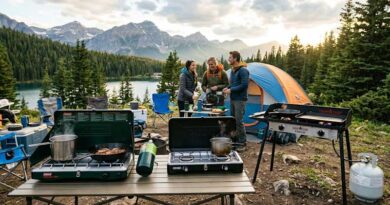
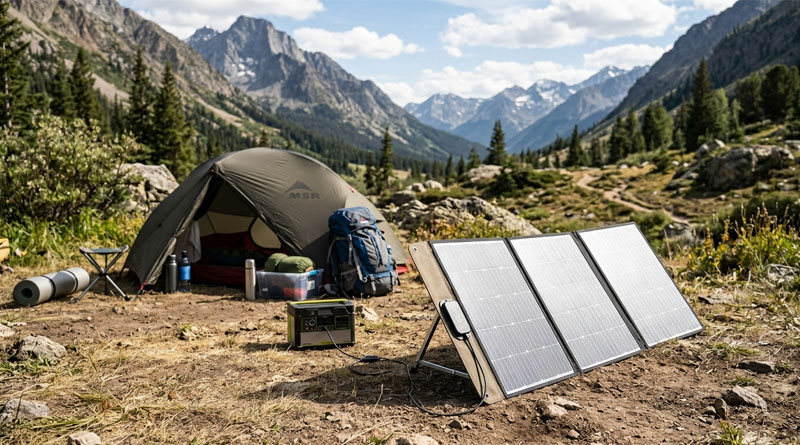
Best Portable Solar Panels for Camping of 2026
Looking for a way to keep your gadgets charged while camping without relying on noisy generators? Portable solar panels are the perfect, eco-friendly solution. They soak up sunlight and turn it into power for your phone, lantern, or cooler. This article reviews the best lightweight, durable, and easy-to-use solar panels for your next outdoor trip. We’ll help you pick the right one to stay connected and safe in the wild.
1. ALLPOWERS SP033 200W Foldable Solar Panel
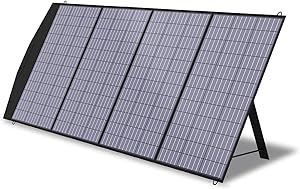
- Efficiency: 23% conversion rate
- Weight: 15.2 lbs (6.92kg)
- Output: 200W Peak Power
- Connectors: Standard MC4
The ALLPOWERS SP033 stands out as a highly efficient and ultra-portable energy solution for modern campers. Weighing just over 15 pounds, it folds down into a slim profile that is remarkably easy to pack into crowded storage compartments. The 23% conversion rate ensures you harvest significant power even during shorter daylight hours.
Equipped with standard MC4 connectors, this panel integrates seamlessly with most portable power stations and existing solar kits. The PET surface provides decent durability against the elements, while the foldable design allows for quick deployment at your campsite. It is a straightforward, reliable choice for those needing a compact 200W boost for their off-grid adventures.
- Pros:
- Extremely lightweight and slim
- High energy conversion rate
- Standard MC4 compatibility
- Cons:
- PET surface less durable than ETFE
- Requires frequent cleaning for peak efficiency
- No built-in kickstands
2. Renogy 300W N-Type Portable Solar Suitcase
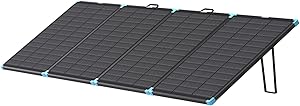
- Technology: N-Type 16BB Cells
- Efficiency: Industry-leading 25%
- Durability: IP67 Waterproof & ETFE
- Setup: 60-second tool-free setup
Renogy has pushed the boundaries of portable solar with this 300W N-Type suitcase, offering a staggering 25% efficiency. This advanced technology allows you to generate more power in smaller spaces, making it ideal for compact camping setups. Despite its high wattage, it remains surprisingly light at 18.74 lbs, outperforming traditional heavy glass suitcases.
The IP67 rating and hail-resistant ETFE coating ensure this panel survives harsh conditions, from desert heat to mountain storms. Parallel wiring is a standout feature, allowing the panel to continue producing power even when partially shaded by trees or clouds. The rust-proof kickstands provide a stable foundation for immediate energy harvesting anywhere you park.
- Pros:
- Highest efficiency in its class
- Works well in partial shade
- Robust IP67 weather protection
- Cons:
- Premium price for N-Type tech
- Larger footprint than blanket styles
- Kickstands require level ground
3. EBL 200W Waterproof Foldable Solar Panel
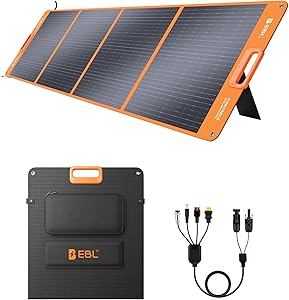
- Efficiency: Up to 23.5% Mono cells
- Build: 840D Oxford Cloth + PET
- Cables: 4-in-1 Output Connector
- Safety: FCC, RoHS, EMC certified
The EBL 200W panel is a versatile powerhouse designed for wide compatibility across various portable power stations. Its monocrystalline cells provide a respectable 23.5% conversion rate, significantly outperforming traditional polycrystalline panels. The inclusion of a 4-in-1 cable—featuring XT60, Anderson, and DC connectors—makes it a truly universal “plug-and-play” solution for off-grid power.
Constructed with upgraded PET lamination and heavy-duty 840D Oxford cloth, this panel is built to withstand frequent folding and transport. It features built-in short circuit and surge protection, prioritizing safety for your expensive electronics. While it folds into a convenient briefcase shape, the high-quality monocrystalline cells ensure you get consistent output for your camping or emergency needs.
- Pros:
- Universal 4-in-1 compatibility
- Durable Oxford cloth exterior
- Certified safety protections
- Cons:
- IP65 rating (splash only)
- PET can degrade in extreme heat
- Lacks adjustable kickstands
4. 200W Portable Solar Panel with 4 Kickstands

- Lamination: 6-layer ETFE Technology
- Efficiency: 23.5% Conversion
- Design: 4 Adjustable Kickstands
- Materials: 840D moisture-proof cloth
This 200W foldable charger utilizes advanced 6-layer ETFE lamination, which provides superior transparency and heat resistance compared to standard PET panels. The 23.5% conversion efficiency is bolstered by the four adjustable kickstands, allowing you to angle the panel perfectly toward the sun for maximum energy gain. It is specifically designed for rugged outdoor adventures and emergency off-grid use.
The unit includes a built-in waterproof bag for cable storage and high-quality grommets that allow for creative mounting on the side of a camping vehicle. Despite its large unfolded size, it collapses to a quarter of its dimensions for easy transport. The robust rubber handle and front clips prevent accidental opening, making it one of the most user-friendly portable kits available.
- Pros:
- Superior ETFE heat resistance
- Adjustable stands maximize harvest
- Integrated cable storage bag
- Cons:
- Cannot be left in heavy rain
- Heavier than simple blanket styles
- Four stands take time to align
5. Renogy 400W Ultra-Light Solar Blanket

- Portability: 16-fold backpack design
- Weight: 16.09 lbs (Ultra-light)
- Efficiency: 25% N-Type cells
- Safety: UL 61730 Certified
The Renogy 400W Solar Blanket is a game-changer for space-constrained travelers, weighing 62% less than traditional 400W portable panels. Its innovative 16-fold design allows it to pack down to the size of a standard backpack, fitting effortlessly into SUVs or small campers. Despite its tiny footprint, it utilizes N-Type technology to deliver a massive 400W output at 25% efficiency.
This blanket is incredibly versatile; it can be draped over a windshield for shade, hung vertically between trees, or spread on the ground. Military-grade ETFE lamination and reinforced stitching provide high durability against hidden cracks and extreme temperatures. It is a premium, safety-certified solution for those who need high power density without the bulk of rigid panels.
- Pros:
- Unbeatable power-to-weight ratio
- Fits in tiny storage spaces
- Multiple mounting configurations
- Cons:
- Lacks rigid stands for angling
- Higher cost for 400W output
- Difficult to manage in high wind
6. DOKIO 300W Foldable Solar Panel Kit
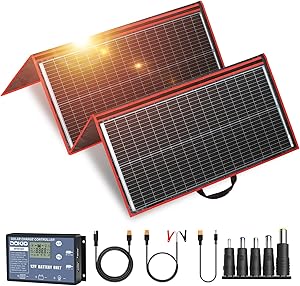
- Power: 300W Monocrystalline
- Controller: Standalone PWM with USB
- Cable: 9.85ft (3m) long reach
- Weight: 15.2 lbs (Very light)
DOKIO provides an all-in-one 300W kit that balances high power output with extreme portability. At only 15.2 lbs, this panel is significantly lighter than most 300W competitors, yet it includes a dedicated PWM controller for charging 12V batteries directly. The long 9.85ft cable is a practical addition, allowing you to camp in the shade while placing the panels in direct sunlight.
The standalone controller features dual USB ports, enabling you to charge small devices even without a battery bank. While the fabric case isn’t meant for long-term exposure to heavy rain, the monocrystalline cells provide excellent conversion for quick charging during sunny spells. It’s a complete, budget-friendly bundle for those who need a high-wattage portable solution.
- Pros:
- Lightest 300W panel available
- Includes charge controller and adapters
- Long cable for shade management
- Cons:
- Fabric case not fully waterproof
- PWM controller less efficient than MPPT
- Output limited by power station caps
7. Renogy 200W Portable Solar Suitcase Kit

- Type: Rigid Suitcase Design
- Controller: 20A Waterproof Voyager
- Cells: Grade A+ Monocrystalline
- Life: Designed for up to 25 years
For those seeking a more permanent, rugged solution, the Renogy 200W Suitcase is built for long-term durability. Unlike fabric-backed blankets, this rigid design features weather-resistant backplanes and a protective canvas case intended to last for decades. It includes the highly-rated 20A Voyager charge controller, making it compatible with various 12V battery types, including lithium and AGM.
The Grade A+ monocrystalline cells ensure peak performance, while the adjustable kickstand allows for precise solar tracking. This kit is truly “plug-and-play,” coming with alligator clips for immediate battery connection. While it is heavier than “blanket” styles, its structural integrity makes it the best choice for users who travel in areas with high winds or frequent storms.
- Pros:
- Extreme 25-year design life
- High-quality waterproof controller
- Sturdy in windy conditions
- Cons:
- Much heavier than folding blankets
- Bulky storage footprint
- PWM controller instead of MPPT
Portable Solar Panels for Camping: Harness the Sun Anywhere
Camping used to mean leaving behind the comforts of home, including reliable electricity. But today, portable solar panels have transformed the outdoor experience, letting you keep gadgets charged, lights glowing, and small appliances running — all while staying off-grid. Whether you are a weekend warrior or a long‑term van‑lifer, understanding how to choose and use portable solar panels for camping will give you energy independence, reduce your carbon footprint, and add a new level of convenience to your adventures under the open sky.
This comprehensive guide walks you through everything you need to know about portable solar panels for camping: how they work, what sizes and types suit different camping styles, key features to look for, practical setup tips, maintenance advice, and answers to common questions. By the end, you will be ready to pick the perfect solar solution for your next trip.
Why Go Solar While Camping?
Portable solar panels turn sunlight into direct current (DC) electricity, which can charge power banks, USB devices, 12V batteries, or even larger portable power stations. For campers, this means no more fighting for the last campsite with an electric hookup, no more running a noisy generator, and no more dead phone batteries when you need a GPS or emergency call. Solar energy is silent, fume‑free, renewable, and increasingly affordable. Plus, modern foldable panels are lightweight and pack down into a backpack or car trunk with minimal hassle.
Types of Portable Solar Panels for Camping
Before you buy, it helps to understand the two dominant technologies found in portable camping panels.
Monocrystalline Solar Panels
Monocrystalline panels are made from a single crystal structure, giving them a distinctive black or dark blue appearance. They are the most efficient type (typically 18–22%) and perform better in low‑light conditions, such as cloudy days or early morning hours. For camping where space is limited, monocrystalline panels provide more power per square inch. They are often the first choice for backpackers and serious overlanders, though they tend to cost slightly more than polycrystalline alternatives.
Polycrystalline Solar Panels
Polycrystalline panels are made from multiple silicon fragments melted together, resulting in a blue, speckled look. They are slightly less efficient (15–17%) and usually a bit larger for the same wattage. However, they are also more budget‑friendly. For car camping or basecamp setups where weight and packed size are less critical, polycrystalline panels offer good value. Both types are durable and widely available, but efficiency‑focused campers will lean toward monocrystalline.
Choosing the Right Size: Watts, Amps, and Your Needs
Sizing a portable solar panel system for camping is not one‑size‑fits‑all. The wattage rating (e.g., 60W, 100W, 200W) tells you how much power the panel can produce under ideal sunlight. But real‑world output is often 50‑80% of the rated value due to clouds, angle, and temperature. To determine what you need, list all devices you plan to charge and estimate their daily energy consumption in watt‑hours (Wh).
Example load calculation:
Smartphone (10Wh per full charge) × 2 = 20Wh
Headlamp (5Wh) × 2 = 10Wh
Laptop (50Wh) = 50Wh
Portable fridge (200Wh per day) = 200Wh
Total = 280Wh per day.
If you get 5 peak sun hours, you would need a 280Wh ÷ 5h = 56W panel. With efficiency losses, a 100W panel gives a comfortable buffer.
For minimalist campers (phone, camera, power bank): a 20‑40W panel is often enough. For family car camping with lights, fans, and cooler: 100‑150W. For RV or van life with a fridge and multiple devices: 200W or larger, preferably paired with a portable power station.
Key Features to Look For
Not all portable solar panels are created equal. When shopping for a camping‑ready solar panel, consider these essential features.
Portability and Folded Size
Look for foldable designs with a carrying case or built‑in kickstands. Most camping panels fold into a compact briefcase shape, protecting the cells during transport. Check the weight: backpacking panels should weigh under 5 pounds (2.3 kg) for 50‑100W, while car camping panels can be heavier.
Durability and Weather Resistance
Camping means exposure to dust, moisture, and occasional rain. Choose panels with an IP rating (e.g., IP65 or IP67) for water and dust resistance. Also, look for reinforced corners, scratch‑resistant ETFE coating (instead of cheaper PET), and quality stitching on fabric hinges. High‑quality panels survive years of rough use.
Compatibility and Connectors
Most portable camping panels come with a built‑in USB‑A and USB‑C port for direct device charging. For larger needs, an Anderson Power Pole, MC4, or 8mm DC output lets you connect to a solar generator or charge a 12V battery via a charge controller. Some panels include a PWM (Pulse Width Modulation) controller inside the junction box — convenient for beginners, though external MPPT (Maximum Power Point Tracking) controllers are more efficient.
Warning: Never connect a solar panel directly to a lead‑acid or lithium battery without a charge controller — you risk overcharging and fire.
Angle Adjustability and Kickstands
To get maximum output, you need to angle the panel toward the sun (roughly perpendicular). Built‑in kickstands or mounting grommets are invaluable. Without proper angling, you might lose 30‑50% of potential power. Many foldable panels include fabric stands or adjustable plastic legs.
How to Set Up Portable Solar Panels at Camp
Using solar panels while camping is simple once you understand a few principles. Follow these steps for optimal performance.
Step 1: Find the sun. Scout a clear, open spot without tree cover, shadows from your tent, or vehicle. Shadows on even one cell can drastically reduce total output due to how solar cells are wired.
Step 2: Unfold and position. Lay out your panel or prop it using built‑in stands. In the northern hemisphere, point the panel south. In the southern hemisphere, point north. Tilt angle should roughly equal your latitude — for example, 40 degrees in spring/fall, or latitude minus 15 degrees in summer (flatter), plus 15 degrees in winter (steeper).
Step 3: Connect your devices. Plug your phone, power bank, or portable generator directly via USB or DC output. If you are charging a battery bank first (recommended), let the solar panel top off the battery during the day, then use the battery at night.
Step 4: Monitor and adjust. Every couple of hours, change the panel’s angle to follow the sun. Many solar generators show real‑time input wattage, which helps you tweak the angle for maximum harvest.
Using a Solar Generator (Power Station) with Panels
A portable power station (like those from Jackery, EcoFlow, Bluetti, or Goal Zero) combines a battery, inverter, charge controller, and multiple output ports. You connect solar panels to the station’s solar input, which stores energy for later use. This is the most user‑friendly camping setup: you can charge laptops, run CPAP machines, power a mini fridge, or even use a small coffee maker. Make sure the panel’s voltage and current are within the station’s input limits (most handle 12‑24V panels).
Tips to Maximize Solar Efficiency While Camping
Even a 100W panel can disappoint if used incorrectly. Use these pro tips to get every possible watt.
- Clean the panels regularly. Dust, pollen, pine sap, and bird droppings block sunlight. Wipe with a damp, soft cloth each morning.
- Park in the shade, but put panels in the sun. Never place panels under trees — only a few minutes of shade kills output.
- Charge during peak hours (10 a.m. to 3 p.m.). That’s when the sun is highest and strongest. Even on overcast days, you can get 20‑40% of rated power.
- Use an MPPT charge controller for larger systems. MPPT can increase harvest by 10‑30% compared to PWM, especially in cold or cloudy conditions.
- Parallel vs. series connection. For two or more portable panels, connecting in parallel keeps voltage lower (safer for most power stations) but increases amperage. Series raises voltage — good for long cable runs but requires an MPPT controller that can handle higher voltage input.
Maintenance and Storage for Long Life
Portable solar panels are durable but not indestructible. After each camping trip, follow these care steps to ensure years of reliable service.
- Avoid stepping or sitting on panels. The photovoltaic cells are brittle; point pressure can cause micro‑cracks that reduce performance.
- Store in a cool, dry place. Extreme heat in a parked car can degrade the encapsulation over time. Fold and zip into the carry case.
- Check cables and connectors. Look for fraying or corrosion. Keep USB and DC ports clean and dry.
- Recharge the battery periodically if you use a solar generator. Lithium batteries like to be stored at 40‑60% charge if not used for months.
Top Recommended Use Cases (Who Needs What)
Backpackers and Ultralight Campers
Look for a 20‑60W monocrystalline panel weighing under 2 lbs (0.9 kg). Many ultralight options come with integrated USB and can be strapped to the outside of a backpack. You will mainly keep a power bank topped up. Brands like Lixada, BigBlue, and Nekteck offer popular choices.
Car Campers and Weekend Families
A 100‑120W foldable panel paired with a 200‑300Wh power station covers phones, lights, speakers, a fan, and a car fridge for 2‑3 days. This setup is hassle‑free and fits easily in a trunk. Look for a waterproof case and multiple USB ports.
RV / Overlanding / Van Life
You will want 200W or more in portable or semi‑flexible panels, or a combination of rooftop and portable. Portable panels are excellent for parking in the shade while you chase the sun with movable panels. Use an MPPT controller and a larger power station (500Wh+).
Common Myths and Misconceptions
Myth 1: Solar panels don’t work on cloudy days. Reality: They still produce reduced power (10‑30% of rated). On overcast days, instead of 100W you might get 20W — enough to keep a phone alive.
Myth 2: Bigger wattage is always better. Reality: Oversized panels can be heavier and more expensive. Match panel size to your battery capacity; a 200W panel charging a tiny 100Wh battery might overcharge quickly if you don’t have a quality controller.
Myth 3: You need direct sunlight perpendicular all day. Reality: While ideal, even scattered light works. Modern panels have better low‑light sensitivity than older models. Don’t stress — just get it roughly pointed toward the equator.
Final Thoughts: Is Solar Camping Right for You?
Portable solar panels for camping have matured into reliable, affordable, and user‑friendly tools. They suit everyone from solo hikers trying to keep a phone alive for emergencies to families who want to run a small fridge and charge tablets. The freedom from gas stations, noisy generators, and electrical hookups is liberating — and it’s a quiet, clean way to enjoy nature. Start with a modest setup: a 60‑100W panel plus a mid‑sized power bank. Once you experience the convenience of unlimited sun‑powered energy at your campsite, you’ll never go back.
Remember to practice “Leave No Trace” principles: set panels away from fragile vegetation, manage cables to avoid tripping hazards, and enjoy the sunset knowing your devices are fully charged for tomorrow’s adventure.
Disclaimer: Electrical safety is paramount. Always follow manufacturer guidelines, use proper charge controllers, and never exceed device input limits. When in doubt, consult a professional. The sun is free — but a smart camper respects both the power and the potential risks of portable solar systems.