Best Sleeping Bags for Couples of 2026
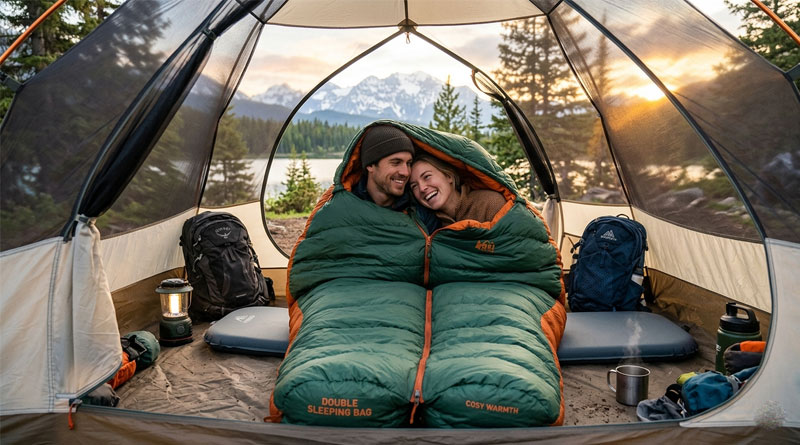
If you and your partner love camping together, sharing one sleeping bag can be warmer, cozier, and more convenient than using two separate bags. But not all double bags are made equal. The right one should keep you both comfortable, block out cold air, and offer enough room to move without waking each other up. In this guide, we’ve picked the best sleeping bags for couples based on comfort, durability, and value.
1. REI Co-op Siesta Hooded 20 Double

- Best Use: Camping
- Temp Rating: 20°F / -6.6°C
- Weight: 9.7–11.9 lbs
- Shape: Rectangular
This spacious double bag is built for car camping couples who value room to move. The recycled polyester shell and lining feel durable yet soft, while the 20-degree rating handles cool-weather nights with ease. We love the hooded design that traps heat around your head, and the left/right zipper options make entry and exit graceful. At nearly 10 pounds in its medium size, this is strictly for drive-up campsites, but the comfort is undeniable. The rectangular cut offers 127 inches of shoulder girth, so even restless sleepers stay happy.
Fill weight varies by size, but the medium packs a substantial 6.5 pounds of recycled insulation. That’s serious warmth for two. The stuff sack volume hits 50 liters, and compressed volume drops to around 38 liters—still bulky but manageable. If you want a toasty, eco-friendly bag for chilly nights under the stars, this REI classic delivers. Just don’t plan on backpacking with it.
Pros: Roomy rectangular shape, eco-friendly recycled materials, hood adds warmth, multiple size options.
Cons: Very heavy, bulky for storage, not for backpacking.
See the REI Co-op Siesta Hooded 20 Double
2. Kelty Tru.Comfort Doublewide
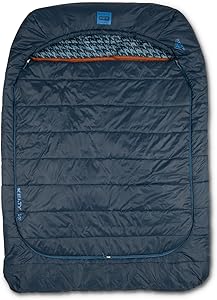
- Material: 100% polyester
- Shoulder width: 64 inches
- Length: 84 inches
- Insulation: Cloud Loft synthetic
Kelty rethinks couple’s camping with this feature-packed doublewide. The independent ventilation system lets each person control their temperature, while the fully removable top layer transforms the bag for warmer nights. Two built-in blankets add versatility, and the oversized hood fits standard pillows from home. At 64 inches of shoulder space, it’s wider than a queen bed, giving both sleepers room to sprawl. The 75D poly taffeta liner feels silky against skin, and the Cloud Loft insulation compresses well for synthetic fill.
This bag shines for car-camping couples who run at different temperatures. One person can kick off the top layer while the other stays bundled. The two-way zip foot vents release heat without letting in cold drafts. While it’s too heavy and bulky for backpacking, it’s a fantastic investment for relationship harmony outdoors. Kids love it too—plenty of space for family cuddles without overheating mom or dad.
Pros: Independent ventilation, removable top layer, oversized hood for pillows, wider than queen bed.
Cons: Heavy, bulky, not for backpacking.
3. AGEMORE Double Sleeping Bag
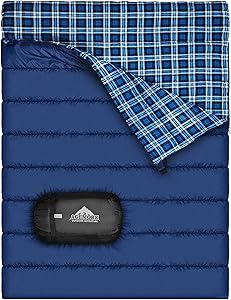
- Shell: 210T polyester
- Lining: Cotton flannel
- Temp range: 41-59°F / 5-15°C
- Weight: 7 lbs
The AGEMORE brings a touch of home to the outdoors with its soft brushed cotton flannel lining. Unlike crinkly synthetics, this feels like your favorite bedsheet. The 210T water-resistant polyester shell handles damp grass and morning dew without soaking through. At 7 pounds, it’s lighter than many double bags, and the compression sack reduces it to 17×11.5×11.5 inches for transport. The 59×86.6-inch size fits two adults up to 6 feet tall comfortably.
Versatility is the headline here. Unzip it fully to create two separate sleeping bags or two large blankets. Dual-sided zippers mean each person can exit without disturbing the other. The 3D synthetic fiber fill provides solid warmth for spring through fall camping, though serious winter trips might need more insulation. For couples who want flexibility and home-like comfort, this bag hits the sweet spot without breaking the bank.
Pros: Soft flannel lining, splits into two bags, lightweight for a double, waterproof shell.
Cons: Not for extreme cold, flannel can absorb moisture over time.
See the AGEMORE Double Sleeping Bag
4. oaskys Double Sleeping Bag
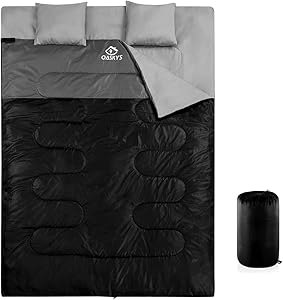
- Temp range: 50-68°F / 10-20°C
- Shell: 210T anti-tear polyester
- Lining: 190T polyester pongee
- Size: 145 x 220 cm
Oaskys delivers a solid all-season contender that won’t empty your wallet. The double-filled technology balances warmth and breathability, making it suitable for spring, summer, and fall. At the warmer end of the spectrum, it’s perfect for mild nights when you just need a light layer. The 210T anti-tearing polyester shell resists snags from tent floors or campsite debris, while the pongee lining feels smooth and wicks moisture away from skin.
This bag easily converts into two individual sleeping bags by unzipping the center—great for couples who occasionally want separate spaces. The included compression sack with straps helps tame the bulk for transport. While not built for freezing temperatures, it excels for car camping, backyard sleepouts, or festival trips. The weather-resistant design keeps dampness at bay, and the wipe-clean exterior makes maintenance simple. A budget-friendly option for casual campers.
Pros: Affordable, splits into two bags, weather-resistant shell, easy to clean.
Cons: Not for cold weather, bulky when packed.
See the oaskys Double Sleeping Bag
5. The North Face Wawona Bed Double

- Temp rating: 20°F / -7°C
- Shell: 50D recycled ripstop polyester
- Fill weight: 5.1-5.4 lbs
- Shoulder girth: 120 inches
The North Face brings serious warmth to car camping with the Wawona Bed Double. Rated to 20 degrees, this bag keeps two people cozy when temperatures drop near freezing. The recycled ripstop shell features a non-PFC DWR finish that sheds light rain and condensation. Inside, the 50-denier recycled polyester taffeta lining feels smooth against skin. The rectangular shape offers 120 inches of shoulder and hip girth, giving plenty of room for side sleepers to shift positions.
We appreciate the attention to sustainability here—both shell and lining use recycled materials. The polyester fiber batting fill traps body heat efficiently without adding excessive weight. At around 9 pounds, it’s still a heavy beast, but the 62-liter stuff sack and compressed volume near 55 liters make it manageable for SUV camping. The regular length fits up to 72 inches, while the long accommodates 78-inch sleepers. A premium choice for cold-weather car camping couples.
Pros: Warm 20°F rating, recycled materials, roomy rectangular shape, durable ripstop shell.
Cons: Expensive, heavy, limited to car camping.
See The North Face Wawona Bed Double
6. NEMO Jazz 30 Double

- ISO comfort: 32°F / 0°C
- Fill: Recycled Stratofiber
- Girth: 129 inches
- Stuff sack volume: 138 liters
NEMO aims to replicate your bed at home with the Jazz 30 Double. The bedsheet-inspired design and spacious 129-inch girth make this feel less like a sleeping bag and more like a portable mattress topper. The recycled Stratofiber synthetic insulation provides a comfort rating of 32 degrees, meaning you’ll stay warm without sweating. At just under 9 pounds, it’s lighter than many comparable double bags, and the taffeta lining adds a luxurious touch.
The massive 138-liter stuff sack is both a blessing and a curse—it packs easily but takes up significant trunk space. Compressed volume matches the sack size, so don’t expect miracles. Where the Jazz excels is temperature regulation; the 30-degree rating hits the sweet spot for three-season camping. Lower limit testing at 21 degrees gives you a buffer for unexpected cold snaps. If you prioritize at-home comfort over packability, the NEMO Jazz delivers a five-star sleeping experience.
Pros: Bedsheet feel, spacious 129-inch girth, recycled insulation, good three-season range.
Cons: Bulky storage, expensive, not for backpacking.
7. Exped MegaSleep Duo 25/40

- Temp rating: 25/40°F (-3/5°C)
- Weight: 8 lbs
- Shell: Recycled 40D ripstop polyester
- Girth: 133.9 inches
The Exped MegaSleep Duo solves the “one person runs hot” problem with dual temperature ratings. Use the 25-degree configuration for chilly nights or flip to the 40-degree setup when things warm up. This adaptability makes it a true three-season workhorse for car camping couples. The recycled 40-denier ripstop polyester shell and lining carry OEKO-TEX 100 certification, so you can sleep soundly knowing materials are free from harmful substances.
At 8 pounds exactly, this is one of the lighter double bags on our list, yet it doesn’t skimp on space. The 133.9-inch girth is the roomiest here—perfect for plus-sized couples or those who really spread out. The DWR finish on the lining adds moisture management, and the TEXPEDLOFT polyester fill retains loft even in damp conditions. The 83-liter stuff sack compresses decently for transport. For versatile, eco-conscious campers, the MegaSleep Duo is a brilliant choice.
Pros: Dual temperature options, very spacious 134-inch girth, lightweight for a double, eco-friendly materials.
Cons: Complex setup, expensive, limited availability.
See the Exped MegaSleep Duo 25/40
8. The North Face Dolomite One Double

- Temp ratings: 15/30/50°F (-9/-1/10°C)
- Shell: 50D cire polyester taffeta
- Shape: Semirectangular
- Girth: 120 inches
The Dolomite One Double is the chameleon of double bags, offering three distinct temperature ratings in one package. Layer the inserts for 15-degree warmth, remove one for 30 degrees, or use the lightest configuration for 50-degree summer nights. This modular system means one bag covers your couple’s camping from early spring through late fall. The semirectangular shape balances traditional mummy efficiency with rectangular comfort, giving 120 inches of girth at shoulders and hips.
The 50-denier cire polyester taffeta shell feels smooth and resists moisture thanks to the non-PFC DWR finish. At nearly 9 pounds for the regular, it’s not light, but the versatility justifies the bulk for car campers. The long version adds 6 inches of length for taller couples. While fill weight isn’t specified, the cut-staple insulation includes 30% recycled content. If you want one bag for every season, the Dolomite One Double is a smart investment.
Pros: Three temperature configurations, modular layering system, semirectangular shape, durable shell.
Cons: Heavy, complex to adjust, expensive.
See The North Face Dolomite One Double
9. Swtmerry Double Sleeping Bag

- Season: 3-season
- Includes: 2 pillows
- Shell: Water-resistant polyester
- Lining: Ultra-soft skin-friendly fabric
Swtmerry focuses on value and comfort with this queen-size double bag. The water-resistant outer shell keeps dampness at bay, while the ultra-soft lining feels gentle against skin—no scratchy synthetics here. The included two pillows are a rare and welcome addition, saving you from stuffing clothes into a stuff sack. At 3-season rating, it handles spring, summer, and fall with ease, balancing insulation and breathability so you don’t overheat when temperatures rise.
Unzip it fully to create two single blankets or one large comforter—great for picnics or unexpected warm nights. The compression carry bag with a portable handle makes transport easier than many bulkier double bags. While not designed for extreme cold or backpacking, this is an excellent choice for casual couples, backyard campers, or families with young kids. The pillow inclusion alone makes it a standout for those who want home-like comfort without a premium price tag.
Pros: Includes two pillows, water-resistant shell, unzips to blankets, affordable.
Cons: Not for cold weather, bulkier than premium bags.
See the Swtmerry Double Sleeping Bag
10. Tuphen Double Sleeping Bag

- Shell: 210T nylon
- Lining: 190T polyester pongee
- Fill: 100% hollow microfiber
- Includes: 2 pillows
Tuphen’s double bag combines durability with thoughtful extras. The 210T nylon shell is waterproof and breathable, standing up to tent condensation and light rain. Inside, the 190T polyester pongee lining wicks moisture while the hollow microfiber fill traps heat efficiently. Two small pillows are included, providing stable neck support that many budget bags skip. The bag splits into two independent sleeping bags via a full-length zipper, giving couples flexibility when someone wants their own space.
Three-season suitability makes this a versatile choice for spring through fall camping trips. The microfiber fill maintains warmth even in damp conditions, and the durable construction resists tearing under normal use. While not ultralight, it’s manageable for car camping, and the included carry bag simplifies storage. Families will appreciate the extra pillows and split design—perfect for parents camping with one child. For a budget-friendly bag that doesn’t cut corners on comfort, Tuphen delivers solid value.
Pros: Includes two pillows, splits into two bags, waterproof nylon shell, durable construction.
Cons: Bulky when packed, not for extreme cold.
See the Tuphen Double Sleeping Bag
How to Choose Sleeping Bags for Couples: The Complete Guide to Shared Comfort
There’s a special kind of magic in falling asleep under the stars with your favorite person beside you. But when the temperature drops and the ground gets hard, sharing a standard single sleeping bag can quickly turn into a wrestling match for warmth and elbow room. Whether you’re planning a weekend backpacking trip, a car-camping getaway, or a backcountry expedition, choosing the right sleeping bag for two people requires balancing warmth, weight, space, and compatibility. This guide walks you through every essential factor—from temperature ratings and shapes to zipper systems and insulation types—so you and your partner can sleep soundly, comfortably, and closely, night after night.
1. Why a Couple’s Sleeping Bag? Understanding the Benefits
Before diving into specifications, it’s worth understanding why couples often prefer a dedicated two-person sleeping bag over two separate mummy bags. Shared body heat is the most obvious advantage: two people generate significantly more warmth than one, potentially allowing you to use a bag rated for milder conditions while staying comfortable in colder weather. Couples’ bags also eliminate the dreaded “draft gap” that occurs when two individual bags shift apart. Additionally, they save weight and pack space compared to carrying two separate sleeping bags and two sleeping pads. For many couples, the emotional benefit of snuggling without a zipper barrier is just as important as the practical advantages.
2. Key Shapes: Rectangular, Semi-Rectangular, and Double Mummy
Couples’ sleeping bags come in several shapes, each with trade-offs between roominess, weight, and thermal efficiency.
Rectangular Couples’ Bags
These are the most spacious and home-like. They offer ample room to sprawl, roll over, or even bring a pet inside. Most rectangular bags can be fully unzipped to become a large quilt, making them ideal for warm-weather camping or for couples who prefer separate blankets. The downsides? They’re bulky and heavy, with less heat retention due to extra empty space. Best for car camping or base camping where weight doesn’t matter.
Semi-Rectangular (Barrel) Bags
A popular compromise, semi-rectangular bags taper slightly at the feet while keeping generous shoulder and hip room. They offer better thermal efficiency than full rectangles while still allowing both partners to move. Many top-rated couples’ bags use this shape, and they often pack down smaller than full rectangles. Suitable for both car camping and moderate backpacking trips.
Double Mummy Bags
Designed for maximum warmth-to-weight ratio, double mummy bags follow the contours of two bodies lying close together. They have narrow shoulders, a tapered footbox, and often include a hood for each partner. These are the lightest and most compressible option, making them excellent for backpacking, winter camping, or alpine adventures. However, they feel restrictive—claustrophobic for some—and leave little room for different sleep positions (e.g., one back sleeper, one side sleeper).
3. Temperature Ratings: The “Sleep Warm” vs. “Sleep Cold” Factor
Couples face a unique challenge when choosing temperature ratings because men and women often have different comfort thresholds. Most standard ratings are based on an average male sleeper. A bag rated for 20°F (-7°C) might keep a man comfortable at that temperature, while a woman might need a 10°F (-12°C) bag for the same comfort. When sharing a bag, you need to accommodate the colder sleeper.
A reliable rule: choose a bag rated 10-15°F lower than the coldest temperature you expect to encounter. If you’re camping in 30°F weather, a 20°F bag is usually safe. Also look for EN or ISO tested ratings, which provide a “comfort” (for women) and “lower limit” (for men) figure. Some couples’ bags offer separate comfort zones or adjustable draft tubes. When in doubt, buy warmer—you can always unzip, but you can’t add insulation to a bag that’s too cold.
4. Zipper Systems: Left-Zip, Right-Zip, and Double-Zip Configurations
Not all couples buy a dedicated two-person bag. Many prefer to zip two individual bags together. For this to work, you need one left-zip bag and one right-zip bag of the same model and size. Most reputable brands offer “pairing” zippers. When zipped together, you get a wide, shared sleeping space with separate foot boxes. The advantages include flexibility (you can still use the bags solo) and easier washing. The downside is a potential draft down the middle if the zippers don’t align perfectly.
Dedicated couples’ bags often use a single large central zipper or dual zippers on both sides, allowing each person to vent their side independently. Look for “anti-snag” zipper tape and draft tubes along the zipper path to prevent heat loss. For maximum versatility, choose a bag with a full-separating zipper that turns the bag into a comforter.
5. Insulation Type: Down vs. Synthetic
The down vs. synthetic debate becomes more nuanced for two-person bags because you’re doubling the surface area that could get wet.
Down Insulation
Down (usually goose or duck) offers the best warmth-to-weight ratio and compressibility. A high-quality down couples’ bag packs down to the size of a large watermelon, saving precious backpack space. Down also lasts longer if cared for properly. However, down loses almost all insulating power when wet, and drying a large couples’ down bag is a challenge. Choose down only if you’re confident in dry conditions or use a waterproof stuff sack and tent. Look for water-resistant treatments like Nikwax or DWR.
Synthetic Insulation
Synthetic fills (e.g., polyester, Climashield, Thermolite) retain heat even when damp, dry faster, and cost less. The trade-off is bulk and weight—a synthetic double bag can be the size of a small suitcase. Synthetics also lose loft faster over years of compression. They’re perfect for humid environments, canoe camping, or trips where wetness is likely. For car camping, synthetic is often the smarter, cheaper choice.
6. Sleeping Pad Integration: The Missing Link
Even the warmest sleeping bag won’t keep you comfortable if you’re losing heat to the cold ground. Most couples’ bags are designed to fit over two separate sleeping pads, or sometimes one large double pad. Check the bag’s pad sleeves or attachment loops. Some premium bags have integrated pad sleeves that prevent you from rolling off your pad. For two pads, make sure they can be coupled together (many brands offer pad connectors or straps). The combined R-value (insulation from ground) should match or exceed your bag’s temperature rating. A common mistake is buying a 0°F bag but using two low-R-value summer pads—you’ll be cold from below.
7. Sizing and Fit: One Size Does Not Fit All Couples
Manufacturers label couples’ bags as “double” or “two-person,” but internal dimensions vary wildly. Always check the shoulder girth (circumference) and length. A standard double bag offers about 120-130 inches of shoulder circumference—roughly two 25-inch mummy bags side by side. For larger couples or active sleepers, look for “wide” or “XL” double bags with 140+ inches of girth. Length is equally important: if one partner is over 6’2”, seek a “long” version. Don’t forget that sleeping bag insulation compresses if you’re pressed against the side—if the bag is too narrow, both of you will have cold spots.
8. Weight and Packed Size: Backpacking vs. Car Camping
A couples’ bag for backpacking should weigh under 5 pounds (2.3 kg) ideally, and pack down to fit inside a 30-40 liter backpack. Double mummy bags with 800-fill down excel here. For car camping, weight is nearly irrelevant—you can choose a 10-pound flannel-lined rectangular bag for luxury. Be realistic about your primary use case. If you split the bag between two backpacks (one carries the bag, the other carries the tent, etc.), make sure the bag can be divided. Some couples’ bags come with two stuff sacks for this purpose.
9. Extra Features That Matter for Two
Beyond the basics, small design details can make or break a couples’ sleeping bag.
Separate Hoods or Drawcords
Since couples have different head shapes and sleeping positions, two adjustable hoods (or one oversized hood with two drawcords) prevent fighting over the covers. Some bags offer a removable hood for one partner who runs hot.
Draft Collars and Tubes
A generous draft tube along the zipper and a neck draft collar keep warm air from escaping between your bodies. Look for bags with insulated baffles around the chest area.
Internal Pockets and Loops
Stash a headlamp, phone, or gloves in small pockets. Some bags have loops to hang a lantern or clip a sleeping bag liner.
Pillow Attachments
Many couples’ bags have a slot or sleeve on the head end to hold a camp pillow (or a stuff sack filled with clothes). This prevents pillows from migrating during the night.
10. Compatibility with Sleeping Bag Liners
A liner extends the life of your bag, adds 5-15°F of warmth, and keeps the bag cleaner. For couples, a “double liner” is available, or you can use two single liners. Silk or fleece liners add comfort without bulk. If you tend to sleep at different temperatures, the colder sleeper can use a thicker liner while the warmer sleeper uses a thin cotton liner.
11. Cleaning and Maintenance for Double Bags
Washing a couples’ sleeping bag is more challenging than a solo bag because of its size. Most front-loading washing machines can handle a 3-4 pound solo bag, but a 6-8 pound double bag may require a commercial machine at a laundromat. Check the manufacturer’s instructions. Down bags need special down wash and low heat drying with tennis balls to restore loft. Synthetic bags are more forgiving but still require gentle cycle. To reduce wash frequency, always use a liner and air out the bag after each trip.
12. Top Recommended Scenarios and Models (Without Brand Bias)
While we won’t list specific brands, here’s how to match bag type to your camping style:
- Backpacking minimalists: Choose a double mummy bag with 800+ fill down, total weight under 4 lbs, and pad attachment system.
- Car camping comfort seekers: A large rectangular flannel-lined bag with a full separating zipper (turns into a queen-size blanket).
- Four-season winter campers: A double mummy bag with a high collar, draft tube, and EN rating of 0°F or lower, paired with two high R-value pads.
- Couples with different sleep styles: Two compatible left/right zip mummy bags that can be used separately or zipped together.
13. Try Before You Buy (Or Use a Good Return Policy)
Sleeping bags are personal. A bag that feels roomy in a store might be cramped at 2 AM when both of you roll over. If possible, visit an outdoor retailer to lie down in a double bag with your partner. Pay attention to shoulder squeeze, foot space, and how easy it is to zip. If buying online, choose a retailer with a generous return policy (some allow you to test the bag indoors for 30 days). Many couples end up trying two or three different shapes before finding “the one.”
14. The Budget Question: Splurge vs. Save
Couples’ sleeping bags range from $80 (basic synthetic rectangles) to $800+ (expedition-grade down mummies). Where should you invest? Spend on insulation quality and temperature rating if you camp in shoulder seasons or mountains. Save on shape and extra features if you only camp in summer. A mid-range $250-400 synthetic double bag with a good draft tube will satisfy most casual campers for years. Remember that you’re buying one bag for two people, so the per-person cost often beats buying two premium solo bags.
15. Final Checklist: Before You Click “Buy”
Run through this checklist with your partner:
- What’s the lowest temperature we’ll realistically camp in?
- Who sleeps colder? (Add 10°F for the colder sleeper’s comfort.)
- Do we need a bag for backpacking (lightweight) or car camping (roomy)?
- Do we both fit lying side by side with arms down? With arms up?
- Will we use sleeping pads with high enough R-value?
- Can we wash this bag at home or locally?
- Does the zipper system allow one person to vent without freezing the other?
Answering these honestly will steer you toward the right balance of warmth, weight, and togetherness.
Conclusion: Better Together, Warmer Together
Choosing a sleeping bag for two isn’t just about gear specs—it’s about how you and your partner experience the outdoors together. A well-chosen couples’ bag eliminates midnight shivers, zipper fights, and cold drafts, replacing them with shared warmth and the simple joy of waking up side by side in the wilderness. Prioritize the colder sleeper’s comfort, match the bag shape to your camping style, and never underestimate the importance of a good sleeping pad. With the right double bag, every campsite becomes a cozy bedroom under the stars. Happy camping—and even happier sleeping.