Best Summer Sleeping Bags of 2026
When the temperatures rise, you don’t need a heavy winter bag that leaves you sweating all night. The best summer sleeping bags are all about staying cool, sleeping light, and packing small. Whether you are backpacking through the mountains, camping by the lake, or just enjoying a warm night in the backyard, the right bag makes all the difference. Here are the top picks that balance breathability, weight, and comfort for your hot-weather adventures.
1. REI Co-op Trailmade 25

- Tested Lower Limit: 20°F / Comfort: 31°F (ISO)
- Weight (Medium): 2 lbs 15.14 oz / Fill: 100% recycled polyester
- Shell: 30D recycled ripstop polyester with PFAS-free DWR
- Compressed Volume (Medium): 8 liters / Fits up to: 72 inches
The REI Co-op Trailmade 25 hits the sweet spot for backpackers and car campers who want reliable synthetic insulation without breaking the bank. Its 20°F lower limit means you’ll stay cozy on chilly nights, while the recycled polyester fill holds warmth even if damp. The mummy shape and multiple size options (including wide versions) ensure a tailored fit, and the PFAS-free DWR shell adds eco-friendly weather resistance. At just under three pounds for the medium size, it’s light enough for trail use yet durable enough for frequent adventures.
On cooler spring or fall trips, the Trailmade shines with consistent thermal performance. The left-side zipper operates smoothly, and the recycled ripstop shell stands up to abrasion. While synthetic insulation doesn’t pack as small as down, the compressed volume of 8 liters is reasonable for overnighters. Overall, this bag offers outstanding value for beginners and seasoned campers alike, balancing warmth, weight, and price in a thoughtful, sustainable package.
- Pros: Eco-friendly materials, multiple size/width options, good warmth-to-weight ratio, PFAS-free DWR finish.
- Cons: Synthetic fill less compressible than down, not ideal for extreme cold below 20°F.
See the REI Co-op Trailmade 25
2. Naturehike Sleeping Bag
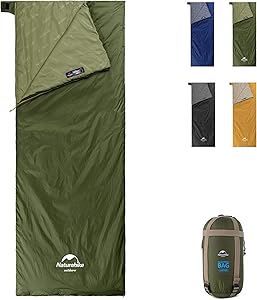
- Weight: 1.68 lbs (0.76 kg) / Compressed size: 5 x 12 inches
- Dimensions: 80.7″L x 33.5″W / Fill: 80g/m² imitation silk cotton
- Shape: Rectangular / Zipper: Anti-snag double reinforced
- Best for: Backpacking, travel, and warm-weather camping
Naturehike’s ultralight sleeping bag is a game-changer for minimalist travelers. Weighing just 1.68 pounds and compressing to a tiny 5×12-inch stuff sack, it disappears into any backpack. The rectangular design offers generous shoulder and hip room (33.5 inches wide), making it easy to shift positions. Filled with premium imitation silk cotton, it provides loft without bulk, ideal for summer camping, hostel stays, or as a liner inside a larger bag. The durable fabric and double-reinforced seams hold up well to repeated use and washing.
While not meant for freezing temperatures, this bag excels in mild conditions from 50°F upward. The spacious cut accommodates most adults comfortably, and the full-length zipper allows venting on warm nights. Naturehike backs it with a 30-day return policy, giving peace of mind. The only trade-offs are limited cold-weather capability and a basic stuff sack. Still, for weight-conscious backpackers and travelers needing a compact sleep solution, this bag is a fantastic, affordable choice.
- Pros: Extremely lightweight and compact, roomy rectangular shape, durable construction, great for travel and summer use.
- Cons: Not suitable for cold weather, basic included carry bag.
See the Naturehike Sleeping Bag
3. Sea to Summit Spark 45

- Tested Lower Limit: 45°F / Comfort: 51°F (ISO)
- Weight (Regular): 12.8 oz / Fill: 850+ fill-power goose down (5.3 oz)
- Shell & Lining: 10-denier nylon / Water-resistant down: Yes
- Compressed volume (Regular): 2.4 liters / Fits up to: 73 inches
The Sea to Summit Spark 45 is an ultralight dream for gram-counters. Weighing a mere 12.8 ounces and packing down to 2.4 liters, it’s barely noticeable in your pack. Premium 850+ fill-power goose down provides exceptional loft and warmth for its weight, and the water-resistant treatment keeps it functional in damp conditions. The 10-denier nylon shell is whisper-thin yet surprisingly tough, shedding wind and light moisture. Designed for summer alpinism and fast-and-light missions, this mummy bag delivers maximum warmth with minimum bulk.
Comfortable down to 51°F (with a 45°F lower limit), the Spark excels on warm nights at elevation or in humid environments. The tapered mummy cut and left-side zipper save weight while maintaining decent mobility. However, the ultra-light fabric demands careful handling around sharp objects. For thru-hikers, bike tourers, and climbers who prioritize every ounce, this bag is a top-tier choice. It’s expensive but justified by premium materials, meticulous construction, and unmatched packability.
- Pros: Extremely light and compressible, high-quality 850+ down, water-resistant treatment, premium materials.
- Cons: Expensive, delicate 10D shell requires care, only for warm conditions.
See the Sea to Summit Spark 45 See the Sea to Summit Spark 30
4. QEZER Backpacking Sleeping Bag
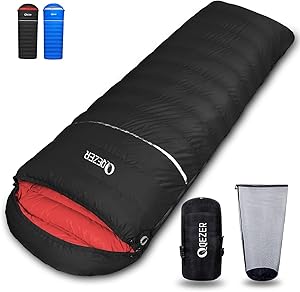
- Fill: 1.1 lbs 600 FP duck down / Comfort: 41°F-54°F / Limit: 28°F
- Weight: 2.54 lbs / Pack size: 13.78″ x 6.3″
- Shape: Semi-rectangular / Dimensions: 30.71″ x 86.61″
- Shell: 400T high-density nylon / Special: Combines into double bag
QEZER’s down sleeping bag offers a superb balance of warmth, weight, and space. Filled with 1.1 pounds of 600 fill-power duck down, it provides reliable insulation with a comfort range of 41°F to 54°F and a lower limit of 28°F. The semi-rectangular shape is roomier than a mummy, giving you 30.7 inches of shoulder width and an extra-long 86.6-inch length. Despite the spacious cut, it packs down to a compact 13.78 x 6.3 inches and weighs only 2.54 pounds, making it trail-friendly. The 400T nylon shell resists tears and moisture.
This bag shines on three-season trips where you want freedom to move. The foot zipper allows ventilation on warmer nights, and two bags can zip together into a double. Dense stitching prevents down leakage, and the high-quality zipper glides without snagging. While not the lightest ultralight option, the QEZER offers excellent value for down insulation. It’s ideal for backpackers who want more wiggle room than a mummy without sacrificing packability or warmth.
- Pros: Roomy semi-rectangular cut, good warmth-to-weight ratio, combines into double bag, durable 400T nylon shell.
- Cons: Slightly heavier than premium ultralight bags, down loses loft if wet.
See the QEZER Backpacking Sleeping Bag
5. Naturehike Down Sleeping Bag

- Fill: 650 FP RDS duck down / Comfort temp: 40.4°F (4.7°C)
- Weight: 2 lbs (910g) / Packed size: 13.8″ x 7.1″
- Shell: 400T 20D ripstop nylon / Zipper: YKK
- Shape: Hybrid (mummy upper, rectangular lower) / Sizes: Regular (82.7″x29.5″) or Large
Naturehike’s hybrid down bag cleverly combines a snug mummy upper body for heat retention with a roomy rectangular lower section for leg freedom. The 650 fill-power duck down is RDS-certified, ensuring ethical sourcing, and provides a comfortable 40.4°F rating. Weighing exactly 2 pounds and packing to 13.8 x 7.1 inches, it’s an excellent choice for backpackers who want down’s compressibility without a claustrophobic feel. The 400T ripstop nylon shell is both waterproof and tear-resistant, while YKK zippers promise smooth operation.
This bag excels on cool spring and fall trips where versatility matters. The unique cut allows you to curl up warmly or stretch out your legs, and the foot box can be opened for ventilation. Naturehike’s commitment to sustainability is evident with the RDS label. The included compression sack reduces bulk significantly. Though the hybrid shape may not suit everyone, most users appreciate the balance. It’s a high-value, durable, and ethical choice for campers and hikers alike.
- Pros: Innovative hybrid shape, RDS-certified down, lightweight and packable, durable YKK zipper and ripstop shell.
- Cons: Hybrid design takes getting used to, not for extreme cold below 40°F.
See the Naturehike Down Sleeping Bag
6. NewDoar Ultralight Sleeping Bag

- Weight: 1.5 lbs / Packed size: 11.8″ x 6.5″
- Temp range: 50°F-70°F (10°C-21°C) / Shell: 380T ripstop nylon
- Lining: Breathable cotton / Features: Spliceable, bottom zipper, machine washable
- Fits up to: 6’3″ (Large) / Shape: Rectangular
NewDoar’s ultralight bag is built for warm-weather adventurers who refuse to carry extra ounces. At just 1.5 pounds and compressing to a tiny 11.8 x 6.5 inches, it’s barely there until you need it. The 380T ripstop nylon shell resists tears and light moisture, while the breathable cotton lining wicks sweat and feels soft against skin. Rated for 50°F to 70°F, it’s ideal for summer camping, festival sleeping, or as a travel liner. The two-way zippers let you link two bags into a double or unzip fully into a blanket.
Practical features abound: an anti-snag zipper, Velcro neck closure, and separate bottom zipper for foot ventilation. The included compression sack shrinks the bag to one-third its size. Machine washable construction means easy cleanup after messy trips. While not suited for cold weather, the NewDoar excels in its niche. It’s spacious enough for taller users (fits up to 6’3″) and light enough for thru-hikes. For budget-conscious warm-weather campers, this is a fantastic choice.
- Pros: Super lightweight and compact, spliceable into double bag or blanket, breathable cotton lining, machine washable.
- Cons: Only for warm temperatures (50°F+), basic features compared to premium bags.
See the NewDoar Ultralight Sleeping Bag
7. SYWSKW Sleeping Bag

- Fill: 680FP duck down / Comfort range: 46°F to 0°F (3-4 season)
- Weight: 2.38 – 2.99 lbs / Packed size: 7.08″ x 11.8″ to 13.78″
- Shape: Rectangular with mummy hood / Width: 33.5 inches / Length: 78.8 inches
- Includes: 80g detachable pillow / Zipper: YKK / Construction: Baffle box
SYWSKW delivers a versatile down sleeping bag that bridges the gap between rectangular comfort and mummy warmth. The 680 fill-power duck down is arranged in baffle box construction to prevent shifting, ensuring even heat distribution across a wide comfort range from 46°F down to 0°F. The clever design features a mummy-style hood to trap heat while maintaining a roomy 33.5-inch shoulder width. Weighing between 2.38 and 2.99 pounds depending on fill, it packs surprisingly small (as compact as 7 x 11.8 inches). An integrated detachable pillow adds campsite convenience.
This bag truly shines for three- to four-season use. The YKK zipper is reliable, and two bags can zip together for couples. The internal security pocket keeps valuables close. While heavier than ultralight specialist bags, the SYWSKW offers real cold-weather capability for a reasonable weight. The reflective drawcords add safety during dawn or dusk use. For campers wanting one bag for most conditions, from summer mountains to winter car camping, this is an excellent, feature-rich choice.
- Pros: Wide temperature range (46°F to 0°F), includes detachable pillow, baffle box down construction, two bags zip together.
- Cons: Heavier than summer-only bags, down requires dry conditions.
8. Exped Terra 30

- Tested Lower Limit: 30°F / Comfort: 39°F (ISO)
- Weight (Medium): 1 lb 9.5 oz / Fill: 650+ FP grey duck down (RDS certified)
- Shell & Lining: 100% recycled 20D ripstop polyester, DWR-free
- Compressed volume (Medium): 4 liters / Fits up to: 72 inches
Exped’s Terra 30 is a masterclass in sustainable, lightweight warmth. Weighing just 1 pound 9.5 ounces for the medium size, it packs a surprising punch with 650+ fill-power grey duck down. The ISO-tested 30°F lower limit and 39°F comfort rating make it a true three-season contender. All materials are recycled and OEKO-TEX certified, and the DWR-free finish reduces chemical use. The 20-denier ripstop polyester shell is durable yet light, and the mummy shape efficiently traps heat. Compressed volume is a tight 4 liters.
On the trail, the Terra 30 impresses with its balance of features. The left-side zipper operates smoothly, and the bag stuffs easily into its small sack. While down typically requires water resistance, Exped opts for DWR-free simplicity, trusting users to keep it dry. The fit is athletic but not constricting, with multiple sizes including wide versions. For eco-conscious backpackers who want a light, warm, and responsibly made bag, the Exped Terra 30 is a standout. It’s not the cheapest, but the quality and ethics justify the price.
- Pros: Very lightweight for 30°F rating, sustainable recycled materials, RDS-certified down, DWR-free and OEKO-TEX certified.
- Cons: No DWR on shell (relying on user care), premium price point.
9. MalloMe Sleeping Bag

- Temp rating: 50°F to 77°F / Weight: ~3 lbs
- Shell: Waterproof hex-tech polyester / Fill: 3D synthetic fiber
- Dimensions: Fits 6 ft adult / Shape: Rectangular with drawstring hood
- Features: Double-sided snag-free zipper, compression sack, machine washable
The MalloMe sleeping bag is a family-friendly favorite for warm-weather camping. Rated from 50°F to 77°F, it’s perfect for summer trips, scout outings, or backyard sleepovers. The unique waterproof hex-tech shell is tough and easy to wipe clean, while the 3D synthetic fiber fill provides loft without bulk. Weighing around 3 pounds and including a compression sack, it’s manageable for short backpacking hauls. The rectangular shape offers generous space, and the drawstring hood adds extra warmth when needed. Vibrant colors appeal to kids and adults alike.
Practical touches abound: double-sided zippers are snag-free, Velcro straps secure the closure, and the bag is machine washable for easy care. While not suited for cold weather, the MalloMe excels in its intended range. It’s affordable, durable, and comfortable for a wide range of sleepers. The compression sack with straps makes transport simple. For car camping, summer festivals, or a first sleeping bag for a child, this is an outstanding value pick that doesn’t cut corners on essential features.
- Pros: Affordable and durable, waterproof hex-tech shell, machine washable, great for kids and beginners.
- Cons: Heavy for backpacking, only suitable for warm temperatures (50°F+).
10. SWTMERRY Sleeping Bag

- Temp rating: 41-77℉ (5-25℃) / Comfort: 50-68℉ (10-20℃)
- Shell: 190T anti-tearing polyester / Lining: 190T polyester pongee
- Fill: Hollow cotton / Weight: Lightweight and compact
- Features: Bottom zipper, compression sack, machine washable
SWTMERRY’s sleeping bag is a reliable three-season companion for casual campers. Rated from 41°F to 77°F with a comfort zone of 50-68°F, it handles spring, summer, and fall with ease. The double-filled technology uses hollow cotton insulation sandwiched between a 190T anti-tear polyester shell and a soft 190T polyester pongee lining. This construction balances warmth, breathability, and durability. The bag comes with a compression sack for easy transport and is machine washable for simple maintenance. A separated bottom zipper allows foot ventilation on warmer nights.
The rectangular shape offers plenty of room to move, and the variety of colors makes it fun for family trips. While not ultralight, it’s compact enough for short backpacking adventures or car camping. The waterproof shell handles morning dew or light rain, and the anti-tear fabric withstands rugged use. For budget-conscious campers needing a versatile, easy-care bag that works across three seasons, the SWTMERRY delivers solid performance without breaking the bank. It’s a great choice for scout groups, families, or emergency kits.
- Pros: Good three-season temperature range, bottom zipper for ventilation, machine washable, affordable price.
- Cons: Not for extreme cold or ultralight backpacking, basic hollow cotton fill.
The Ultimate Guide to Choosing Summer Sleeping Bags
As the mercury rises and the days lengthen, outdoor enthusiasts begin trading their heavy winter parkas for lightweight hiking shirts. However, one of the most common mistakes campers make is bringing their four-season or even three-season sleeping bags into the height of summer. Waking up in a pool of sweat because your insulation is designed for sub-zero temperatures can ruin a trip just as easily as being too cold. Choosing the right summer sleeping bag is about balancing weight, packability, and, most importantly, thermal regulation.
Understanding Temperature Ratings
The first step in selecting a summer bag is understanding how manufacturers rate their gear. Most modern bags use the ISO or EN testing standards, which provide a “Comfort,” “Limit,” and “Extreme” rating. For summer use, you are primarily looking at the Comfort rating.
The Ideal Summer Range
A true summer sleeping bag is typically rated for temperatures between 35°F and 50°F (1.5°C to 10°C). While summer nights can be warm, high-altitude environments or desert floors can see significant temperature drops once the sun sets. If you are camping in low-elevation areas during a heatwave, you might even opt for a “liner” or a bag rated for 55°F+. Always check the historical lows of your destination rather than the average daytime highs.
The Difference Between Comfort and Limit
The “Comfort” rating is the temperature at which a standard sleeper can have a relaxing night’s sleep in a relaxed position. The “Limit” rating is the temperature at which a sleeper in a curled-up position can sleep for eight hours without waking. For summer bags, always lean toward the Comfort rating to ensure you aren’t pushing the bag’s limits, especially if you are a “cold sleeper.”
Insulation Types: Down vs. Synthetic
The fill inside your bag determines how well it compresses, how much it weighs, and how it handles moisture. Both down and synthetic fills have specific advantages in a summer context.
Down Insulation
Down is the plumage found under the feathers of ducks and geese. It is prized for its incredible warmth-to-weight ratio and its ability to compress into a tiny package. For backpackers where space is at a premium, down is often the preferred choice. In the summer, look for a lower “fill weight”—you don’t need a lot of down to keep you warm in 50-degree weather. The main drawback of down is that it loses its insulating properties if it gets wet, which can be an issue in humid summer climates or during unexpected thunderstorms.
Synthetic Insulation
Synthetic insulation is made from polyester fibers designed to mimic the structure of down. While usually bulkier and heavier than down, synthetic insulation continues to provide warmth even when damp. It also dries much faster. For car campers or those heading into very humid or rainy environments, a synthetic bag is often more practical and significantly more affordable.
Shape and Construction
The silhouette of your sleeping bag affects both your comfort and the bag’s efficiency. Since heat retention is less of a priority in summer, you have more flexibility in the shape you choose.
The Mummy Bag
Mummy bags are tapered at the feet and include a fitted hood. While they are the most thermally efficient shape, many people find them too restrictive for summer use. However, if you are a weight-conscious backpacker, a lightweight summer mummy bag remains the gold standard for efficiency.
Rectangular and Semi-Rectangular Bags
For most summer campers, a rectangular bag is the superior choice. These bags provide ample room to kick your legs out and move around, which helps prevent that “stuck” feeling when you’re warm. Many rectangular bags can also be unzipped completely and used as a flat quilt, providing maximum versatility.
Key Features for Ventilation
In the summer, the ability to dump heat is just as important as the ability to retain it. Look for specific design features that allow for airflow.
Two-Way Zippers
A bag with a two-way zipper allows you to unzip the bottom of the bag independently of the top. This creates a “foot vent,” allowing you to stick your feet out to cool down your core temperature while keeping your torso covered. This is perhaps the most critical feature for a versatile summer bag.
Full-Length Zippers
Avoid “half-zip” or “quarter-zip” bags in the summer. A full-length zipper allows you to open the bag like a blanket. If the night starts warm and cools down toward dawn, you can start with the bag open and pull it over you as needed.
Considering the Sleeping System
A sleeping bag does not work in isolation. Your entire “sleep system,” including your pad and what you wear, will dictate your comfort.
The Role of the Sleeping Pad
In the winter, a high R-value (insulation value) pad is essential to block the cold ground. In the summer, you can get away with a much lower R-value (1.0 to 2.0). Using a high-insulation winter pad in the summer can actually make you feel overheated from underneath, so consider a lightweight, uninsulated air mattress for summer excursions.
Sleepwear Selection
For summer camping, moisture-wicking base layers are essential. Avoid cotton, which holds onto sweat and can leave you feeling clammy and cold if the temperature drops. Lightweight merino wool or synthetic “cool-touch” fabrics are ideal for maintaining a comfortable skin temperature inside the bag.
Weight and Packability
One of the greatest joys of summer camping is the ability to carry a lighter pack. Because summer bags require less insulation, they are naturally smaller and lighter.
Backpacking Considerations
If you are trekking long distances, aim for a bag that weighs under 2 pounds (approx. 900g). Some ultralight summer bags can weigh as little as 1 pound. Look for bags with high-fill-power down (800+) to achieve the smallest packed size possible.
Storage and Maintenance
When you return from your summer trip, never store your bag in its small compression sack. This crushes the insulation over time, reducing its loft. Store it in a large mesh or cotton laundry bag in a dry place. Additionally, since summer camping often involves more sweat and sunscreen, consider using a sleeping bag liner. A liner is much easier to wash than the bag itself and can extend the life of your gear significantly.
Conclusion
Choosing the right summer sleeping bag requires a shift in mindset from “maximum warmth” to “maximum versatility.” By prioritizing ventilation features like two-way zippers, selecting the appropriate insulation for your climate, and choosing a shape that allows for movement, you can ensure a restful night’s sleep under the stars. Whether you are an ultralight hiker or a weekend car camper, the right summer bag is the one that stays out of your way and lets you enjoy the cool breeze of a summer night.