Best Mummy Sleeping Bags of 2026
When the temperature drops, a good mummy sleeping bag is your best friend on the trail. These bags are designed to hug your body closely, trapping heat to keep you warm without weighing down your backpack. Whether you are a beginner backpacker or a seasoned hiker, finding the right fit is crucial. Below, we break down the best mummy bags to help you sleep comfortably on your next adventure.
1. NEMO Disco 15 Endless Promise

- Best Use: Backpacking
- Weight (Reg): 2 lbs. 11 oz.
- Fill: 650-fill-power hydrophobic duck down
- Shape: Semirectangular
The NEMO Disco 15 strikes an impressive balance between packability and spacious comfort. Its unique semirectangular cut allows you to shift positions freely throughout the night—a game-changer for restless sleepers—while still compressing down to a compact 6.4 liters. The 20-denier recycled polyester ripstop shell with C0 DWR offers eco-friendly water resistance, and the hydrophobic down keeps you insulated even in damp conditions. With an ISO lower limit of 16°F, this bag is a reliable three-season companion for backpacking adventures.
What sets the Disco apart is the Thermo Gills, which allow temperature regulation without letting in drafts. The spoon-shaped design provides extra elbow and knee room where you need it most. While the 650-fill down isn’t the highest loft available, it strikes a great value-to-warmth ratio. The Endless Promise label means NEMO will repair or recycle the bag at end of life—a huge win for sustainability-minded adventurers.
Pros: Roomy semirectangular cut, excellent packability, hydrophobic down.
Cons: Moderate 650-fill power, left-zip only limits pairing options.
See the NEMO Disco 15 See the Women’s Disco 15
2. REI Co-op Trailmade 25

- Best Use: Backpacking/Camping
- Weight (Med): 2 lbs. 15 oz.
- Fill: 100% recycled polyester synthetic
- Shape: Mummy
The REI Co-op Trailmade 25 is a versatile workhorse that excels for both backpacking trips and car camping setups. Its synthetic insulation performs reliably in damp conditions, maintaining loft even when wet—a key advantage over down in humid environments. The 30-denier recycled ripstop polyester shell with PFAS-free DWR is bluesign-approved, reflecting REI’s commitment to sustainability. With an ISO comfort rating of 31°F, this bag keeps you cozy through chilly spring and fall nights without breaking the bank.
The mummy shape efficiently traps heat while the generous girth options (up to 70 inches at the shoulder) prevent that claustrophobic feeling. The Trailmade 25 doesn’t have the highest-end features, but it nails the trifecta of warmth, packability, and light weight at an accessible price point. The medium size compresses to just 8 liters, making it easy to strap to any pack. For entry-level backpackers or those seeking a reliable loaner bag, this is an outstanding choice.
Pros: Affordable, PFAS-free DWR, recycled materials, reliable synthetic insulation for wet conditions.
Cons: Heavier than down alternatives, moderate warmth-to-weight ratio.
See the REI Co-op Trailmade 25
3. Kelty Cosmic 20

- Best Use: Backpacking
- Weight (Reg): 2 lbs. 7 oz.
- Fill: 550-fill-power down
- Shape: Mummy
The Kelty Cosmic 20 has long been a favorite among budget-conscious backpackers, and for good reason. This three-season superstar uses 550-fill-power down with trapezoidal baffle construction to prevent shifting and eliminate cold spots. The recycled 50-denier polyester taffeta shell offers durability without excessive weight, while the recycled nylon taffeta lining feels soft against the skin. With an ISO lower limit of 21°F, this bag handles chilly nights confidently, making it a go-to for spring through fall adventures.
What makes the Cosmic 20 special is its value proposition—you get genuine down insulation at a synthetic bag price point. The mummy shape provides an efficient thermal profile, and the draft tube along the zipper prevents heat loss. While the 550-fill down isn’t as compressible as higher-end options, the included compression sack helps reduce pack size. The right-side zipper is worth noting for those who might want to pair bags. For entry-level backpackers wanting to transition from synthetic to down, this is an ideal first step.
Pros: Excellent value for down insulation, durable shell, good warmth-to-weight ratio, reliable Kelty craftsmanship.
Cons: Lower 550-fill power limits compressibility, right-zip only.
4. SYWSKW Down Sleeping Bag

- Best Use: 3-4 Season Camping
- Weight: 2.38 – 2.99 lbs
- Fill: 680FP duck down
- Shape: Rectangular with widened shoulder
The SYWSKW Down Sleeping Bag delivers impressive versatility for family camping and couples travel. With premium 680FP duck down and advanced baffle box construction, this bag prevents down migration while ensuring consistent heat distribution. The comfort ratings range from 46°F (1.1 lb fill) to 23°F (800g fill), making it adaptable across three to four seasons. The widened 33.5-inch shoulder design provides ample room for restless sleepers, and the included 80g detachable pillow adds instant comfort without packing extra gear.
One standout feature is the ability to zip two different-color bags together to create a cozy double sleeping bag—perfect for couples or families with young children. The YKK zipper and internal security pocket add thoughtful functionality, while reflective drawcords improve safety during dawn or dusk expeditions. The compression bag helps reduce pack size, though you should allow at least 30 minutes for the bag to fully loft after unpacking. For those seeking an affordable all-season sleep system with pillow included, this bag is hard to beat.
Pros: Includes detachable pillow, two bags zip together for couples, widened design for comfort, 680FP quality down.
Cons: Needs time to loft after compression, temperature ratings may be optimistic.
See the SYWSKW Down Sleeping Bag
5. Kelty Cosmic 20 Synthetic

- Best Use: Backpacking/Camping
- Weight (Reg): 2 lbs. 13 oz.
- Fill: Cirroloft synthetic
- Shape: Mummy with spacious footbox
The Kelty Cosmic 20 Synthetic brings the beloved Cosmic platform to damp-weather warriors who need reliable insulation even when conditions get wet. Cirroloft synthetic insulation maintains its loft in humid environments and provides even coverage without cold spots, thanks to thoughtful baffle construction. The 380T nylon taffeta shell is durable enough for rugged use, while the natural fit spacious footbox gives your toes room to wiggle—a small luxury often missing in mummy bags. The integrated compression stuff sack helps achieve minimalist pack sizes for backpacking.
Kelty has refined the Cosmic line for years, and this synthetic version shows that attention to detail. The exterior stash pocket keeps overnight essentials like a headlamp or phone within easy reach, and multiple length options accommodate sleepers from 5’8” to 6’6”. With temperature ratings from 0°F to 40°F across the line, the 20° version hits the sweet spot for three-season use. While heavier than its down counterpart, the synthetic fill’s performance in wet conditions makes this the smarter choice for humid climates or damp spring camping.
Pros: Excellent wet-weather performance, spacious footbox, exterior stash pocket, durable shell fabric.
Cons: Heavier than down version, synthetic insulation less compressible.
See the Kelty Cosmic 20 Synthetic
6. Naturehike Ultralight Sleeping Bag

- Best Use: Backpacking/Hiking
- Weight: 2 lbs. (910g)
- Fill: 650-fill-power RDS-certified duck down
- Shape: Hybrid envelope/mummy
The Naturehike Ultralight Sleeping Bag features an innovative hybrid design that combines a mummy-style upper body for compact heat retention with an envelope-style lower body that lets you move or expose your feet. This clever approach gives you the best of both worlds—efficient warmth where you need it and freedom where you want it. The 650-fill-power RDS-certified duck down is odor-free and ethically sourced, with a comfort rating of 40.4°F. The 400T 20D ripstop nylon shell is both waterproof and breathable, while YKK zippers ensure reliable operation.
Weighing just 2 pounds and packing down to 13.8 x 7.1 inches, this bag is a true ultralight contender. The included storage bag and compression sack help maximize packability, and the RDS label provides traceability for sustainability-minded buyers. Available in Regular (82.7” x 29.5”) and Large (86.6” x 33.5”) sizes, there’s room for most sleepers. While the 40°F comfort rating makes this better suited for mild conditions than deep winter, it’s an exceptional choice for summer backpacking, hut trips, or travel.
Pros: Innovative hybrid shape, ultralight 2lb weight, RDS-certified ethical down, includes both storage and compression sacks.
Cons: 40°F comfort rating limits cold-weather use, not for winter camping.
See the Naturehike Ultralight Sleeping Bag
7. HLITMOUT Sleeping Bag

- Best Use: Backpacking/Cold Weather
- Weight: 2.16 – 2.98 lbs
- Fill: 680FP white duck down
- Shape: Mummy with compartmentalized design
The HLITMOUT Sleeping Bag delivers serious warmth for cold weather hiking and winter camping. With 680FP traceable white duck down and a compartmentalized design that prevents cold spots, this bag keeps you comfortable from 5°F to 23°F with the 1.76lb fill version. The outer shell uses tear-resistant, water-repellent 400T 40D nylon, while the inner lining features soft-touch Pongee fabric that feels silky against the skin. An added chest collar provides extra warmth retention, and the integrated removable pillow reduces pack clutter.
Thoughtful details abound on this bag. The two-way zipper features an inner loop for easy operation, and zippered pockets on both sides allow two bags to be joined into a spacious double sleeping bag. An internal Velcro pocket keeps your phone and valuables secure. The bag compresses down to just 11.8 x 6.29 inches, making it remarkably portable for its warmth rating. The customer service promise—responses within 1-8 hours—adds peace of mind. For winter backpackers seeking quality down without boutique pricing, this is a compelling option.
Pros: Impressive 5°F to 23°F warmth range, silky Pongee lining, two bags zip together, includes removable pillow.
Cons: Heavier than some ultralight options, temperature ratings may vary by individual.
8. BUERTS Backpacking Sleeping Bag
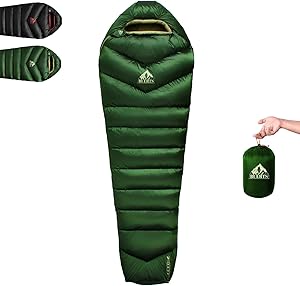
- Best Use: Backpacking/Camping
- Weight: 1.72 lbs
- Fill: 620FP RDS-certified down (14.1 oz)
- Shape: Ergonomic with spacious 86.6×31.5-inch design
The BUERTS Backpacking Sleeping Bag is an ultra-lightweight champion, weighing just 1.72 pounds and compressing to a mere 11×6.3 inches. This makes it one of the most packable options in its class, ideal for backpackers who count every ounce. The 620FP RDS-certified high-loft down is humanely sourced and efficiently locks in heat. With a comfort temperature of 60°F, limit of 44°F, and extreme rating of 35°F, this bag is designed for three-season use in moderate conditions. The 400T 20D nylon shell is windproof, breathable, wear-resistant, and water-repellent.
The ergonomic shape provides 86.6×31.5 inches of interior space, allowing free rolling and unrestricted movement throughout the night. An inner pocket keeps valuables like phones safe, while high-quality zippers let you connect two BUERTS bags for a double-wide option—perfect for family trips or couples. For ultralight enthusiasts who prioritize packability above all else, this bag delivers exceptional value. While the 60°F comfort rating means it’s not for cold weather, summer backpackers, hut users, and warm-weather campers will appreciate the featherlight carry.
Pros: Incredibly lightweight 1.72 lbs, ultra-compact 11×6.3-inch pack size, RDS-certified ethical down, two bags zip together.
Cons: 60°F comfort rating limits use to warm conditions, not suitable for cold weather camping.
See the BUERTS Backpacking Sleeping Bag
The Ultimate Guide to Choosing the Perfect Mummy Sleeping Bag
For backpackers, mountaineers, and cold-weather campers, the mummy sleeping bag is an essential piece of gear. Characterized by its tapered fit—wide at the shoulders and narrow at the feet—this design is engineered for maximum thermal efficiency and minimum weight. However, with hundreds of options ranging from budget-friendly synthetic bags to high-end ultralight down versions, selecting the right one can be overwhelming. This guide breaks down the critical factors you need to consider to find a bag that keeps you warm, comfortable, and ready for adventure.
Understanding the Mummy Shape: Why It Matters
The primary reason to choose a mummy bag over a rectangular one is heat retention. A sleeping bag does not generate heat; rather, it traps the heat your body produces. In a rectangular bag, there is a significant amount of “dead air” space. Your body must work harder to warm up that extra volume of air. The mummy shape contours closely to your body, minimizing dead air and creating a more efficient thermal envelope.
Additionally, mummy bags are significantly more packable. By tapering the fabric and insulation at the legs and feet, manufacturers reduce the overall weight and bulk of the bag, making it the gold standard for anyone carrying their gear on their back.
Deciding on Insulation: Down vs. Synthetic
The most significant decision you will make is the type of insulation. Each has distinct advantages and disadvantages depending on your environment and budget.
Down Insulation
Down is the plumage found underneath the exterior feathers of ducks and geese. It is widely considered the best insulator available for outdoor gear.
- Pros: Excellent warmth-to-weight ratio, highly compressible, and incredibly durable (a well-cared-for down bag can last 10–20 years).
- Cons: More expensive than synthetic options. Most importantly, standard down loses its insulating properties when it gets wet and takes a long time to dry.
When looking at down, pay attention to “Fill Power” (e.g., 600, 800, or 950). This measure indicates the quality of the down. Higher fill power means the down loathes more effectively, providing more warmth for less weight.
Synthetic Insulation
Synthetic insulation is usually made of polyester fibers designed to mimic the structure of down.
- Pros: Continues to insulate even when damp, dries quickly, and is much more affordable. It is also hypoallergenic.
- Cons: Heavier and bulkier than down for the same warmth level. The fibers also break down over time, meaning the bag will lose its loft (and warmth) faster than a down bag.
Decoding Temperature Ratings
Temperature ratings are intended to help you compare bags, but they can be misleading if you don’t know how to read them. Most modern bags use the ISO (International Organization for Standardization) or EN (European Norm) rating system.
Comfort vs. Limit Ratings
When you see a bag labeled as a “20-degree bag,” you need to check if that is the Comfort or Limit rating.
- Comfort Rating: This is the lowest temperature at which a “cold sleeper” (often modeled after a standard woman) can sleep comfortably in a relaxed position.
- Limit Rating: This is the lowest temperature at which a “warm sleeper” (often modeled after a standard man) can sleep for eight hours without waking up from the cold.
Always choose a bag with a comfort rating slightly lower than the coldest temperature you expect to encounter. If you are a “cold sleeper,” add a 10-degree buffer to your estimate.
Weight and Packability
For backpackers, every ounce matters. The weight of a mummy bag is determined by the insulation type, the fill power (if down), and the denier (thickness) of the shell fabric. High-end ultralight bags use 10D or 20D fabrics, which are incredibly thin but require careful handling to avoid snags.
Packability is equally important. A high-fill-power down bag can often be compressed to the size of a large water bottle, leaving more room in your pack for food and safety gear. Synthetic bags will always take up more volume, which may require a larger backpack.
Key Features to Look For
The efficiency of a mummy bag is often found in the details. When shopping, look for these specific design elements that enhance warmth and usability.
The Hood and Draft Collar
Since you lose a significant amount of heat through your head, a well-insulated, cinchable hood is vital. Look for a hood that fits snugly around your face without feeling claustrophobic. An internal draft collar—an insulated tube around the neck area—prevents warm air from escaping when you move in your sleep.
Draft Tubes and Zippers
The zipper is a major point of heat loss. Quality mummy bags feature a “draft tube” (an insulated flap) that runs the length of the zipper on the inside. Furthermore, look for “anti-snag” zippers. There is nothing more frustrating than a zipper getting stuck in the thin lining fabric in the middle of a freezing night.
The Footbox
Some bags feature a flared or “trapezoidal” footbox. This provides extra room for your feet to rest in a natural position without pushing against the insulation. When you compress the insulation from the inside, you create cold spots, so a properly shaped footbox is a major comfort advantage.
Sizing and Fit
Mummy bags come in different lengths (Short, Regular, Long) and sometimes different widths. If the bag is too long, you have extra space at the bottom that your feet will never be able to warm up. If it is too tight, you will compress the insulation, leading to cold spots.
Many manufacturers now offer women-specific bags. These are generally shorter, narrower at the shoulders, and wider at the hips. They also often feature extra insulation in the footbox and torso areas where women tend to feel the cold more acutely.
Environmental and Ethical Considerations
If you choose a down bag, look for the Responsible Down Standard (RDS) or Global Traceability Standard (Global TDS) certification. These ensure that the down was not harvested from live-plucked or force-fed birds. For synthetic bags, many brands are now using recycled polyester to reduce the environmental impact of plastic production.
Conclusion: Making the Final Choice
To choose the right mummy sleeping bag, you must balance your specific needs. Ask yourself: What is the coldest temperature I will realistically face? Will I be in a damp environment? How much weight am I willing to carry?
If you are a casual summer camper, an affordable synthetic bag is a great entry point. If you are an aspiring thru-hiker, investing in a high-quality 800-fill down bag will pay dividends in comfort and weight savings for years to come. By focusing on insulation type, accurate temperature ratings, and a proper fit, you can ensure that your nights in the wilderness are as restful as they are adventurous.