

Best Memory Foam Camping Pillows of 2026
A good night’s sleep under the stars starts with the right pillow. Regular camping pillows can be flat and lumpy, but memory foam options offer real comfort by molding to your head and neck. Whether you’re in a tent, RV, or hammock, the best memory foam camping pillows pack down small yet provide pressure-relieving support. In this guide, we’ll share top picks that balance softness, portability, and durability—so you wake up refreshed and ready for adventure.
1. HEST Camp Pillow

- Fill: Shredded memory foam and polyester blend
- Sizes: Small (10×15 in), Medium (15×22 in), Large (20×26 in)
- Weight: Small 1 lb 3.2 oz | Medium 2 lbs 3.2 oz | Large 3 lbs 3.2 oz
- Material: Stretch-woven nylon with polyurethane-coated nylon cover
The HEST Camp Pillow is a premium option for campers who refuse to sacrifice sleep comfort in the outdoors. Its shredded memory foam and polyester fill conforms naturally to your head and neck, delivering a feel that closely mimics what you’d find at home. The stretch-woven nylon exterior adds a soft, flexible touch, while the durable polyurethane-coated cover keeps moisture and dirt at bay during rugged use.
Available in three sizes, this pillow accommodates a wide range of sleepers — from those who prefer a compact option to those who want full-sized luxury. It compresses down into a closed form for easy transport and comes with a stuff sack for clean storage. Whether you’re living out of a van or pulling into a campsite, the HEST Camp Pillow is a dependable comfort upgrade that punches well above its weight.
- Pros: Three size options, home-like memory foam feel, durable water-resistant cover, includes stuff sack
- Cons: Heavier than inflatable alternatives, may feel bulky for ultralight backpacking
2. Sea to Summit Aeros Premium

- Fill: Adjustable air chamber with polyester foam layer
- Sizes: Regular (13.4×9.4 in), Large (16.9×11.8 in), XL (22×14.2 in)
- Weight: Regular 3.5 oz | Large 5.3 oz | XL 8.8 oz
- Material: Polyester pillowcase top, nylon base, TPU air bladder
The Sea to Summit Aeros Premium strikes a near-perfect balance between packability and comfort, making it a standout choice for backpackers and minimalist travelers. Its hybrid construction pairs a layer of soft memory foam with an adjustable air bladder beneath, letting you dial in the exact firmness and loft that suits your sleeping style. The brushed stretch-knit fabric feels gentle against the skin, even on warm nights in a tent.
At just 3.5 ounces in the Regular size, this pillow practically disappears in your pack — yet it performs like something far larger. The multi-function valve makes inflation and deflation quick and precise, and the included stuff sack keeps things tidy. For side, back, or stomach sleepers looking for a versatile, featherlight option, the Aeros Premium is one of the best pillows in its class.
- Pros: Ultra-lightweight, adjustable firmness, brushed comfort fabric, compact packed size
- Cons: Higher price point, air-only feel may not suit all sleepers
3. Wise Owl Outfitters Camping Pillow
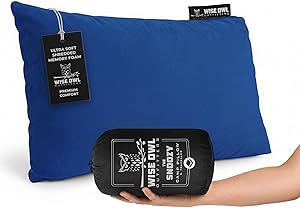
- Fill: Compressible memory foam
- Sizes: Small (12×16 in), Medium (14×18 in)
- Weight: Under 12 oz
- Material: Soft micro-suede removable and machine-washable cover
The Wise Owl Outfitters Camping Pillow brings everyday softness to the backcountry with its silky micro-suede cover and responsive memory foam core. Unlike inflatable options, it conforms gently to your head and neck the moment your head touches it, making it equally at home on a long-haul flight, a road trip, or a night in the tent. It’s available in two sizes so you can match the pillow to your sleep preferences.
Weighing under 12 ounces and compressing into a waterproof stuff sack, it earns its place in any adventure kit without adding meaningful bulk. The removable cover is machine washable, which is a practical advantage for multi-day trips and repeated use. Whether you’re camping, hammocking, or lounging at a beach, this pillow is a reliable, affordable comfort companion that makes roughing it feel a little less rough.
- Pros: Silky-soft micro-suede cover, machine-washable, waterproof stuff sack included, budget-friendly
- Cons: Limited size options, less packable than ultralight inflatables
4. NEMO Fillo

- Fill: Baffled air cell with foam top layer
- Dimensions: 17×11×4 inches inflated
- Weight: 9.2 oz
- Material: Polyester jersey shell
The NEMO Fillo is a thoughtfully engineered hybrid pillow that layers a plush foam cushion over a baffled air cell, resulting in exceptional comfort without the stiffness often associated with purely inflatable options. The foam top creates a soft, cradling surface that feels natural against your face, while the air core underneath provides adjustable height and firm support for your neck. Setup is quick, and deflation is equally hassle-free.
At 9.2 ounces, the Fillo sits comfortably in the lightweight category while delivering a sleeping experience that rivals far bulkier alternatives. The polyester jersey cover is smooth and pleasant against skin, and the pillow compresses into a stuff sack for easy packing. Best suited for backpackers and camping enthusiasts who want genuine comfort without the weight penalty, the NEMO Fillo is a well-rounded performer that consistently earns high marks.
- Pros: Foam-over-air hybrid design, quick inflation and deflation, soft jersey fabric, versatile use
- Cons: Slightly heavier than air-only pillows, single size only
5. Sea to Summit Memory Lux

- Fill: Memory foam with self-inflating air core
- Sizes: Large (17.7×11 in), XL (22×14.2 in)
- Weight: Large 1 lb 4.6 oz | XL 2 lbs 5.2 oz
- Material: 100% recycled polyester top, recycled nylon base, polyurethane foam
The Sea to Summit Memory Lux is built for car campers and glampers who want the feel of a real pillow without leaving comfort behind. It combines plush memory foam with a self-inflating air core that opens up automatically when unpacked — just fine-tune the valve to your preferred loft. The recycled polyester and nylon construction reflects a commitment to sustainability without compromising on durability or softness.
Available in Large and XL sizes, this pillow caters to those who like room to move in their sleep. It’s heavier than ultralight options, but the tradeoff is a genuinely luxurious sleeping surface that makes camping feel more like sleeping in a proper bed. If weight isn’t a primary concern and comfort is king, the Memory Lux is the Sea to Summit pillow to reach for.
- Pros: Self-inflating convenience, memory foam comfort, made with recycled materials, generous sizing
- Cons: Heavier and bulkier than other options, not ideal for backpacking
6. Therm-a-Rest Compressible

- Fill: Urethane foam with polyester insulation
- Sizes: S (15×11 in), M (18×13 in), L (22×15 in)
- Weight: S 8 oz | M 11.5 oz | L 1 lb
- Material: Polyester shell with urethane foam and polyester insulation fill
The Therm-a-Rest Compressible Pillow Cinch has long been a trusted name in outdoor sleep gear, and for good reason. Its urethane foam fill compresses tightly for storage then springs back to full loft when unpacked, delivering reliable comfort night after night. The soft polyester shell feels familiar and cozy, and the cinch stuff-sack design makes compression and storage straightforward without needing extra gear.
With three size options ranging from a slim S to a generous L, there’s a fit for nearly every sleeper type. At just 8 ounces in the Small size, it’s easy enough to bring along without thinking twice. Whether you’re at a campground, on a plane, or road-tripping across the country, this durable, no-fuss pillow delivers consistent rest without any setup required — just unpack and sleep.
- Pros: No inflation required, three size options, reliable foam rebound, lightweight small size
- Cons: Packs larger than inflatables, foam may flatten over time with heavy use
7. PEUJEW Camping Pillow
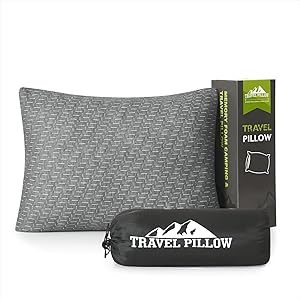
- Fill: Shredded memory foam
- Dimensions: 13.8×17.7 inches
- Material: 100% premium microfiber cover, removable and machine-washable
- Portability: Includes travel bag, attaches easily to luggage
The PEUJEW Camping Pillow delivers reliable comfort on the go with its shredded memory foam core wrapped in a plush 100% microfiber cover. The foam adapts to your head and neck’s natural curves, making it a strong performer for side and back sleepers who need consistent support across long nights outdoors or extended travel. Compared to inflatable pillows, the memory foam filling offers a more natural, pressure-relieving feel.
The removable cover is machine washable and quick-drying, which is a practical perk for travelers who care about hygiene on multi-day trips. Its compressible design and included travel bag make it easy to clip onto a bag or tuck into a car seat pocket. This pillow works just as well on airplanes, RVs, and office naps as it does in a tent, making it a genuinely versatile option for anyone on the move.
- Pros: Contouring shredded memory foam, machine-washable microfiber cover, versatile use cases, packable with carry bag
- Cons: Only one size available, packs bulkier than ultralight options
8. Klymit Drift
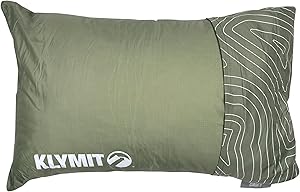
- Fill: Shredded memory foam
- Dimensions: 18×12×5.5 inches | Packed: 11×5×5 inches
- Weight: 19 oz
- Material: 70D polyester ripstop outer shell, 100% jersey cotton inner pillowcase
The Klymit Drift brings genuine home comfort to the campsite with its shredded memory foam fill and jersey cotton inner pillowcase — a combination that feels familiar and indulgent even in rough conditions. The foam strikes a balanced mix of soft and supportive, molding to your sleeping position rather than forcing you to adapt to it. The outer shell is made from durable 70D ripstop polyester with water resistance, keeping the pillow protected during transport and outdoor use.
Its removable, machine-washable cover makes upkeep easy after muddy or dusty trips. The Drift packs down to 11×5×5 inches — compact enough for car camping and overlanding adventures where weight is less critical than comfort. At 19 ounces it’s on the heavier side, but for anyone prioritizing a true-to-home sleeping experience in the backcountry, the Klymit Drift delivers in every way that matters.
- Pros: Home-like jersey cotton feel, water-resistant ripstop shell, machine-washable cover, generous dimensions
- Cons: Heavier than most camping pillows, not suited for ultralight backpacking
The Ultimate Guide to Memory Foam Camping Pillows: Comfort Beyond the Bedroom
For many outdoor enthusiasts, the transition from a traditional bed to a sleeping bag on the hard ground is the most challenging part of camping. While high-quality sleeping pads and down-filled sleeping bags have come a long way in providing insulation and cushioning, the humble pillow is often an afterthought. Many campers settle for a bunched-up fleece jacket or a flimsy inflatable pillow that feels like sleeping on a balloon. However, the rise of memory foam camping pillows has revolutionized outdoor rest, bringing the contouring comfort of a luxury mattress to the rugged wilderness.
In this comprehensive guide, we will explore why memory foam has become the gold standard for backcountry sleep, how to choose the right one, and how to maintain your pillow for years of adventure.
Understanding Memory Foam in a Camping Context
Memory foam, or viscoelastic foam, was originally developed by NASA to improve seat cushioning and crash protection for airline pilots and passengers. Its unique property is its ability to react to body heat and pressure, molding to the specific shape of the user and evenly distributing weight. When you remove the pressure, it slowly returns to its original shape.
In a camping environment, this material is invaluable. Unlike inflatable pillows, which provide a firm, bouncy surface that often lacks neck support, memory foam provides a stable, “dead” feel that absorbs movement and cradles the head. This helps maintain spinal alignment even when sleeping on uneven terrain.
The Evolution: Solid vs. Shredded Memory Foam
When shopping for a camping pillow, you will generally encounter two types of memory foam construction: solid blocks and shredded fill.
Solid memory foam pillows are essentially miniature versions of the ones you use at home. They provide the most consistent support and are excellent for side sleepers who need a high “loft” (the height of the pillow) to fill the gap between their shoulder and head. However, they are often heavier and more difficult to compress into a small pack.
Shredded memory foam consists of thousands of tiny foam pieces packed into an inner liner. This design is increasingly popular for camping because it is more breathable and, most importantly, highly adjustable. You can shift the foam around to create a “nest” for your head or punch it down to reduce the loft. Shredded foam also compresses much better than a solid block, making it the preferred choice for backpackers.
Why Choose Memory Foam Over Inflatables?
The primary rival to the memory foam pillow in the camping world is the ultralight inflatable pillow. While inflatables win on weight and packed size, memory foam wins on every other metric related to sleep quality.
First, there is the noise. Inflatable pillows are often made of nylon or TPU materials that “crinkle” every time you move your head. In the silence of the woods, this can be incredibly distracting. Memory foam is silent. Second, there is the temperature regulation. Inflatable pillows often feel clammy or cold because they lack insulation. Memory foam provides a layer of thermal mass that helps keep your head warm on chilly nights. Finally, there is the “slip” factor. Inflatable pillows are notorious for shooting out from under a sleeper’s head in the middle of the night. The weight and texture of memory foam pillows keep them firmly in place on your sleeping pad.
Key Features to Look for in a Memory Foam Camping Pillow
Not all memory foam pillows are created equal. When selecting one for your next trip, consider the following technical specifications.
Compressibility and Packed Size
The biggest drawback of foam is its bulk. A good camping pillow should come with a high-quality stuff sack or have a built-in roll-up mechanism. Look for pillows that can compress to at least 25-33% of their original size. Some hybrid models use a combination of an inflatable base and a memory foam topper to provide the best of both worlds: the packability of air and the feel of foam.
Cover Materials and Skin Comfort
Since your face will be in direct contact with the pillow for eight hours, the cover material matters. Look for soft-touch fabrics like brushed polyester, micro-fleece, or even sustainable options like Tencel or bamboo blends. Ensure the cover is removable and machine washable, as it will inevitably collect sweat, dirt, and campfire smoke.
Water Resistance and Durability
Memory foam is like a giant sponge; if it gets wet, it can take days to dry and may develop mold. A quality camping pillow should have a water-resistant outer shell or at least a highly protective stuff sack to keep it dry during transport. The underside of the pillow should ideally be made of a more rugged, non-slip fabric to withstand the friction of a tent floor or sleeping pad.
Optimizing Your Sleep: Tips for Using Memory Foam Outdoors
To get the most out of your investment, you should treat your memory foam pillow slightly differently than your home bedding.
Temperature Sensitivity
Memory foam is chemically reactive to temperature. In extremely cold weather, the foam can become quite stiff until your body heat softens it up. If you are winter camping, it is a good idea to keep your pillow inside your sleeping bag for 15 minutes before you plan to sleep. This “pre-heats” the foam so it is soft the moment your head hits it.
The “Off-Gassing” Period
New memory foam often has a distinct chemical smell, known as off-gassing. Before taking a new pillow on a trip, let it sit out in a well-ventilated room or even outside in the sun for 24 to 48 hours. This allows the volatile organic compounds (VOCs) to dissipate so you aren’t breathing them in within the confined space of a tent.
Maintenance and Long-Term Care
If cared for properly, a memory foam camping pillow can last for decades. However, improper storage is the number one killer of these products.
Never Store Compressed
Just like a high-end sleeping bag, you should never store your memory foam pillow in its stuff sack for long periods. Keeping the foam compressed for months at a time can break down the cell structure, leading to a loss of “rebound” and support. When you return from a trip, take the pillow out, let it loft fully, and store it in a cool, dry place.
Cleaning Instructions
You should never put a solid block of memory foam in a washing machine; the agitation will tear it apart. Instead, wash the removable cover regularly. If the foam itself becomes soiled, spot clean it with a damp cloth and mild detergent. For shredded foam pillows, check the manufacturer’s label; some are actually machine washable on a gentle cycle, provided they are dried thoroughly on a low-heat setting.
Conclusion: Is it Worth the Weight?
For the ultralight backpacker counting every gram, a memory foam pillow might seem like an unnecessary luxury. But for the weekend warrior, the car camper, or the long-distance hiker who knows that recovery is the key to performance, the memory foam camping pillow is a game-changer. The weight penalty—usually between 10 to 20 ounces—is a small price to pay for a deep, restorative night of sleep that allows you to wake up without a stiff neck, ready to tackle the trail ahead.