Best 6-Person 4-Season Tents of 2026
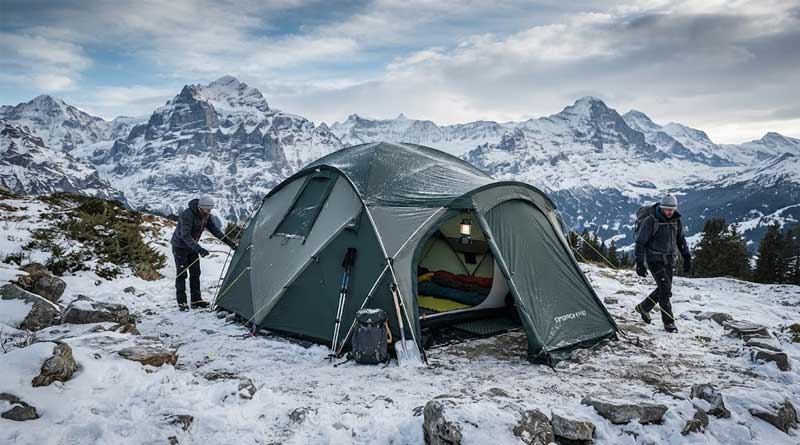
When you’re heading into the backcountry in harsh weather, your tent is your lifeline. A good 4-season shelter must stand up to heavy snow, strong winds, and freezing temperatures—while still keeping your group of six comfortable. But with so many options, finding the right one can feel overwhelming. That’s why we’ve tested the top models on the market. This guide breaks down the best 6-person, 4-season tents, focusing on durability, space, and ease of setup, so your next winter adventure is a safe and warm success.
1. Coleman PEAK1 6

- Sleeping Capacity: 6-person
- Floor Area: 83.3 square feet
- Peak Height: 72 inches
- Packaged Weight: 15 lbs. 8 oz.
The Coleman PEAK1 6-person dome tent is built to handle unpredictable outdoor weather with ease. Its rugged design provides outstanding wind and rain resistance, keeping your camp group safe and dry. Designed as a freestanding dome, it offers a sturdy structure that sets up reliably anywhere you pitch it.
With a generous peak height, campers can move around inside comfortably. Included aluminum poles add strong structural support without adding excessive bulk. It is an exceptional choice for family camping trips across multiple seasons.
Pros: Rugged weather resistance, high peak height, footprint included.
Cons: Only one door for a six-person tent.
2. Naturehike KOTA 6

- Occupancy: 6 Person
- Dimensions: 212″L x 99.2″W x 80.7″H
- Water Resistance: 3000mm+
- Seasons: 4 Season
The Naturehike KOTA 6 is a spacious rectangular tent engineered for year-round outdoor adventures. Its impressive dimensions and high peak height give your crew plenty of headroom and living space. Built with robust waterproof technology, it ensures reliable protection during heavy rain or harsh wind.
This four-season tent comes packed with necessary setup accessories including four sturdy poles, multiple wind ropes, and positioning webbing. The separate inner and outer tent layout enhances ventilation while preventing condensation build-up inside. It is a complete shelter package ready for demanding backcountry trips.
Pros: Excellent waterproof rating, massive interior space, four-season ready.
Cons: Complex setup due to numerous included components.
3. Purebox Family Cabin Tent

- Occupancy: 6 Person
- Dimensions: 120″L x 99.6″W x 74″H
- Item Weight: 7 kg
- Waterproofing: PU 3000mm+
The Purebox Family Cabin Tent offers a comfortable, rectangular layout tailored for family camping and hiking excursions. Weighing just seven kilograms, it delivers a great balance of interior volume and manageable transport weight. Its straight cabin-style walls optimize usable floor space, making gear storage simple.
Equipped with a PU 3000mm+ waterproof fabric and fully heat-sealed taped seams, this four-season shelter prevents water leakage during heavy downpours. The included full-coverage rainfly provides extra shelter against cold winds and storms. It offers dependable reliability for campers seeking straightforward comfort.
Pros: Lightweight for its size, heat-sealed taped seams, four-season usability.
Cons: Basic accessory set compared to other models.
See the Purebox Family Cabin Tent
4. Zempire Pro TXL V2

- Sleeping Capacity: 6-person
- Floor Area: 223 square feet
- Peak Height: 88.6 inches
- Packaged Weight: 96 lbs. 13 oz.
The Zempire Pro TXL V2 brings luxurious living to your campsite with its high-volume air frame design. Pitching is fast and effortless thanks to the inflatable air poles that replace traditional metal frames. Inside, a massive floor space allows for comfortable lounging, dining, and sleeping.
Three separate doors provide effortless access and excellent airflow throughout the shelter. Heavy-duty canopy fabrics offer weather defense, while a large integrated vestibule creates extra room for wet boots and equipment. It turns any outdoor camping trip into a premium retreat.
Pros: Fast inflatable setup, enormous floor space, three access doors.
Cons: Very heavy packaged weight makes transport challenging.
5. White Duck Outdoors Regatta

- Sleeping Capacity: 6-person
- Floor Area: 133 square feet
- Peak Height: 98.4 inches
- Packaged Weight: 66 pounds
The White Duck Outdoors Regatta bell tent is crafted from breathable DYNATEK performance canvas for true four-season comfort. This classic design allows full walk-around height, creating an airy atmosphere for up to six campers. Despite its grand scale, the entire structure can be pitched by one person.
Galvanized steel poles and heavy-duty floor fabric shield occupants from harsh mountain winds and moisture. The combination of sustainable cotton and recycled polyester offers natural weatherproofing without synthetic odors. It is a stylish, ultra-durable shelter suited for glamping or basecamp living.
Pros: Premium canvas fabric, easy single-person setup, high peak height.
Cons: Non-freestanding design requires secure ground staking.
See the White Duck Outdoors Regatta
6. The North Face Wawona 6

- Floor Area: 86.11 sq. ft.
- Vestibule Area: 44.7 sq. ft.
- Total Weight: 20 lbs. 15 oz.
- Pole System: DAC MX aluminum
The North Face Wawona 6 delivers home-like comfort with double-wall protection and exceptional vertical space. Campers can stand upright with room to spare, while a large mesh front door encourages continuous airflow. Its giant front vestibule acts as a dry mudroom or shaded porch area for gear storage.
Color-coded poles simplify installation, allowing you to pitch the shelter quickly after a long drive. Ceiling and wall pockets keep small gear organized, safe, and off the floor. Coated in a non-PFC water repellent finish, it stands up to unpredictable weather with ease.
Pros: Massive front vestibule, tall standing height, color-coded easy assembly.
Cons: Footprint must be purchased separately.
7. White Duck Outdoors Altimus

- Sleeping Capacity: 6-person
- Floor Area: 154 square feet
- Peak Height: 110 inches
- Packaged Weight: 77 pounds
The White Duck Outdoors Altimus tent delivers expansive floor space combined with an impressive peak height. Built using weatherproof DYNATEK performance canvas, it provides four-season comfort that resists heavy winds and rain. Its unique profile provides full stand-up capability across much of the interior floor.
Robust steel and aluminum poles form a sturdy framework that keeps the canvas canopy taut and stable. Large wall sections offer panoramic views when opened, while maintaining complete protection when closed against cold weather. It is a heavy-duty option built for long-term comfort in wild environments.
Pros: Unmatched ceiling height, durable canvas construction, panoramic view design.
Cons: Heavy package weight requires vehicle transportation.
See the White Duck Outdoors Altimus
How to Choose 6-Person 4-Season Tents?
Buying a tent for six people that can handle winter storms is a big decision. It is not like buying a summer camping tent. A 4-season tent must stand up to heavy snow, strong winds, and freezing rain. It also needs to fit six adults and their gear comfortably. If you pick the wrong one, your trip can become dangerous or just very uncomfortable. This guide will walk you through every feature you need to check. We will cover materials, poles, shape, space, and special features. By the end, you will know exactly what to look for when you shop.
Why a 4-Season Tent is Different
Many people think “4-season” just means it is tougher. That is partly true, but there is more to it. A true 4-season tent is designed to shed snow, not just rain. The poles are stronger to resist bending in wind. The fabric is thicker and less breathable to keep warmth inside. These tents also have a stronger shape, often dome or tunnel style, which helps wind slide over them. A summer tent will collapse under a foot of snow. A 4-season tent will hold firm and keep you safe.
Key Factors to Consider
When you start comparing models, keep these main points in mind. Every tent has trade-offs. Your job is to find the best balance for your needs.
1. Tent Shape and Design
The shape is the first thing you will notice. It affects how the tent handles wind and snow.
- Dome Tents: These are the most common for 6-person winter tents. They have two or more poles that cross in the middle. This shape is strong and sheds snow well. It also gives good headroom in the center.
- Tunnel Tents: These are long and curved. They are great in high winds because they are aerodynamic. However, they need to be staked down well. They can be harder to pitch in deep snow.
- Geodesic Tents: These have many poles that cross in multiple directions. They are the strongest of all. They handle heavy snow loads and extreme winds. They are often heavier and more expensive, but they are the safest choice for serious expeditions.
For most families or small groups, a dome or semi-geodesic tent offers the best mix of strength, space, and price.
2. Pole Material and Strength
Poles are the skeleton of your tent. In winter, they must be strong enough to hold snow without snapping.
| Pole Material | Pros | Cons |
|---|---|---|
| Aluminum (7000 series) | Very strong, lightweight, flexible | More expensive |
| Aluminum (6000 series) | Good strength, cheaper | Heavier than 7000 series |
| Fiberglass | Cheap | Brittle in cold, breaks easily under snow load – avoid for 4-season |
Always choose aluminum poles for a 4-season tent. Look for poles that are at least 9 mm thick. Thicker poles are heavier but much stronger. Also, check if the poles have a clip system or a sleeve system. Sleeves (where poles slide into fabric tunnels) are stronger but harder to set up in gloves. Clips are easier but can be weaker in high winds. Many good tents use a mix of both.
3. Fabric and Denier
The fabric keeps out wind, rain, and snow. It also affects weight and durability.
- Flysheet (outer rainfly): Look for ripstop nylon or polyester. A denier (thickness) of 70D to 150D is good. Higher denier is tougher but heavier. The fly should have a waterproof coating (like silicone or PU) with a rating of at least 3000 mm.
- Inner tent: This is usually breathable mesh or nylon. In a 4-season tent, the inner has less mesh than summer tents. This keeps warmth inside. Some tents have a solid fabric inner with small mesh windows. That is ideal for winter.
- Floor: The floor needs to be thick and waterproof. Look for 100D to 150D nylon or polyester. A floor with a 5000 mm waterproof rating is good. Also, check if the floor has a bathtub design (the fabric comes up the sides) to stop melting snow from seeping in.
4. Weight and Packed Size
A 6-person 4-season tent is never ultralight. Expect weights between 12 to 25 pounds (5.5 to 11 kg). If you are carrying it far, weight matters. If you are car camping or using sleds, weight is less important.
Think about how you will split the weight. Some tents let you carry poles, fly, and inner separately. That helps distribute the load among group members. Also, check the packed length. Longer poles (over 20 inches) can be hard to fit in a backpack. Some tents use shorter pole sections for easier packing.
5. Space and Floor Area
A 6-person tent does not mean six people with lots of room. In winter, you need space for gear, boots, and cooking (in the vestibule).
- Floor area: Look for at least 90 to 100 square feet. That gives about 15–17 square feet per person. That is tight but manageable.
- Peak height: Anything over 6 feet (72 inches) is good. It lets most people stand or at least sit up straight.
- Vestibules: These are covered areas outside the inner tent. They are essential in winter. You need at least one large vestibule to store packs, boots, and wet clothes. Two vestibules are better – one for gear and one for cooking (with ventilation).
6. Ventilation and Condensation
This is a tricky part of 4-season tents. They are built to keep heat in, but they also trap moisture from your breath. If you do not manage condensation, your sleeping bags will get wet.
Look for these ventilation features:
- Adjustable vents: These are openings near the top of the fly. You can open them to let moist air escape while keeping rain and snow out.
- Mesh panels: Even in a winter tent, some mesh is helpful. It allows airflow when the weather is milder.
- Door zippers: Double zippers let you open the top or bottom of the door for cross-ventilation.
Remember, you will need to open vents even on cold nights. The dry air inside is worth a little draft.
7. Number and Type of Doors
For six people, two doors are almost a must. With one door, everyone has to climb over each other to get out at night. Two doors make it easier to enter and exit. They also help with ventilation.
Check the door shape. D-shaped doors are common and offer good access. Some tents have large, curved doors that open fully – these are great for moving gear in and out.
8. Setup Ease
In winter, you will be setting up in cold wind, snow, or darkness. Complicated setups are frustrating and dangerous.
- Color-coded poles and clips: These make it easy to match poles to the right corner.
- Hub systems: Some tents use a central hub where all poles connect. This is quick but can be a single point of failure.
- Pitch-first or pitch-inner? Most 4-season tents pitch the fly and inner together (or fly first). Fly-first is best in rain or snow because the inner stays dry. Always practice setting up at home before your trip.
9. Guyline Points and Stakes
Guyline points are small loops on the fly where you attach ropes to stake the tent down. More guyline points mean better wind resistance. Look for at least 6 to 8 points on a 6-person tent.
Stakes matter too. Regular thin stakes will bend in frozen ground or pull out in snow. Look for:
- Snow stakes: These are wide and flat to hold in snow.
- V-shaped stakes: Good for hard or rocky ground.
- Extra-long stakes: These go deeper for better hold.
Many tents include stakes, but they are often cheap. Consider buying better stakes separately.
10. Weatherproofing Details
Small design details can make a big difference in bad weather.
- Snow skirts: These are flaps of fabric around the bottom of the fly. You can pile snow on them to seal out drafts and anchor the tent.
- Waterproof zippers: Look for zippers with a protective flap (zipper garage) to stop snow from freezing them shut.
- Reinforced corners: The corners take the most stress. Extra stitching or patches there add durability.
- Reflective guylines: These are easier to see in the dark, so you do not trip over them.
Special Considerations for Six People
Six people in a winter tent means more body heat and more moisture. It also means more gear. Here are some extra tips for larger groups:
- Look for a “gear loft” or interior pockets: These keep small items off the floor and organized.
- Consider a tent with a removable inner: Some tents let you use just the fly and floor as a lightweight shelter in milder conditions. That adds versatility.
- Check the zipper quality: With six people going in and out, the zippers will be used a lot. Heavy-duty #10 zippers are better than thinner #8 or #5.
- Plan for a separate cooking tent: If you can, bring a lightweight tarp or a separate small tent for cooking. This reduces condensation inside the sleeping tent and keeps food smells away from your sleeping area.
Budget vs. Quality
You will find 6-person 4-season tents from $300 to over $2,000. What does your money buy?
| Price Range | What to Expect | Who It Is For |
|---|---|---|
| $300 – $600 | Basic materials, thicker poles, fewer features, heavier weight. | Occasional winter campers, car camping, mild conditions. |
| $600 – $1,200 | Good aluminum poles, better fabrics, decent vents, reasonable weight. | Regular winter campers, backpacking with group gear splits. |
| $1,200+ | Top-grade materials, geodesic designs, ultralight for size, excellent weatherproofing. | Expeditions, harsh alpine conditions, serious mountaineers. |
If you are new to winter camping, start with a mid-range tent. It will serve you well without breaking the bank. As you gain experience, you will know what extra features are worth the money.
Final Checklist Before Buying
Before you click “buy,” run through this quick checklist:
- Does it have aluminum poles (no fiberglass)?
- Is the fly waterproof rating at least 3000 mm?
- Does it have at least one large vestibule?
- Are there adjustable vents for condensation?
- Does it have two doors for six people?
- Are the guyline points sufficient (6 or more)?
- Can you set it up easily with gloves on?
- Is the floor durable (100D or higher)?
- Does it come with snow stakes or will you need to buy them?
- Is the total weight something your group can carry or pull?
Final Thoughts
Choosing a 6-person 4-season tent is about balancing strength, space, weight, and price. No tent is perfect for every situation. A heavy, bombproof tent is great for base camps but terrible for long hikes. A lighter tent is easier to carry but may not survive a severe storm. Think about where and how you will use it most. Read reviews from real users who have tested it in conditions similar to yours. And remember, practice setting it up before you leave. A good tent, chosen wisely, will be your home away from home in the harshest places on earth. Stay safe, stay warm, and enjoy the winter wilds.