Best 3-Person 4-Season Tents of 2026
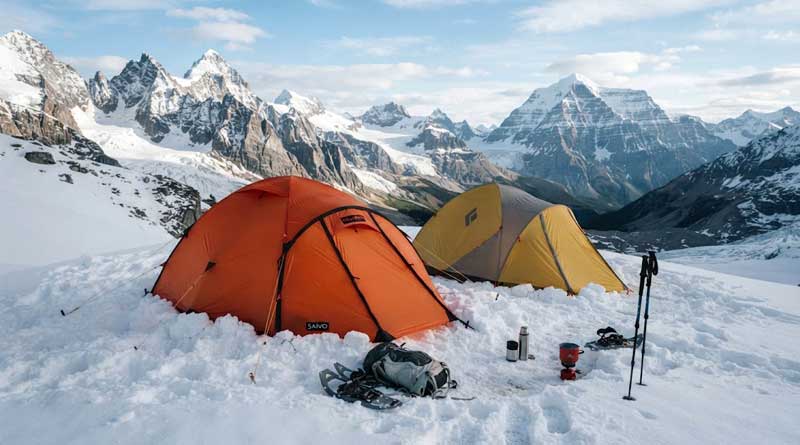
When you’re braving harsh winter winds, heavy snow, or sudden mountain storms, your tent is your lifeline. A standard three-season shelter just won’t cut it. You need a fortress that can handle it all. If you’re heading out with two trusted partners, a 3-person, 4-season tent is the perfect blend of shared warmth and manageable weight. This article reviews the best options on the market, helping you find a tough, reliable home for your most extreme adventures.
1. NEMO Kunai 3P

- Seasons: 3 – 4-season
- Sleeping Capacity: 3-person
- Minimum Trail Weight: 5 lbs. 3 oz.
- Floor Area: 43.4 square feet
The NEMO Kunai 3P is an exceptionally versatile option for backpacking year-round, built to endure both hot humid days in the trees and frigid mountain exposures. Its robust design structure and high-quality aluminum poles provide reliable stability against harsh winds. Campers will appreciate the thoughtful engineering that balances internal space with a streamlined exterior profile, making it a dependable shelter for unpredictable weather conditions.
While the minimum trail weight is slightly heavier than ultralight alternatives, the trade-off is well worth the unmatched seasonal protection and durability. Setting up the tent is straightforward, and the interior layout comfortably accommodates three individuals along with essential gear. Overall, it stands out as a premier choice for outdoor enthusiasts seeking reliable performance across diverse climates.
Pros: Excellent multi-season durability, sturdy aluminum poles, comfortable interior space, reliable weather protection.
Cons: Heavier trail weight, does not include a footprint.
2. Forceatt Tent

- Seasons: 4 Season
- Occupancy: 3 Person
- Item Weight: 2.98 kg
- Product Dimensions: 88.4L x 72.2W x 47H inches
The Forceatt Tent is designed to provide reliable shelter for campers seeking a spacious and durable option for backpacking and general outdoor excursions. Featuring a polyester coating with advanced water resistance technology, it ensures interior dryness during unexpected rainstorms. The rectangular shape maximizes floor width to comfortably fit three occupants alongside personal gear, creating a cozy environment for overnight stays in nature.
Equipped with essential components like a rainfly, stakes, and a storage sack, this model delivers great value and convenience straight out of the box. Although it carries a moderate item weight, the sturdy construction easily justifies the load by offering enhanced protection against the elements. It serves as a dependable choice for those starting their multi-season camping journey.
Pros: Spacious rectangular interior, reliable polyester water coating, includes stakes and rainfly, great value.
Cons: Moderate weight for backpacking, setup instructions could be clearer.
3. MSR Access 3

- Seasons: 3 – 4-season
- Sleeping Capacity: 3-person
- Minimum Trail Weight: 4 lbs. 6 oz.
- Vestibule Area: 17.5 square feet
Enjoy the winter backcountry without hauling a heavy mountaineering tent using the lightweight MSR Access 3. Ideal for nights out in less-severe conditions near the tree line, this shelter provides an impressive balance of warmth and reduced pack weight. The Easton Syclone composite poles offer extraordinary flexibility and strength against heavy snow loads, ensuring peace of mind during chilly mountain getaways.
Dual doors and spacious vestibules enhance livability by allowing easy entry and ample storage for gear. The thoughtful combination of ripstop nylon and micromesh maximizes ventilation while blocking cold drafts effectively. It represents an exceptional investment for backpackers who want cold-weather performance without the traditional heavy burden.
Pros: Lightweight design for winter camping, strong composite poles, generous vestibule area, dual entry doors.
Cons: Premium price point, footprint sold separately.
4. NEMO Chogori 3P

- Seasons: 4-season
- Sleeping Capacity: 3-person
- Minimum Trail Weight: 8 pounds
- Floor Area: 49.6 square feet
With an integrated fly and tent body alongside an innovative external pole structure, the NEMO Chogori 3P tent sets up faster and weighs less than traditional alternatives. This engineering marvel allows mountaineers to quickly shield themselves from hostile alpine weather without struggling through complex pitching routines. The spacious interior provides plenty of room for three individuals to rest comfortably while enduring harsh winter storms or high-altitude winds.
Durability remains a core strength of this model, highlighted by robust ripstop fabrics and reliable aluminum poles designed to withstand heavy loads of snow. Although it represents a significant investment, its specialized performance and weather resistance justify the cost for serious climbers. It offers an optimal balance of swift deployment and heavy-duty protection when safety is paramount on demanding peaks.
Pros: Fast integrated setup, external pole structure, excellent floor area, strong multi-season durability.
Cons: High price point, heavier than standard backpacking tents.
5. Mountain Hardwear Trango 3

- Seasons: 4-season
- Sleeping Capacity: 3-person
- Minimum Trail Weight: 10 lbs. 3.9 oz.
- Floor Area: 48 square feet
Built explicitly for unrelenting alpine conditions, the Mountain Hardwear Trango 3 tent delivers unmatched shelter for three climbers or two mountaineers carrying extensive gear. Its extraordinarily durable construction features heavy-duty nylon taffeta walls and an elite waterproof rating to keep moisture completely outside during severe blizzards. The robust five-pole configuration creates a fortress-like rigidity that resists high-velocity winds with exceptional stability.
While the minimum trail weight and packed size are substantial, the absolute security it provides in extreme environments makes the bulk worthwhile. Thoughtful interior dimensions ensure occupants have adequate headroom and shoulder space to wait out multi-day storms comfortably. It remains a legendary standard for serious high-altitude expeditions where equipment failure is simply not an option.
Pros: Extreme weather resistance, high waterproof rating, fortress-like structural stability, generous gear space.
Cons: Heavy trail weight, bulky packed size.
See the Mountain Hardwear Trango 3
6. Exped Orion III

- Seasons: 4-season
- Sleeping Capacity: 3-person
- Minimum Trail Weight: 8 lbs. 0.5 oz.
- Vestibule Area: 25.8 square feet
The Exped Orion III Extreme Tent is meticulously engineered for demanding adventures in harsh environments, utilizing robust materials and a time-tested design to combat fierce winds. Its standout feature is the massive dual vestibule system, offering an incredible amount of space to store bulky gear safely out of the elements. Certified safe fabrics and silicone-coated nylon layers enhance longevity and long-term weatherproofing performance.
Campers will appreciate the generous peak height, which allows occupants to sit up comfortably and manage equipment without feeling cramped. Despite its high-altitude capabilities, the packed size remains surprisingly manageable for transport on rigorous treks. It stands out as a top-tier choice for expeditions requiring maximum storage space and structural integrity.
Pros: Massive vestibule space, high peak height, OEKO-TEX certified fabrics, dependable wind stability.
Cons: Complex multi-pole setup, premium price tag.
7. MSR Remote 3

- Seasons: 4-season
- Sleeping Capacity: 3-person
- Minimum Trail Weight: 8 lbs. 2 oz.
- Floor Area: 46 square feet
Serving as a cavernous stronghold for three people, the MSR Remote 3 tent provides highly livable accommodations designed to preserve your sanity during extended stays high in the mountains. Easton Syclone composite poles provide incredible elasticity and strength, allowing the shelter to flex under heavy snow loads instead of snapping. The thoughtful geometry maximizes internal volume while shedding wind effectively from every angle.
Ample vestibule space ensures gear stays organized and accessible even when weather forces everyone indoors for days on end. The durable polyurethane floor coating and robust rainfly create an impenetrable barrier against moisture and freezing temperatures. It is an exceptional sanctuary for mountaineers seeking comfort and resilience during prolonged winter excursions.
Pros: Highly livable interior design, flexible composite poles, excellent snow-load handling, spacious vestibules.
Cons: Expensive investment, requires careful staking in loose soil.
8. NORDREK Pop Up Tent

- Seasons: 4 Season
- Occupancy: 3 Person
- Item Weight: 3 kg
- Product Dimensions: 86.61L x 78.7W x 57.09H inches
The NORDREK Pop Up Tent offers incredible versatility for various outdoor scenarios ranging from backpacking and beach trips to mountaineering and car camping. Utilizing innovative graphene-infused fabric technology, it delivers superior water resistance and durability to handle harsh weather conditions seamlessly. The round shape and high peak height create an unusually roomy interior environment for three people.
Convenience is a major highlight, as the pop-up mechanism drastically cuts down pitching time compared to traditional shelters. Included stakes and a durable rainfly ensure that users remain secure and dry regardless of sudden environmental changes. It is a fantastic choice for campers who prioritize rapid setup and multi-environment adaptability.
Pros: Rapid pop-up design, graphene-infused waterproof fabric, high ceiling clearance, multi-use capability.
Cons: Bulkier packed shape due to pop-up frame, moderate total weight.
9. CANTUO Backpacking Tent
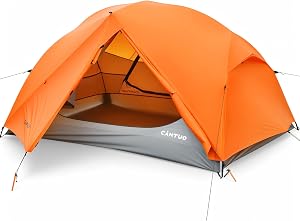
- Seasons: 4 Season
- Occupancy: 3 Person
- Item Weight: 4.1 pounds
- Product Dimensions: 86.61L x 59.06W x 47.24H inches
The CANTUO Backpacking Tent is engineered for adventurers who need a lightweight yet dependable four-season shelter. Weighing in at just over four pounds, it lightens the load significantly on long treks without compromising structural integrity. The high-rigidity 7001 aluminum alloy pole provides a strong dome foundation that resists wind and rain with ease.
The package comes fully equipped with a breathable inner tent, high-protection rainfly, heavy-duty stakes, and a portable compression carrying bag. Its waterproof coating keeps moisture entirely at bay, ensuring a comfortable night of sleep even during heavy downpours. This tent combines portability and rugged protection into one highly efficient package.
Pros: Very lightweight for a 4-season tent, rigid aluminum pole system, comprehensive accessory kit included, waterproof coating.
Cons: Floor width is narrower than some competitor models, interior space can feel tight for three adults.
See the CANTUO Backpacking Tent
How to Choose a 3-Person 4-Season Tent
Buying a tent for extreme weather is not like buying a tent for summer camping. A 3-person 4-season tent is a serious piece of gear. It is your home, your shield, and sometimes your lifeline when the weather turns ugly. If you pick the wrong one, your trip can become dangerous or just plain miserable. This guide will walk you through every important feature. By the end, you will know exactly what to look for and what to avoid. Let us break it down step by step so you can make a smart, confident choice.
Why You Need a 4-Season Tent
Many people think a 4-season tent is just a heavier 3-season tent. That is not true. A 3-season tent is made for spring, summer, and fall. It handles rain and light wind well. But it cannot stand up to heavy snow, strong gusts, or freezing temperatures. A 4-season tent is built differently. It uses stronger poles, thicker fabrics, and a smarter shape. These tents are designed to shed snow, resist wind from all sides, and keep heat inside. They are often called mountaineering or expedition tents. If you plan to camp in winter, above the treeline, or in any place with harsh weather, you need a true 4-season tent.
Key Features to Look For
When you start shopping, you will see many technical terms. Do not get overwhelmed. Focus on these core features. They make the biggest difference in performance and comfort.
1. Pole Material and Design
Poles are the skeleton of your tent. In a 4-season tent, they must be strong. Most good tents use aluminum poles. Aluminum bends rather than breaks, which is important in a storm. Some tents use lightweight alloys, but make sure they are thick enough. The design matters too. A geodesic or semi-geodesic design uses crossing poles that create multiple triangles. This shape is incredibly strong. It distributes force evenly across the tent. A simple dome shape might work for summer, but for winter, you want that multi-pole geometry. Look for at least four poles crossing at the top.
2. Fabric and Denier
Fabric strength is measured in denier. A higher number means thicker, tougher fabric. For a 3-person 4-season tent, look for a floor fabric of at least 70 denier. The fly should be 40 denier or higher. Many high-end tents use a mix of nylon and polyester. Nylon is strong and stretchy, which helps in wind. Polyester holds its shape better when wet. Both work well. Also check for a fire-retardant coating. This is a safety must-have. The fabric should also have a waterproof coating, usually polyurethane or silicone. Silicone coatings are more durable and last longer.
3. Weatherproofing and Seams
A tent is only as good as its seams. All seams on the rainfly and floor must be taped or sealed. Factory-taped seams are best. They save you time and ensure a perfect seal. Look for a waterproof rating of at least 3000 mm for the floor and 1500 mm for the fly. These numbers tell you how much water pressure the fabric can handle before leaking. Also, check the zippers. They should be large and sturdy. Small zippers break easily in cold weather. Many 4-season tents use #10 zippers, which are heavy-duty and reliable.
4. Ventilation and Condensation Control
This is a tricky one. You want to keep heat in, but you also need to let moisture out. Your breath creates condensation inside the tent. In cold weather, that moisture can freeze on the inside walls. Then, when it warms up, it melts and drips on you. Good 4-season tents have adjustable vents near the top. These let moist air escape while keeping rain and snow out. Some tents have mesh panels on the inner tent. This helps airflow while still blocking bugs. Never buy a tent with no ventilation. You will wake up wet and cold.
5. Vestibule Space
A vestibule is a covered area outside the main sleeping space. It is not a luxury; it is a necessity. In winter, you need a place to store your boots, wet gear, and cooking equipment. You do not want snow and mud inside your sleeping area. Look for a tent with at least one large vestibule. Some tents have two, one on each side. This gives you more storage and makes it easier to get in and out without disturbing your partner. A vestibule also acts as a windbreak when you open the main door.
Weight vs. Durability Trade-Off
Every 4-season tent involves a trade-off. Stronger materials and more poles add weight. For a 3-person tent, expect a packed weight between 7 and 12 pounds. Lighter tents are great for backpacking, but they may not be as tough in a severe storm. Heavier tents are bombproof but hard to carry over long distances. Think about your typical trip. If you are skiing or backpacking far from the trailhead, choose a lighter model. If you are setting up a base camp for weeks, go for maximum durability. There is no perfect tent for everyone. Know your priorities.
Capacity and Floor Space
A 3-person tent should sleep three adults, but “sleep” is the key word. Do not expect luxury. Most 3-person tents have a floor area between 40 and 50 square feet. That gives each person about 13 to 17 square feet. It is cozy but doable. Check the peak height too. A higher peak makes it easier to sit up and change clothes. In winter, you will spend more time inside, so headroom matters. Also look at the floor shape. Rectangular floors use space better than tapered designs. Some tents have a slightly wider end for the feet. That helps when you use thick winter sleeping bags.
Setting Up in Bad Weather
You will rarely set up your tent on a sunny, calm day. Practice setting it up at home first. In a storm, you need to do it fast. Look for a design that lets you pitch the fly and inner tent together. This is called a single-pitch setup. It keeps the inner tent dry while you work. Some tents use color-coded poles and clips. This makes setup easier in low light. Also check the guylines. A good 4-season tent has multiple guy-out points. These are loops where you attach extra ropes. Use them in high winds. They add serious stability.
Budget and Value
Good 4-season tents are not cheap. Prices range from $300 to over $1000. Do not go for the cheapest option. In extreme weather, a cheap tent can fail catastrophically. Spend money on quality poles, fabric, and zippers. Brands like Hilleberg, Mountain Hardwear, MSR, and The North Face are known for reliability. That does not mean you need the most expensive model. Look for sales or previous-year models. Often, the only difference is the color. A mid-range tent from a trusted brand is usually a safe bet. Remember, your tent is your shelter. It is worth investing in.
Comparison Table of Key Specs
Use this table as a quick reference when comparing different models. It highlights the most important numbers.
| Feature | Minimum Standard | Ideal for Hardcore Use | Why It Matters |
|---|---|---|---|
| Packed Weight | Under 12 lbs | Under 8 lbs | Easier to carry on long treks |
| Floor Denier | 70D | 100D or higher | Resists punctures from rocks and ice |
| Fly Denier | 40D | 70D | Handles high wind and abrasion |
| Waterproof Rating (Floor) | 3000 mm | 5000 mm | Prevents ground moisture from seeping in |
| Number of Poles | 3 | 4 or more | More poles = stronger structure |
| Vestibules | 1 | 2 | More space for gear and cooking |
Common Mistakes to Avoid
Even experienced campers make errors when choosing a winter tent. Here are the most common pitfalls and how to avoid them.
- Buying too small: A 3-person tent fits three people, but just barely. If you have large sleeping bags or lots of gear, consider a 4-person tent instead. The extra space is worth the weight.
- Ignoring the wind direction: Some tents are stronger at the front than the back. Always set up with the narrow end facing the wind. This reduces drag and stress on the poles.
- Forgetting about snow loading: Snow can pile up on the roof overnight. A steep pitch helps snow slide off. Flat roofs are dangerous. They can collapse under heavy snow.
- Overlooking the footprint: A footprint is a groundsheet that goes under the tent. It protects the floor from sharp objects. It also adds a layer of insulation. Always buy the manufacturer’s footprint or a custom-cut tarp.
- Skipping guylines: Many people do not use guylines in mild weather. In a storm, they are essential. They prevent the tent from flattening in high winds. Always carry extra stakes and cord.
Seasonal Versatility
Some 4-season tents can be used in summer too, but they will be hot. The fabric is thick and does not breathe as well as a mesh tent. If you plan to use your tent year-round, look for one with removable inner panels. You can take out the solid fabric and replace it with mesh. This gives you the best of both worlds. However, most 4-season tents are designed for cold weather. They excel in winter, spring, and fall. In hot summer, they become saunas. If you only camp in summer, a 3-season tent is a better choice.
Final Checklist Before Buying
Before you click “buy,” go through this checklist. It will help you avoid regret.
- Does the tent have at least four crossing poles?
- Is the floor fabric at least 70 denier?
- Are all seams factory-taped?
- Does it have at least one large vestibule?
- Are the zippers heavy-duty (#10 or similar)?
- Does it have top vents for airflow?
- Is the packed weight reasonable for your trips?
- Does the brand have good customer service and warranty?
Choosing the right 3-person 4-season tent takes time, but it is worth it. A good tent will last for many years and many adventures. It will keep you safe in blizzards, comfortable in cold rain, and happy when the weather turns bad. Remember to balance weight, strength, and space based on your specific needs. Read reviews from other climbers and backpackers. They often share real-world feedback that specs cannot tell you. And finally, practice setting it up before you go. That way, when the storm hits, you will be ready. Stay safe, stay warm, and enjoy the wild places.When you’re braving harsh winter winds, heavy snow, or sudden mountain storms, your tent is your lifeline. A standard three-season shelter just won’t cut it. You need a fortress that can handle it all. If you’re heading out with two trusted partners, a 3-person, 4-season tent is the perfect blend of shared warmth and manageable weight. This article reviews the best options on the market, helping you find a tough, reliable home for your most extreme adventures.