
Best Waterproof Winter Gloves of 2027
Cold, wet hands can ruin a winter day, whether you are shoveling snow, commuting, skiing, or walking the dog. The right pair of waterproof gloves keeps moisture out, traps warmth, and still lets you use your phone and grip tools safely. We compared seven popular options, from lightweight everyday picks to insulated snowboard gloves, to find which ones deliver real protection. Read on for detailed reviews, pros and cons, and a practical buying guide to help you choose confidently today.
1. ihuan Waterproof Ski Gloves

- Outer Shell: Waterproof fabric
- Lining: Soft, dense fleece
- Palm: Anti-slip microfiber leather
- Best Range: 20°F to 32°F
The ihuan gloves aim at everyday winter use rather than extreme mountain conditions. A waterproof outer fabric combines with a dense fleece lining to hold heat without making your fingers clumsy. The adjustable cuff helps block wind and snow, and the rated range of 20 to 32°F makes them a sensible pick for commuting, shoveling, dog walks, and light cycling. They feel soft and lightweight, which many buyers prefer for driving.
The microfiber leather palm adds grip on steering wheels, handlebars, and phones, while the touchscreen fingertips let you answer calls without exposing your skin. Keep in mind that the cuffs are not waterproof, so avoid soaking them. Hand washing is recommended, and you should skip the dryer to protect the internal membrane. For anyone wanting an affordable, flexible glove for mild to moderately cold days, this pair delivers solid value, though serious skiers in deep cold should look at heavier insulated options.
- Pros: Lightweight and soft, good grip, touchscreen compatible, adjustable windproof cuff
- Cons: Cuffs are not waterproof, limited warmth in extreme cold
2. Carhartt Insulated Knit Cuff Glove
- Shell: Polyester and softshell
- Waterproofing: Waterproof insert
- Lining: FastDry moisture-wicking
- Grip: Digital-grip palm, stick-grip fingers
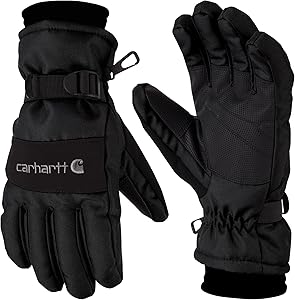
Carhartt built this glove for people who work outside in wet, cold conditions. The polyester and softshell shell resists abrasion, and the synthetic palm stands up to tools, rope, and rough materials. A waterproof insert keeps moisture out, while synthetic insulation holds in warmth during long shifts. FastDry lining wicks sweat away, which matters when you are active and your hands start to heat up inside the glove.
The fleece-lined knit cuff and adjustable wrist strap seal out snow and cold air. For the best fit, loosen the strap before putting the glove on and tighten it afterward. The digital-grip palm and stick-grip fingers give secure handling of equipment, and finger movement stays good for such an insulated design. It is not the flashiest option, but it is dependable, durable, and practical for job sites, yard work, and snow removal where toughness counts more than style or touchscreen convenience.
- Pros: Very durable, waterproof insert, moisture-wicking lining, secure wrist closure
- Cons: Not designed for touchscreens, work-style look
3. Burton GORE-TEX Insulated Gloves

- Membrane: GORE-TEX Plus Warm
- Insulation: ThermacoreECO, 95% recycled
- Liner: Removable two-in-one design
- Extras: Heater pocket, wrist leash, Screen Grab
Burton aimed this glove at snowboarders and skiers who ride in all conditions. GORE-TEX Plus Warm technology delivers dependable waterproofing and breathability, while ThermacoreECO insulation, made from 95 percent recycled materials, adds warmth without too much bulk. The pre-curved ergonomic fit reduces hand fatigue, and the extended gauntlet with an adjustable cinch locks out snow during falls and deep powder days.
The two-in-one design includes a removable liner, so you can wear the shell alone on milder days or layer everything together in deep cold. Smart touches include a heater and vent pocket, a removable wrist leash, a D-ring with hook, a soft nose wipe on the thumb, and Screen Grab touchscreen technology. It costs more than most gloves here, but the Lifetime Warranty and premium construction justify the price for frequent riders. Casual users who only need a glove for commuting may find it more glove than they need.
- Pros: Premium GORE-TEX waterproofing, removable liner, touchscreen tech, Lifetime Warranty
- Cons: Higher price, bulkier than everyday gloves
4. Pixel Panda Thinsulate Gloves

- Insulation: 3M Thinsulate with plush fleece
- Waterproofing: Sealed liner, 10,000mm rating
- Touchscreen: 270° conductive index finger
- Palm: Full-palm PU leather
Pixel Panda focuses on warmth and weather protection at a friendly price. The 3M Thinsulate insulation and plush fleece lining are marketed as up to twice as warm as standard gloves, and the double-layer waterproof design uses a water-repellent shell plus a sealed liner with heat-sealed seams tested to 10,000mm water pressure. That combination suits skiing, snowboarding, shoveling, and wet commutes.
The 270-degree conductive fabric on the index finger makes phone and tablet use easy, and the full-palm PU leather grip holds well on poles, handlebars, and tools. An adjustable wrist strap, anti-loss leash, and snap clip add convenience, especially for travel and slopes. Because the insulation is substantial, expect some bulk compared with thin liner gloves, which may reduce dexterity for fine tasks. Overall, this is a well-rounded option for people who want ski-ready performance without paying premium brand prices.
- Pros: Warm Thinsulate fill, tested waterproof liner, good touchscreen coverage, wrist leash
- Cons: Some bulk, reduced dexterity for small tasks
5. TRENDOUX Merino Wool Gloves

- Material: 30% merino wool blend with spandex
- Touchscreen: Thumb and index finger
- Grip: Silicone palm prints
- Fit: Unisex, one size fits most
These knitted gloves take a different approach, focusing on lightweight comfort rather than full waterproofing. The 30 percent merino wool blend provides breathable insulation, and the stretchy knit with spandex fits both men and women snugly without bulk. They work well as a daily commuter glove, a travel companion, or a liner under heavier mittens when temperatures drop.
Conductive fibers on the thumb and index finger handle phones, tablets, and car screens, and silicone grip prints improve traction on the steering wheel and bike handlebars. It is important to be clear that these are not waterproof, so they will soak through in heavy snow or sustained rain and are best for dry cold or light flurries. If you want a thin, soft, giftable pair that keeps hands comfortable during driving and running, they are an excellent choice. For wet conditions, pick a waterproof model instead.
- Pros: Soft and breathable, slim fit, good touchscreen response, great gift idea
- Cons: Not waterproof, limited warmth in severe cold
6. SIMARI Thermal Touchscreen Gloves

- Fabric: 95% polyester, 5% spandex
- Lining: Warm fleece
- Grip: Silicone particles on palm and fingers
- Safety: Reflective back stripes
SIMARI offers a budget-friendly thermal glove that works best as a lightweight daily option or a liner. The knit stretches in four directions, and the fleece lining traps heat without adding bulk. An elastic cuff helps keep icy wind out during walks, commutes, and runs, and the fit feels like a second skin that stays comfortable through a full day of wear.
Silicone particles on the palm and fingers provide strong traction for steering wheels, handlebars, and tools, and the reflective stripes on the back improve visibility after dark. The touchscreen fingertips work with phones, tablets, smartwatches, and car GPS panels. Since this is a knit glove rather than a sealed waterproof design, it is not meant for heavy snow or wet slush. For dry cold, night runs, and dog walks, it is a practical pick, backed by 12-month quality support and a quick customer response promise.
- Pros: Affordable, stretchy fit, reflective safety stripes, strong grip
- Cons: Not truly waterproof, too thin for deep winter
7. TRENDOUX 3M Thinsulate Ski Gloves

- Insulation: 3M Thinsulate filling
- Waterproofing: Dry-max insert, coated back
- Palm: Reinforced PU leather
- Closure: Adjustable strap, anti-loss buckle
This TRENDOUX model is built for tougher conditions, pairing 3M Thinsulate insulation with a dry-max waterproof insert and a durable coating on the back of the hand. The company says the filling is twice as warm as eiderdown while staying thin, and the fast-dry lining wicks sweat so your hands stay comfortable during active days on the mountain, bike, or snowmobile.
Reinforced PU leather palms and digital grip details offer dependable handling, while the self-adjusting wrist strap, elastic knit cuff, and anti-loss buckle keep snow out and the gloves secure. Touchscreen fingertips are a welcome convenience. The materials list includes cotton and laminated sponge, so expect a bulkier feel and a slower drying time than thin knits. Hand washing and air drying are required. Overall, it is a strong choice for skiing, snowboarding, motorcycling, and cold work where warmth is the priority.
- Pros: Very warm, waterproof insert, secure closure, reinforced palm
- Cons: Bulkier, hand wash only, longer drying time
How to Choose Waterproof Winter Gloves
Choosing the right gloves depends on the weather you face, the activities you do, and how much dexterity you need. A glove that is perfect for skiing may feel clumsy while driving, and a thin knit may fail in wet snow. This guide breaks down the features that matter most so you can match a pair to your daily routine.
Understand Waterproofing
Waterproofing is the main reason to buy winter gloves, yet the term is used loosely. Some gloves are truly sealed against water, while others only shed light moisture for a short time. Knowing the difference prevents cold, soggy hands.
Waterproof vs Water-Resistant
Waterproof gloves use a membrane or sealed insert that blocks liquid water, usually with taped or heat-sealed seams. Water-resistant gloves rely on a coating that repels light moisture but eventually lets water through. For heavy snow, slush, or rain, choose waterproof. For dry cold or brief flurries, water-resistant may be enough.
Membranes and Inserts
Premium gloves often use GORE-TEX or similar membranes that block water while letting sweat vapor escape. Budget gloves use generic inserts that also work, though breathability can vary. Look for details such as sealed seams and tested water pressure ratings, because these show how well a glove resists leaks.
Match Insulation to Temperature
Insulation traps body heat, but more is not always better. Too much insulation causes sweat, and damp hands get cold quickly. Think about the lowest temperature you expect and how active you will be.
Synthetic Insulation
Thinsulate and similar synthetic fills stay warm even when slightly damp and add little bulk. They are the most common choice in ski and work gloves because they balance warmth, weight, and price.
Fleece and Wool Linings
Fleece and merino wool feel soft and breathe well, making them ideal for light winter use and layering. They provide comfort rather than extreme warmth, so pair them with a waterproof shell when conditions turn wet.
| Temperature | Recommended Style | Typical Use |
|---|---|---|
| Above 40°F | Thin knit or fleece glove | Commuting, driving |
| 20°F to 40°F | Light waterproof insulated glove | Dog walks, shoveling |
| 0°F to 20°F | Thinsulate waterproof glove | Skiing, cycling |
| Below 0°F | Heavy gauntlet with removable liner | Snowboarding, snowmobiling |
Check Fit and Dexterity
A good glove should feel snug without squeezing. Tight gloves restrict circulation and make hands colder, while loose gloves leave air gaps that waste heat and reduce control. When trying a pair, make a fist and pinch your thumb to each finger.
- Fingertips should reach the end without bunching
- The palm should flex without pulling
- The wrist strap should tighten without cutting off blood flow
- Pre-curved fingers reduce fatigue during long days
Look at Grip and Palm Material
Grip matters for safety when you hold a steering wheel, ski pole, or tool. PU leather and microfiber leather offer durable, flexible traction. Silicone prints add grip on knit gloves but wear down faster. Reinforced palms last longer in work settings.
Consider Touchscreen Features
Removing gloves in freezing weather is uncomfortable, so touchscreen fingertips are worth having. Some gloves only cover the thumb and index finger, while others use wider conductive zones. Remember that thick insulation can reduce screen accuracy, so test it if you text often.
Pay Attention to Cuff Design
Cuffs decide whether snow gets inside your glove. Short knit cuffs are convenient under a jacket sleeve, while long gauntlets go over the sleeve and block powder. Adjustable straps help seal the opening, and wrist leashes prevent loss on chairlifts.
Choose by Activity
| Activity | Key Features |
|---|---|
| Skiing and snowboarding | Waterproof membrane, long cuff, strong insulation |
| Work and shoveling | Durable shell, reinforced palm, moisture-wicking lining |
| Driving and commuting | Thin profile, grip, touchscreen fingertips |
| Running and cycling | Lightweight, windproof, reflective details |
Care and Maintenance
Proper care extends glove life and protects waterproofing. Most manufacturers recommend gentle cleaning and natural drying.
- Hand wash with mild detergent in lukewarm water
- Avoid wringing, which can damage membranes
- Skip the dryer and high heat
- Air dry flat in a cool, ventilated spot
Final Buying Checklist
- Confirm the glove is waterproof, not just water-resistant
- Match insulation to your coldest expected temperature
- Check fit, grip, and touchscreen compatibility
- Choose a cuff style that suits your jacket and activity
- Review warranty and care instructions before buying