Best Winter Camping Sleeping Bags of 2027
Winter camping rewards you with quiet trails and starry skies, but only if you stay warm after sunset. A good sleeping bag is the most important piece of cold-weather gear you can carry. We reviewed eight options, from zero-degree mummy bags to roomy flannel rectangles for car camping. Each one differs in insulation, size, and intended use. This guide covers their specifications, strengths, and weaknesses, then explains how to choose the right bag for your climate, body, and camping style.
1. Coleman North Rim 0°F

- Temperature Rating: 0°F
- Insulation: Coletherm hollow polyester
- Fits: Campers up to 6 ft 2 in
- Key Feature: Thermolock draft tube and adjustable hood
The Coleman North Rim is one of the few bags in this roundup built around a zero-degree rating in a traditional mummy shape. Coletherm hollow polyester insulation holds heat while keeping weight lower than bulky flannel designs, which matters when you are hauling gear across snow. A Thermolock draft tube runs along the zipper to stop warm air from leaking out, and the no-snag zipper reduces frustration when you are fumbling with gloves at night.
The adjustable hood lets you balance warmth and ventilation, tightening it on freezing nights and loosening it when the temperature rises. It is sized for campers up to 6 ft 2 in, so it suits most adults without feeling oversized. Because it is a mummy cut, it traps heat efficiently but offers less room to roll around than rectangular bags. Pair it with an insulated pad, since ground cold can undermine even a strong bag. For serious cold, this is the most dependable option here.
Pros
- True zero-degree rating
- Draft tube blocks zipper heat loss
- Adjustable hood for ventilation
Cons
- Limited room to move
- Not suited to very tall campers
2. Cotton Flannel XXL Bag
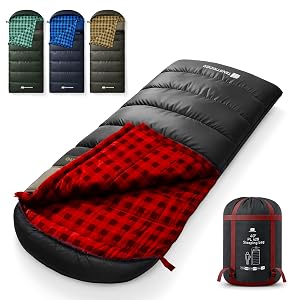
- Size: 90.5 x 39.4 in
- Weight: 7.05 lb
- Temperature Rating: Comfort 30-40°F, limit 15°F
- Shell: Waterproof polyester, flannel lining
This XXL flannel bag is designed for larger campers who dislike the squeeze of a mummy shape. At 90.5 by 39.4 inches, it offers plenty of room to stretch out or sleep on your side. The 7.05-pound weight comes from thick insulation, and the listing gives a comfort range of 30 to 40°F with a 15°F limit. That makes it better suited to cool or cold nights than extreme conditions.
The polyester shell is described as tear-resistant and waterproof, helping block snowmelt and condensation. A two-way zipper lets you open the footbox for ventilation, and the bag unzips fully to work as a blanket or tent floor mat. It is also machine washable. The main drawback is weight and bulk, so it works best for car camping, ice fishing, or emergency use rather than backpacking. Treat the comfort rating honestly, and add a liner or warm layers if you expect temperatures near freezing.
Pros
- Very spacious for big and tall adults
- Waterproof, tear-resistant shell
- Footbox ventilation and full unzip
Cons
- Heavy at 7.05 lb
- Comfort range is only 30-40°F
3. Coleman Heritage Big & Tall

- Temperature Rating: 10°F
- Size: 84 x 40 in, fits up to 6 ft 7 in
- Insulation: 5 lb Holofill 808
- Cover: Cotton with synthetic flannel liner
The Coleman Heritage Big & Tall is a roomy rectangular bag built for tall campers, fitting people up to 6 ft 7 in. It carries a 10°F rating and uses five pounds of Holofill 808 insulation, which gives it substantial warmth for winter car camping and hunting trips. FiberLock construction helps stop the insulation from shifting, and the no-snag zipper keeps entry and exit smooth. Treat the rating as a limit rather than a comfort target.
A heavy-duty cotton cover with a synthetic flannel liner gives it a durable yet cozy feel, and the whole bag is machine washable. The Wrap ’N’ Roll system makes packing simpler, although the finished roll is still bulky and heavy. This is not an ultralight choice, so it fits best when you are camping near your vehicle. Add a sleeping pad to protect against cold ground. The 5-year limited warranty adds confidence, making it a strong value for large adults who want space and dependable warmth.
Pros
- Fits campers up to 6 ft 7 in
- Thick insulation and durable cover
- 5-year limited warranty
Cons
- Bulky and heavy to carry
- Rectangular cut loses heat faster than a mummy
4. rioyalo 0 Degree Bag

- Temperature Rating: Comfort 32°F, limit 15°F, extreme 5°F
- Weight: 5 lb
- Fits: Campers up to 6 ft 10 in
- Fill: 450GSM microfiber, 210T ripstop shell
The rioyalo bag stands out for combining generous length with a manageable five-pound weight. It fits campers up to 6 ft 10 in, which is rare in this price range. The listing gives a comfort rating of 32°F, a limit of 15°F, and an extreme rating of 5°F, so despite the zero-degree name, it is better viewed as a cold-weather bag than a deep-winter one. The 450GSM microfiber fill is paired with a 210T ripstop polyester shell.
A wind buffer reduces heat loss along the zipper, and an anti-pinch ribbon helps prevent snags. The soft 190T pongee lining feels smooth against the skin, and the bag comes with a compression sack with straps, making it easier to carry than most flannel-lined bags. It is machine washable on a gentle cold cycle. Because the rating is for reference only, add layers if you run cold. It is a sensible choice for campers who want length, moderate winter warmth, and easier packing.
Pros
- Roomy length for very tall campers
- Compression sack included
- Wind buffer and anti-snag zipper
Cons
- Comfort rating is only 32°F
- Name overstates its deep-cold performance
5. FARLAND Fleece-Lined Bag

- Size: 86.6 x 32.68 in
- Fits: Users up to 6 ft tall
- Lining: Full plush interior
- Zipper: Snag-resistant, two-way
The FARLAND bag focuses on comfort from the moment you climb in. Its plush lining covers the back, sides, and footbox, so the interior feels warm against your skin instead of cold and slick. The rectangular cut gives room to turn and curl up, and it fits adults and teenagers up to 6 feet tall. At 86.6 by 32.68 inches, it is long enough for most people, though narrower than some oversized rivals.
The two-way zipper opens from either end, and the bag unzips completely to serve as a blanket. The listing does not state a temperature rating, which makes it harder to judge for true winter use, so treat it as a cold-weather comfort bag best suited to car camping, guest use, or an emergency kit. Pair it with a pad and warm base layers on freezing nights. It is a pleasant, versatile option for casual cold-season trips rather than extreme conditions.
Pros
- Full plush lining feels warm immediately
- Versatile as a bag or blanket
- Smooth two-way zipper
Cons
- No temperature rating listed
- Better for casual use than extreme cold
6. OneTigris Bushcrafter’s Bag

- Season Rating: 3-season, 46.4-59°F
- Size: 6.8 x 2.7 ft
- Shell: 300T pongee, 190T lining
- Fill: 7 oz polycotton
The OneTigris Bushcrafter’s bag is the mildest option in this list, and it is important to be clear about that. Its listing describes a three-season design for temperatures between 46.4 and 59°F, so it is not a standalone winter bag. Where it can help is as a lightweight layer inside a warmer bag, or as a backup for shoulder-season trips. It uses a mummy shape with a cord-stopped hood and quality YKK zippers.
The 300T pongee shell is water repellent and quick drying, and the bag is machine washable on a delicate cycle. At 6.8 feet by 2.7 feet, it offers extra width for adults and kids, and it compresses into a compact tube-shaped stuff sack. Those traits make it handy for bushcraft, hiking, and emergency use. For winter camping, treat it as a liner or secondary layer rather than your main protection. Used that way, it adds flexibility without much bulk.
Pros
- Compact and easy to carry
- Quality YKK anti-snag zippers
- Roomy for a mummy bag
Cons
- Only rated for 46-59°F
- Unsuitable as a standalone winter bag
7. TETON Deer Hunter Bag

- Shell: Teton Tough canvas
- Lining: Soft poly-flannel
- Draft Protection: Zipper and shoulder draft tubes
- Design: Double-layer, half-circle mummy-style hood
The TETON Deer Hunter is built for rugged use, with a tough canvas shell meant to handle hunting camps and cold, damp weather. Its fiber fill and double-layer construction are paired with draft tubes at both the zipper and shoulders, which help keep warm air from escaping around your neck and chest. The soft poly-flannel lining adds comfort, and the half-circle hood gives some head protection without the tight fit of a full mummy.
Zippers on each side allow easy entry and temperature control, which is helpful when a night starts cold and warms up. The listing does not provide a specific temperature rating, so check the product page before relying on it for extreme cold. Canvas shells are durable but heavier, making this bag a better match for truck camping, hunting blinds, and base camps than long hikes. The brand also offers product support, which is reassuring. Add an insulated pad and a stocking cap for the best results.
Pros
- Durable canvas shell
- Zipper and shoulder draft tubes
- Soft flannel lining
Cons
- Heavy and bulky
- Temperature rating not stated in the listing
8. Coleman Brazos 30°F

- Temperature Rating: 30°F
- Fits: Campers up to 5 ft 11 in
- Construction: FiberLock insulation system
- Extras: Thermolock draft tube, stuff sack
The Coleman Brazos is a simple, affordable bag designed for cool weather rather than deep winter. Its 30°F rating means it works for late autumn or early spring nights, and it can serve as a base layer in a layered winter system. A Thermolock draft tube along the zipper keeps body heat from escaping, while FiberLock construction stops insulation from shifting and creating cold spots.
It fits campers up to 5 ft 11 in, so taller adults may feel cramped. The no-snag zipper is easy to use, and fasteners that lock the bag in place as you roll make packing quicker. A stuff sack is included, which helps with storage and transport. For true winter camping, you would need to pair it with a liner or a warmer outer bag. As a budget-friendly cool-weather option for short trips, car camping, or guest use, it is a practical and straightforward choice.
Pros
- Draft tube and FiberLock construction
- Easy packing with included stuff sack
- Affordable cool-weather option
Cons
- 30°F rating is not enough for deep winter
- Limited to campers under 6 ft
How to Choose Winter Sleeping Bags
Choosing a winter sleeping bag is about matching warmth, size, weight, and features to the way you camp. A bag that works for a backpacker may be wrong for someone sleeping beside a truck. The sections below explain the main factors, using the bags reviewed above as examples.
Understand Temperature Ratings
Temperature ratings tell you how cold a bag can handle, but the numbers are not all equal. Manufacturers often list several figures, and the lowest one is rarely the one you should plan around.
Comfort, Limit, and Extreme
- Comfort rating: the temperature at which an average sleeper stays comfortable.
- Limit rating: the lowest temperature at which you can sleep without serious discomfort, usually while curled up.
- Extreme rating: a survival figure only, not a target for planning.
The rioyalo bag shows this well, with a comfort rating of 32°F but an extreme rating of 5°F.
Add a Safety Margin
Choose a bag rated at least 10 to 15°F below the coldest night you expect. Wind, humidity, fatigue, and a thin sleeping pad all make you feel colder than the forecast suggests.
| Expected Night Temperature | Suggested Bag Rating | Example From This List |
|---|---|---|
| 40-50°F | 30°F or lower | Coleman Brazos |
| 25-35°F | 10-15°F | Coleman Heritage, rioyalo |
| 10-20°F | 0°F or lower | Coleman North Rim |
Pick the Right Shape
Shape affects warmth, comfort, and packed size, so choose based on how you sleep.
Mummy Bags
Mummy bags taper toward the feet and include a hood. They leave less empty space to heat, which makes them more thermally efficient. The Coleman North Rim and OneTigris use this shape.
Rectangular Bags
Rectangular bags give you room to turn and stretch, and they unzip into blankets. They feel more comfortable but lose heat faster. The Cotton Flannel XXL, Coleman Heritage, and FARLAND bags follow this style.
Compare Insulation and Shell
Most bags in this guide use synthetic insulation, which keeps working better than down when damp and is easier to wash. Fill weight matters, but so does construction.
- Hollow polyester, such as Coletherm, holds heat with less weight.
- Thicker fills, such as the five pounds of Holofill 808, add warmth but also bulk.
- Waterproof or water-repellent shells help against snowmelt and condensation.
- Canvas shells, as on the TETON, resist abrasion but add weight.
Check Size and Fit
A bag that is too large leaves cold air to heat, while one that is too small compresses the insulation and creates cold spots. Check the listed height limit and the shoulder width before buying.
| Camper Height | Good Options |
|---|---|
| Under 6 ft | Coleman Brazos, FARLAND |
| 6 ft to 6 ft 2 in | Coleman North Rim |
| 6 ft 5 in and taller | Coleman Heritage, rioyalo |
Balance Weight and Portability
Weight is the main trade-off in winter bags. Heavy flannel and canvas designs feel luxurious but are difficult to carry far. If you walk to your campsite, favor lighter synthetic bags with a compression sack. If you camp beside your vehicle, you can choose a larger and heavier bag for extra comfort.
Look for Key Features
- Draft tubes along the zipper and shoulders to block heat loss.
- An adjustable hood for balancing warmth and airflow.
- Snag-resistant zippers that work with gloves.
- Two-way zippers for footbox ventilation.
- Machine washability for easy cleaning.
- A stuff or compression sack for transport.
Match the Bag to Your Trip
| Trip Type | Best Fit |
|---|---|
| Cold-weather camping near a vehicle | Coleman Heritage, Cotton Flannel XXL |
| Serious cold with weight in mind | Coleman North Rim |
| Hunting and rugged use | TETON Deer Hunter |
| Cool nights and guest use | Coleman Brazos, FARLAND |
| Layering in a warmer system | OneTigris |
Care Tips
Store your bag loosely in a large sack rather than compressed, since long-term compression flattens the insulation. Fluff it before each trip, wash it on a gentle cycle, and dry it completely. A dry bag keeps its loft and warms you better. Always use an insulated pad, as the ground pulls away more heat than the air.
Final Advice
Start with the coldest temperature you expect, add a safety margin, and then choose the shape and size that suit your body and camping style. For deep cold, the Coleman North Rim is the strongest fit here. For tall campers in cold weather, the Coleman Heritage is a solid choice. Use the lighter bags as layers or for milder nights.