Best 6-Person Tents for Rain of 2026
Finding a good tent for camping can be challenging. Tents come in a variety of different designs and options. In this article, we have narrowed the myriad of choices down to the top 6-person tents for camping in the rain. These tents are easy to set up, spacious, and can be used in many relevant areas. They are comfortable to sleep in and they will keep you warm and dry in a downpour. As we know, a tent can make or break your vacation but a good, user-friendly, and feature-rich tent will always make your vacation a luxurious experience in the backcountry.
1. Kelty Wireless 6

Seasons: 3-season | Capacity: 6-person | Floor Area: 86.5 sq ft | Peak Height: 74 inches
The Kelty Wireless 6 is built for hassle-free camping, with Quick Corners that speed up setup and a Shark Mouth duffel that makes packing a breeze. With two doors and large vestibules, it offers excellent storage and access. The fiberglass poles and freestanding design provide solid stability, while the no-see-um mesh canopy keeps bugs out without blocking airflow. This tent prioritizes convenience for family car camping trips.
While the 19-pound packaged weight is typical for a six-person tent, it’s not ideal for backpacking. The rainfly and floor share a 1,200mm water column rating, offering decent weather resistance for light to moderate rain. Overall, the Wireless 6 is a practical choice for campers who want a roomy, easy-to-use shelter without breaking the bank.
Pros: Fast setup, easy packing duffel, two doors, good ventilation
Cons: Heavy for its class, fiberglass poles are less durable
2. FanttikOutdoor Camping Tent

Seasons: 3-season | Capacity: 6-person | Floor Area: 90 sq ft (120×108 in) | Peak Height: 66 inches
This FanttikOutdoor tent boasts a 60-second setup thanks to pre-installed poles, making it a top pick for beginners. The SBS zippers and bathtub floor design keep water and bugs out, while the mesh windows on all four sides and ceiling provide panoramic views and excellent airflow. At 16.8 pounds, it’s relatively lightweight for a six-person tent, and the carbon structural steel frame adds surprising strength.
Keep in mind the inner tent top is mesh and not waterproof, so you must use the included rainfly in wet weather. The tent withstands winds up to 35 MPH, which is decent but not extreme. With a 66-inch peak height, taller campers may need to stoop slightly. Overall, it’s a fantastic value for families seeking quick, comfortable shelter with great ventilation.
Pros: 60-second setup, lightweight, excellent ventilation, sturdy steel frame
Cons: Inner mesh top not waterproof, moderate wind resistance
See the FanttikOutdoor Camping Tent
3. The North Face Wawona 6

Seasons: 3-season | Capacity: 6-person | Floor Area: 75.7 sq ft | Peak Height: 76 inches
The North Face Wawona 6 feels more like a mobile home than a tent. With a 76-inch peak height, most people can stand upright comfortably, and the massive 44.7-square-foot vestibole provides covered storage for gear or camp chairs. Color-coded DAC MX aluminum poles make setup intuitive, and the two-door design improves traffic flow. The 75-denier polyester canopy with 1,200mm coating balances durability and weight.
At just over 19 pounds packaged, it’s not ultralight, but the build quality is exceptional. The floor uses a tougher 150-denier polyester with 1,500mm coating, adding durability for rougher campsites. While a footprint isn’t included, the Wawona 6 is a premium choice for family campers who want a spacious, reliable tent that lasts for years.
Pros: Very tall peak height, huge vestibule, premium DAC poles, easy color-coded setup
Cons: Expensive, footprint sold separately
4. UNP 6 Person Tent

Seasons: 3-season | Capacity: 6-person | Floor Area: 90 sq ft (10×9 ft) | Peak Height: 78 inches
The UNP 6 Person Tent offers an impressive 78-inch center height, allowing most adults to stand up fully while changing. The 10×9-foot floor fits two queen air mattresses or six sleeping bags with ease. Four steel leg poles and a rectangular roof design enhance stability and wind resistance. The polyurethane-coated fabric provides reliable waterproofing, and the 18-pound total weight is manageable for car camping.
Setup takes about 5-10 minutes with two people, though one person can manage in ten minutes. The tent features one large mesh door, five mesh windows, and a mesh top for exceptional airflow and starry views. UNP backs the tent with a one-year unconditional quality assurance and 12-hour customer service response. If you want a tall, roomy tent with solid weather protection at a budget price, this is a strong contender.
Pros: 78-inch standing height, steel poles for stability, excellent ventilation, budget-friendly
Cons: Setup takes longer than instant tents, no vestibule area
5. REI Co-op Base Camp 6

Seasons: 3-season | Capacity: 6-person | Floor Area: 84 sq ft | Peak Height: 74 inches
The REI Co-op Base Camp 6 is a member-favorite for good reason. Its near-square 110.2×110.2-inch floor creates a spacious interior, while the 74-inch peak height allows comfortable standing. Five aluminum poles make this tent exceptionally stable in windy conditions, and the two vestibules (27+17 sq ft) provide generous gear storage. The 75-denier polyester taffeta rainfly with PU coating offers reliable weather protection.
At nearly 21 pounds packaged, this is a true car-camping tent, but the durability is outstanding. The floor uses tough 150-denier polyester, and the no-see-um mesh is solution-dyed 40-denier nylon for longevity. Two doors improve access and ventilation. While a footprint is not included, the Base Camp 6 is a rugged, well-ventilated shelter that handles diverse conditions, from dispersed camping to family campgrounds.
Pros: Excellent wind stability, durable materials, two large vestibules, near-square floor plan
Cons: Heavy, footprint not included
6. CAMPROS CP 6 Person Tent

Seasons: 3-season | Capacity: 6-person | Floor Area: 77 sq ft (11×7 ft) | Peak Height: 72 inches
The CAMPROS CP 6 Person Tent combines a cabin-style design with a 2,000mm waterproof rating for reliable rain protection. The 190T polyester shell with PU coating and fully taped seams creates a dry interior, while 19mm steel poles and four guylines add stability. A large mesh roof and four mesh windows provide 360-degree ventilation and stargazing opportunities. The 72-inch center height allows most people to stand without hunching.
Setup takes just 5-10 minutes with two people, thanks to an instant-style design. The tent includes an interior e-port for power cords, handy storage pockets, and smooth double-ended zippers. It packs down to a compact carry bag for easy transport. While it’s not the lightest at roughly 18 pounds, the CAMPROS offers fantastic value for families wanting weather protection, ventilation, and quick setup in one package.
Pros: 2000mm waterproof rating, 5-minute setup, steel poles, mesh roof for stargazing
Cons: Narrow floor width (7 ft), no vestibule area listed
See the CAMPROS CP 6 Person Tent
7. Coleman Skydome 6

Seasons: 3-season | Capacity: 6-person | Floor Area: 125 sq ft | Peak Height: 72 inches
The Coleman Skydome 6 stands out with its Dark Room technology, which blocks 90% of sunlight so you can sleep past sunrise. The massive 150×120-inch floor provides 125 square feet of living space—among the largest in its class—plus a 40-square-foot vestibule. Three poles make setup straightforward, and the 68D polyester canopy with 600mm coating offers basic water resistance. The single door design simplifies entry but may create bottlenecks.
At over 21 pounds packaged, this tent is heavy, but the space is unmatched. The PE floor is durable, and the dark room coating is a game-changer for late sleepers or families with young kids. While the rainfly fabric isn’t listed, the tent is freestanding and suitable for fair-weather camping. If maximum interior space and light-blocking are priorities, the Skydome 6 is an excellent choice.
Pros: Massive 125 sq ft floor, Dark Room technology, large vestibule, easy 3-pole setup
Cons: Very heavy, low waterproof rating (600mm)
8. NEMO Aurora Highrise 6

Seasons: 3-season | Capacity: 6-person | Floor Area: 83.3 sq ft | Peak Height: 77 inches
The NEMO Aurora Highrise 6 redefines family camping with a 77-inch peak height and a surprisingly low minimum trail weight of just 15 pounds 14 ounces. Two aluminum poles (14mm and 12mm) and two additional poles create a sturdy freestanding structure. The two vestibules (23.6 sq ft each) provide ample gear storage, and the 68-denier polyester canopy balances weight and durability. Two doors improve traffic flow and ventilation.
Packaged weight is 18 pounds 10 ounces, making this one of the lighter six-person tents available. The polyurethane polyester rainfly offers solid weather protection, and the floor is also polyester. Setup is straightforward thanks to color-coded poles. While a footprint is not included, the Aurora Highrise 6 is a premium option for families who want a spacious, tall tent without breaking their backs carrying it to the campsite.
Pros: Lightweight for its size (18.6 lbs packed), 77-inch height, aluminum poles, two vestibules
Cons: Expensive, footprint sold separately
See the NEMO Aurora Highrise 6
9. Coleman Skylodge 6

Seasons: 3-season | Capacity: 6-person | Floor Area: 90 sq ft | Peak Height: 74 inches
The Coleman Skylodge 6 lives up to its “instant” name, setting up in about one minute thanks to pre-attached fiberglass poles. The 120×108-inch floor provides 90 square feet of space, and the 74-inch peak height allows standing room for most adults. Two doors improve access, and the five-pole system (21mm diameter) creates a stable freestanding structure. The polyester canopy and rainfly offer basic weather protection for fair-weather camping.
At over 24 pounds packaged, this is one of the heaviest tents in its class, so it’s strictly for car camping. The packed size is also large (46x10x10 inches), requiring significant trunk space. However, the instant setup is a major time-saver, especially for families with impatient kids. If you prioritize speed and simplicity over weight and packability, the Skylodge 6 delivers.
Pros: 1-minute instant setup, 74-inch peak height, two doors, freestanding design
Cons: Very heavy (24+ lbs), large packed size, fiberglass poles
10. Kelty Daydreamer 6

Seasons: 3-season | Capacity: 6-person | Floor Area: 89.2 sq ft | Peak Height: 77 inches
The Kelty Daydreamer 6 is all about sleeping in, thanks to Twilight Tech fabric that blocks light for daytime napping. The 120×107-inch floor offers 89.2 square feet, and the 77-inch peak height is among the tallest in its class. Two fiberglass poles make setup simple, and the single door is adequate for a tent this size. The 26.7-square-foot vestibule provides covered gear storage, and the no-see-um mesh canopy ensures ventilation.
The rainfly features a 5,000mm coating—exceptionally high for a three-season tent—while the floor has a 3,000mm rating. At 19 pounds 12 ounces packaged, it’s average weight for a six-person tent. The dark interior is perfect for late sleepers or afternoon naps, and the high waterproof ratings inspire confidence in rain. If you value light-blocking and weather resistance, the Daydreamer 6 is a superb choice.
Pros: Twilight Tech light-blocking fabric, 77-inch height, 5,000mm rainfly rating, large vestibule
Cons: Single door only, fiberglass poles
11. Caddis Rapid 6

Seasons: 3-season | Capacity: 6-person | Floor Area: 100 sq ft | Peak Height: 80 inches
The Caddis Rapid 6 offers an incredible 80-inch peak height—tall enough for nearly anyone to stand comfortably. The 10×10-foot floor provides 100 square feet of space, and the single steel pole (21mm diameter) makes setup remarkably fast. The 190-denier polyester taffeta canopy and rainfly are durable, and the 210-denier floor adds ruggedness. One door is acceptable given the square floor plan, and the freestanding design adds convenience.
At 25.5 pounds packaged, this is the heaviest tent on our list, so it’s strictly for car camping. The packed size is a long 50 inches, which may be challenging for smaller vehicles. However, the spacious interior, extreme height, and simple one-pole setup make it a fantastic choice for large families or groups who prioritize living space and ease of assembly over weight.
Pros: 80-inch standing height, 100 sq ft floor, super-simple 1-pole setup, durable fabrics
Cons: Heaviest in class (25.5 lbs), long packed size (50 inches), single door
12. Kelty Discovery Basecamp 6

Seasons: 3-season | Capacity: 6-person | Floor Area: 88 sq ft | Peak Height: 68 inches
The Kelty Discovery Basecamp 6 is the lightest six-person tent on our list, with a packaged weight of just 13 pounds 14 ounces and a minimum trail weight of 12 pounds 14 ounces. The 119×106-inch floor offers 88 square feet, and three fiberglass poles create a freestanding structure. The 68-inch peak height is adequate for sitting but may require stooping for taller users. The single door and 68-denier polyester canopy keep weight down.
This tent is ideal for car campers who still care about weight and packability. The packed size is a compact 23x7x7 inches, easily fitting in most trunks. The rainfly and floor are both 68-denier polyester, offering basic weather resistance. While it lacks a vestibule and standing height, the Discovery Basecamp 6 is perfect for budget-conscious families who want a lightweight, easy-to-carry six-person tent for fair-weather camping.
Pros: Very lightweight (13.9 lbs packed), compact packed size, budget-friendly, freestanding
Cons: Lower peak height (68 inches), single door, no vestibule
See the Kelty Discovery Basecamp 6
Choosing the Ideal 6-Person Tent for Rainy Weather
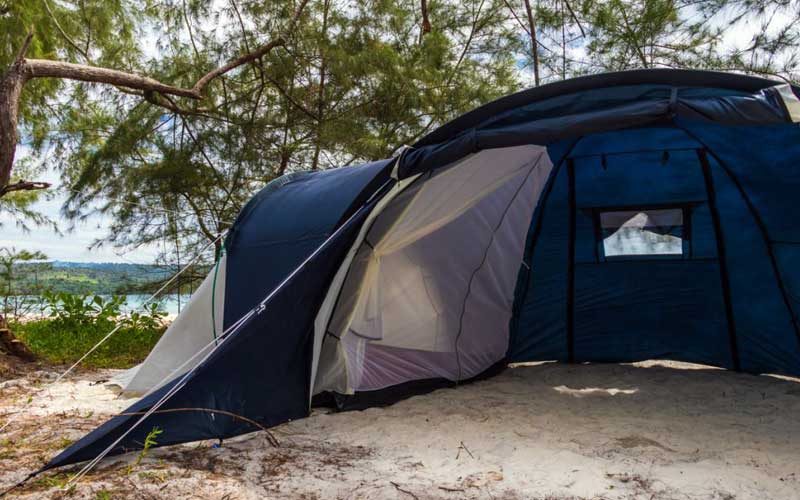
Camping with a group of six—whether it is a large family or a circle of close friends—requires a delicate balance of space, comfort, and protection. When the forecast calls for rain, that balance becomes even more critical. A 6-person tent offers the necessary “living room” feel, but without the right technical specifications, a weekend getaway can quickly turn into a damp, uncomfortable ordeal. Choosing a tent for rain involves looking beyond the marketing claims of “waterproof” and diving into the specifics of fabric coatings, structural design, and ventilation mechanics.
Understanding Waterproof Ratings and Fabric Quality
The first line of defense against a downpour is the tent fabric. Most modern tents are made from polyester or nylon, treated with a waterproof coating. To determine how much rain a tent can actually handle, you must look at the Hydrostatic Head (HH) rating, measured in millimeters.
Hydrostatic Head (HH) Explained
The HH rating indicates the pressure of water required to penetrate the fabric. For a 6-person tent intended for rainy environments, a rating of at least 2,000mm is recommended. While 1,000mm is technically waterproof, it may not withstand the persistent pressure of heavy rain or the physical contact of gear leaning against the tent walls, which can “wick” moisture through the membrane.
Denier and Durability
Denier (D) refers to the thickness of the fibers in the fabric. A higher denier (e.g., 75D or 150D) usually indicates a tougher, more water-resistant material. In a 6-person tent, the floor is the most vulnerable area because the weight of six people creates significant pressure against the damp ground. Look for a “bathtub floor” design, where the heavy-duty, high-denier waterproof material wraps several inches up the sides of the tent, ensuring no seams are touching the standing water on the ground.
The Importance of the Rainfly Design
The rainfly is the outer “umbrella” of your tent. In a 6-person model, the surface area is large, meaning the rainfly has a lot of water to shed. There are generally two types of rainflies: partial-coverage and full-coverage.
Full-Coverage vs. Partial Rainflies
Partial rainflies cover only the roof and the tops of the windows. While these allow for great views in fair weather, they are often insufficient for driving rain or wind-blown moisture. For maximum protection, a full-coverage rainfly is essential. This design extends all the way to the ground, creating a protective cocoon around the inner tent body. This not only keeps the walls dry but also provides better wind resistance, which often accompanies rainstorms.
Integrated Vestibules
A major advantage of a high-quality 6-person tent is the inclusion of a vestibule—a covered porch area created by the rainfly. When it is raining, a vestibule serves as a “mudroom.” It allows campers to remove wet boots and raincoats before entering the main sleeping area, keeping the interior dry and clean. Without a vestibule, every entry and exit during a storm invites water directly onto the sleeping bags.
Structural Stability and Wind Resistance
Rain rarely falls straight down; it is often accompanied by wind. A large 6-person tent acts like a sail in the wind due to its height and surface area. Therefore, the frame of the tent is just as important as the fabric.
Pole Materials and Architecture
Aluminum poles are generally superior to fiberglass for rainy and windy conditions. Aluminum is lighter, more flexible, and less likely to shatter under the stress of a heavy gust. Regarding architecture, a dome-shaped or geodesic tent sheds water more efficiently than a cabin-style tent with a flat roof. While cabin tents offer more “headroom,” they can allow water to pool on the roof if not tensioned perfectly, eventually leading to leaks.
Tensioning and Guy Lines
A well-pitched tent is a dry tent. Look for models that feature multiple “guy-out” points. Guy lines are the ropes that pull the rainfly taut and away from the inner tent body. If the rainfly touches the inner mesh or fabric, condensation and rain will seep through. In a 6-person tent, the large spans of fabric require extra tensioning to prevent sagging during a heavy soak.
Ventilation: The Hidden Factor in Staying Dry
It may seem counterintuitive, but one of the biggest causes of “leaks” is actually internal moisture. Six people exhaling throughout the night produce a significant amount of water vapor. In a rainy environment where the air is already humid, this vapor condenses on the cool inner surface of the rainfly and drips back down onto the campers.
Low and High Venting Systems
To combat condensation, a tent must have a chimney effect. Look for tents with “low-to-high” ventilation. This includes floor-level vents that pull in cool, dry air and roof-level vents (protected by the rainfly) that allow warm, moist air to escape. Even during a downpour, these vents should be able to remain open. If you have to zip every window shut to keep the rain out, you will likely wake up in a damp environment caused by your own breath.
Seam Construction and Factory Sealing
The most common point of failure in any tent is the seams. Even the most waterproof fabric will leak if the holes made by the sewing needles aren’t properly sealed.
Taped vs. Welded Seams
High-quality tents come with “factory-taped” seams, where a waterproof tape is heat-bonded over every stitch. Some premium models use “welded” seams, which use heat and pressure to join fabrics without needles at all. Before taking a 6-person tent into the field, inspect the interior seams. If you see clear tape lifting or missing sections, you will need to apply a manual seam sealer to ensure the tent remains watertight.
Ease of Setup in Inclement Weather
When selecting a tent, consider how long it takes to pitch. If you arrive at your campsite in the middle of a storm, a complex 20-minute setup process means the interior of your tent will be soaked before the rainfly is even attached.
Color-Coding and Fast-Pitch Features
Many 6-person tents now feature color-coded poles and grommets, which significantly speed up the assembly process. Additionally, some “fast-pitch” designs allow the rainfly to be set up first or simultaneously with the inner body, keeping the sleeping area shielded from the rain throughout the entire process. For large groups, a “hubbed” pole system, where all poles are connected into a single framework, can also reduce confusion and setup time.
Conclusion: Prioritizing Quality for the Group
Choosing a 6-person tent for rain is an investment in the success of your outdoor adventures. While budget-friendly options may look appealing in a dry showroom, they often lack the HH ratings, full-coverage flies, and robust ventilation needed for a multi-day storm. By focusing on a full-coverage rainfly, a high-denier bathtub floor, aluminum poles, and adequate ventilation, you ensure that your group stays dry, warm, and ready to enjoy the wilderness, regardless of what the clouds may bring.