Best 8-Person Tents for Rain of 2026
When camping in the rain, a good tent makes all the difference. The best 8-person tents for rain keep your group dry with strong waterproof materials, sealed seams, and steep roofs that shed water fast. In this guide, we picked durable, easy-to-setup options that hold up in a storm—without breaking the bank. Stay comfortable and rain-free with these top picks.
1. Coleman Skylodge 8

- Setup Time: Approximately 1 minute
- Floor Area: 114 square feet
- Peak Height: 77 inches
- Pole Material: Fiberglass
The Coleman Skylodge 8 is a game changer for families who dread the traditional wrestling match with tent poles. Its instant setup design allows you to get your camp established in roughly sixty seconds, making it ideal for those arriving at their site after dark or during unpredictable weather. The vertical walls create a spacious interior that feels much larger than the footprint suggests, allowing for easy movement.
While the weight is significant at over 30 pounds, the convenience factor for car camping is hard to beat. The large door and ample head height make it a comfortable base for a week-long stay. It is a reliable three-season shelter that focuses heavily on user-friendliness and speed, though the large packed size requires a fair amount of trunk space in smaller vehicles.
Pros: Incredibly fast setup, excellent interior head height, sturdy freestanding design.
Cons: Heavy trail weight, large packed dimensions, single door entry.
2. PORTAL Family Camping Tent
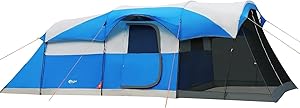
- Dimensions: 20 x 8 feet
- Center Height: 76 inches
- Fabric: 66D Taffeta with water-resistant coating
- Features: Integrated screen room and E-port
The PORTAL Family Camping Tent stands out for its versatile floor plan, featuring a dedicated 6-foot screen room. This porch area is a massive benefit for pet owners or those who want a bug-free zone to relax in while enjoying the breeze. The interior is spacious enough to accommodate two full-size air mattresses with room to spare for gear and pathways.
Construction-wise, the upgraded fiberglass poles offer improved bending performance under wind pressure compared to standard budget tents. The inclusion of an E-port for electrical access and multiple storage pockets shows a thoughtful design for modern campers. Though it takes about 15 minutes to pitch, the color-coded system keeps the process straightforward even for beginners.
Pros: Large bug-free screen room, great ventilation, standing height throughout.
Cons: Requires two people for setup, long footprint may limit campsite choices.
See the PORTAL Family Camping Tent
3. Kelty Wireless 8

- Peak Height: 83.5 inches
- Floor Area: 117.3 square feet
- Vestibule Area: 53.2 total square feet
- Material: 68-denier polyester with 1,200mm rating
The Kelty Wireless 8 is an excellent choice for those who value height and storage. With a peak height of over 83 inches, it is one of the tallest tents in its class, ensuring even the tallest campers can stand fully upright. The Quick Corners technology simplifies the setup process, while the Shark Mouth duffel makes the dreaded task of packing the tent away surprisingly simple.
Dual vestibules provide over 50 square feet of exterior storage, keeping muddy boots and bulky gear out of the sleeping area. The use of 68-denier polyester with a DWR coating ensures that the tent remains dry during typical three-season storms. It strikes a fine balance between a rugged outdoor shelter and a comfortable family home, though the weight remains squarely in the car-camping category.
Pros: Exceptional head height, dual doors and vestibules, easy-pack storage bag.
Cons: Higher price point, multi-diameter pole set can be confusing initially.
4. OLIXIS Camping Tent

- Packaged Weight: 17.4 lbs
- Interior Height: 78.7 inches
- Footprint: 169.7 x 109.8 inches
- Stakes: 16 ground stakes included
The OLIXIS Camping Tent is a lightweight champion among 8-person tents, weighing in at just under 18 pounds. This makes it significantly easier to transport and handle than its heavier competitors. Despite the lower weight, it does not sacrifice interior volume, offering enough floor space for three queen-sized air mattresses and a nearly 79-inch ceiling height for standing comfort.
The double-layer design is effective at managing condensation, assisted by extensive mesh panels on the roof and windows. Stability is a focus here, as the tent comes with 16 stakes and 8 wind ropes to secure it against breezes. It is a practical, value-oriented option for families who want a large footprint without the physical burden of a heavy, industrial-grade tent.
Pros: Very lightweight for its size, excellent ventilation, budget-friendly.
Cons: Fabric is thinner than premium brands, requires careful staking in wind.
5. Coleman Skydome 8

- Floor Area: 162 square feet
- Technology: Dark Room light-blocking fabric
- Number of Poles: 3
- Peak Height: 76 inches
- Setup Type: Freestanding
The Coleman Skydome 8 with Dark Room technology is the ultimate solution for campers who value their sleep. The specialized fabric blocks 90% of sunlight, allowing you to sleep in past dawn and keeping the interior cooler during hot afternoons. With a massive 162 square feet of floor space, this is one of the roomiest options available for large groups.
The tent features a pre-attached pole system that simplifies the pitching process, while the integrated screen room provides an additional area for gear or lounging. It feels exceptionally stable despite having only three poles. The massive interior volume is perfect for those who bring a lot of luxury gear, though the lack of specific vestibule storage means you will rely on the screen room for weather-protected gear storage.
Pros: Huge floor area, blocks morning light effectively, keeps interior cooler.
Cons: Bulky when packed, Dark Room fabric can make it very dark during the day.
6. Coleman Montana 8

- Door Type: Patented hinged door
- Fabric: 100% Polyester
- Weather Tech: Inverted seams and welded corners
- Pitch Time: 15 minutes
A classic in the camping world, the Coleman Montana 8 is best known for its unique hinged door. This feature eliminates the constant zipping and unzipping typical of tents, which is a major convenience for families with children constantly running in and out. The extended front awning provides a dry entry point, keeping the interior clean even during rain showers.
Inside, the tent uses Coleman WeatherTec features like inverted seams to keep moisture out. The double-thick fabric is designed for durability, standing up well to repeated use. While it uses a conventional pitch method that takes slightly longer than instant models, the result is a sturdy, elongated structure that fits well in narrow campsites. It remains a top choice for those seeking a balance of durability and functional design.
Pros: Convenient hinged door, extended entry awning, very durable fabric.
Cons: Elongated shape may be awkward to pitch, interior height is lower at the ends.
7. Mountain Summit Gear Party Den 8

- Pole Material: 21mm Steel
- Floor Area: 117 square feet
- Rainfly: 190-denier polyester taffeta
- Packaged Weight: 33 lbs. 8 oz.
The Mountain Summit Gear Party Den 8 is built like a fortress, utilizing 21mm steel poles that provide superior structural integrity compared to fiberglass alternatives. The eaves system is a standout feature, extending the rainfly coverage to ensure that the windows can remain partially open for ventilation even during a downpour. It is designed specifically for groups who want a social hub.
While it is the heaviest tent on the list, the durability of the 150-denier canopy and heavy-duty PE floor makes it suitable for rougher terrain. The freestanding design is surprisingly easy to assemble despite the weight of the components. It is a reliable, high-quality shelter for campers who prioritize a rugged build and weather protection over portability and light weight.
Pros: Incredibly strong steel frame, superior rainfly coverage, high-denier fabrics.
Cons: Very heavy to transport, large packed size, single door design.
See the Mountain Summit Gear Party Den 8
8. CAMPROS CP Tent 8

- Center Height: 72 inches
- Setup Time: 5 minutes (2 people)
- Structure: Straight wall design
- Special Feature: Interior room divider/projector screen
The CAMPROS CP Tent 8 focuses on maximizing internal volume through its straight-wall design. This architecture allows campers to utilize the floor space right up to the edges, creating a roomier feel for standing and moving. A unique highlight is the included privacy curtain, which not only divides the tent into two rooms but can also double as a projector screen for movie nights.
Setup is remarkably fast for a non-instant tent, taking two people just five minutes thanks to color-coded poles. The high-tech waterproof coating and sealed seams offer solid protection against the elements. With a mesh top and large doors, the airflow is excellent, making it a great candidate for summer camping where heat management is essential for a comfortable night’s rest.
Pros: Straight walls maximize space, fast setup, versatile room divider.
Cons: Lower peak height than some competitors, fiberglass poles are standard grade.
9. GoHimal 8 Person Tent

- Waterproof Rating: PU2000 mm coating
- Fabric: 190 T ripstop polyester
- Dimensions: 169 x 95 x 76 inches
- Ventilation: 1 door and 4 mesh windows
The GoHimal 8 Person Tent is built with 190T ripstop polyester, offering an impressive PU2000mm waterproof rating that exceeds many other budget-friendly options. This makes it a strong contender for campers who expect to face heavy rain. The setup is straightforward, typically taking two people about ten minutes, and the tent packs down into a surprisingly compact carrying bag.
Ventilation is a priority here, with four large mesh windows and a mesh ceiling that allow for cross-breezes and stargazing. The interior is spacious enough to fit eight sleeping bags comfortably or three queen air mattresses for a more luxurious setup. It is an ideal entry-level tent for families who want a reliable, waterproof shelter without a massive financial investment.
Pros: High waterproof rating for the price, ripstop fabric, compact storage.
Cons: Fiberglass poles can be brittle in extreme cold, smaller interior height.
10. UNP Camping Tent 8

- Dimensions: 20 x 9 feet
- Peak Height: 80 inches
- Pole Material: 8 steel leg poles
- Water Rating: 1500mm polyurethane coating
The UNP Camping Tent 8 offers a massive tunnel-style layout with a peak height of 80 inches, providing plenty of room for even tall adults to walk around comfortably. The use of eight steel leg poles provides a more rigid and stable structure than traditional fiberglass dome tents. This stability is crucial for a tent with such a large surface area when the wind picks up.
With two doors and four oversized mesh windows, the cross-ventilation is superb, helping to prevent the “stuffy” feeling common in large capacity tents. The color-coded setup system ensures that the assembly is intuitive, taking around 15 minutes. It is a well-engineered family tent that provides a great balance of height, stability, and waterproof performance for car camping adventures.
Pros: Very high center height, steel leg poles for stability, excellent ventilation.
Cons: Large footprint requires level ground, 30-pound weight is heavy for some.
The Ultimate Guide to Choosing and Using 8-Person Tents for Rain
Camping with a large group or family is an incredible way to bond with nature, but nothing tests those bonds like a sudden downpour. When you have eight people sharing a single shelter, the stakes for weatherproofing are significantly higher. A small leak in a two-person tent is an inconvenience; a leak in an eight-person tent can result in a soggy, miserable experience for an entire crowd. Understanding the mechanics of how large tents handle rain—and how to select the right one—is the difference between a cozy storm-watching session and a midnight evacuation to the car.
Understanding Waterproof Ratings and Fabric Technology
The first line of defense against rain is the fabric itself. Most modern family tents are made from polyester or nylon treated with a specialized coating. When shopping for an 8-person tent, you will often see a numerical rating followed by “mm,” such as 1,500mm or 3,000mm. This is the Hydrostatic Head (HH) rating.
Hydrostatic Head Explained
The Hydrostatic Head rating measures how much water pressure a fabric can withstand before it begins to leak. To determine this, a tube is placed over the fabric and filled with water. If the water reaches 1,500mm in height before drops penetrate the material, the tent is rated at 1,500mm. For 8-person tents, which have large surface areas susceptible to wind-driven rain, a rating of at least 1,200mm to 2,000mm is recommended for standard three-season camping. Tents designed for extreme conditions may feature ratings of 5,000mm or higher.
Denier and Fabric Durability
Another technical term to watch for is “Denier” (D). This refers to the thickness of the individual threads in the fabric. A higher denier, such as 150D, is thicker and generally more durable than a 68D fabric. In heavy rain, a higher denier fabric is less likely to “mist”—a phenomenon where high-pressure raindrops strike the fabric so hard they create a fine spray on the inside.
Key Design Features for Wet Weather
The architecture of an 8-person tent plays a massive role in how it sheds water. Because these tents are so large, they can act like sails in the wind or basins for collecting water if the design is flawed.
The Importance of the Rainfly
There are two primary types of rainflies: partial and full-coverage. A partial fly covers the mesh roof but leaves the tent walls exposed. While these offer better ventilation, they are riskier in driving rain. A full-coverage rainfly extends all the way to the ground, creating a protective “outer shell.” For maximum rain protection in a large group setting, a full-coverage fly is almost always the superior choice.
Seam Sealing and Taped Seams
The most common place for a tent to leak is not through the fabric, but through the holes created by the sewing needle during manufacturing. Quality 8-person tents come with “factory-taped seams,” where a waterproof tape is heat-sealed over the stitching. Always inspect the interior seams of your tent; if you see a clear film covering the stitch lines, your tent is ready for rain.
Bathtub Floors
In a heavy downpour, water can pool on the ground and run underneath your tent. A “bathtub floor” is a design where the waterproof floor material extends several inches up the sides of the tent walls before meeting the canopy fabric. This ensures that the seam between the floor and the walls is elevated off the ground, preventing standing water from seeping into your sleeping bags.
Ventilation: The Hidden Battle with Humidity
One of the biggest misconceptions about rainy-day camping is that every drop of moisture inside the tent came from the outside. In reality, much of it comes from the occupants. Eight people breathing in a confined space produce a significant amount of water vapor. If the tent is sealed tight to keep out the rain, this vapor hits the cold tent walls and condenses into liquid water.
Managing Condensation
To prevent condensation, look for 8-person tents with protected vents. These are usually located high on the rainfly and have small “kickstands” to keep them open. This allows warm, moist air to escape while the overhang of the fly prevents rain from entering. Ground vents are also helpful, as they pull in cool, dry air from the bottom to create a chimney effect.
Setup Strategies for Rainy Conditions
How you set up your tent is just as important as the tent’s specs. A poorly pitched $500 tent will leak more than a perfectly pitched $150 tent.
Site Selection
Avoid “natural bowls” or depressions in the ground where water might collect. Look for slightly elevated ground or a gentle slope that allows water to drain away. Additionally, avoid setting up directly under large trees if a storm is expected; “tree drip” can continue long after the rain has stopped, and falling branches pose a safety risk.
Tautness and Guy Lines
A sagging rainfly is a recipe for disaster. When fabric sags, water pools. If the fly touches the inner tent body, moisture will transfer through via capillary action. Use every guy line provided with your 8-person tent. Pull them tight and stake them out securely. This keeps the fly separated from the tent body and ensures that water sheds off the sides efficiently.
The Role of the Footprint
A footprint is a custom-sized ground cloth that sits under your tent. Its primary job is to protect the floor from abrasions, but it also provides an extra layer of moisture protection. Crucially, the footprint must be slightly smaller than the floor of the tent. If it sticks out, it will catch rainwater and funnel it directly underneath your tent, creating a puddle between the footprint and your floor.
Maintenance and Long-Term Care
Waterproofing is not permanent. Over time, UV rays and folding cycles will break down the coatings on your tent fabric. To ensure your 8-person tent remains a dry sanctuary, you must perform regular maintenance.
Re-Proofing the Fabric
If you notice that water is no longer “beading” on the surface of your rainfly but is instead soaking into the fibers, it is time to apply a DWR (Durable Water Repellent) spray. This is a simple process: pitch the tent in your yard, wash it with a gentle soap, and spray a specialized waterproofing agent while the fabric is damp.
Storing Your Tent Dry
The absolute fastest way to ruin a waterproof tent is to store it while it is damp. Mildew can grow in as little as 24 hours, and it will eat through the waterproof coatings and cause the seam tape to peel. Even if it didn’t rain on your trip, morning dew is enough to cause damage. Always hang your tent to dry completely in a shaded, well-ventilated area before packing it away for the season.
Conclusion
An 8-person tent for rain is more than just a large piece of fabric; it is a complex piece of engineering designed to manage pressure, airflow, and structural integrity. By prioritizing features like high hydrostatic head ratings, bathtub floors, and proper ventilation, you can ensure that your group stays dry and comfortable regardless of what the forecast says. Remember that the best defense against a storm is preparation—know your gear, practice your pitch, and always respect the power of the elements.