Best Budget 2-Person Tents of 2026
Looking for an affordable tent for two? You don’t need to spend a lot to get something reliable for your next camping trip. The best budget 2-person tents offer easy setup, weather protection, and lightweight design without breaking the bank. Whether you’re backpacking or car camping, these picks prove that cheap can still mean cozy and dry. Here’s our list of top value tents that won’t let you down.
1. REI Co-op Trailmade 2

- Minimum Trail Weight: 4 lbs. 10 oz.
- Floor Area: 31.8 square feet
- Pole Material: Aluminum
- Peak Height: 40 inches
The REI Co-op Trailmade 2 is an excellent entry point for those beginning their backpacking journey. It prioritizes simplicity and durability, featuring a straightforward two-pole aluminum design that makes setup intuitive even for novices. The inclusion of a footprint is a significant value add, extending the life of the polyester floor against rough terrain without requiring an extra purchase.
Inside, the tent offers a symmetrical layout with two doors and two vestibules, ensuring that both occupants have easy access and private storage for their packs. While the 40-inch peak height is modest, the vertical side walls help maximize the internal volume. It strikes a fine balance between weight and cost, making it a reliable three-season companion for weekend adventures.
Pros: Includes footprint, durable materials, easy setup.
Cons: Slightly heavier than premium ultralight models, lower peak height.
2. Kelty Wireless 2

- Minimum Trail Weight: 6 lbs. 14 oz.
- Floor Dimensions: 86 x 50.5 inches
- Pole Material: Fiberglass
- Peak Height: 43.8 inches
- Vestibule Area: 19 square feet (total)
The Kelty Wireless 2 focuses on user convenience and interior comfort for casual campers. Utilizing Kelty’s Quick Corners technology, the tent poles snap into place rapidly, significantly reducing the frustration often found during late-night arrivals at a campsite. The Shark Mouth duffel bag is another thoughtful touch, designed for easy packing without needing perfect folding techniques.
With a generous peak height of nearly 44 inches, the interior feels airy and less restrictive than many budget alternatives. However, the use of fiberglass poles and heavier fabrics makes this better suited for car camping or very short hikes rather than long-distance backpacking. The dual-vestibule design provides ample external storage for muddy boots and gear bags.
Pros: Excellent interior height, fast setup, easy-to-use carry bag.
Cons: Heavy for backpacking, fiberglass poles are less durable than aluminum.
3. BISINNA 2 Person
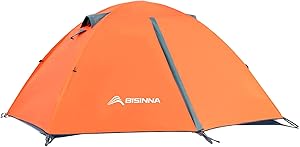
- Packed Size: 16.9 x 5.9 x 5.9 inches
- Waterproof Rating: PU2000mm
- Pole Material: 7001 Space Aluminum
- Design: Freestanding Double Layer
The BISINNA 2 Person tent is a versatile three-season option that emphasizes breathability and stability. Constructed with high-quality 190T polyester and supported by lightweight 7001 aluminum poles, it is designed to withstand moderate wind and rain. The inclusion of a large mesh section on the inner tent ensures that condensation is kept to a minimum during humid nights.
This tent is particularly notable for its compact packed size, making it a strong contender for bikepacking or kayaking where space is at a premium. The two-door design allows for cross-ventilation and easy entry for two people. While it may not have the brand prestige of higher-end models, it offers a functional and sturdy shelter for budget-conscious adventurers.
Pros: Highly portable, affordable price, quality aluminum poles.
Cons: Waterproof rating is lower than some competitors, tighter interior space.
4. Amazon Basics Camping Tent

- Center Height: 45 inches
- Floor Dimensions: 7 x 5 feet
- Material: 100% Polyester
- Setup Time: Under 4 minutes
The Amazon Basics Camping Tent is a no-frills, dome-style shelter designed for the casual outdoor enthusiast. It features a spacious interior with a 45-inch center height, providing one of the tallest ceilings in this category for a standard two-person tent. The snag-free pole sleeves are a helpful feature, allowing for a quick setup that usually takes less than four minutes.
While primarily built for fair-weather excursions, it includes welded seams and a coated polyester fabric to manage light moisture. The addition of a back window and a cool-air port helps promote airflow when the rainfly is attached. It is an ideal choice for backyard camping, festivals, or gentle weekend trips where low cost is the primary priority.
Pros: Very affordable, tall interior height, extremely easy to pitch.
Cons: Limited weather protection, basic storage options, heavier materials.
See the Amazon Basics Camping Tent
5. Night Cat 2-Person Tent
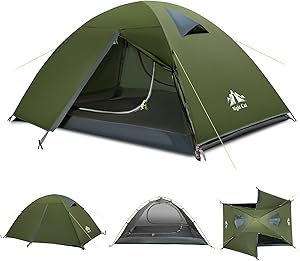
- Waterproof Rating: 3000mm
- Setup Time: 3 minutes
- Interior Dimensions: 6.8 x 4.6 x 3.6 feet
- Ventilation: Full mesh walls and ceiling vents
The Night Cat 2-Person tent is engineered for those who face unpredictable weather. With a high waterproof rating of 3000mm and a full-coverage rainfly, it provides a reliable shield against heavy downpours and wind. The structure is supported by lightweight aluminum poles, which offer a better strength-to-weight ratio than traditional fiberglass used in many budget tents.
Ventilation is a core strength of this design, featuring full mesh inner walls that facilitate significant airflow and reduce moisture buildup. The dual D-shaped doors and vestibules offer convenient access and extra storage for two people. It balances a relatively light weight with robust weatherproofing, making it a solid candidate for hikers who prioritize staying dry above all else.
Pros: Excellent waterproof rating, aluminum poles, great ventilation.
Cons: Interior length may feel short for taller users, zippers require careful handling.
See the Night Cat 2-Person Tent
6. Forceatt Tent

- Weight: 5.5 lbs.
- Waterproof Index: 3000mm
- Floor Dimensions: 88.6 x 53.1 inches
- Pole Material: 7001 Aluminum
The Forceatt 2-person tent stands out for its professional-grade weatherproofing and thoughtful construction. It utilizes a welded floor design that keeps the bottom of the tent elevated from wet ground, which is a crucial feature during persistent rain. The use of high-quality #8 zippers ensures a smooth experience when entering or exiting the tent, preventing common snags.
Inside, the tent offers a generous floor plan that accommodates two adults comfortably without feeling cramped. The micro-mesh fabric on the inner layer allows for star-gazing on clear nights while keeping insects at bay. It is a well-rounded package for those who want a mix of durability and moderate weight for their backpacking or car camping adventures.
Pros: Sturdy zippers, great floor space, high-quality waterproof coating.
Cons: Slightly bulky when packed, reflective lines are thin.
7. REI Co-op Half Dome 2

- Minimum Trail Weight: 4 lbs. 13.3 oz.
- Peak Height: 42 inches
- Pole Material: 7000-series Aluminum
- Floor Area: 31.8 square feet
The REI Co-op Half Dome 2 is a refined version of a backpacking classic. Built on decades of member feedback, this tent features a clever hubbed-pole architecture that creates nearly vertical walls, significantly increasing the livable space compared to standard dome tents. The 40-denier ripstop nylon rainfly provides excellent protection while remaining relatively lightweight for a three-season shelter.
Thoughtful interior details like multiple storage pockets and a gear loft make it easy to stay organized in the backcountry. The inclusion of a custom-fit footprint adds extra protection for the floor. This tent is often cited as the gold standard for versatility, offering enough durability for rugged trails and enough comfort for casual campgrounds.
Pros: Excellent vertical space, high-quality materials, includes footprint.
Cons: Higher price point, single-pole hub system can be awkward for some to pack.
8. Clostnature Backpacking Tent

- Waterproof Coating: PU 5000mm
- Total Weight: 5.29 lbs.
- Packed Size: 16.5 x 5.9 x 5.9 inches
- Pole Material: Aluminum
The Clostnature Backpacking Tent distinguishes itself with an impressive PU 5000mm waterproof coating on both the rainfly and the groundsheet. This makes it one of the most water-resistant options available in the budget-to-midrange market. The factory-sealed seams and bathtub floor design further ensure that occupants remain dry even in sustained wet conditions.
Designed with portability in mind, its compact packed size and reasonable weight make it ideal for family hikes or scouting trips. The dual-door and dual-vestibule layout ensures that gear storage is never an issue. It is a rugged, value-driven choice for those who need a dependable shelter that can handle more aggressive weather than a standard entry-level tent.
Pros: Exceptional waterproof rating, very compact, emergency repair kit included.
Cons: Interior height is slightly lower than others, stakes can bend in hard ground.
See the Clostnature Backpacking Tent
9. Kelty Late Start
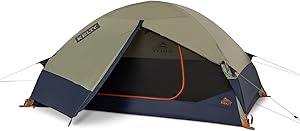
- Peak Height: 43 inches
- Floor Area: 30 square feet
- Material: 68D Polyester
- Setup: Quickcorner pole sleeves
The Kelty Late Start is designed specifically for efficiency and ease of use. Its standout feature is the Quickcorner technology, which allows the poles to be secured into deep sleeves at the corners, enabling a single person to pitch the tent in about three minutes. This makes it a perfect choice for those arriving at their campsite after dark.
While it features a single-door design, the interior is roomy with a peak height that allows for comfortable sitting. The 68D polyester fabrics are durable and PFC-free, reflecting Kelty’s commitment to environmental conservation. It is a robust “jack-of-all-camping” tent that performs just as well on a backcountry trail as it does at a developed campground.
Pros: Fastest setup in its class, environmentally friendly coatings, durable floor.
Cons: Only one door and vestibule, slightly less ventilation than two-door models.
10. GEERTOP Ultralight 2

- Season Rating: 4-season (with snow skirt)
- Waterproof Rating: PU 3000mm
- Weight: 6.8 lbs.
- Pole Material: Aluminum
The GEERTOP Ultralight 2 is a unique offering in this list because it is designed for year-round use, including winter. It features a built-in snow skirt that provides extra protection against wind-blown snow and cold drafts. The 210T tear-resistant polyester fly ensures durability against the elements, while double-stitched sealed seams prevent leaks during heavy rainfall.
Despite its four-season capabilities, it remains manageable for backpacking at under seven pounds. The double-layer design allows the inner mesh tent to be used independently in warmer weather, making it a truly versatile piece of gear. It is a fantastic option for solo adventurers or couples who want a single tent that can handle everything from a summer beach trip to a snowy mountain camp.
Pros: True four-season capability, snow skirt included, very durable fabric.
Cons: Heavier than standard three-season tents, snow skirt adds bulk when packing.
How to Choose the Best Budget 2-Person Tent for Your Adventures
Selecting a budget 2-person tent doesn’t mean you have to settle for a heavy, leaky shelter that falls apart after one trip. In recent years, the gap between high-end expedition gear and affordable entry-level equipment has narrowed significantly. Whether you are planning a weekend at a local state park or your first foray into the backcountry, understanding how to balance cost, weight, and durability is the key to a successful purchase. This guide will walk you through the essential factors to consider when shopping for an affordable home away from home.
Understanding the 2-Person Capacity
The first thing any camper should know is that “2-person” is a technical measurement, not necessarily a comfort rating. In the world of tent manufacturing, this usually means there is just enough floor space for two standard 20-inch wide sleeping pads to lie side-by-side. If you are camping with a partner, it will be a cozy experience with very little room for extra gear inside the tent body.
Floor Dimensions and Peak Height
When looking at budget options, check the actual floor dimensions. A length of 84 to 88 inches is standard, allowing taller campers to stretch out without hitting the walls. Peak height is equally important; a tent with a 40-inch peak height allows most people to sit up comfortably, which is vital if you are stuck inside during a rainstorm. Budget tents often use a simple dome structure, which can feel cramped at the shoulders, so look for “pre-bent” poles or ridge poles that pull the walls outward to create more livable volume.
Weight vs. Portability
The biggest trade-off in budget tents is weight. Lightweight materials like high-tenacity nylon are expensive. Affordable tents typically use heavier polyester or thicker gauge aluminum. You need to decide how you will be transporting the tent before you buy.
Car Camping vs. Backpacking
If you are car camping, weight is irrelevant. You can prioritize a heavier tent with thicker fabrics and more interior space. However, if you plan to carry the tent in a backpack, aim for a “packaged weight” under 6 pounds. While professional ultralight tents weigh 2 to 3 pounds, they often cost five times as much as a budget model. You can manage a 5-pound tent by splitting the weight with your hiking partner—one person carries the poles and stakes, while the other carries the tent body and fly.
Weather Protection and Materials
A tent’s primary job is to keep you dry and shielded from the wind. In the budget category, you will encounter various waterproof ratings and fabric types. Do not be swayed by marketing alone; look at the technical specs of the materials used.
Rainfly Coverage
Budget tents often come in two styles: “partial fly” and “full-coverage fly.” A partial fly only covers the mesh roof, leaving the lower walls exposed. These are great for backyard camping in the summer but are risky in wind-driven rain. For real outdoor adventures, always choose a full-coverage rainfly. This creates a complete protective shell around the tent and provides vestibules (covered porch areas) for storing muddy boots and gear outside the sleeping area.
Waterproof Ratings and Seam Taping
Look for a waterproof rating measured in millimeters (mm). A rating of 1,200mm to 3,000mm is standard for 3-season tents. Just as important as the fabric is the construction. Ensure the tent has “factory-taped seams.” This means a waterproof tape has been heat-sealed over the stitching to prevent needles holes from leaking. Also, a “bathtub floor”—where the waterproof floor material wraps several inches up the side walls—is essential for preventing splashes and ground moisture from seeping in.
Durability of Poles and Fabrics
The longevity of your tent depends largely on what it is made of. Budget tents generally use one of two materials for their skeleton: fiberglass or aluminum.
Aluminum vs. Fiberglass Poles
If your budget allows, always choose aluminum poles (often labeled as 7001 or 7000-series). Aluminum is lighter, significantly stronger, and will bend rather than snap under high wind loads. Fiberglass poles are common in very cheap tents; they are heavier, more brittle, and can splinter over time. While fiberglass is fine for calm weather and occasional use, aluminum is a hallmark of a “true” backpacking tent.
Denier and Fabric Strength
Fabric thickness is measured in “Denier” (D). Budget tents often use 68D or 75D polyester. While these are heavier than the 10D or 20D fabrics found in expensive tents, they are actually much more durable and resistant to punctures. This is a rare instance where “cheaper” materials are actually tougher, making budget tents a great choice for campers with dogs or those who are rough on their gear.
Ease of Setup and Features
After a long day of hiking or driving, the last thing you want is a complicated puzzle. Most budget 2-person tents utilize a freestanding design, meaning the tent holds its shape without needing to be staked into the ground (though you should always stake it down for safety).
Setup Innovations
Look for features like color-coded poles and clips. Many modern budget brands have adopted “hubbed” pole systems where all the poles are connected, making it nearly impossible to lose a piece or put it in the wrong spot. Speed clips that snap onto the poles are much faster than traditional fabric sleeves, which can snag and tear during assembly.
Ventilation
Condensation is the enemy of a good night’s sleep. As you breathe, moisture collects on the inside of the rainfly. If a tent has poor ventilation, that moisture will drip onto you. Look for tents with large mesh panels on the inner body and “pop-up” vents on the rainfly. These features promote airflow, even when the fly is fully zipped up during a storm.
The Hidden Costs: Footprints and Stakes
When comparing prices, check what is included in the box. A “footprint” is a custom-sized ground cloth that protects the bottom of your tent from rocks and roots. Some budget brands include this for free, while others charge $20 to $40 extra. If the tent doesn’t come with one, you can save money by using a trimmed-down plastic tarp, but a custom footprint is much more convenient. Similarly, many budget tents come with heavy, soft steel stakes. Replacing these with a set of $10 lightweight aluminum Y-stakes is a cheap way to upgrade your tent’s performance in hard soil.
Final Verdict: Making the Choice
Choosing a budget 2-person tent is about identifying your “must-haves.” If you are backpacking, prioritize aluminum poles and a weight under 5.5 pounds. If you are car camping, prioritize interior height and a full-coverage rainfly. By focusing on the quality of the poles, the coverage of the fly, and the floor dimensions, you can find a reliable shelter that will keep you comfortable in the great outdoors for years to come without breaking the bank.
Always remember to set your tent up at home first. Practice the pitch in your living room or backyard to ensure all parts are present and that you understand the mechanics before you reach the trailhead. With the right budget tent, the only thing you’ll be worried about is where to head for your next adventure.
“`