Best Budget 4-Season Tents of 2026
From mountaineering to casual winter camping with friends, a 4-season tent is the last thing that stands between you and the elements. These tents are much stronger and more reliable than their counterpart 3-season tents. They feature less mesh and a tougher pole structure, which make them an essential piece of gear for any successful winter adventure. It is an ideal choice for those who need a durable tent that they can take everywhere without having to think twice about durability. Usually, 4-season tents are expensive but you don’t need to spend a lot of money on tents. You can get a decent tent at an affordable price and it will get the job done nicely.
So here is the list of top budget-friendly 4-season tents that you can use for your extreme outdoor adventures.
1. REI Co-op Arete ASL 2
Packaged weight: 6 lbs. 5 oz.
Type: Double wall
Floor area: 32.9 sq. ft.
Peak height: 43 in.

REI Co-op Arete ASL 2 is a 3- to 4-season tent, which means it has the lightness of a 3-season tent but has a 4-pole system and a heavier rainfly. This tent can handle light to moderate snow but it’s not built for super-strong winds or heavy snow loads. But the 4-pole design makes this tent very stable and it also offers a generous 43 inches of headroom. It offers around 33 square feet of area and it weighs around 5.6 pounds, which is the minimum trail weight. There is little to no interior mesh and the main tent body provides some good ventilation. There is a nice vestibule and a big door.
One of the good things about Arete ASL 2 is that it can be used for year-round camping trips. The double-wall design, little mesh on the inside, and good ventilation make up a tent that can be used for normal camping and even backpacking without involving the cold. On the plus side, the Arete ASL 2 can hold snow as well. Though Arete ASL 2 is a great option for shoulder season and mild winter camping trips, do not depend on the Arete to be your primary tent on high-altitude or stormy adventures.
What I like: A great value 4-season tent that can be used for year-round camping.
What I don’t like: Small vestibule, only one door, not built for the toughest of weather
2. GeerTop 2-Person Tent
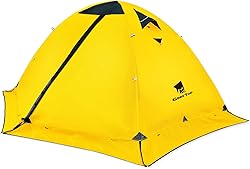
Packaged weight: 6 lbs. 6.4 oz.
Type: Double wall
Floor area: 30 sq. ft.
Peak height: 41 in.
GeerTop 2-Person Tent is an inexpensive option for those just getting into winter camping. It’s a basic 4-season tent that is made of reasonably quality materials and it provides a good amount of waterproofness. The tent is easy to set up and you can even set it up in just a few minutes. The fabric provides additional protection against UV rays and the PU 3000mm coating sheds water well. This is a double-wall tent and it offers good weather protection. You can even use the inner layer alone in warm and dry conditions. The outer layer can be added easily for privacy and to keep the wind and inclement weather out.
The GeerTop offers enough room for two campers yet it is small enough to be carried in your backpack. The tent has a freestanding design and it features built-in lantern hook and storage pockets. To increase the airflow and reduce condensation, you can use mesh ventilation panels on the inside of the tent. The zippers are heavy-duty and two-sided, which allows you to open doors easily from both inside and outside. There are nice convenient vestibules that keep your extra gear dry. The ropes have reflectors for increased visibility and they can even be seen in the dark.
What I like: Very affordable, easy to set up and take down, freestanding design
What I don’t like: Cheap materials, zippers are not high-quality, a little heavy
3. Nemo Kunai
Packaged weight: 3 lbs. 15 oz.
Type: Double wall
Floor area: 27.6 sq. ft.
Peak height: 42.2 in.

The Nemo Kunai backpacking tent has mountaineering stability and a convertible tent body for warm weather versatility. The tent is equipped with alpinist-specific technology. Kunai has the technical features you’ll need to face the ever-changing weather of the backcountry while remaining compact enough to travel longer distances. The fly is significantly stronger and reinforced with a silicone treatment for increased durability. The floor is made of 30D ripstop nylon and there’s single-seam construction for greater protection and tent longevity. The reshaped vestibule has more volume in the front and more usable gear storage. The fly is tapered and has a streamlined profile to withstand strong winds, rain, or snow.
The canopy seams at the brow are reinforced with ultra-durable laminated polyester fabric for greater tent rigidity and security in extreme conditions. The Kunai’s thoughtfully engineered frame design, combined with an aggressive brow pole, is designed to provide an incredible amount of headspace for two camping partners. Kunai’s top-tier color-coded pole system is simple to use and relies on incredibly strong, premium Aluminum DAC Featherlite poles for ultralight strength and stability. When you need more protection in a storm, weatherproof hoods allow pass-through guy-outs to secure the inner tent structure directly to the ground. Finally, the Kunai tent, like all NEMO products, comes with a lifetime warranty, ensuring that it will last you for years of adventures.
What I like: Versatile, great value, zip-off walls
What I don’t like: Takes a little more time to set up, not very budge-friendly
See the Nemo Kunai 2P See the Nemo Kunai 3P
4. ALPS Mountaineering Tasmanian 2

Packaged weight: 7 lbs. 7 oz.
Type: Double wall
Floor area: 34.5 sq. ft.
Peak height: 46 in.
ALPS Mountaineering Tasmanian is the cheapest 4-season tent available on the market. It is an option worth considering if your main goal is winter camping. However, this tent performs reasonably well in all four seasons and it is a great option to consider if you are on a tight budget and need one tent for year-round use. Although you can’t take it on a backpacking trip due to its weight, it’s a type of tent for trips where most people will take their 4-season tent. The weather protection is really good and even better than most options in this price range.
The tent has a freestanding design that features hubbed 7000 series aluminum poles. The shock cords are waterproof and the overall assembly of the tent is straightforward. The rainfly protects against UV damage and stays taut all day long. There are vents that you can open or close according to weather conditions. Two nice doors offer easy entry and exit. Additionally, the tent features two zippered mesh windows and two vestibules where you can store your extra gear. The tent weighs around 7.5 pounds, which is not too heavy for a double-wall tent. It features 34.5 square feet of floor area and has a longer shape, which is good for taller folks.
What I like: Two nice hooped vestibules and the tent handles heavy snow loads well
What I don’t like: Poor performance in heavy winds, the doors are small, comparatively less headroom
See the Tasmanian 2 See the Tasmanian 3
5. OneTigris Stella

Packaged weight: 4 lbs. 6.4 oz.
Type: Double wall
Floor area: 28.29 sq. ft.
Peak height: 45.28 in.
The OneTigris Stella Camping Tent is impressively lightweight and durable, making it a great choice for outdoor enthusiasts. Weighing only 4.4 pounds (2 kg), it’s made from 20D nylon with a single-layer silicone coating, so it’s easy to carry and can handle tough conditions. The tent’s waterproof rating is 3000mm, which means it’s built to withstand all kinds of weather. The blackout outer tent is removable, giving you more flexibility in how you use it. Its four-season design includes a quality mesh inner tent that allows for excellent airflow while keeping you dry and comfortable, even in damp or humid environments.
Setting up the Stella tent is straightforward thanks to the flexible poles that cross at the top and anchor to the floor at all four corners. The packed dimensions are 19.7 x 5.9 inches, and when set up, the tent measures 6.9 feet by 4.1 feet, with a height of 3.7 feet. This size is roomy enough for tall campers, and it includes side pockets for easy storage. Though the vestibules aren’t massive, they’re sufficient for rainy or snowy cooking. With its quality and design comparable to pricier four-season tents, the Stella stands out for its value. Small improvements like the addition of mesh on the doors have made it suitable for a wider range of weather conditions. Overall, the Stella is a reliable and affordable choice for everything from backcountry camping to ski touring.
What I like: Lightweight, durable, waterproof, easy to set up, spacious.
What I don’t like: Vestibules are small, limited mesh for ventilation in warm weather.
6. Clostnature Libra

- Material: Polyester
- Origin: Imported
- Season rating: 4-season with PU5000 coating
- Weight & packed size: 6.28 lbs (2.85 kg) total; packed 42 x 15 x 15 cm
The Clostnature Libra is a compact four-season two-person tent designed for backpackers seeking winter protection without excessive bulk. Its polyester rainfly, bathtub floor and factory-sealed seams deliver reliable waterproofing while the PU5000 coating and snow flaps help block spindrift. The interior (220 x 150 x 115 cm) feels roomy for two or for one person with gear, and dual D-doors plus two vestibules make access and storage straightforward.
On trail the Libra’s strength is its balance of weight, space and included hardware: 14 aluminum stakes, guy lines and a pole repair kit mean fewer improvisations when conditions tighten. The tradeoff is material choice — polyester sacrifices some breathability compared with ultralight nylon — but gains durability and cost savings. Setup is freestanding and quick using two aluminum poles, so a solo hiker can pitch it in minutes, making it suitable for fast-moving trips.
Pros:
- Lightweight for a four-season two-person tent
- Roomy interior with dual vestibules
- Winter-ready details (snow flaps, PU coating)
- Comprehensive accessory kit included
Cons:
- Polyester less breathable than premium fabrics
- Not for extreme high-altitude mountaineering
- Floor protection recommended for rough ground
7. Underwood Aggregator Tent

- Material: Mesh (with full rain fly)
- Origin: Imported
- Season rating: 4-season with snow skirt and PU5000mm coating
- Capacity & weight: Single-person; packed 5.1″ x 15″; 4.4 lbs
The Underwood Aggregator is a highly compact solo tent engineered for year-round use. A rollable snow skirt seals out drifting snow in winter while mesh panels provide airflow and insect protection in warmer months. Aircraft-grade aluminum poles and duraflex fasteners create a sturdy freestanding frame that handles wind and storms better than many ultralight solo shelters. Interior touches like a lantern hook and mesh pockets keep essentials organized and accessible.
At 4.4 pounds the Aggregator remains impressively light for a full-coverage four-season shelter. The PU5000mm-coated full fly and reinforced corners boost weather resistance, and the two-way snag-free zipper adds practical convenience. The narrow floor maximizes packability but limits internal gear storage, so pairing this tent with an insulating pad and an external vestibule setup is advised for serious cold-weather trips. Overall it’s a smart choice for solo hikers who want full protection in variable conditions without carrying much extra weight.
Pros:
- Very compact and light for a four-season tent
- Strong weatherproofing and reinforced corners
- Useful interior features (lantern hook, pockets)
- Durable aircraft-grade poles
Cons:
- Narrow floor limits gear inside
- Single-person capacity only
- Requires careful ventilation management in cold, wet conditions
See the Underwood Aggregator Tent
8. Bessport Camping Tent
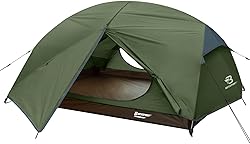
- Material: Not specified (aluminum poles, mesh vents)
- Origin: Imported
- Waterproof rating: 3000mm with welded seams
- Capacity & dimensions: 2-person; floor 228 x 135 cm; height 110 cm
The Bessport Camping Tent focuses on user-friendly setup and interior comfort for two people. A single pole and clip system makes pitching fast and intuitive in changing weather, while two D-doors and dual vestibules offer generous storage for packs and boots. Large mesh windows and ceiling vents reduce condensation and improve airflow; welded seams and a 3000mm waterproof rating provide dependable rain protection for most three-season and light winter outings.
Inside the tent, the taller center height gives a noticeably more comfortable sitting area compared with many backpacking tents, and smooth #8 zippers reduce frustration when entering or exiting. The 8.5mm aluminum poles and added guylines improve stability in wind, though serious winter mountaineering will call for a purpose-built four-season design with stronger materials. For campers who prioritize easy setup, ventilation and interior space over minimal weight, the Bessport is a reliable option for car camping and backpacking trips where convenience matters.
Pros:
- Spacious interior and generous vestibules
- Quick one-pole setup for fast pitching
- Good ventilation to minimise condensation
- Sturdy pole system and guylines for stability
Cons:
- Not intended as a hardcore winter tent
- Material specifics not fully detailed by maker
- Heavier than ultralight solo shelters
How to Choose the Right 4-Season Tent?
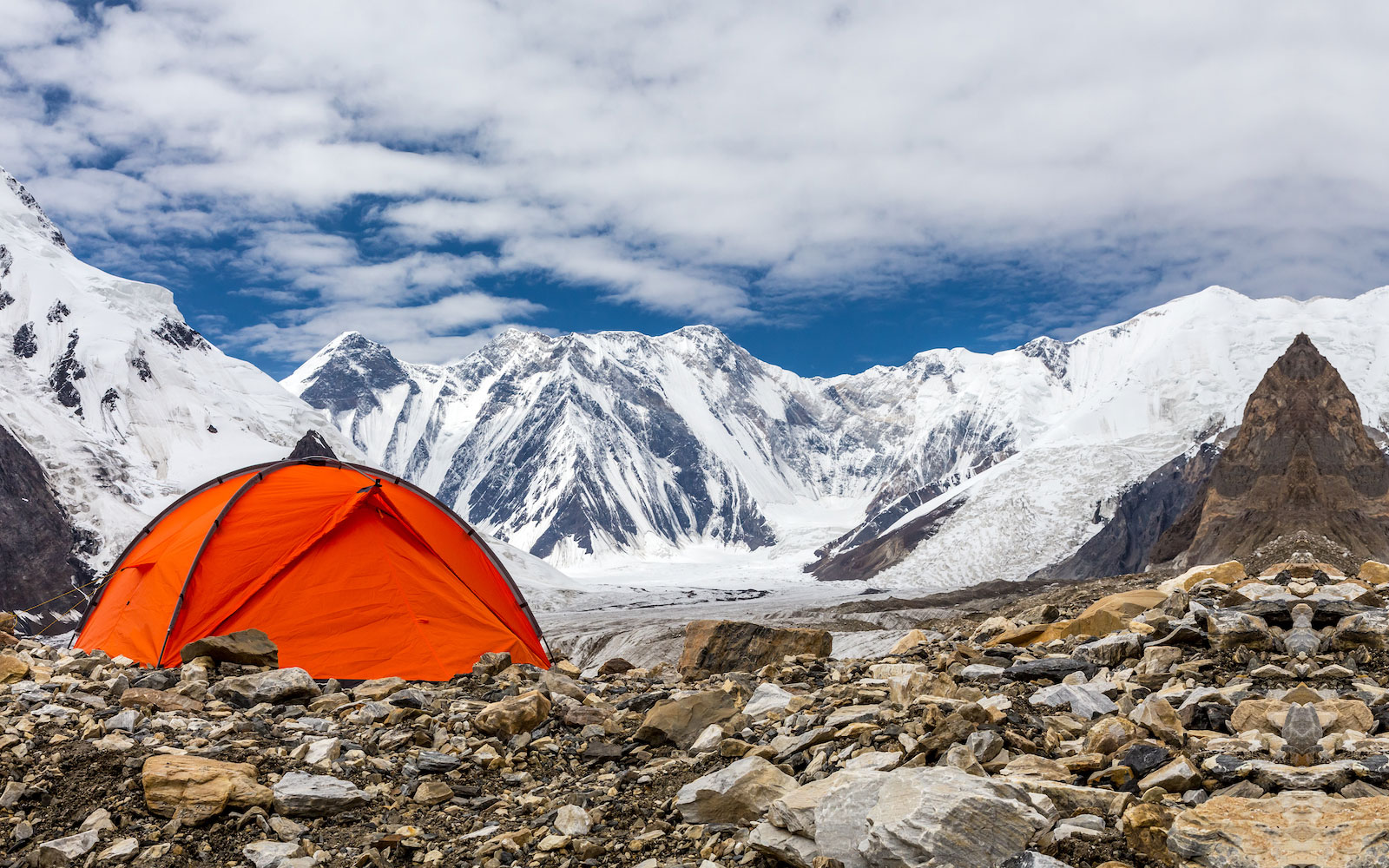
A 4-season tent keeps you safe and protected in weather conditions like heavy snow, wind, and other similar harsh conditions. In the below section, I am going to deep dive in and look at key features of a cheaper 4-season tent, one that’s best for you. At the same time, I want to help you avoid making a purchasing decision based on the bogus claims that some websites make.
Outer Fly Fabric
To help protect you during harsh weather while you’re in your tent, you want a strong outer fly fabric made from a tough 30 to 40 denier thick silicon-coated material. Avoid tents that have large sections of the outer fabric that aren’t strongly supported by a pole or guy lines.
Floor Material
On the floor, you want a strong and water-tight 70 to 100 denier thick nylon fabric, which will do the trick.
Poles
Since the skeleton of your tent is made from the poles you have, I suggest you want to have a strong 9 to 10 millimeter in diameter pole made of aluminum. Stay away from cheap carbon fiber poles as they will shatter in the cold. Supporting the poles should be a good number of well-positioned guy lines to help stop the poles from collapsing inwards.
Design
When it comes to the type of design of the tent, there are two types; one is a tunnel and a dome tent. When pitched properly a tunnel tent is very strong. I’ve been out in it and it held up extremely well. However, for several reasons, my pick is a dome tent. A dome structure allows a tent to have poles that have multiple crossover points. The most classic pole design, has seven intersection points, three on the sides, which provides good protection against heavy wind, and one on the top, which provides good protection against heavy snow loads.
One other advantage of a dome tent is that it performs better in changing wind conditions. The freestanding design is also good if you want to pick it up and move it around a bit. Also, having a tent that’s got sharper angled walls can be very helpful especially when it’s snowing. Even though the snow can fall on it, it will generally fall off a lot easier and a lot quicker.
Ease of Pitching
A topic that’s not often talked about by reviewers or considered by purchasers of a 4-season tent is how easily a tent is pitched. When the weather is bad, the temperature drops, it’s freezing, it’s windy, the tent is flapping around like crazy and you’ve got thicker gloves on trying to work with small plastic clips.
Speed and ease are essential that’s why I am a great proponent of what’s called a multi-pitch tent where the inner and the outer are joined together and go up as one.
A friend of mine had a well-known 4-season expedition tent that had the fly separate to the inner of the tent and it literally took him no less than 50 separate things that he needed to do to fully set up his tent. Now when the weather is crazy, that’s the last thing that you want to have to do.
Ventilation
In winter, snow can easily build up around the base of your tent, which is generally one of the points from which you draw air. So, you must have a tent that has good ventilation points on the top half of the tent that you’re looking at.
Interior Space
During winter camping or backpacking, you’ll be carrying a lot more gear and a lot of snow-related equipment, which is generally bulkier. So, having good internal sleeping and vestibule space is important. Many people like an extended vestibule, which they dig out to allow them to comfortably sit in and cook in. Also, having two entrance points and a 2- or more-person tent is very helpful.
Additional Features
Based on some infield experience, I’d like to give you some extra tips that will make your trip a lot safer and more comfortable.
When it’s windy, it can be very noisy and one thing that can help reduce that just by a bit is having what we call no rattle zips. You can also tape up the ends so the metal does not rub against one another or you can take off the metal pulley and replace it with a cord such as what you might have on a guy line.
One thing that will stop cold wind from coming into your tent and also spindrift getting into your tent is having it pitched where the outer goes right down to the ground or having snow flaps or a skirt around areas of the base of your tent.
A good amount of pockets in the tent is helpful, especially for putting your gear into it. Also, a double-skinned internal door so that you can regulate through a zip how much mesh or ventilation you want or don’t want.
Lastly, the color of your tent can make a big difference. You will notice that a lot of four-season tents are a bright color so they can be easily seen in harsh weather.
Weight vs. Features
Now you’re probably thinking, with all these features, this tent is going to be super heavy but you want something light and strong. Let me tell you that when you’ve got a 3-season tent, your focus is on the light weight. But when you’ve got a four-season tent, however, your focus is on strength. So, you have the option to choose either lightweight or strong.