Best Leather Hiking Boots of 2026
For adventurers who refuse to sacrifice durability for comfort, the right footwear makes all the difference. Leather hiking boots are the classic choice, offering unmatched toughness, natural water resistance, and a fit that molds to your feet over time. Whether you are tackling rocky trails or muddy paths, a solid leather boot provides the support you need. Here is our guide to the best leather hiking boots built to last for years.
1. Merrell Moab 3 Mid

- Waterproofing: Merrell DRY waterproof membrane
- Upper Material: Pig suede leather and mesh
- Outsole: Vibram TC5+ rubber
- Weight: 2 lbs. 2.9 oz. per pair
The Merrell Moab 3 Mid continues the legacy of the “Mother of All Boots” by offering exceptional out-of-the-box comfort. This latest generation features a softer midsole and a more supportive footbed, making it an ideal choice for hikers who want to hit the trails without a lengthy break-in period.
Equipped with a Vibram TC5+ outsole, these boots provide reliable grip on various terrains. The combination of pig suede and breathable mesh ensures durability while keeping the weight manageable. It is a versatile choice for day hikes where stability and cushioning are top priorities for the wearer.
Pros: Excellent arch support, superior traction, and immediate comfort.
Cons: Suede can be difficult to clean after muddy treks.
See the Merrell Moab 3 See the Women’s Moab 3
2. Columbia Transverse Hike

- Technology: Omni-Tech waterproof breathable construction
- Midsole: Techlite lightweight cushioning
- Outsole: Omni-Grip non-marking traction rubber
- Upper: Durable leather and mesh with metal hardware
Columbia’s Transverse Hike is engineered for those who face unpredictable weather conditions. Utilizing Omni-Tech technology, the boot offers a multilayered waterproof barrier that remains breathable. This ensures that your feet stay dry during moderate rain or snow while allowing internal moisture to escape effectively during high activity.
The Techlite midsole provides high energy return and impact absorption, which reduces foot fatigue on rocky trails. With the Omni-Grip outsole, you get a specially formulated tread design that offers cross-terrain stability. It is a rugged, budget-friendly option for hikers who value longevity and consistent performance across diverse environments.
Pros: Lightweight feel, great energy return, and highly breathable.
Cons: May require thicker socks for extreme cold temperatures.
See the Columbia Transverse Hike See the Women’s Transverse Hike
3. Lowa Renegade Evo GTX Mid

- Waterproofing: GORE-TEX waterproof/breathable membrane
- Upper: Heinen terracare nubuck leather
- Support: MONOWRAP frame for lateral stability
- Outsole: Vibram Rene Trac rubber
The Lowa Renegade has been a fan favorite for over a quarter-century, and the Evo edition refines that classic design. Built with premium nubuck leather, these boots provide a sophisticated look paired with heavy-duty performance. The GORE-TEX lining ensures total waterproof protection, making them reliable for multi-day excursions.
What sets this boot apart is the MONOWRAP frame construction, which provides a lightweight yet sturdy support structure. This design helps reduce the overall weight of the boot while maintaining the lateral stability required for carrying packs. It remains a top-tier choice for hikers seeking a blend of tradition and modern technology.
Pros: Exceptional stability, premium leather quality, and reliable GORE-TEX.
Cons: Higher price point than entry-level hiking footwear.
See the Lowa Renegade Evo See the Women’s Renegade Evo
4. Timberland Mt. Maddsen

- Material: Waterproof Premium Timberland Leather
- Lining: Eco-friendly ReBOTL fabric
- Footbed: Anti-fatigue removable footbed
- Tongue: Fully gusseted to keep out debris
The Timberland Mt. Maddsen is a stylish yet functional hiker designed for those who want versatility between the trail and the city. Crafted from premium leather, these boots are fully waterproofed to handle puddles and stream crossings. The fully gusseted tongue is a crucial feature that prevents dirt and rocks from entering.
Comfort is a major focus here, thanks to the anti-fatigue technology built into the footbed. This provides all-day support and energy return, which is especially helpful during long descents. Additionally, the use of ReBOTL fabric lining reflects a commitment to sustainability, utilizing recycled plastic in the manufacturing process for a greener footprint.
Pros: Very stylish design, fatigue-reducing footbed, and eco-friendly lining.
Cons: Leather requires occasional treatment to maintain its water resistance.
See the Timberland Mt. Maddsen See the Women’s Mt. Maddsen
5. Salomon Quest 5

- Waterproofing: GORE-TEX membrane
- Support: 4D Advanced Chassis for rough terrain
- Outsole: All Terrain Contagrip
- Upper: Nubuck leather and ripstop fabric
The Salomon Quest 5 is built for the serious backpacker who needs maximum support without sacrificing agility. These boots are specifically designed for long-distance treks where the trail gets rough and technical. The standout 4D Advanced Chassis guides the foot, providing stability on uneven surfaces while reducing fatigue during high-mileage days.
A combination of nubuck leather and ripstop fabric creates a tough exterior that can withstand abrasions. The All Terrain Contagrip outsole ensures you have a firm hold on wet, loose, or hard surfaces. While they are slightly heavier than day-hiking boots, the level of protection and ankle support offered makes them indispensable for heavy-duty exploration.
Pros: Elite-level stability, durable ripstop materials, and superior grip.
Cons: Heavier weight may feel bulky for casual short walks.
See the Salomon Quest 5 See the Women’s Quest 4
6. Columbia Newton Ridge Plus II

- Construction: Waterproof full-grain leather and mesh bootie
- Midsole: Lightweight Techlite for long-lasting comfort
- Outsole: Omni-Grip non-marking traction rubber
- Closure: Adjustable lace-up for a secure fit
The Columbia Newton Ridge Plus II offers a classic mountaineering aesthetic combined with modern waterproof technology. This boot features a full-grain leather upper that is both durable and stylish. The interior bootie construction ensures that water stays out, while the mesh tongue allows for necessary airflow during strenuous climbs in warmer weather.
Comfort is provided by the signature Techlite midsole, which cushions every step while providing high energy return. The Omni-Grip outsole is particularly impressive, featuring a dual-zone winter tread pattern that ensures solid footing even on ice and snow. It is an excellent, versatile boot for those who hike in varied seasonal conditions.
Pros: Great price-to-performance ratio, excellent winter traction, and classic look.
Cons: The leather can feel stiff during the first few wears.
See the Columbia Newton Ridge Plus II See the Women’s Newton Ridge Plus
7. Timberland White Ledge Mid
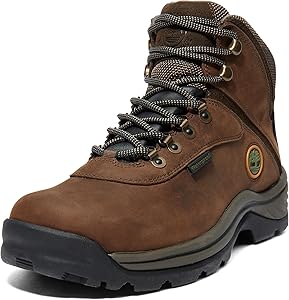
- Upper: Waterproof Premium Timberland Leather
- Hardware: Rustproof speed lace hardware with top hooks
- Lining: ReBOTL fabric containing recycled plastic
- Midsole: Shock-absorbing EVA footbed and midsole
The Timberland White Ledge Mid is a reliable workhorse for day hikers who appreciate a traditional all-leather look. The premium waterproof leather upper is seam-sealed to keep feet dry in wet conditions. One of its best features is the rustproof speed lace hardware, which allows for quick and secure adjustments on the go.
Inside, the boot features an EVA footbed and midsole that provide essential cushioning and shock absorption. The ReBOTL fabric lining adds an eco-friendly touch without compromising on comfort. This boot is particularly well-suited for light to moderate trails where a balance of protection, simplicity, and classic style is desired by the hiker.
Pros: Very easy to lace up, durable hardware, and effective waterproofing.
Cons: Provides less ankle stiffness than more technical mountain boots.
See the Timberland White Ledge See the Women’s White Ledge
8. KEEN Targhee 2 Mid

- Waterproofing: KEEN.DRY breathable membrane
- Outsole: KEEN ALL-TERRAIN rubber with 4mm lugs
- Fit: KEEN Original Fit with generous toe space
- Support: External Support Shank for balance
The KEEN Targhee 2 Mid is famous for its “Original Fit,” which offers a wide toe box that allows your toes to spread out naturally. This makes it a fantastic choice for hikers who struggle with narrow footwear. The KEEN.DRY membrane provides a breathable yet waterproof barrier, ensuring comfort during long days on the trail.
Protection is a key theme for this boot, featuring a high-abrasion rubber toe guard and a bruise plate for uneven surfaces. The 4mm multi-directional lugs provide aggressive traction in muddy or rocky environments. It is a robust, dependable boot that prioritizes foot health and stability for both casual and frequent hikers alike.
Pros: Spacious toe box, excellent toe protection, and durable lugs.
Cons: The bulky toe guard may not appeal to those seeking a slim profile.
See the KEEN Targhee 2 See the Women’s Targhee 2
The Ultimate Guide to Choosing Leather Hiking Boots
For decades, leather has been the gold standard for rugged backcountry travel. While synthetic materials have made massive leaps in breathability and weight reduction, nothing quite matches the durability, protection, and “custom fit” feel of a well-broken-in pair of leather hiking boots. However, walking into an outdoor gear shop can be overwhelming. With various types of leather, weights, and tanning processes, making the right choice requires a bit of technical knowledge.
Choosing the right boot isn’t just about aesthetics; it is about protecting your feet from repetitive impact, moisture, and debris. This guide will walk you through everything you need to know to find your perfect trail companion.
Understanding Different Leather Types
Not all leather is created equal. The “type” of leather refers to which part of the cowhide is used and how it is processed. This determines the boot’s weight, water resistance, and longevity.
Full-Grain Leather
Full-grain leather is the highest quality and most durable option. It uses the entire thickness of the hide, including the tough outer layer. These boots are incredibly abrasion-resistant and naturally water-repellent. They are the best choice for long-distance backpacking, off-trail navigation, and heavy loads. The downside? They are heavy and require a significant “break-in” period before they feel comfortable.
Top-Grain and Nubuck Leather
Nubuck is full-grain leather that has been buffed or sanded to create a soft, suede-like surface. It is very durable and more flexible than traditional full-grain leather. It resists scuffs well but requires specific conditioners to maintain its appearance and water resistance.
Split-Grain Leather
Split-grain leather is created by separating the rough inner part of the hide from the smooth outer layer. This is often paired with nylon or mesh panels to create “hybrid” boots. These are much lighter, more breathable, and cheaper, but they lack the long-term durability and waterproofing of full-grain options.
Matching the Boot to Your Terrain
Before you buy, you must be honest about where you will actually be hiking. A boot designed for the Alps will be a nightmare on a casual forest stroll, and a light day-hiker will fail you on a rocky summit scramble.
Light Hiking Boots
These are often “mid-cut” and emphasize comfort out of the box. They usually feature split-grain leather or a mix of leather and fabric. They are perfect for maintained trails and day trips with a light pack.
Backpacking Boots
Designed for multi-day trips with a 30-50 pound pack, these boots have stiffer midsoles and higher ankles. They are almost always made of full-grain leather or thick nubuck. The stiffness is intentional; it prevents your foot from wrapping around every rock and root, which reduces fatigue over long distances.
Mountaineering Boots
These are the tanks of the footwear world. They are heavy, exceptionally stiff, and designed to handle crampons. Unless you are traversing glaciers or climbing steep ice, these are generally overkill for standard hiking.
The Anatomy of Support: Midsoles and Outsoles
What’s happening inside and under the boot is just as important as the leather on the outside. The internal support system determines how much protection your arches and heels receive.
Midsoles: EVA vs. Polyurethane
The midsole provides cushioning. EVA (Ethylene Vinyl Acetate) is lighter, softer, and cheaper, commonly found in trail runners and light hikers. However, it compresses over time. Polyurethane (PU) is firmer and much more durable. It doesn’t “pack out” as easily, making it the preferred choice for serious leather backpacking boots.
The Importance of the Shank
The shank is a thin insert (usually 3–5mm thick) between the midsole and outsole. It adds load-bearing stiffness. In heavy leather boots, shanks often run the full length of the foot to ensure the boot doesn’t flex too much under a heavy backpack.
Ensuring the Perfect Fit
You can buy the most expensive boots in the world, but if they don’t fit your specific foot shape, you will be miserable. Leather boots, specifically, have a “memory”—they will eventually mold to your foot, but they must start with a solid foundation.
The Rule of Thumb
When your toes are touching the front of the boot (unlaced), you should be able to slide your index finger behind your heel. This ensures that when you are hiking downhill, your toes won’t slam into the front of the boot, which is a leading cause of “hiker’s toe” (blackened toenails).
Account for Foot Swell
Your feet will swell significantly after a few hours on the trail. Always shop for boots in the late afternoon or evening when your feet are at their largest. Additionally, wear the specific wool socks you plan to use on the trail.
Heel Lift and Volume
Lace the boots up firmly. Walk around the store—ideally on an incline ramp if they have one. Your heel should remain locked in place. If it slides up and down (heel lift), you are guaranteed to get blisters. If you have “low volume” feet (thin/flat), look for brands that offer narrower lasts.
The Break-In Process
One of the most common mistakes hikers make is taking brand-new leather boots straight onto a 10-mile hike. This is a recipe for disaster. Leather requires time to soften and crease at your natural flex points.
- Week 1: Wear them around the house with your hiking socks.
- Week 2: Wear them on short walks around the neighborhood or to the grocery store.
- Week 3: Take them on a 2-3 mile easy trail.
If you feel a “hot spot” (a localized area of friction), stop immediately. This is where a blister will form. You can use moleskin or specialized tape during the break-in period to protect these areas.
Maintenance: Making Them Last a Lifetime
Leather is a biological material. If it gets too dry, it cracks; if it stays too wet, it rots. Proper care can make a pair of leather boots last for over a decade.
Cleaning
After a muddy hike, don’t just toss your boots in the closet. Use a soft brush and water to remove dirt. Mud acts like a sponge, drawing moisture out of the leather and making it brittle.
Conditioning and Waterproofing
Once the leather starts looking lighter in color or “thirsty,” apply a leather conditioner. For waterproofing, use products specifically designed for the type of leather you have (wax for full-grain, sprays for nubuck). Avoid using oils like mink oil unless specified by the manufacturer, as they can over-soften the leather and cause the boot to lose its supportive shape.
Drying
Never dry your boots near a campfire, heater, or radiator. High heat can cause the leather to shrink and crack, and it can weaken the adhesives holding the sole together. Air dry them at room temperature, stuffing them with newspaper to absorb internal moisture.
Conclusion
Choosing leather hiking boots is an investment in your comfort and safety in the wilderness. By understanding the difference between full-grain and split-grain leather, matching the boot’s stiffness to your intended terrain, and being patient with the break-in process, you’ll end up with footwear that feels like a second skin. Remember: your boots are the only thing between you and the ground—make sure they are a solid foundation.