Best Rectangular Sleeping Bags of 2026
If you’re tired of feeling cramped while you sleep under the stars, a rectangular sleeping bag is a smart choice. Unlike tight mummy bags, these give your legs and arms plenty of room to move. They unzip fully to lie flat like a blanket, making them perfect for car camping or backyard lounges. This article rounds up the best rectangular sleeping bags for comfort, value, and easy packing.
1. REI Co-op Siesta Hooded

- Temperature Rating: 20°F (-6.6°C)
- Insulation Type: Synthetic (98% recycled polyester)
- Shape: Rectangular
- Weight: 5 lbs. 7.3 oz. (Medium)
The REI Co-op Siesta Hooded is a reliable choice for car campers who prioritize comfort and roominess. Its rectangular shape provides ample space for sleepers who like to stretch out or turn throughout the night. The hooded design is a thoughtful addition, typically found on mummy bags, which helps retain heat around the head during colder 20-degree nights. Utilizing bluesign-approved recycled materials, it balances sustainability with practical warmth for cool-weather adventures.
Constructed with a durable recycled polyester shell and lining, this bag feels substantial and cozy. While it is too bulky for backpacking, the included stuff sack makes it manageable for vehicle-based trips. The left-side zipper is snag-resistant, and the overall build quality reflects REI’s commitment to long-lasting outdoor gear. It is a solid investment for those seeking a spacious, environmentally conscious synthetic bag for three-season camping.
Pros: Spacious rectangular cut; recycled eco-friendly materials; integrated hood for extra warmth.
Cons: Quite heavy for transport; high compressed volume takes up significant trunk space.
See the REI Co-op Siesta Hooded
2. Teton Sports Celsius
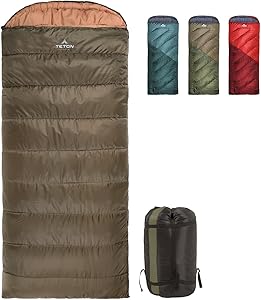
- Lining: Soft poly-flannel
- Fill: Innovative fiber fill
- Construction: Double-layer with draft tubes
- Hood: Half-circle mummy-style
The Teton Sports Celsius stands out for its emphasis on interior comfort, featuring a soft poly-flannel lining that feels more like home bedding than a technical nylon bag. The spacious design is paired with a half-circle mummy-style hood that serves a dual purpose: keeping your head warm and providing a clean surface for your pillow. It is engineered for those who want to forget they are sleeping on the ground by providing a plush, cushioned experience.
To combat the cold, Teton utilizes a double-layer offset stitch construction combined with draft tubes to prevent heat loss through the zippers. Packing is simplified with a heavy-duty compression sack, eliminating the need to roll the bag perfectly. This bag is ideal for families and casual campers who value a soft touch and dependable warmth during their outdoor excursions. Its durable build ensures it can handle frequent use across various seasons.
Pros: Extremely comfortable flannel lining; includes high-quality compression sack; effective draft protection.
Cons: Bulky even when compressed; synthetic fill can be heavy compared to down options.
3. Kelty Wayback 20

- Lining: Organic cotton
- Insulation: Recycled Cirroloft Eco
- Shell: Recycled 40-denier nylon ripstop
- Weight: 6 pounds
The Kelty Wayback 20 is a dream for “active sleepers” who find traditional mummy bags too restrictive. Its oversized rectangular design accommodates side sleepers, belly floppers, and those who starfish with ease. A unique standout feature is the built-in blanket, which allows for customizable temperature regulation and a more natural sleeping feel. The use of organic cotton for the lining provides a crisp, breathable texture that many campers prefer over synthetic fabrics.
Durability is key with the recycled nylon ripstop shell, which protects the Cirroloft Eco insulation. At six pounds, it is firmly in the car-camping category, but the comfort trade-off is significant. The right-hand zipper operates smoothly, and the generous dimensions ensure that even taller campers have plenty of room. This bag is perfect for those who prioritize freedom of movement and a natural fabric feel over weight savings or compact packability.
Pros: Massive interior space for all sleeping positions; built-in blanket; soft organic cotton lining.
Cons: One of the heaviest options; very large stuff sack volume is difficult to pack.
4. The North Face Wawona Bed 20

- Shell: 50D recycled ripstop polyester with DWR
- Fill: 100% polyester fiber batting
- Lining: 50D recycled polyester taffeta
- Weight: 4 lbs. 14.3 oz. (Regular)
The North Face Wawona Bed 20 offers a premium rectangular sleeping experience designed for versatility. Its 50-denier recycled ripstop shell is treated with a non-PFC durable water repellent finish, making it more resistant to tent condensation than standard bags. The interior taffeta lining is smooth and snag-free, providing a comfortable environment for sleepers regardless of whether they prefer their back, front, or side. It strikes a nice balance between weight and warmth for a synthetic bag.
With a temperature rating of 20°F, it is well-suited for chilly spring and autumn nights. The polyester fiber batting provides consistent loft and insulation even in damp conditions. While it is still a car-camping bag, its weight is slightly lower than some competitors, making it a bit easier to haul from the car to the campsite. The North Face build quality is evident in the sturdy zippers and well-distributed fill that prevents cold spots from forming.
Pros: Water-resistant DWR finish; high-quality ripstop shell; lighter than many rectangular bags.
Cons: Narrower shoulder girth than some other rectangular models; no integrated hood.
See the The North Face Wawona Bed 20
5. REI Co-op Campwell 30

- Temperature Rating: 30°F (-1°C)
- Fill: 98% recycled polyester
- Compressed Volume: 16.6 liters (Medium)
- Shape: Relaxed rectangular fit
The REI Co-op Campwell 30 is marketed as an “approachable” bag, making it an excellent entry-level choice for summer and mild-weather car camping. Rated for 30°F, it is less bulky than the 20-degree models, offering a more streamlined profile while still maintaining a relaxed rectangular fit. The synthetic fill is almost entirely recycled, appealing to the eco-conscious camper without sacrificing the loft needed for a comfortable night’s sleep under the stars.
This bag is particularly user-friendly, featuring simple aesthetics and a straightforward design that focuses on ease of use. It compresses reasonably well for a synthetic rectangular bag, taking up less space in your gear bin. While it lacks the extreme cold-weather features of more expensive models, it provides plenty of warmth for most standard camping seasons. It is a practical, durable, and affordable solution for those who enjoy casual weekend getaways in the forest or at the beach.
Pros: More compact than 20-degree counterparts; excellent value for the price; sustainable materials.
Cons: Not suitable for freezing temperatures; basic design lacks specialized features like hoods.
6. oaskys Sleeping Bag

- Outer Material: 210T Anti-tearing Polyester
- Lining: 190T polyester pongee
- Season Rating: 3 Seasons
- Design: Separated bottom zipper
The oaskys sleeping bag is a versatile 3-season option designed for versatility and temperature control. One of its standout features is the separated zipper at the bottom, which allows users to stick their feet out for ventilation on warmer nights. The 210T polyester shell is both waterproof and breathable, ensuring that dampness from dew or humidity doesn’t ruin your sleep. It is an affordable option for hikers and travelers who need a functional bag for mild conditions.
The half-circle hood includes an adjustable drawstring, allowing you to cinch it tight during colder spells. Despite its budget-friendly price point, it uses double-filled technology to enhance warmth. The bag is easy to clean and comes with a convenient compression sack for transport. While it may not be suitable for extreme winter conditions, it excels in the 10-20 degree Celsius range, making it a great companion for summer trekking or indoor sleepovers.
Pros: Excellent ventilation via foot zipper; budget-friendly; water-resistant outer shell.
Cons: Temperature ratings are optimistic; materials feel less premium than higher-end brands.
7. REI Co-op HunkerDown 20

- Insulation: 600-fill-power down (RDS certified)
- Weight: 3 lbs. 6.3 oz. (Medium)
- Compressed Volume: 8 liters (Medium)
- Shape: Rectangular with oversize hood
The REI Co-op HunkerDown 20 brings a touch of luxury to the campsite by utilizing down insulation instead of synthetic. This significantly reduces the weight and allows the bag to compress much smaller—down to just 8 liters—making it a viable option for short backpacking trips where a rectangular shape is preferred. The 600-fill-power down is water-resistant and RDS-certified, providing exceptional loft and warmth that synthetic fibers struggle to match.
Beyond the premium fill, the HunkerDown features an oversize hood and a draft collar to seal in heat. This bag is designed for those who want the spaciousness of a rectangular cut but the performance and packability of a down bag. It feels much lighter and loftier than the Siesta or Campwell models, offering a “cloud-like” feel. It is an ideal choice for campers who want a high-performance, 3-season bag that doesn’t feel restrictive or heavy.
Pros: Superior warmth-to-weight ratio; highly compressible; water-resistant down insulation.
Cons: More expensive than synthetic options; requires more careful cleaning and maintenance.
See the REI Co-op HunkerDown 20
8. QEZER Down Sleeping Bag

- Insulation: 600 FP premium duck down
- Weight: 3.24 lbs.
- Shell: 400T high-density nylon
- Shape: Semi-Rectangular
The QEZER Down Sleeping Bag is a high-performance choice for backpackers and hikers looking for an ultralight setup. Filled with 1.7 lbs of 600-fill-power duck down, it offers a comfort range between 28°F and 45°F. The semi-rectangular shape is a clever compromise, providing more foot room than a traditional mummy bag while remaining more thermally efficient than a standard rectangle. The 400T high-density nylon shell is moisture-proof and tear-resistant, ensuring durability on the trail.
Portability is a major selling point here; at just over three pounds, it is significantly lighter and more compact than polyester alternatives. It also features a double zipper design to prevent cold air intrusion and added chest insulation for enhanced warmth. For couples, a unique feature is the ability to combine two bags into a double sleeping bag. It is a technical, versatile piece of gear that balances weight, warmth, and space for the serious outdoor enthusiast.
Pros: Lightweight and compact for backpacking; can be joined with another bag; durable nylon shell.
Cons: Duck down may have a slight odor when damp; semi-rectangular shape is narrower than full rectangles.
See the QEZER Down Sleeping Bag
9. ATEPA Down Sleeping Bag
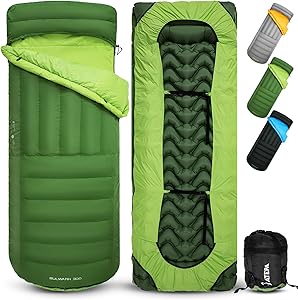
- Insulation: 300g COLDMASTER Down
- Weight: 2.5 lbs.
- Material: 20D 400T recycled nylon
- Multifunctionality: 3-in-1 system
The ATEPA Down Sleeping Bag is an incredibly versatile piece of equipment that functions as a 3-in-1 sleeping system. It can be used as a traditional rectangular bag, unzipped into a large down blanket, or even worn over the shoulders like a poncho. This makes it an excellent choice for campers who want one item that covers sleeping, lounging by the fire, and staying warm at a stadium. The use of 3D baffle technology ensures the down stays evenly distributed.
Weighing only 2.5 lbs and compressing to the size of a football, it is remarkably portable. The 20D recycled nylon material is eco-friendly and weather-resistant, repelling stains and moisture effectively. It also features reinforced corners and straps to integrate with an air pad, preventing the common problem of sliding off your mattress during the night. For summer or mild spring camping, its 50°F comfort rating provides just the right amount of insulation without overheating.
Pros: Extremely lightweight and portable; versatile 3-in-1 design; air pad integration straps.
Cons: Low fill weight means it is not for cold weather; the 50°F comfort rating is limited to summer.
See the ATEPA Down Sleeping Bag
10. MalloMe Sleeping Bag

- Temperature Range: 50°F to 77°F
- Outer Shell: Waterproof hex-tech polyester
- Weight: Approx. 3 lbs.
- Cleaning: Machine washable
The MalloMe sleeping bag is a fantastic “all-rounder” that is particularly well-suited for families and casual campers. It features a unique waterproof hex-tech design on the outer shell, which is double-layered with S-shape stitching to keep the 3D synthetic fiber fill in place. This ensures no cold spots and protects the sleeper from damp conditions. Its vibrant color options make it a popular choice for both adults and children alike.
Designed for spring, summer, and fall, this bag emphasizes easy maintenance as it is fully machine washable. The snag-free double-sided zippers and adjustable drawstring headrest allow for easy temperature adjustments throughout the night. While it is lightweight enough for short backpacking trips, its primary strength lies in providing a comfortable, bed-like experience for traditional camping. It is a durable and practical choice for those who need a reliable bag for varied outdoor conditions.
Pros: Waterproof outer shell; easy to clean and machine washable; very affordable price.
Cons: Not suitable for temperatures below 50°F; synthetic fill is less durable over many years.
How to Choose the Perfect Rectangular Sleeping Bag
Choosing a sleeping bag is one of the most critical decisions for any outdoor enthusiast. While backpacking-style mummy bags often dominate the conversation, the classic rectangular sleeping bag remains the undisputed king of comfort for car campers, festival-goers, and casual adventurers. Unlike their tapered counterparts, rectangular bags offer the freedom to move, roll, and stretch, mimicking the feel of a traditional bed. This guide will walk you through everything you need to know to select the right rectangular bag for your next trip.
Understanding the Rectangular Shape
The defining characteristic of a rectangular sleeping bag is its uniform width from top to bottom. This design provides significant benefits, but it also comes with specific trade-offs that you should consider before making a purchase.
Freedom of Movement
The primary reason people choose rectangular bags is the “wriggle room.” If you are a side sleeper, a stomach sleeper, or someone who tends to “starfish” in the middle of the night, a mummy bag can feel claustrophobic and restrictive. Rectangular bags allow you to bend your knees and shift your weight without the entire bag twisting with you.
Versatility and Temperature Regulation
Most rectangular bags feature a full-length zipper that runs down one side and across the bottom. This allows you to open the bag completely and use it as a large quilt or comforter. On warmer nights, you can unzip just the bottom to let your feet breathe, a feature often referred to as a “ventilation zipper.”
Evaluating Temperature Ratings
Before looking at colors or brands, you must determine the climate in which you will be camping. Sleeping bags are usually categorized by their temperature rating, but these numbers require a bit of interpretation.
Comfort vs. Limit Ratings
Many high-quality bags provide two different numbers. The “Comfort” rating is the temperature at which a cold sleeper (often a woman) will feel warm. The “Limit” or “Lower” rating is the temperature at which a warm sleeper (often a man) can sleep without shivering. For car camping, it is always safer to choose a bag with a comfort rating about 10 degrees lower than the coldest temperature you expect to encounter.
Seasonal Classifications
Rectangular bags generally fall into three categories:
- Summer Season (35°F and up): These are lightweight, thin, and easy to pack. They are ideal for backyard campouts or mid-summer trips.
- 3-Season (15°F to 35°F): The most versatile option, designed for spring, summer, and fall. They often include draft tubes along the zipper to keep cold air out.
- Winter (15°F and below): While rare in rectangular shapes due to heat loss, some heavy-duty bags use thick insulation and flannel linings to handle freezing temperatures.
Choosing the Right Insulation
The “stuffing” inside your bag determines how warm it will be, how well it packs down, and how it handles moisture. There are two main types: Synthetic and Down.
Synthetic Insulation
This is the most common choice for rectangular bags. It is made from polyester fibers that mimic the loft of down.
Pros: It is more affordable, hypoallergenic, and most importantly, it continues to provide warmth even if it gets wet. It is also easier to wash in a standard machine.
Cons: It is heavier and bulkier than down, meaning it takes up more space in your vehicle.
Down Insulation
Down consists of the fluffy under-feathers of ducks or geese. It is the gold standard for warmth-to-weight ratio.
Pros: It is incredibly light and can be compressed into a very small package. It also has a longer lifespan if cared for properly.
Cons: It is significantly more expensive. Traditional down loses its insulating power if it gets wet, though many modern bags now use “Water-Resistant Down” to mitigate this issue.
Key Features to Look For
Once you’ve narrowed down the temperature and insulation, look for these specific features that can make or break your sleeping experience.
Linings and Shell Materials
The interior fabric (lining) is what touches your skin. Flannel or cotton linings feel incredibly cozy and “bed-like,” but they are heavy and absorb moisture. Polyester or Nylon linings are smoother, lighter, and moisture-wicking, which is better if you tend to sweat at night. The outer shell should ideally be a Ripstop Nylon or DWR-treated polyester to repel light spills or tent condensation.
Integrated Hoods
While most rectangular bags are “hoodless,” some modern designs include a hooded top. Since you lose a significant amount of heat through your head, a hood can turn a marginal bag into a very warm one. If you choose a bag without a hood, remember to bring a warm beanie for cold nights.
Stash Pockets and Draft Tubes
Small interior stash pockets are perfect for keeping your phone, flashlight, or glasses within reach. A “draft tube” is a padded strip of insulation that runs along the inside of the zipper; it prevents cold air from leaking through the teeth of the zipper, which is a common source of midnight chills.
Sizing and Fit
Not all rectangular bags are the same size. If you are tall or have broad shoulders, a “Standard” bag might feel tight. Look for bags labeled “Long” (usually fitting up to 6’6″) or “Wide.” Conversely, if you are a smaller person, a bag with too much “dead air” space will be harder for your body to heat up. Match the bag size to your frame for the best thermal efficiency.
Storage and Maintenance Tips
To ensure your sleeping bag lasts for years, you must treat it well after the trip ends. Never store your sleeping bag in its tight compression sack for long periods. This crushes the insulation (both down and synthetic) and reduces its “loft,” eventually making the bag colder. Instead, store it in a large, breathable mesh laundry bag or hang it up in a closet.
When it comes to washing, always follow the manufacturer’s instructions. Synthetic bags can usually handle a front-loading washing machine on a gentle cycle. Use a specific “Down Wash” for down bags to avoid stripping the natural oils from the feathers. Always air dry or tumble dry on the lowest possible heat setting with a few clean tennis balls to fluff the insulation back up.
Conclusion
Choosing the right rectangular sleeping bag is about balancing the luxury of space with the necessity of warmth. By understanding your environment, selecting the appropriate insulation, and looking for comfort-focused features like flannel linings or draft tubes, you can ensure that your nights in the great outdoors are just as restful as your nights at home. Whether you are sleeping in the back of a truck or under a canopy of stars, the right bag is the foundation of a great adventure.