Best Small Camping Tents of 2026
Looking for a small camping tent that’s easy to carry and set up? You’ve come to the right place. Whether you’re hiking solo or sharing a tent with one friend, a compact shelter makes all the difference. The best small tents save space in your pack, set up fast, and still keep you dry and comfy at night. In this article, we’ll share top picks that are light, tough, and budget-friendly—so you can spend less time struggling with gear and more time enjoying the outdoors.
1. REI Co-op Trailmade 2

- Seasons: 3-season
- Minimum Trail Weight: 4 lbs. 10 oz.
- Floor Dimensions: 88 x 52 inches
- Peak Height: 40 inches
The REI Co-op Trailmade 2 is an excellent gateway into backpacking without breaking the bank. Setup is refreshingly simple thanks to the two-pole aluminum design, and the freestanding structure means you can pitch it anywhere. At 4 lbs. 10 oz. minimum trail weight, it won’t weigh you down too much, and the included footprint adds durability and value right out of the box.
Inside, two campers will find 31.8 square feet of floor space plus two generous vestibules (9.5 sq. ft. each) for gear storage. The 40-inch peak height is average for this class, but dual doors make entry and exit a breeze. Ventilation is solid with mesh canopy panels, and the polyester fabrics resist UV damage better than nylon. This tent balances price, weight, and features perfectly for weekend warriors.
- Pros: Footprint included, two doors, easy setup, durable polyester fabric
- Cons: A bit heavy for ultralight backpacking, packed size is bulky
See the REI Co-op Trailmade 2 See the REI Co-op Trailmade 1
2. Night Cat Camping Tent

- Weight: 4.4 lbs (2kg)
- Inner Size: 7.0 x 3.8 x 3.6 ft
- Waterproof Rating: PU 3000mm
- Packed Size: 16.5 x 4.7 x 4.7 in
The Night Cat Camping Tent is a smart choice for solo adventurers or a parent with a small child. The standout feature is the upgraded fiberglass poles with protective cases, which prevent those annoying tiny splinters from getting into your hands during assembly. Weighing just 4.4 lbs and packing down to a compact 16.5 inches, it’s ideal for backpacking, motorcycling, or even backyard fun with the kids.
Waterproofing is serious here with PU 3000mm-coated polyester and fully taped seams, keeping you dry through heavy rain. The big mesh door and roof window provide excellent airflow while keeping bugs out. Setup takes only 1-2 minutes thanks to the diagonal sleeve design. While it’s snug for two adults, one person gets plenty of room for gear. A great budget-friendly shelter that doesn’t cut corners on weather protection.
- Pros: Protective pole covers, excellent ventilation, very compact pack size, budget price
- Cons: Fiberglass poles less durable than aluminum, tight for two adults
See the Night Cat Camping Tent
3. The North Face Stormbreak 2

- Minimum Trail Weight: 5 lbs. 5 oz.
- Floor Area: 30.56 sq ft
- Peak Height: 43 inches
- Pole Material: DAC aluminum
The North Face Stormbreak 2 brings legendary brand reliability to the backpacking tent market. With two large doors and generous vestibules (9.78 sq. ft. each), accessing your gear and enjoying scenic views is effortless. The 43-inch peak height is among the tallest in its class, allowing most people to sit up comfortably. Four DAC aluminum poles create a sturdy structure that handles wind well, though they add a bit to the packed size of 7×22 inches.
At 5 lbs. 5 oz. minimum trail weight, this is better suited for short backpacking trips or car camping than ultralight thru-hiking. The 68-denier polyester floor has a 3000mm coating, while the rainfly offers 1200mm protection—adequate for moderate rain. One downside: the footprint is sold separately. Still, the Stormbreak 2 offers excellent build quality, spaciousness, and the trusted North Face warranty for campers who prioritize comfort over ounces.
- Pros: Tall peak height, two large doors, high-quality DAC poles, spacious vestibules
- Cons: Heavy for backpacking, footprint not included
See The North Face Stormbreak 2 See The North Face Stormbreak 3
4. Kelty Grand Mesa 2

- Packed Weight: 4 lbs. 12 oz.
- Floor Area: 30 sq ft
- Packed Size: 16 x 7 x 7 in
- Pole Material: DAC Pressfit aluminum
The refreshed Kelty Grand Mesa 2 is a reliable, affordable backpacking companion that just got better. The 2020 updates include Kelty Quick Corners that hold poles in place during setup, an EZ-Zip vestibule with fully taped seams, and a clever Shark Mouth carry bag for hassle-free packing. Weighing just 4 lbs. 12 oz. packed, it’s light enough for the trail yet durable enough for seasons of use.
The freestanding design uses color-coded clip and fly attachments, making setup intuitive even for beginners. Inside, you get 30 square feet of floor space with a tapered shape (85×57/44 inches). The single door and single vestibule keep things simple, and the 68D polyester fabric throughout resists weathering well. While it lacks a second door, the Grand Mesa 2 offers exceptional value, DAC aluminum poles, and Kelty’s trusted build quality for budget-conscious backpackers.
- Pros: Quick Corner setup aid, DAC aluminum poles, Shark Mouth carry bag, great value
- Cons: Only one door, tapered floor reduces foot space
5. Forceatt Camping Tent

- Weight: 5.5 lbs (2.5kg)
- Floor Dimensions: 88.6 x 53.1 in
- Waterproof Index: 3000mm
- Pole Material: 7001 series aluminum
The Forceatt Camping Tent packs impressive features into a budget-friendly package. With two D-shaped doors and two vestibules, two campers get their own entry and gear storage—a feature usually reserved for pricier tents. The 7001 series aluminum poles are lightweight and strong, and setup takes about three minutes thanks to the freestanding design. Reflective guy lines add nighttime visibility and wind resistance.
Weather protection is a priority here with a welded floor design that elevates the bottom to keep you off wet ground, plus a full-coverage rainfly and 3000mm waterproof rating. The large mesh window and two ceiling vents provide excellent airflow to prevent condensation, and the micro-mesh fabric lets you stargaze on clear nights. Smooth #8 zippers resist snagging. At 5.5 lbs, it’s not ultralight, but for car camping or short hikes, this tent offers incredible value and solid protection.
- Pros: Two doors and two vestibules, 7001 aluminum poles, welded floor design, great ventilation
- Cons: A bit heavy for backpacking, no footprint included
6. BISINNA 2/4 Person Tent
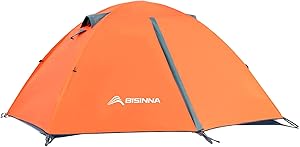
- Unfolded Size: 82.7 x 47.2 x 23.6+55+23.6 in
- Water Resistance: PU2000mm
- Packed Size: 16.9 x 5.9 x 5.9 in
- Pole Material: 7001 space aluminum
The BISINNA 2/4 Person Tent offers versatility for couples or small groups. The unique extended floor design (60+140+60 cm width) creates vestibule space without needing a separate rainfly extension. Two D-shaped doors with dual zippers make entry easy, and the large mesh sections provide excellent cross-ventilation. The 7001 aluminum poles are both lightweight and sturdy, capable of handling strong winds when guyed out properly.
Setup is straightforward for a freestanding tent, with most users pitching it in under 10 minutes on the first try. The double-layer construction with PU2000mm rainfly keeps you dry in moderate rain, and the included 10 aluminum stakes and two ropes add stability. While the 47-inch peak height is generous, the tent’s shape can feel a bit narrow at the foot end. Overall, BISINNA delivers a solid, affordable shelter for three-season camping with good portability.
- Pros: Two D-shaped doors, 7001 aluminum poles, generous peak height, good ventilation
- Cons: Narrow floor at foot end, assembly takes practice
See the BISINNA 2/4 Person Tent
7. Clostnature Lightweight Tent

- Minimum Trail Weight: 4.52 lbs (2.05 kg)
- Tent Size: 7’3″ x 4’11” x 3’10”
- Waterproof Coating: PU 5000
- Packed Size: 16.5 x 5.9 x 5.9 in
The Clostnature Lightweight Tent stands out for its impressive weather protection at a reasonable weight. With a PU 5000 coating on the rainfly, groundsheet, and bathtub floor, this tent is built to handle serious downpours. Factory-sealed seams add another layer of security. At just 4.52 lbs minimum trail weight, it’s light enough for backpacking, yet the 7’3″ length provides ample room for taller campers.
The freestanding design with two aluminum poles allows for quick setup even by beginners. Inside, you’ll find two D-shaped doors and two vestibules for gear storage—a premium feature at this price point. The entire mesh walls create phenomenal airflow while keeping bugs out. The package includes 14 aluminum stakes, four ropes, and even a pole repair kit, showing thoughtful attention to detail. For budget-conscious backpackers who refuse to compromise on weather protection, this tent is a winner.
- Pros: Excellent PU 5000 waterproofing, two doors and vestibules, includes repair kit, lightweight
- Cons: Stakes are lightweight but not ultra-strong, floor fabric could be thicker
See the Clostnature Lightweight Tent
8. ALPS Mountaineering Lynx 2

- Total Weight: 5 lbs. 13 oz.
- Base Size: 7’6″ L x 5′ W
- Center Height: 3’10”
- Vestibule Area: 20 sq ft total
The ALPS Mountaineering Lynx 2 is a time-tested design that prioritizes durability and comfort. The free-standing two-pole aluminum design makes setup quick and intuitive, while the 7000 series aluminum poles and large #8 zippers ensure years of reliable use. With a base of 7’6″ by 5′, two adults have room to sleep without feeling cramped, and the 3’10” center height allows for comfortable sitting.
Weather protection comes from a 75D 185T polyester fly and floor with 2000mm coating, plus fully sealed seams. The two doors and two vestibules (20 sq. ft. total) provide excellent gear storage and easy access for both occupants. Half mesh walls paired with rainfly vents promote airflow while reducing condensation. At 5 lbs. 13 oz., it’s heavier than ultralight options, but the Lynx 2 is bombproof for car camping, scout trips, or short backpacking adventures where durability matters most.
- Pros: Two doors and two vestibules, durable #8 zippers, 7000 series poles, great ventilation
- Cons: Heavy for backpacking, footprint sold separately
See the ALPS Mountaineering Lynx 2
9. Camppal 1 Person Tent

- Water Resistance: 3500-4000mm
- Weight: 3.75 lbs
- Inner Size: L8.2ft x W2.95ft x H2.95ft
- Fire Retardant: CPAI-84 certified
The Camppal 1 Person Tent is thoughtfully designed for solo travelers who need reliable weather protection. At 8.2 feet long, it comfortably accommodates taller individuals while leaving room for gear like backpacks and boots. The 3500-4000mm water resistance is exceptional for a tent this size, and seam taping on the zipper, velcro wraps, and all four bottom corners ensures no weak points in heavy rain.
Setup takes about three minutes thanks to the single ridge pole design, making this one of the quickest tents to pitch. The anti-tearing ripstop fabric and strong aluminum pole construction handle strong winds admirably. Weighing just 3.75 lbs, it’s backpack-friendly, and the oversized carry bag means you won’t fight to repack it. Fire retardant CPAI-84 certification adds safety peace of mind. While the 2.95-foot width is snug, that’s expected for a true solo shelter. Great for motorcycle camping, hiking, or backpacking.
- Pros: Excellent 4000mm waterproofing, extra-long for tall people, quick 3-minute setup, fire retardant certified
- Cons: Narrow width, single pole design less stable in high winds
10. CAMEL CROWN Tent
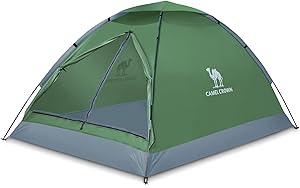
- Pole Material: 8.5mm glass fiber
- Floor Fabric: 150D Oxford cloth PU2000
- Rainfly Fabric: Polyester
- Ground Stakes: 8 iron stakes
The CAMEL CROWN Tent is an affordable dome-style shelter perfect for casual camping trips. Built with 8.5mm fiberglass poles and iron ground stakes, this tent provides adequate stability for fair-weather camping. The 150D Oxford cloth floor with PU2000 coating offers solid protection from ground moisture, while the polyester rainfly keeps light rain at bay. Four windproof ropes add extra security when winds pick up.
The double-layer dual-purpose top design includes external mosquito-proof breathable screens, promoting air circulation while keeping bugs out. Setup is quick—most users have it up in just a few minutes—and the lightweight portable carry bag makes transport easy. While not intended for serious backpacking or extreme weather, this tent shines for family camping trips, beach outings, fishing, or backyard adventures. The value is undeniable for occasional campers who want a functional shelter without a big investment.
- Pros: Very affordable, iron stakes are durable, good ventilation with mosquito screens, easy setup
- Cons: Fiberglass poles less durable, not for heavy rain or strong wind
The Ultimate Guide to Choosing Small Camping Tents
Choosing the right small camping tent is a balancing act between weight, space, durability, and cost. Whether you are a solo backpacker looking to shave ounces off your pack or a couple seeking a cozy weekend getaway in the woods, the tent you choose serves as your primary sanctuary against the elements. A “small” tent typically refers to 1-person or 2-person models, designed for portability and efficiency.
In this guide, we will break down the essential factors to consider, from internal architecture to material science, ensuring you make an informed decision for your next trip.
Understanding Tent Capacity and Livability
The first step in choosing a small tent is deciding between a 1-person or 2-person model. While “1-person” sounds straightforward, these tents are often quite narrow, sometimes described as “coffin-like” by those who prefer more room.
Floor Area vs. Interior Volume
Many beginners look only at the square footage of the floor. While floor area is important for fitting your sleeping pad, it doesn’t tell the whole story. The “interior volume” or “livability” is determined by the angle of the walls. Tents with steep vertical walls, often achieved through pre-bent poles or spreader bars at the top, provide much more headroom. This allows you to sit upright comfortably to change clothes or wait out a rainstorm without the fabric pressing against your face.
The Importance of Vestibules
In small tents, interior storage is limited. This is where the vestibule—the “porch” created by the rainfly—becomes critical. A good small tent should have at least one vestibule where you can store your muddy boots and bulky backpack, keeping the sleeping area clean and maximizing the limited floor space.
Shelter Type: Double-Wall vs. Single-Wall
How a tent manages moisture is perhaps its most important technical feature.
Double-Wall Tents
The most common design is the double-wall tent, consisting of an inner mesh tent body and a waterproof outer rainfly. This design is superior for most campers because it handles condensation effectively. Moisture from your breath passes through the mesh and settles on the underside of the fly, keeping you dry.
Single-Wall Tents
Single-wall tents integrate the waterproof layer into the tent body itself. These are significantly lighter and easier to pitch, making them popular with high-altitude mountaineers or ultralight “fast-packing” enthusiasts. However, they are prone to condensation buildup on the inside walls, which can lead to a damp sleeping bag if the ventilation isn’t perfect.
Weight and Portability
When discussing small tents, weight is often the primary concern. Manufacturers usually list two weights: “Trail Weight” and “Packaged Weight.”
Trail Weight vs. Packaged Weight
Trail weight typically includes only the tent body, fly, and poles—the essentials. Packaged weight includes the stakes, guy lines, stuff sacks, and instructions. For most hikers, the trail weight is the more accurate metric of what you will actually carry. For a 1-person tent, a weight of 2 to 3 pounds is considered excellent, while 2-person tents usually range between 3 and 5 pounds.
Freestanding vs. Non-Freestanding
Freestanding tents use a dedicated pole system that allows the tent to hold its shape without stakes. These are easier to set up on hard ground or wooden platforms. Non-freestanding tents (often called “trekking pole tents”) require stakes and tension to stay upright. While they require more skill to pitch, they are the gold standard for weight savings because they utilize the trekking poles you are already carrying.
Materials and Durability
The longevity of your tent depends on the “denier” (D) of the fabric—a measurement of the fiber thickness.
Nylon vs. Polyester
Most small tents are made of nylon or polyester. Nylon is generally stronger and more flexible, but it tends to sag when it gets wet, requiring you to re-tension the fly. Polyester is slightly heavier but doesn’t sag and dries faster. Higher-end ultralight tents may use Dyneema Composite Fabric (DCF), which is incredibly strong and waterproof but significantly more expensive.
Silnylon and Polyurethane Coatings
To make the fabric waterproof, it is coated with either Silicone (Sil) or Polyurethane (PU). “Silnylon” is highly durable and slippery, allowing snow and rain to slide off easily. Many budget-friendly small tents use PU coatings, which are effective but can degrade over many years if the tent is stored damp.
Seasonal Ratings
You must match your tent to the environment you plan to explore.
3-Season Tents
These are the most popular small tents. They are designed for spring, summer, and fall. They feature plenty of mesh for ventilation and are built to withstand moderate rain and light wind. They are not designed for heavy snow loads.
Extended Season (3-4 Season) Tents
Often called “treeline” tents, these have fewer mesh panels and more solid fabric to retain heat and block cold wind. They are ideal for early spring or late autumn in high-elevation areas where a surprise dusting of snow is possible.
4-Season Tents
These are specialized tools for winter. They feature heavy-duty poles and rounded shapes designed to shed heavy snow and withstand gale-force winds. They are usually much heavier and lack the ventilation needed for summer camping.
Setup and Ease of Use
After a long day of hiking, the last thing you want is a complicated puzzle. Look for tents with color-coded poles and clips. Hubbed pole systems—where the poles are connected at a central joint—are generally faster to assemble than separate poles.
Internal Features
Check for small details that improve the experience. Gear lofts (overhead mesh pockets) are great for storing a headlamp to illuminate the tent at night. Pockets at the head or foot of the tent help keep your phone and glasses safe. Also, consider the door configuration. In a 2-person tent, having two doors is a massive advantage, as it prevents you from having to crawl over your partner for a midnight bathroom break.
The Role of the Footprint
A footprint is a custom-sized ground cloth that sits under your tent. While it adds a few ounces to your pack, it protects the thin floor of a lightweight tent from sharp rocks, sticks, and abrasion. For small, expensive ultralight tents, a footprint is a wise investment to extend the life of your gear.
Conclusion
Choosing the right small camping tent requires you to prioritize your needs. If you are hiking long distances, every ounce matters, and a non-freestanding 1-person tent might be your best bet. If you prefer comfort and ease of setup, a freestanding 2-person tent with vertical walls and double doors will provide a much better experience. By understanding the trade-offs between weight, space, and materials, you can find a shelter that doesn’t just keep you dry, but becomes a home away from home.