
Best Double Sleeping Pads of 2026
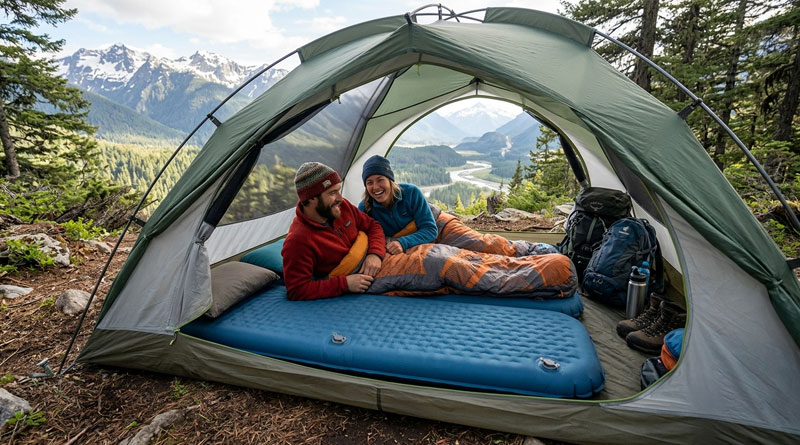
When camping with a partner, sharing a bed of cold, hard ground can ruin a good night’s sleep. That’s where double sleeping pads come in. Designed for two people, these wide pads fit inside most two-person tents and stop you from rolling into the center crack. The best models balance comfort, weight, and insulation. Below, we compare the top double pads to help you and your teammate sleep soundly under the stars.
1. Klymit Klymaloft SUMMIT

- Type: Air pad, rectangular
- R-Value: 2.4
- Dimensions: 78 x 53 x 5 inches
- Weight: 6 lbs | Packed: 9 x 27 inches
The Klymit Klymaloft SUMMIT is a generously sized double sleeping pad built for two campers who refuse to compromise on comfort. Its foam topper contours naturally to the body while I-beam air chambers underneath provide solid loft and stability throughout the night. Quick inflation means less time fussing with setup and more time enjoying the outdoors.
With a 5-inch thickness and a wide 53-inch berth, both sleepers get ample room to move without disturbing each other. The included repair kit and stuff sack add practical value. It’s best suited for car camping rather than long-distance backpacking given its packed size, but for basecamp comfort, it delivers reliably.
Pros:
- Foam topper adds superior comfort
- Generous 2-person dimensions
- Quick and easy inflation
Cons:
- Low R-value of 2.4 limits cold-weather use
- Bulky packed size not ideal for backpacking
See the Klymit Klymaloft SUMMIT
2. Yuzonc Double Sleeping Pad

- Type: Inflatable air pad
- Dimensions: 79.8 x 53.5 x 4 inches
- Weight: 3 lbs | Packed: 12 x 5.9 inches
- Material: 40D nylon with TPU coating
The Yuzonc Double Sleeping Pad punches well above its weight class, offering 4 inches of air cushioning across a spacious surface designed comfortably for two adults. Its built-in foot pump inflates the pad in just 1–3 minutes without any additional gear, which is a genuine convenience on the trail. The water ripple ergonomic design helps distribute pressure evenly for all sleeping positions.
At just 3 pounds and packing down to 12 x 5.9 inches, this is one of the lightest and most compact double pads available. The durable 40D nylon and TPU coating resist tears and moisture effectively. Built-in pillows with double-layer valves round out an impressively feature-rich package at an accessible price point.
Pros:
- Ultralight at only 3 lbs
- Built-in foot pump — no extra gear needed
- Extremely compact packed size
Cons:
- No listed R-value — not ideal for cold conditions
- 40D nylon less rugged than heavier fabrics
See the Yuzonc Double Sleeping Pad
3. KLYMIT Insulated Double V
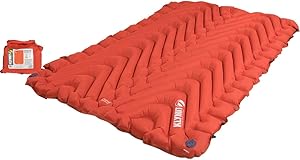
- Type: Insulated air pad
- R-Value: 4.4
- Dimensions: 73 x 47 x 3 inches
- Weight: 52.8 oz | Packed: 12 x 7 inches
The KLYMIT Insulated Double V is a four-season double sleeping pad that balances packability with meaningful warmth. Its signature V-Chamber design limits air movement and conforms to the shape of two adult bodies, making it comfortable for side, back, and stomach sleepers alike. Dynamic side rails gently cradle each sleeper to minimize nighttime disturbances.
Klymalite synthetic insulation fills the V-Chambers, offering an R-value of 4.4 that makes it genuinely viable in colder conditions. A special anti-microbial laminate runs throughout the pad to prevent odor and material degradation over time. Inflating takes just 10 pumps from the included stuff sack, and packed dimensions remain trail-friendly at 12 x 7 inches.
Pros:
- 4-season R-value of 4.4
- Body-mapping V-Chamber design for comfort
- Anti-microbial laminate for longevity
Cons:
- Narrower (47 inches) than some competitors
- Only 3 inches thick
See the KLYMIT Insulated Double V
4. Exped MegaMat Duo

- Type: Self-inflating, open-cell foam
- R-Value: 8.1
- Thickness: 4 inches
- Weight: From 7 lbs 5.8 oz (Medium Duo)
The Exped MegaMat Duo is the gold standard in car camping luxury, delivering an extraordinary R-value of 8.1 alongside 4 inches of pressure-relieving open-cell foam. It’s engineered specifically with side sleepers in mind, cradling the body and eliminating pressure points that cause restless nights. Self-inflation means minimal effort at camp — just open the valve and let it do the work.
Available in multiple sizes from Medium Duo to Queen, it adapts to different camping setups and tent footprints. The foam-forward construction provides unmatched warmth and cushioning, though it comes at a weight cost. For those who car camp or base camp and prioritize sleep quality above all else, the MegaMat Duo is simply hard to beat.
Pros:
- Exceptional R-value of 8.1
- Superior comfort for side sleepers
- Multiple size options available
Cons:
- Heavy — starts at over 7 lbs
- Not suitable for backpacking
5. REI Co-op Westward Dreamer

- Type: Self-inflating, open-cell foam
- R-Value: 6.7
- Dimensions: 76 x 50 x 4 inches
- Weight: 9 lbs 3 oz | Packed: 14 x 28 inches
The REI Co-op Westward Dreamer earns its name by transforming any campsite into a genuinely restful retreat. With 4 inches of combined air and open-cell foam insulation, plus a strong R-value of 6.7, it handles three-season camping with ease and even pushes into cooler conditions comfortably. Its 76 x 50 inch footprint gives two sleepers plenty of room.
Self-inflation makes setup effortless — just crack open the valve after a long day on the trail. REI’s own-brand quality assurance shows in the included repair kit and stuff sack, and the overall build quality is solid throughout. It is on the heavier and bulkier side, making it best reserved for vehicle-supported camping trips rather than backpacking adventures.
Pros:
- High R-value of 6.7 for 3-season warmth
- Comfortable 4-inch foam and air construction
- Trusted REI build quality
Cons:
- Bulky packed size of 14 x 28 inches
- Heavy at over 9 lbs
See the REI Co-op Westward Dreamer
6. Klymit Static V SUMMIT

- Type: Insulated air pad, synthetic fill
- R-Value: 2.4
- Dimensions: 74 x 47 x 3 inches
- Weight: 3 lbs 4.8 oz | Packed: 7.5 x 11.5 inches
The Klymit Static V SUMMIT is one of the most packable 2-person sleeping pads available, compressing to an impressively small 7.5 x 11.5 inches. Despite its lightweight build, it features synthetic insulation and a V-chamber design that supports both campers independently, reducing sleep disturbance when one person shifts position during the night.
While the R-value of 2.4 positions it as a three-season pad rather than a true winter option, the synthetic insulation still provides a meaningful warmth advantage over uninsulated air pads. At just over 3 pounds, it’s genuinely viable for backpacking trips where shared gear weight matters. A repair kit and stuff sack are included for added peace of mind on longer adventures.
Pros:
- Incredibly compact packed size
- Lightweight at 3 lbs 4.8 oz
- V-chamber design minimizes partner disturbance
Cons:
- Low R-value of 2.4 limits cold-weather use
- Only 3 inches thick
See the Klymit Static V SUMMIT
7. Exped DeepSleep Duo

- Type: Self-inflating, open-cell foam
- R-Value: 9
- Thickness: 3 inches
- Weight: From 6 lbs 10.5 oz (Medium Duo)
The Exped DeepSleep Duo achieves a remarkable R-value of 9 in a relatively low-profile 3-inch self-inflating package. This makes it one of the warmest double sleeping pads available, capable of handling genuine winter camping conditions without the extreme weight penalty of thicker foam alternatives. It’s built for campers who prioritize warmth and durability above all else.
Available in two sizes, the generous sleeping surface accommodates two adults comfortably, and the self-inflating mechanism simplifies setup considerably. The open-cell foam construction offers reliable support and warmth retention night after night. Combined with Exped’s well-regarded build standards and the included repair kit and stuff sack, this pad is a serious long-term investment in outdoor sleep quality.
Pros:
- Exceptional R-value of 9 for winter use
- Self-inflating for easy setup
- Available in two size options
Cons:
- Heavier than air-only alternatives
- 3-inch thickness less cushioned than 4–5-inch pads
8. Hikenture Double Sleeping Pad

- Type: Inflatable air pad
- Dimensions: 79 x 47.5 x 4 inches
- Weight: 3.65 lbs | Packed: 13.5 x 6 inches
- Material: Polyester pongee with TPU lamination
The Hikenture Double Sleeping Pad delivers 4 inches of air cushioning across a 79 x 47.5 inch surface, providing genuine bed-like comfort for two campers of any sleeping style. Its dual-valve system — one for inflation via hand or foot, one for rapid deflation — makes setup and packdown fast and frustration-free. The 600 lb weight capacity speaks to the robustness of its TPU-laminated construction.
At 3.65 lbs and packing down to 13.5 x 6 inches, it strikes an impressive balance between size and comfort for a double pad. Waterproof and wear-resistant, it handles varied outdoor conditions well. Whether used for camping, van travel, backpacking, or even as a guest air bed at home, the Hikenture is a versatile and well-priced option.
Pros:
- 4-inch thickness for superior cushioning
- Lightweight and compact at 3.65 lbs
- High 600 lb weight capacity
Cons:
- No stated R-value — not optimized for cold weather
- Slightly narrower than some rival double pads
See the Hikenture Double Sleeping Pad
9. Big Agnes Captain Comfort Deluxe

- Type: Self-inflating, closed-cell foam
- R-Value: 9.9
- Dimensions: 78 x 52 x 5 inches
- Weight: 11 lbs 2 oz | Packed: 11 x 27 inches
The Big Agnes Captain Comfort Deluxe lives up to its name by combining a massive 5-inch thickness with a best-in-class R-value of 9.9. The stretch fabric top layer adds a soft-touch feel that distinguishes it from more utilitarian self-inflating pads. Closed-cell foam insulation delivers consistent warmth in even the coldest camping conditions, making this a true four-season performer.
At 78 x 52 inches, there’s room for two adults to sleep comfortably without crowding. Self-inflation simplifies setup, and the included repair kit and stuff sack ensure you’re prepared for the unexpected. The major trade-off is weight — at over 11 lbs, this is firmly in car camping territory — but for those who value uncompromising sleep quality, it sets a high bar.
Pros:
- Outstanding R-value of 9.9
- 5-inch thickness for maximum comfort
- Soft stretch fabric top surface
Cons:
- Very heavy at 11 lbs 2 oz
- Bulky packed dimensions
See the Big Agnes Captain Comfort Deluxe
10. Elegear CumbreX

- Type: Memory foam with built-in electric pump
- R-Value: 9.5
- Thickness: 4 inches
- Material: 50D knitted fabric with TPU layer
The Elegear CumbreX stands out from every other pad on this list by incorporating a built-in electric pump for one-touch inflation and deflation. The 26D hollowed memory foam core adapts to the body’s natural contours and distributes pressure evenly, making it genuinely comfortable for all sleeping positions. With an R-value of 9.5, it performs confidently across all four seasons.
The hollow foam structure combined with an air cushion layer allows firmness to be customized to personal preference — a thoughtful touch rarely seen in camping pads. Durable 50D knitted fabric and a leak-proof TPU layer ensure long-term reliability across rugged terrain. The built-in pillow adds head and neck support, rounding out a feature-rich pad designed for campers who want maximum comfort without the manual effort.
Pros:
- Built-in electric pump — effortless setup
- Memory foam adapts to body shape
- Impressive R-value of 9.5 for all seasons
Cons:
- Pump battery limits — only 20 minutes of runtime
- Heavier and bulkier than air-only alternatives
How to Double Sleeping Pads for Maximum Winter Comfort and R-Value
For many outdoor enthusiasts, the transition from summer backpacking to winter camping brings a significant challenge: staying warm while sleeping on the frozen ground. While a high-quality sleeping bag is essential, it is often the ground that robs the body of its heat through conduction. Standard sleeping pads that perform beautifully in July often fail miserably in January. The solution used by mountaineers and seasoned four-season campers is “doubling up”—stacking two sleeping pads to create a superior thermal barrier and enhanced physical comfort.
In this guide, we will explore the science of R-values, the specific techniques for layering different types of pads, and the practical tips to ensure your sleep system remains stable throughout the night.
Understanding the Science: The Power of R-Value
Before diving into the “how,” it is vital to understand the “why.” In the world of camping gear, insulation is measured by R-value. The R-value indicates a material’s resistance to heat flow. The higher the R-value, the better the pad will insulate you from the cold ground.
When you stack two sleeping pads, the R-values are additive. If you have a closed-cell foam pad with an R-value of 2.0 and an inflatable air pad with an R-value of 3.0, stacking them provides a total R-value of 5.0. This additive property allows campers to customize their sleep system for extreme temperatures without necessarily buying an expensive, dedicated “winter-only” pad that might be too heavy or bulky for year-round use.
Conductive Heat Loss
Heat always moves from a warmer object to a colder one. When you lie down, your body heat transfers directly into the ground. Air is a poor conductor of heat, but only if it is trapped. Sleeping pads work by trapping air in small pockets (foam) or baffled chambers (inflatables). By doubling up, you increase the thickness of the trapped air and create multiple layers of resistance, significantly slowing the rate at which your body heat escapes into the earth.
The Ideal Combination: Foam and Air
While you can technically stack any two pads, the gold standard for doubling up is placing a Closed-Cell Foam (CCF) pad underneath an Inflatable Air Pad. This combination offers the best balance of insulation, protection, and comfort.
The Role of the Closed-Cell Foam Pad
The CCF pad (like the classic accordion-style or roll-up blue foam pads) should always be the bottom layer. Because these pads are made of dense foam filled with tiny, independent air bubbles, they are virtually indestructible. Placing them on the bottom protects your more expensive inflatable pad from punctures caused by rocks, frozen twigs, or ice shards on the tent floor.
Furthermore, CCF pads provide a consistent “floor” of insulation. Unlike air pads, which can have “cold spots” if the air inside circulates or if the pad is slightly under-inflated, the foam provides a solid thermal break that doesn’t shift.
The Role of the Inflatable Air Pad
The inflatable pad goes on top. Its primary job is comfort and secondary insulation. Because the foam pad underneath is already handling the “rough” work of blocking the frozen ground, the air pad can be inflated to your preferred firmness to cushion your hips and shoulders. This setup mimics the feel of a real mattress much better than a single pad ever could.
Step-by-Step Instructions for Doubling Your Pads
Achieving a perfect night’s sleep requires more than just throwing one pad on top of the other. Proper alignment and stabilization are key to preventing a “slip-and-slide” effect during the night.
1. Clear the Ground and Level the Site
Even with two pads, a slope will cause you to slide off your sleep system. Choose the flattest spot possible. Before pitching your tent, remove any large debris. While the CCF pad is tough, preventing unnecessary wear will extend the life of your gear.
2. Lay Down the Closed-Cell Foam Pad
Place your CCF pad directly on the tent floor. If you are using a dimpled pad (like the Therm-a-Rest Z-Lite), the common debate is whether the “egg carton” dimples should face up or down. For doubling up, it is generally recommended to face the dimples up. These dimples trap additional pockets of air between the foam and the bottom of your air pad, slightly boosting the total insulation.
3. Inflate and Position the Air Pad
Place your inflatable pad directly on top of the foam. Ensure the edges are aligned. If your air pad is wider than your foam pad, try to center it. In winter, it is often better to slightly under-inflate the top air pad. This allows the pad to “wrap” around your body slightly, increasing the surface area of insulation and making it less likely to slide off the foam base.
4. Prevent Sliding
One of the biggest complaints with doubled pads is that the top pad slides off the bottom one. You can remedy this using a few tricks:
- Silicone Seam Sealer: Apply small dots or lines of silicone sealant to the top of the foam pad and the bottom of the air pad. Once dry, these create a “tacky” surface that adds friction.
- Strap Systems: Some manufacturers sell “coupler” straps designed to hold two pads together. You can also use large elastic bands or DIY shock cord loops to tether the two pads at the head and foot.
- Shelf Liner: A small piece of rubberized mesh shelf liner placed between the two pads acts as an excellent non-slip grip.
Alternative Strategies: Double Air Pads
What if you don’t own a foam pad and have two inflatable pads instead? This is possible, though slightly riskier and bulkier. If using two air pads, the same rules of R-value addition apply. However, you must be extremely careful about the tent floor surface.
Managing Pressure and Stability
Stacking two air pads creates a very high profile, which can feel unstable—almost like sleeping on a pool float. To counter this, keep the bottom pad very firm and the top pad slightly softer. This lowers the center of gravity and creates a more “nested” feeling. Be aware that two air pads are more likely to slide against each other than a foam/air combo, so using the non-slip tips mentioned above is mandatory.
When Should You Double Up?
Doubling pads isn’t necessary for every trip. It is a technique specifically designed for certain conditions:
Deep Winter and High Altitudes
If you are camping on snow or permafrost, a single pad with an R-value of 3 or 4 is usually insufficient. Most experts recommend a total R-value of 5.0 or higher for sleeping on snow. Doubling is the most cost-effective way to reach that threshold.
Base Camping and Car Camping
When weight isn’t an issue, doubling up is a great way to increase luxury. If you have a thin “self-inflating” pad and a thick “air” pad, stacking them can provide a sleep experience that rivals a home mattress, ensuring you wake up without back pain for your day’s activities.
Common Mistakes to Avoid
To get the most out of your setup, avoid these frequent errors:
Over-inflating the Top Pad
A rock-hard air pad on top of a foam pad creates a narrow, rounded surface that is easy to roll off of. Keep the top pad supple so it conforms to your body shape.
Ignoring the Width
If your bottom foam pad is a “regular” width (20 inches) and your top air pad is “large/wide” (25 inches), the edges of your air pad will drape over the foam. These edges will touch the cold tent floor, creating cold spots where your arms or legs might rest. Always try to match the widths of your pads or ensure the bottom pad is the wider of the two.
Conclusion
Mastering the art of doubling sleeping pads is a game-changer for anyone looking to extend their camping season into the colder months. By combining the durability and consistent insulation of a closed-cell foam pad with the plush comfort of an inflatable pad, you create a modular sleep system that is versatile, safe, and incredibly warm. Don’t let the falling mercury keep you indoors—simply stack your gear and enjoy the quiet beauty of a winter night in total comfort.