Best Snowshoes for Backpacking of 2025
Backpacking in winter can be an amazing adventure, but deep snow often makes the journey slow and exhausting without the right gear. That’s where snowshoes come in. The best snowshoes for backpacking are lightweight, durable, and designed to handle the extra weight of a loaded pack. They provide traction, flotation, and stability so you can move safely across snowy trails and rugged terrain. With the right pair, you’ll save energy and enjoy your trip instead of struggling with every step. In this guide, we’ll look at the best snowshoes for backpacking to help you stay comfortable and confident outdoors.
1. MSR Evo Ascent

- Deck Material: Injection-molded plastic deck for durability and torsional flex.
- Traction: Steel traction rails and brake bars molded into the deck.
- Bindings: 3-strap, freeze-resistant bindings that are glove-friendly.
- Heel Lift: Yes, to reduce calf fatigue on steep terrain.
The MSR Evo Ascent snowshoes are a reliable choice for anyone tackling challenging mountain terrain. Their design is built on a solid foundation, offering a level of security and performance that many tubular-frame snowshoes can’t match. The injection-molded plastic deck is not only tough enough to handle abusive conditions but also provides a unique torsional flex. This feature helps the snowshoes conform to the terrain, giving you a deeper and more secure purchase with every step. The steel traction rails and brake bars are integrated directly into the deck, ensuring a strong and lasting grip on tough traverses. The 3-strap bindings are easy to use, even with gloves on, and provide a secure, freeze-resistant fit for a wide range of footwear.
These snowshoes are particularly well-suited for those who frequently encounter steep ascents. The built-in heel lifts give your calves a much-needed break on inclines, allowing you to save energy and extend your time on the trail. A standout feature is the ability to add on modular flotation tails (not included). This versatility means you can use a single pair of snowshoes for everything from packed snow to deep powder, simply by adjusting to the conditions and your load. The MSR Evo Ascent is a workhorse, designed to provide dependable traction and comfort, making it a solid investment for serious winter hikers who need a reliable shoe that can handle varied and difficult conditions.
Pros and Cons
Pros:
- Incredibly durable injection-molded plastic deck withstands harsh use.
- Integrated steel traction rails offer excellent grip.
- Heel lifts are a huge plus for reducing fatigue on steep climbs.
- Modular flotation tails make them adaptable to different snow conditions.
Cons:
- The 3-strap bindings, while secure, may be less convenient to adjust than some modern ratchet systems.
- They are heavier than some lighter-weight alternatives.
2. G2 21/25/30/36 Inches Snowshoes
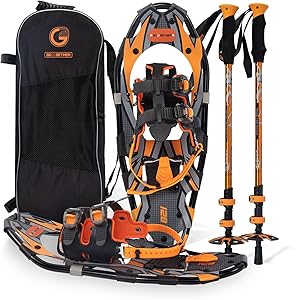
- Deck Material: Lightweight high-density polyethylene (HDPE).
- Bindings: Fast ratchet binding system with a one-pull buckle for easy use.
- Crampons: Sharp, high-quality aluminum crampons.
- Comfort: Padded with soft EVA foam for warmth and comfort.
The G2 snowshoes are designed to provide a comfortable and efficient experience in snowy conditions. The use of high-quality, lightweight HDPE for the deck is a key feature, as it ensures excellent floatation in deep snow. This helps users conserve energy and go further without feeling bogged down. One of the most unique and user-friendly aspects of these snowshoes is the fast ratchet binding system. It’s specifically designed for use in low temperatures, featuring a one-pull buckle that can be easily fastened with a single finger, even when your hands are numb or gloved. This eliminates the fumbling and frustration often associated with cold-weather gear, allowing you to get on the trail quickly and efficiently.
Beyond the ease of use, the G2 snowshoes focus on performance and comfort. The sharp aluminum crampons provide a reliable and excellent grip on both snow and ice, keeping you safe and stable on slick surfaces. The inclusion of soft EVA foam padding inside the snowshoes is a thoughtful addition that provides a layer of warmth and comfort, protecting your feet during long treks in the cold. Additionally, the special structure of the flex pivot bar and heel lift system ensures a more natural gait on both flat and uphill terrain. This design reduces strain and allows for a more enjoyable hiking experience, making the G2 a solid choice for winter enthusiasts looking for a blend of convenience and performance.
Pros and Cons
Pros:
- One-pull buckle on the bindings is extremely convenient for cold-weather use.
- EVA foam padding adds a great layer of comfort and warmth.
- Flex pivot bar and heel lift improve natural gait and reduce fatigue.
- Lightweight HDPE deck provides good floatation.
Cons:
- The material and design might not be as durable as some high-end brands for extremely rugged, year-after-year use.
- May not offer the same aggressive traction as some premium models on very steep or icy terrain.
See the G2 21/25/30/36 Inches Snowshoes
3. MSR Evo Trail

- Bindings: ParaGlide bindings with 2 roller buckles and toe stops.
- Traction: Molded-in steel traction rails and brake bars.
- Deck: Molded plastic deck designed to withstand harsh conditions.
- Floatation: Compatible with add-on modular flotation tails (not included).
For those who love winter wandering on trails and rolling terrain, the MSR Evo Trail snowshoes are a dependable and straightforward option. They are designed to blend simplicity, comfort, and performance, making it easy to enjoy the outdoors. The ParaGlide bindings are a highlight, featuring two roller buckles and toe stops that make securing your feet simple and intuitive, even while wearing thick gloves. The stretch mesh bindings are also a thoughtful touch, as they comfortably hug your feet without creating uncomfortable pressure points, fitting a wide variety of footwear securely. This ease of use is perfect for beginners or anyone who prioritizes a no-fuss setup.
Underneath it all, these snowshoes are built tough. The molded plastic decks can handle harsh conditions, and the steel traction rails and brake bars are molded directly into the decks, providing a secure and long-lasting grip. This construction ensures you have the stability you need on packed snow or uneven surfaces. Like other MSR models, the Evo Trail also offers the option to add modular flotation tails, which are perfect for when you need to accommodate a heavier load or transition from packed trails to deep powder. This versatility means you can rely on a single pair of snowshoes for a range of conditions, making the MSR Evo Trail a great choice for casual to intermediate winter adventurers.
Pros and Cons
Pros:
- ParaGlide bindings are very easy and intuitive to use, even with gloves.
- Durable molded plastic deck and integrated steel traction rails.
- Stretch mesh bindings offer a comfortable, pressure-point-free fit.
- Can be expanded with modular flotation tails for deeper snow.
Cons:
- Not designed for steep, technical mountain terrain.
- Bindings may not be as secure for extreme sidehilling compared to more advanced models.
4. Tubbs Flex TRK
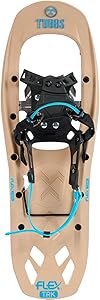
- Deck Technology: Torsion Deck for torsional articulation.
- Binding System: Quick-Fit Binding with easy-pull straps and a roller buckle heel strap.
- Crampons: Tubbs Toe Crampon and Traction Rails.
- Heel Lift: Activelift 16-degree heel lift.
The Tubbs Flex TRK snowshoes are built with a focus on preserving a natural gait and providing comfort on uneven terrain. The signature Torsion Deck is a standout feature, allowing the snowshoe to articulate torsionally. This design enhances traction and helps the shoe feel more like a natural extension of your foot, reducing the awkwardness often associated with snowshoes. Paired with the innovative Flex Tail, which allows the snowshoe to roll naturally from heel to toe, these features work together to reduce fatigue and make your winter treks more enjoyable. The result is a more fluid and less strenuous experience, especially over varied ground.
For traction, the Tubbs Toe Crampon and Traction Rails provide a solid grip on uphill, downhill, and sidehill terrain. This comprehensive traction system ensures you feel confident and secure, no matter the slope. The Quick-Fit Binding system adds to the user-friendly design, offering a fast and secure fit with easy-pull straps. The roller buckle heel strap is a nice touch that ensures your foot stays locked in place. When you hit a steep incline, the Activelift heel lift is there to help. At a 16-degree angle, it significantly reduces calf fatigue and Achilles tendon strain, and it’s easy to engage and disengage with a simple pull. Overall, the Tubbs Flex TRK is an excellent choice for those who value ergonomic design and comfort on a wide range of trails.
Pros and Cons
Pros:
- Torsion Deck and Flex Tail technologies create a natural, comfortable gait.
- Quick-Fit bindings are easy and fast to use.
- Activelift heel lift is a higher angle (16 degrees) for more support on steep climbs.
- Provides ample grip on various types of terrain, including sidehills.
Cons:
- The unique flex features may feel different and take some getting used to for users accustomed to more rigid designs.
- May not be the best choice for extremely deep, untracked powder without supplemental floatation.
5. Wildhorn Outfitters Sawtooth
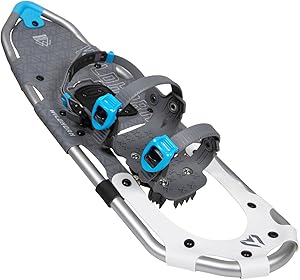
- Frame: Durable, lightweight aluminum frame.
- Bindings: Reinforced ratchet binding with heavy-duty, spring-loaded clips and an auto-locking heel strap.
- Crampons: Two sets of reinforced, heavy-duty crampons.
- Heel Lift: Incline heel lift riser system for climbing hills.
The Wildhorn Outfitters Sawtooth snowshoes have been designed with a focus on user feedback, incorporating improvements that make them a more reliable and comfortable choice for winter adventurers. Their construction with a durable, lightweight aluminum frame is ideal for achieving optimal flotation in deep powder without weighing you down. This makes them a great option for those who plan to explore areas with significant snowfall. The ratchet binding system has been reinforced with heavy-duty, spring-loaded clips and a new auto-locking heel strap, which ensures a secure and stable fit that won’t slip or loosen during your hike. This attention to detail in the binding design is crucial for maintaining control and preventing discomfort on the trail.
Traction is a key feature of the Sawtooth snowshoes. They are equipped with two sets of reinforced, heavy-duty crampons that provide excellent grip on icy and hard-packed surfaces. The design allows the pressure from your feet to drive the crampons into the ice, acting as an “extreme ice pick” for your boots. For inclines, the steep incline heel lift riser is a major benefit. This system provides traction and balance when climbing hills, supporting your heel and reducing calf fatigue. It’s a simple yet effective system that lies flat when you don’t need it. Additionally, features like the boot grip, no-slip textured pads, and an excess heel strap clip work together to cradle your foot and prevent it from sliding around, ensuring a secure and stable experience.
Pros and Cons
Pros:
- Reinforced bindings and auto-locking heel strap offer a very secure fit.
- Heel lift riser is a great aid for climbing hills and reducing fatigue.
- Lightweight aluminum frame provides good flotation.
- Two sets of heavy-duty crampons ensure excellent traction on icy surfaces.
Cons:
- The “no-slip” features might add slight bulk to the binding system.
- Some users might prefer a more traditional binding style.
See the Wildhorn Outfitters Sawtooth
6. Cascade Mountain Tech Snowshoes
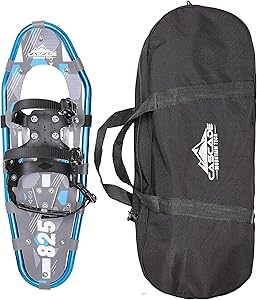
- Frame: High-strength, lightweight aluminum frame.
- Crampons: Aggressive dual cleat crampons.
- Bindings: Ratchet bindings for quick and secure adjustments.
- Deck: Flexible decking material designed for durability and shock absorption.
The Cascade Mountain Tech snowshoes are crafted for both men and women, focusing on providing a blend of lightweight design and rugged durability. The foundation is a high-strength aluminum frame that keeps the overall weight down, which is a big plus for reducing fatigue on long treks. This allows for easier maneuverability and a more enjoyable experience on the trail. The aggressive dual cleat crampons are a highlight, offering superior traction on everything from packed snow to slick, icy surfaces. These cleats are designed to give you a secure grip, enhancing your stability and safety when navigating challenging terrain. The reliable ratchet bindings are also a key feature, as they allow for quick, easy, and secure adjustments. This ensures a customized fit that keeps your feet locked in place for maximum comfort and support throughout your adventure.
Another great aspect of these snowshoes is the thoughtful design of the toe band and decking. The reflexive articulating toe band is engineered to adapt to your natural stride, which improves flexibility and minimizes strain on your feet. This makes for a more efficient and comfortable walking experience. The flexible decking material is built to withstand harsh winter conditions, offering durability and resilience in extreme cold. This material also provides excellent shock absorption, which is a great benefit when traversing rugged landscapes or deep, uneven snow. Overall, the Cascade Mountain Tech snowshoes are a solid, all-around choice for anyone seeking a durable, comfortable, and secure pair of snowshoes for a variety of winter excursions.
Pros and Cons
Pros:
- Lightweight aluminum frame reduces fatigue.
- Aggressive dual cleat crampons provide superior grip on ice.
- Ratchet bindings are quick and easy to adjust.
- Flexible decking absorbs shock and holds up well in cold weather.
Cons:
- May lack some of the advanced features of high-end brands, such as a dedicated heel lift.
- The overall design is more basic compared to specialized models for specific terrain.
See the Cascade Mountain Tech Snowshoes
7. Atlas Helium Trail

- Frame/Deck: Ultralight, composite Helium Trail frame.
- Bindings: Wrapp™ Stretch bindings with a simple 2-buckle closure.
- Traction: Forefoot-aligned tempered steel crampon and steel traction rails.
- Heel Lift: Easy-climb 12° heel lifts.
The Atlas Helium Trail snowshoes are designed for winter hikers who appreciate a straightforward, ultralight, and efficient experience on well-traveled trails. These snowshoes are perfect for beginners or anyone who enjoys less-than-extreme winter excursions. The composite Helium Trail frame is exceptionally lightweight, which is a huge advantage for reducing leg fatigue and making long hikes feel less like a chore. The Wrapp™ Stretch bindings are a key feature, providing a comfortable and secure fit that wraps around your boots without creating pressure points. The simple two-buckle closure system is intuitive and makes for a quick and easy entry and exit, so you can spend less time gearing up and more time on the trail.
Despite their lightweight design, the Helium Trail snowshoes don’t skimp on traction. The forefoot-aligned tempered steel crampon, combined with the steel traction rails, provides a solid grip on packed-down or uneven trails. This reliable traction ensures you feel stable and confident with every step. For those moments when the trail turns uphill, the easy-climb 12° heel lifts are a welcome feature. They reduce strain on your calves and Achilles tendons, making ascents significantly more comfortable. The overall design prioritizes simplicity and function, making the Atlas Helium Trail a fantastic choice for anyone looking for a no-nonsense, comfortable, and effective snowshoe for day hikes and rolling terrain.
Pros and Cons
Pros:
- Extremely lightweight composite frame for reduced fatigue.
- Bindings are comfortable and easy to use.
- Heel lifts are a great addition for moderate inclines.
- Excellent for beginners and use on packed trails.
Cons:
- Not designed for deep powder or extremely steep, off-trail terrain.
- The traction system is less aggressive than those on more technical snowshoes.
8. Retrospec Drifter
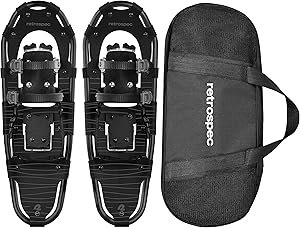
- Frame: Lightweight 6061-T6 aluminum alloy frames.
- Deck: Tough polyethylene (HDPE) decks.
- Bindings: Double-ratchet binding system.
- Traction: Heel lifters and a full-floating pivot system.
The Retrospec Drifter snowshoes are engineered for prime wintertime performance, offering a great balance of durability, light weight, and functionality. The combination of a lightweight 6061-T6 aluminum alloy frame and a tough polyethylene (HDPE) deck provides superior support and flotation on the snow. This construction ensures your steps feel light and controlled, which is a major advantage for longer excursions. A key feature of the Drifter is its double-ratchet binding system. This fast and secure system makes it incredibly easy to strap in and out while you’re on the trail, which is a huge time-saver and convenience, especially when your hands are cold or gloved.
For enhanced performance on varied terrain, the Drifter snowshoes incorporate several key features. The heel lifters are a welcome addition, reducing fatigue and strain on your calves and Achilles tendons when you’re climbing steep terrain. Paired with a full-floating pivot system, these snowshoes increase traction and allow for a more natural stride. This system ensures that the snowshoe moves with you, providing better stability and control. The Drifter snowshoes also come with a mesh vented carrying bag, which is perfect for storage during the off-season. With various sizes available to accommodate different weights, the Retrospec Drifter is a versatile and reliable choice for a range of winter adventures.
Pros and Cons
Pros:
- Double-ratchet bindings are fast and secure.
- Combination of aluminum frame and HDPE deck is both lightweight and durable.
- Heel lifters and full-floating pivot system improve traction and reduce fatigue.
- Comes with a convenient carrying bag.
Cons:
- May not have the aggressive traction needed for extremely icy or technical alpine environments.
- The bindings, while functional, might not be as refined as those on higher-end models.
9. MSR Lightning Ascent

- Bindings: Advanced Paragon™ bindings with freeze-resistant mesh straps.
- Frame: 360° Traction frames.
- Crampons: Durable steel DTX crampons.
- Decking: Ballistic-grade decking for long-lasting durability.
The men’s MSR Lightning Ascent snowshoes are built for the serious winter adventurer who demands high-performance gear for all-terrain challenges. These snowshoes are exceptionally lightweight, yet they offer an aggressive grip that inspires confidence in difficult conditions. The key to their performance lies in the advanced features, starting with the Paragon™ bindings. These bindings are designed to wrap securely around a wide range of boots, using freeze-resistant mesh straps for ultimate security and comfort. The addition of toe stops allows for fast and precise foot alignment, ensuring your foot is perfectly positioned for optimal control.
The foundation of the Lightning Ascent’s traction system is the 360° Traction frames, which provide edge-to-edge grip on all types of snow and ice. This full-perimeter traction is complemented by the durable steel DTX crampons, which deliver serious bite and stability, even on the most challenging and icy terrain. The ballistic-grade decking is a testament to their rugged construction, offering long-lasting durability that can withstand heavy use. For steep climbs, the Ergo™ Televators are a game-changer. They reduce fatigue and increase traction with an ergonomic design that can be engaged with a simple flick of a pole grip, so you don’t have to bend down. Like other MSR models, these snowshoes can also be customized with modular flotation tails (not included), which is a huge benefit for transitioning from packed trails to deep powder without needing a second pair.
Pros and Cons
Pros:
- Paragon™ bindings offer an incredibly secure and comfortable fit.
- 360° Traction frames and DTX crampons provide unmatched grip on all terrains.
- Ergo™ Televators are easy to engage and significantly reduce calf fatigue.
- Lightweight design with highly durable materials.
Cons:
- High-performance features come with a higher price point.
- The aggressive design may be overkill for casual use on flat, well-packed trails.
See the MSR Lightning Ascent See the Women’s Lightning Ascent
10. Odoland 21/25/30 Inch Snowshoes
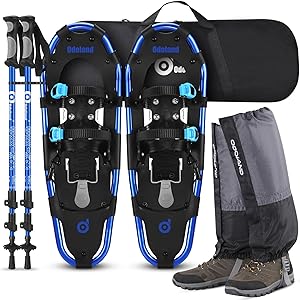
- Frame: Lightweight and strong aluminum frame.
- Traction: Two sets of heavy-duty sawtooth for hard grip.
- Size Options: Available in 21″, 25″, and 30″ to accommodate different weights.
- Included Accessories: Comes with adjustable trekking poles and waterproof leg gaiters.
The Odoland snowshoes are designed as a comprehensive kit for both men and women, providing a great value package for those new to the sport or looking for an all-in-one solution. The snowshoes themselves are built on a lightweight yet strong aluminum frame, which is ergonomically designed to ensure a comfortable and natural walking experience. This frame, combined with the large flat surface area of the deck, provides maximum flotation, which is a major advantage for navigating deep snow. The easy-to-put-on bindings make it simple to get ready for your adventure, and they are lightweight enough to not add unnecessary bulk or fatigue.
A key feature of these snowshoes is the traction system. Each shoe is equipped with two sets of reinforced, heavy-duty sawtooth that provide a strong and reliable grip on both icy and hard-packed surfaces. This ensures you have the stability you need to tackle a variety of winter conditions safely. What truly sets the Odoland set apart, however, is the inclusion of additional gear. The adjustable trekking poles, which can be extended from 25.5 to 54 inches, are a fantastic bonus for maintaining balance and rhythm. The waterproof leg gaiters, made from pongee fabric, are a crucial piece of gear for keeping snow out of your boots and ensuring your lower legs stay dry. This full package makes the Odoland set a great choice, especially for those who want to get started with everything they need right out of the box.
Pros and Cons
Pros:
- Excellent value as a full kit with snowshoes, trekking poles, and gaiters.
- Lightweight aluminum frame provides good flotation and comfort.
- Sawtooth traction system offers a strong grip on icy surfaces.
- Ideal for beginners and casual winter hikers.
Cons:
- The components might not be as durable or high-performance as those on more expensive, specialized models.
- The bindings may not offer the same level of security and fit as high-end systems.
See the Odoland 21/25/30 Inch Snowshoes
Choosing the Right Snowshoes for Backpacking
Winter backpacking opens up a world of serene, snow-covered landscapes and pristine solitude that few get to experience. But to safely and comfortably explore this frozen wilderness, you need the right gear—and at the top of that list are a solid pair of snowshoes. Unlike snowshoes for casual trail walking or running, backpacking snowshoes need to be able to handle significant weight, challenging terrain, and a variety of snow conditions. Choosing the right pair can make the difference between an epic adventure and a miserable slog. This guide will walk you through the key factors to consider when selecting backpacking snowshoes, ensuring you make the best choice for your journey.
The core purpose of a snowshoe is to increase your surface area, preventing you from sinking deep into the snow (a phenomenon known as “post-holing”). For backpacking, this flotation is even more critical because you’re carrying a heavy pack. A day hiker weighing 180 pounds might only need a small to medium snowshoe, but that same person with a 40-pound pack will need a larger, more robust snowshoe to stay on top of the powder. Let’s break down the essential features you need to look for.
Flotation and Sizing
Flotation is the most important consideration for a backpacking snowshoe. The size of the snowshoe directly correlates to its ability to keep you on the surface of the snow. Snowshoe manufacturers provide a weight rating for each model, which includes both your body weight and the weight of your gear. It’s crucial to be honest about your total weight and choose a snowshoe at the higher end of the recommended range. A common mistake is to buy a snowshoe based only on your body weight, which leads to sinking and wasted energy on the trail.
For backpacking, you should generally look for snowshoes in the 25- to 30-inch range for men and 22- to 25-inch range for women, though this can vary based on your total load and the type of snow you’ll encounter.
Snow Conditions Matter
The type of snow you’ll be traveling on also influences the size you need.
- Hard-packed or icy trails: Smaller snowshoes are fine here. You’re not sinking much, so you need the snowshoe more for traction than flotation.
- Powder or fresh snow: This is where you need maximum flotation. Opt for larger snowshoes, or look for models with modular flotation tails. These tails are attachable extensions that you can add to the snowshoes for deep powder and then remove for firmer conditions. This is an incredibly versatile feature for backpackers who might encounter a mix of snow types.
- Wet, heavy snow: This snow is denser, so you might not need as much flotation as with light powder, but you still need a substantial surface area to avoid sinking.
Traction Systems: Crampons and Rails
In backpacking, you’re likely to encounter a wide range of terrain, from flat trails to steep ascents and icy traverses. Your snowshoes’ traction system is what keeps you from slipping and sliding.
Crampons
Every snowshoe has a crampon under the ball of your foot, but for backpacking, you need an aggressive, well-designed crampon. Look for durable materials like steel, aluminum, or titanium. The crampon should have sharp teeth that bite into ice and hard-packed snow with every step. Some high-end models feature multi-point crampons that provide more comprehensive grip.
Traction Rails
Traction rails run along the edges of the snowshoe frame. These are critical for side-hilling—traversing a slope at an angle. For backpacking, you’ll want snowshoes with full-length or near full-length traction rails that provide edge-to-edge grip. This feature is a must-have for maintaining stability and control when you’re carrying a heavy pack on a snowy slope.
Bindings and Security
The binding is the connection between you and your snowshoe. For backpacking, the bindings need to be secure, easy to use, and comfortable.
Types of Bindings
- Ratchet Bindings: These are common and easy to use, especially with gloves on. They use a ratchet system similar to those on ski or snowboard boots and are great for a fast, secure fit.
- Strap Bindings: Found on more basic models, these use a series of straps to secure your foot. While functional, they can be a bit more finicky to adjust, especially in cold weather.
- Advanced/Pivoting Bindings: High-end models often feature bindings with specialized designs that pivot to allow a more natural stride, or use mesh straps for a more secure and pressure-point-free fit. For backpacking, a pivoting binding is a major plus as it reduces strain and makes your gait more efficient.
Regardless of the type, ensure the bindings are freeze-resistant and can accommodate your hiking boots. You should also be able to adjust them quickly and securely with gloves on. A sloppy fit leads to blisters and a loss of control, which is dangerous with a heavy pack.
Frame and Deck Material
The frame and decking material of a snowshoe determine its weight and durability.
Frames
Most backpacking snowshoes have frames made from lightweight aluminum, which offers a great balance of durability and weight savings. Some premium models use composite materials that are even lighter and can have unique shapes to improve flotation.
Decking
The decking material is the part that provides the flotation. It can be a flexible, ballistic-grade material (like nylon or Cordura) stretched over the frame, or a solid, injection-molded plastic. Plastic decks, often found on MSR’s Evo series, are exceptionally durable and resistant to punctures and abrasion from harsh terrain. Fabric decks, like those on MSR’s Lightning Ascent models, are lightweight and often allow for a more aggressive frame design. Both are excellent choices for backpacking, so the decision often comes down to a trade-off between weight and extreme durability.
Heel Lifts (Televators)
Heel lifts, or televators, are a small but crucial feature for backpackers. They are small metal bars that you can flip up under your heel when climbing a steep incline. This raises your heel, reducing the angle of your ankle and calf. By engaging the heel lift, you significantly reduce calf fatigue and Achilles tendon strain, allowing you to climb more efficiently and with less effort. This feature is a non-negotiable for anyone planning to backpack in hilly or mountainous terrain.
Final Considerations: All-in-One vs. Specialized
Finally, consider the versatility of the snowshoe. If you are a dedicated winter backpacker who will be in challenging, mountainous terrain, investing in a high-end, purpose-built snowshoe with aggressive crampons and a durable frame is a wise choice. Brands like MSR or Tubbs offer models designed specifically for this kind of use.
If you are an occasional backpacker who also wants a snowshoe for general winter hiking, a more versatile model might be a better fit. As mentioned, snowshoes with modular flotation tails offer the best of both worlds—lightweight for day hikes and adaptable for heavier loads and deep snow.
Choosing the right backpacking snowshoes is about balancing flotation, traction, and durability with a comfortable and secure fit. By carefully evaluating your needs based on your weight, gear, and intended terrain, you can find a pair that will be a reliable and essential part of your winter backpacking kit for years to come.