Best Ultralight Trekking Poles of 2026
For hikers who count every ounce, ultralight trekking poles are a game-changer. They provide essential stability on rough terrain without weighing down your pack. But with so many options on the market, finding the perfect pair can be tricky. This guide breaks down the best ultralight trekking poles, comparing their weight, durability, and features to help you choose wisely.
1. Montem Ultra Strong
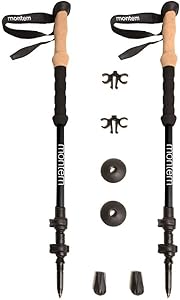
- Weight (pair): 1 lb. 3.2 oz.
- Shaft material: 7075 Aluminum
- Grip: Foam
- Locking mechanism: Flick-lock
The Montem Ultra Strong trekking poles are engineered for hikers who demand rugged durability without breaking the bank. Constructed from high-grade 7075 aluminum, the same material used in aviation, these poles provide immense structural integrity for difficult trails. The three-section telescoping design utilizes a reliable Flick-lock system for rapid height adjustments, collapsing down to a manageable 24 inches for easy storage.
The soft foam grips are specifically shaped to enhance long-term comfort and minimize hand fatigue during strenuous mountain treks. While these poles carry more weight than expensive carbon fiber models, their rock-solid stability makes them an excellent entry-point for beginners. They offer a premium tactile experience and heavy-duty performance, ensuring you stay balanced on unpredictable terrain while keeping your initial gear investment low.
What I like: Strong 7075 aluminum construction, comfortable foam grips, and very affordable price point.
What I don’t: Heavier than carbon models and uses some cheaper plastic components in the locks.
2. REI Co-op Trailmade

- Weight (pair): 1 lb. 1 oz.
- Shaft material: 7065 Aluminum
- Grip: EVA Foam
- Locking mechanism: External Lever Lock
The REI Co-op Trailmade poles are a fantastic solution for casual hikers who need dependable stability. These poles prioritize user-friendly operation, featuring oversized external lever locks that remain easy to manipulate even in cold or wet conditions. The specialized EVA foam grips are designed to be breathable and ergonomic, accommodating various hand sizes comfortably for miles of trail walking.
While these poles excel on maintained paths, they lack premium materials like cork which are often found in more expensive gear. Advanced backpackers may find the aluminum build a bit basic for high-intensity, off-trail navigation. However, for weekend adventurers seeking a lightweight and trustworthy aluminum option from a reputable brand, the Trailmade series provides excellent value and includes helpful trail baskets for softer soil.
What I like: Lightweight for aluminum poles, easy-to-use lever locks, and comfortable ergonomic grips.
What I don’t: Lacks durability for rugged terrain and misses premium features like cork handles.
3. Cascade Mountain Tech Carbon Fiber
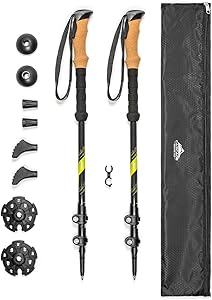
- Weight (pair): 1 lb.
- Shaft material: 100% Carbon fiber
- Grip: Cork or Foam
- Locking mechanism: QuickLock
Cascade Mountain Tech delivers an ultralight experience that rivals the performance of elite outdoor brands. These poles are crafted from 100% carbon fiber, keeping the weight to just 8 ounces per pole to significantly reduce shoulder and arm fatigue. The QuickLock system uses a simple thumbscrew and lever design to keep the sections firmly in place during steep ascents or technical descents.
The kit is highly customizable, allowing hikers to choose between moisture-wicking cork or plush EVA foam handles. It also includes a full accessory set with snow and mud baskets, making it a versatile year-round choice. Although the locking hardware is slightly bulkier than premium competitors, the vibration-dampening properties of the carbon fiber make this an unbeatable value for weight-conscious hikers on a budget.
What I like: Extremely lightweight carbon fiber, multiple included tip accessories, and choice of grip material.
What I don’t: The locking levers are somewhat bulky and the long-term durability of the joints is average.
See the Cascade Mountain Tech Carbon Fiber
4. Leki Journey Lite

- Weight (pair): 1 lb. 2 oz.
- Shaft material: Aluminum HTS 6.0
- Grip: EVOCON Soft
- Locking mechanism: Speed Lock Plus
The Leki Journey Lite is a robust trekking tool designed for longevity and ease of operation. Utilizing high-tensile HTS 6.0 aluminum, these poles are built to survive harsh environments while maintaining a relatively low profile. The Speed Lock Plus mechanism is a standout feature, providing a secure hold and effortless adjustments that can be performed even while wearing thick winter gloves.
Ergonomics are at the forefront of this design, with the EVOCON soft grips featuring a positive angle to keep wrists in a neutral, strain-free position. The lightweight security straps are breathable to prevent skin irritation during long, hot days on the trail. While the locks may require the occasional tension tweak, the overall German engineering makes these poles a reliable middle-ground choice for serious outdoor enthusiasts.
What I like: Ergonomic positive-angle grips, very durable aluminum shaft, and glove-friendly locking system.
What I don’t: The locking mechanism can occasionally slip under heavy vertical pressure.
5. REI Co-op Traverse

- Weight (pair): 1 lb. 2.5 oz.
- Shaft material: 7075 Aluminum
- Grip: Cork
- Locking mechanism: External Lever Lock
The REI Co-op Traverse poles are built for the hiker who wants a straightforward, functional tool without unnecessary complications. These poles feature a standard three-section telescoping aluminum shaft that provides reliable support on established trail systems. The inclusion of natural cork grips is a major benefit at this price point, as they naturally wick away hand moisture and offer a superior feel.
While the Traverse gets the job done, it lacks the refined padding in the wrist straps that higher-end models provide. The external lever locks are effective but consist of slightly bulkier aluminum hardware compared to sleek professional gear. However, for those who primarily explore well-maintained local trails and need a durable, cork-handled set of poles for added balance, the Traverse offers a highly accessible and practical solution.
What I like: Affordable price with natural cork grips and easy telescoping adjustment.
What I don’t: Lacks padding on the wrist straps and the locking hardware feels heavy.
6. TrailBuddy Trekking Poles
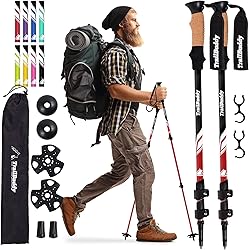
- Weight (pair): 1 lb. 3.2 oz.
- Shaft material: 7075 Aluminum
- Grip: Cork
- Locking mechanism: Lever Lock
TrailBuddy Trekking Poles are the perfect marriage of rugged construction and travel-friendly design. Crafted from 7075 aircraft aluminum, these poles are tougher than standard alloy versions and can withstand significant trail abuse. They are exceptionally versatile, adjusting to fit everyone from children to tall adults, and can be disassembled to a compact 21 inches to fit easily inside carry-on luggage.
These poles prioritize comfort through the use of moisture-wicking cork handles and padded wrist straps that adapt to your hand shape over time. The integrated lever locks allow for quick, one-handed adjustments that are far more reliable than old-fashioned twist locks. While aluminum lacks the vibration dampening of carbon fiber, the sheer resilience and included accessory kit make these poles a dependable choice for any rugged adventure.
What I like: Excellent durability, packs down very small for travel, and includes padded wrist straps.
What I don’t: Aluminum shaft transmits more trail vibration than carbon fiber models.
See the TrailBuddy Trekking Poles
7. LEKI Legacy Lite

- Weight (pair): 1 lb. 2 oz.
- Shaft material: Aluminum
- Grip: COR-TEC (Cork/Latex)
- Locking mechanism: SpeedLock
The LEKI Legacy Lite offers a premium hiking experience by balancing cost with high-performance features. The standout COR-TEC grips utilize a blend of natural cork and latex to create a sweat-resistant, comfortable surface for all-day use. This ergonomic handle design, paired with adjustable security straps, helps maintain a natural wrist position to reduce fatigue during steep, technical climbs in the backcountry.
The aluminum shafts are incredibly stable and utilize LEKI’s SpeedLock system, which is easy to maintain in the field with a simple tension dial. Carbide flex tips provide aggressive traction on rocky surfaces, and the interchangeable baskets make these poles suitable for winter conditions. While the lower sections might occasionally require extra tightening, the overall build quality makes the Legacy Lite a smart long-term investment for serious trail enthusiasts.
What I like: Excellent ergonomic grips, field-maintainable locks, and great stability on various terrains.
What I don’t: The lowest adjustment hinge may occasionally collapse if not tightened perfectly.
8. Hiker Hunger Poles
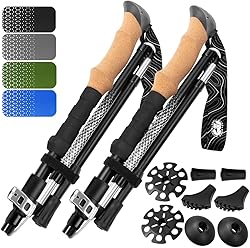
- Weight (pair): 9.95 oz. (short)
- Shaft material: Aluminum
- Grip: Cork or EVA
- Locking mechanism: Quick Flip
Hiker Hunger Poles are the definitive choice for travelers and scramblers who require maximum portability. These aircraft-grade aluminum poles feature a clever folding mechanism that allows them to collapse to just 15 inches, fitting easily inside a daypack. Despite the folding design, they remain remarkably light, with the shorter version weighing less than 10 ounces per pair, making them a top-tier lightweight aluminum option.
Durability is not sacrificed for size, as these poles feature metal flip locks and reinforced joints to handle the stresses of the trail. Hikers can choose between cork or EVA foam grips to suit their personal comfort needs. While they offer slightly less height adjustability than standard telescoping models, their compact nature and rugged Montana-inspired build make them a premier choice for hikers who value easy transport and storage.
What I like: Collapses to an ultra-compact 15 inches, very lightweight, and uses durable metal locks.
What I don’t: The fixed-length sections offer less height versatility than standard telescoping models.
9. Black Diamond Trail Back
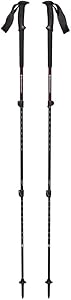
- Weight (pair): 1 lb. 4 oz.
- Shaft material: Aluminum
- Grip: Rubber / Foam Extension
- Locking mechanism: Lever Lock
The Black Diamond Trail Back poles are a heavy-duty option from one of the most trusted names in the outdoor industry. These poles are built for longevity, featuring thick aluminum shafts that can withstand years of rigorous use. A key design highlight is the extended foam grip located below the main handle, which allows hikers to “choke up” on the pole during steep sections without pausing to adjust the height.
Equipped with carbide tips and including both trekking and snow baskets, these poles are ready for four-season duty. While the rubber handles and aluminum build make them heavier than carbon alternatives, the quality of the components is unmatched at this price point. They are slightly less compact than folding poles, but for hikers who want a dependable workhorse that will last for seasons, the Trail Back is a superb investment.
What I like: Useful extended foam grip, highly durable construction, and great for four-season use.
What I don’t: Slightly heavier than rivals and not as compact when fully collapsed.
See the Black Diamond Trail Back
10. Trekology Trek-Z
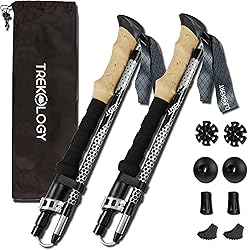
- Weight (pair): 1 lb. 10 oz.
- Shaft material: Aluminum
- Grip: Foam
- Locking mechanism: Lever Lock
The Trekology Trek-Z is a foldable trekking pole that provides impressive portability at a very low price. When folded, the three-section design shrinks to just 15 inches, making it easy to stow inside a pack rather than on the outside. The foam grips are contoured for hand comfort, and the rounded rubber tops allow for varied hand positions while navigating changing trail gradients.
These are the heaviest poles in this category due to the metal reinforcements at the joints which are intended to boost durability. While this makes them sturdy, the extra weight can be noticeable on longer treks. They also offer a more limited range of height adjustment than traditional telescoping poles. However, for budget-conscious travelers who need a compact and sturdy set of poles for occasional day hikes, the Trek-Z is a solid choice.
What I like: Very small packed size, durable reinforced joints, and an extremely low price.
What I don’t: Heaviest option on the list and has a limited adjustment range.
11. Foxelli Carbon Fiber
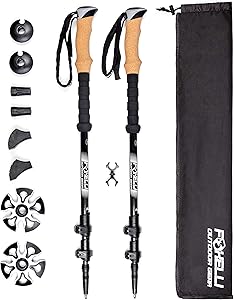
- Weight (pair): 14 oz.
- Shaft material: 100% Carbon fiber
- Grip: Cork
- Locking mechanism: QuickLock
Foxelli Carbon Fiber poles are designed for the hiker who wants to prioritize joint protection and minimal weight. Using 100% carbon fiber, these poles weigh only 7.6 ounces each, effectively reducing arm fatigue and dampening ground vibrations that can lead to wrist pain. With an adjustment range from 24 to 55 inches, they are a versatile choice for a wide variety of hiker heights and trail conditions.
The natural cork grips are excellent for wicking away sweat and preventing blisters during hot summer excursions. While they offer incredible value, the QuickLock mechanism may require more frequent attention than premium brands to ensure it remains tight under heavy loads. Because of this, they are best suited for average hikers looking for ultralight performance and comfortable cork handles without the typical high-end price tag associated with carbon gear.
What I like: Extremely lightweight carbon fiber, great shock absorption, and comfortable natural cork handles.
What I don’t: The locking mechanism is less reliable for heavy-duty or multi-day use.
12. Mountainsmith Dolomite OLS

- Weight (single): 10 oz.
- Shaft material: 7075 Aluminum
- Grip: Cork and Foam
- Locking mechanism: Lever Lock (OLS)
The Mountainsmith Dolomite OLS is a specialized hiking staff designed for those who prefer the simplicity of a single pole. This budget-friendly staff features a three-section telescoping design with an Outer Lock System (OLS) for quick, tool-free height adjustments. The 7075 aluminum shaft provides excellent rigidity and support, making it a dependable choice for maintaining balance during steep descents or river crossings.
The hybrid grip combines a moisture-wicking cork top with an EVA foam extension below, allowing you to change hand positions quickly when the terrain gets steep. It comes equipped with a removable rubber boot and a carbide tip for traction on both pavement and dirt. Although it is relatively heavy for a single staff at 10 ounces, its rugged build and versatile handle make it a high-quality tool for hikers who want a single, reliable point of contact.
What I like: Excellent hybrid cork/foam grip, very sturdy 7075 aluminum, and simple adjustment system.
What I don’t: Quite heavy for a single pole and the overall build quality is just average.
See the Mountainsmith Dolomite OLS
Best Ultralight Trekking Poles: Comparison Table
| POLES | WEIGHT | SHAFT | GRIP | LOCKING |
|---|---|---|---|---|
| Montem Ultra Strong | 1 lb. 3.2 oz. | Aluminum | Foam | Flick-lock |
| REI Co-op Trailmade | 1 lb. 1 oz. | 7065 Aluminum | Foam | Lever Lock |
| Cascade Mountain Tech | 1 lb. | Carbon fiber | Foam or cork | QuickLock |
| Leki Journey Lite | 1 lb. 2 oz. | Aluminum HTS 6.0 | Rubber | Lever Lock |
| REI Co-op Traverse | 1 lb. 2.5 oz. | Aluminum | Cork | Lever Lock |
| TrailBuddy Poles | 1 lb. 3.2 oz. | Aluminum | Cork | Lever |
| LEKI Legacy Lite | 1 lb. 2 oz. | Aluminum | Cork or rubber | Lever lock |
| Hiker Hunger Poles | 9.95 oz. (short) | Aluminum | Cork or EVA | Quick Flip |
| Black Diamond Trail Back | 1 lb. 4 oz. | Aluminum | Rubber | Lever lock |
| Trekology Trek-Z | 1 lb. 10 oz. | Aluminum | Foam | Lever Lock |
| Foxelli Carbon Fiber | 14 oz. | Carbon fiber | Cork | QuickLock |
| Mountainsmith Dolomite OLS | 10 oz. (single) | Aluminum | Cork and foam | Lever lock |
A Comprehensive Guide to Choosing Ultralight Trekking Poles
For the modern hiker, the shift toward ultralight backpacking isn’t just about cutting ounces; it’s about increasing range, reducing fatigue, and protecting the longevity of your joints. Among the most impactful pieces of gear in this weight-saving crusade are your trekking poles. Once viewed as optional accessories for the elderly or the injured, trekking poles have become essential equipment for high-mileage backpackers. When you transition to ultralight poles, you aren’t just carrying less weight—you are fundamentally changing the mechanics of your gait.
Choosing the right pair requires a delicate balance between weight, durability, adjustability, and cost. This guide will walk you through every technical nuance to help you find the perfect set of sticks for your next vertical adventure.
Understanding the Weight-to-Strength Ratio
The primary reason to go “ultralight” is to reduce the pendulum effect. Every time you swing a pole forward, your arm muscles exert energy. Over a 20-mile day, thousands of swings with a heavy aluminum pole can lead to significant shoulder and wrist fatigue. Ultralight poles typically weigh between 7 and 13 ounces per pair, compared to standard poles which often exceed 18 ounces.
However, weight reduction often comes at the cost of absolute strength. As a hiker, you must determine your “failure threshold.” If you are a stout hiker carrying a heavy load over technical talus fields, you may need a slightly burlier pole. If you are a “fast-and-light” specialist on groomed trails, the lightest carbon fiber shafts will serve you best.
Shaft Materials: Carbon Fiber vs. Aluminum
The material of the pole shaft is the single biggest factor in both weight and performance. In the ultralight world, there are two main contenders.
Carbon Fiber
Carbon fiber is the gold standard for ultralight trekking. It is incredibly stiff, which means it doesn’t vibrate when it strikes the ground, leading to a “dead” and stable feel. More importantly, it is significantly lighter than aluminum. The downside? Carbon fiber is brittle. While it can support immense vertical weight, a sharp lateral impact—like getting the pole stuck between two rocks while you stumble—can cause the shaft to snap rather than bend.
High-Grade Aluminum
While standard aluminum is heavy, “ultralight” aluminum poles (often using 7075-T6 series alloys) offer a middle ground. Aluminum is more durable in the sense that it will bend before it breaks. If you find yourself in extremely rugged, off-trail terrain where pole stress is high, a slim-diameter aluminum pole might be the safer, more reliable choice, even if it adds an ounce or two to your kit.
Fixed Length vs. Adjustable Poles
One of the easiest ways to shed weight is to eliminate the adjustment mechanisms. However, this choice impacts how you hike.
Fixed Length Poles
Fixed-length poles are the choice of competitive mountain runners and minimalist thru-hikers. Because there are no flick-locks or twist-locks, the pole is lighter and has fewer points of failure. The trade-off is versatility. You cannot shorten the poles for long uphill climbs or lengthen them for steep descents. If you go this route, precision in sizing is mandatory.
Adjustable Telescoping Poles
Most hikers prefer adjustable poles. They typically use a two or three-section design held together by lever locks (flick-locks). These allow you to fine-tune the length based on the gradient of the terrain. For ultralight enthusiasts, look for poles that use carbon fiber levers or minimalist aluminum hardware to keep the weight down.
Z-Folding Poles
Z-poles fold into three sections, similar to a tent pole, connected by an internal cord. These are incredibly popular in the ultralight community because they collapse into a very small package, making them easy to stow inside a pack during rock scrambles. They are generally lighter than telescoping poles but offer less (or zero) length adjustability.
Grip Materials and Ergonomics
Your point of contact with the pole determines your comfort over long miles. Ultralight poles usually feature one of three grip materials:
- Cork: The premium choice. Cork moisture-wicking properties make it ideal for sweaty hands. Over time, it molds to the shape of your palm. It is slightly heavier than foam but lasts much longer.
- EVA Foam: The lightest option. Foam is soft and provides excellent grip when wet. However, it can retain salt from sweat and may degrade faster than cork.
- Rubber: Avoid rubber for ultralight trekking. It is heavy, causes blisters, and is generally found only on budget or entry-level poles.
The Importance of Tips and Baskets
When every gram counts, even the tips matter. Most ultralight poles come with carbide (tungsten) tips that bite into rock and ice. Many manufacturers also provide removable rubber tips. While rubber tips add weight, they are essential for hiking on sensitive slickrock (to prevent scarring) or on pavement.
Baskets are the circular discs near the bottom. For most 3-season hiking, you should use the smallest “trekking basket” available—or remove them entirely to save weight. Only swap to large powder baskets if you are trekking through deep snow.
Locking Mechanisms: Lever vs. Twist
If you choose adjustable poles, you must decide how they stay extended.
Twist locks function via an internal expander. They are sleek and lightweight but are notorious for slipping when cold or dirty.
Lever locks (flick-locks) are slightly heavier but far more reliable and easier to operate while wearing gloves. For most ultralight hikers, the reliability of a small lever lock is worth the negligible weight penalty.
Key Considerations for Thru-Hikers
If you are planning a long-distance hike (like the AT, PCT, or CDT), your needs differ from a weekend warrior. Your poles will likely serve a dual purpose: supporting your shelter. Many ultralight tents (trekking pole tents) require your poles to act as the primary structural support. If your tent requires a specific height (e.g., 120cm), ensure your poles—especially if they are fixed-length or Z-style—match that requirement exactly.
Maintenance for Longevity
Ultralight gear is a precision instrument, not a blunt tool. To ensure your carbon fiber poles don’t seize up or snap:
- Dry them out: After a rainy hike, pull the sections apart to let moisture evaporate. This prevents corrosion in aluminum and “crust” buildup in carbon.
- Check for cracks: Periodically run your fingers along carbon shafts to feel for hairline fractures or splinters.
- Clean the locks: Dust and grit can cause lever locks to lose their tension. A quick wipe with a damp cloth goes a long way.
Conclusion: Making the Final Choice
To choose the right ultralight trekking poles, start by weighing your priorities. If you want the absolute lightest setup possible and don’t mind a lack of versatility, a fixed-length carbon fiber pole is your winner. If you want a packable, high-performance tool for varied terrain, a carbon Z-pole with slight adjustability is the gold standard.
Remember that the best gear is the gear that disappears. When you find the right pair of ultralight poles, you’ll stop thinking about your hands and start focusing on the horizon. Your knees, and your pace, will thank you.