Best Portable Solar Panels for Backpacking of 2026
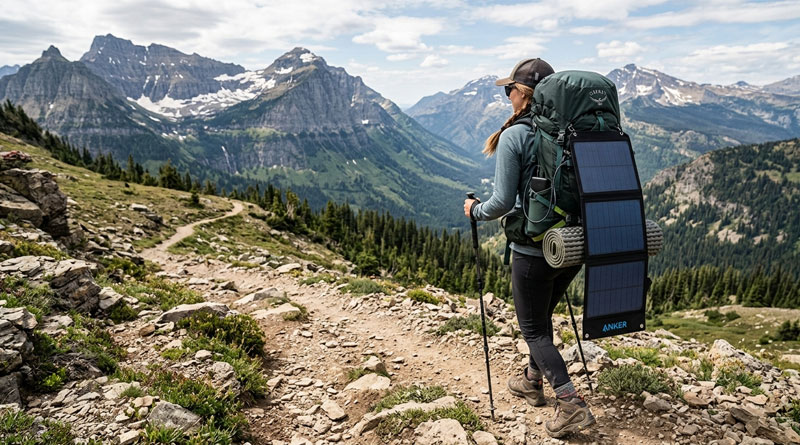
For backpackers, staying powered up on the trail is tough without a wall outlet. Portable solar panels offer a lightweight solution, using the sun’s energy to charge phones, cameras, and GPS devices. This guide breaks down the best options for hikers, focusing on durability, weight, and charging speed. You’ll find simple, reliable picks to keep your gear running without adding heavy bulk to your pack.
1. SOLUPUP Solar Panel
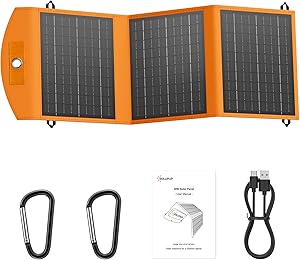
- Power Output: 30W
- Conversion Efficiency: 23%+ Monocrystalline Silicon
- Output Ports: USB-A and Type-C Dual Output (5V/3A)
- Durability Rating: IPX5 Waterproof and Dustproof
The SOLUPUP 30W Foldable Solar Panel is a high-performance companion for outdoor enthusiasts who need reliable power without the bulk. Utilizing advanced monocrystalline silicon technology, it achieves an impressive 23% energy conversion efficiency, effectively shortening charging times for smartphones and power banks even during active travel. The dual-port design allows for simultaneous charging of two devices, making it a versatile mini power station for any campsite.
Safety is a priority with this model, as it includes a built-in smart chip to prevent overcurrent and a handy auto-optimization function that resumes charging immediately after sunlight is restored. Its compact, foldable design weighs only 2.4 pounds and features an adjustable stand for better sun tracking. Included carabiners allow for easy attachment to backpacks, ensuring you can harness energy while hiking deep into the wilderness.
Pros: High efficiency, smart auto-reconnect, and includes an adjustable stand.
Cons: Slightly heavier than ultra-light competitors at 2.4 lbs.
2. FlexSolar Solar Charger
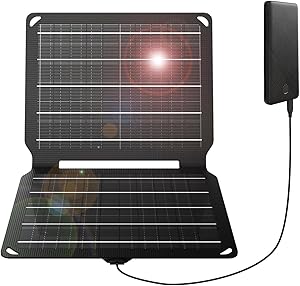
- Maximum Power: 10W (Direct Sunlight)
- Conversion Rate: 24% Monocrystalline A+ Cells
- Weight: 0.66 lbs (300g)
- Protection Rating: IP67 Rated ETFE Film
The FlexSolar Solar Charger is specifically designed for those who prioritize portability above all else. Weighing just 0.66 pounds, this ultra-lightweight 3-fold panel is perfect for minimalist hikers and emergency kits. It features a single USB-A port that utilizes Smart IC technology to identify your device and optimize the charging speed. The integrated LED indicators provide real-time status updates so you know exactly when your device is drawing power effectively.
Constructed with premium ETFE film lamination, the panel is highly resistant to weather and wear, boasting an IP67 durability rating. While it is limited to a 10W maximum output, it is highly efficient at powering low-wattage electronics like smartwatches, small power banks, and portable routers. Its ability to fold down to a size smaller than a standard tablet makes it one of the most convenient options for quick outdoor jaunts.
Pros: Extremely lightweight, high 24% efficiency, and durable ETFE coating.
Cons: Limited to 10W output and only one USB-A port.
See the FlexSolar Solar Charger
3. Griplier Foldable Solar Panel

- Power Rating: 30W
- Dimensions Folded: 8.46 x 8.9 x 0.7 inches
- Interface: USB, Type-C, and DC Port
- Waterproof Rating: IP65 with ETFE Protection
The Griplier 30W Foldable Solar Panel stands out for its multi-device compatibility, offering a comprehensive suite of ports including USB, Type-C, and DC. This variety makes it an excellent choice for users who need to charge more than just a phone, such as cameras or larger tablet devices. The Class A monocrystalline cells ensure a 23% conversion rate, while the ETFE film provides superior light transmittance and protects the unit from harsh environmental elements.
Portability is handled through a smart four-fold design that collapses into a very compact square, weighing only 1.54 pounds. The panel features four pre-drilled holes, allowing for easy mounting on tents or RVs to maintain the best angle toward the sun. Whether you are off-grid camping or preparing for a power outage, this durable panel provides a stable and versatile energy source that solves multiple charging problems simultaneously.
Pros: Features a DC port, compact 4-fold design, and lightweight for its power.
Cons: IP65 rating is lower than some competitors’ IP67 protection.
See the Griplier Foldable Solar Panel
4. BigBlue Solar Panel Charger

- Total Power: 28W
- Conversion Efficiency: 25.4% N-Type Solar Cells
- Port Selection: Dual USB-C and One USB-A
- Environmental Protection: IP44 Waterproof
The BigBlue 28W Solar Panel Charger utilizes cutting-edge N-type solar cells to achieve an industry-leading 25.4% efficiency rate. Its shadow-free surface design removes metal lines from the front of the panel, allowing it to capture more sunlight and perform better in low-light conditions compared to traditional chargers. The upgraded triple-port configuration allows for simultaneous charging of multiple gadgets, making it a powerhouse for group camping trips or family outings.
This unit is designed specifically for durability and ease of use, featuring a polymer surface that resists rain and fog. While it does not store electricity, its intelligent safety charging system ensures a fast and secure energy flow to your GPS, power banks, and smartphones. The folding design is slim enough to fit into tight backpack spaces, and the included carabiners make it simple to hang for maximum exposure while you are on the move.
Pros: Industry-leading efficiency, triple output ports, and great low-light performance.
Cons: IP44 rating means it is only splash-proof; junction box must stay dry.
See the BigBlue Solar Panel Charger
5. BigBlue Ultra-Light
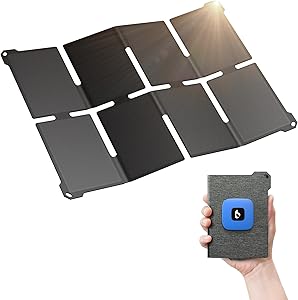
- Maximum Power: 25W
- Weight: 0.84 lbs
- Waterproof Rating: IP68 Dust and Water Resistance
- Folded Size: 4.65 x 6.42 x 1.38 inches
The BigBlue 25W Ultra-Light is a marvel of engineering, offering significant wattage in a package that folds down to the size of an iPad. Weighing less than a pound, it is a must-have for backpackers who need to keep their gear light without sacrificing charging speed. The N-type solar cells used here are highly efficient, reaching up to 25.4% conversion, and are designed to stay cooler during use to maintain peak power generation throughout the day.
Durability is where this panel truly shines, boasting a rugged IP68 rating that can endure splashes and light rain with ease. The combination of ETFE coating and a solid baseplate prevents hidden cracks, ensuring the panel lasts through many seasons of adventure. It comes equipped with both USB-A and USB-C ports, providing the flexibility needed to charge modern gadgets while you are off the grid or facing an emergency power outage.
Pros: Extremely durable IP68 rating, very high efficiency, and ultra-compact size.
Cons: The small surface area requires perfect sun alignment for max output.
6. BLAVOR Portable Solar Charger
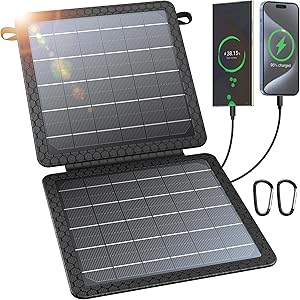
- Wattage: 10W
- Conversion Efficiency: 24% with ETFE Film
- Weight: 0.81 lbs
- Outputs: Dual USB Outputs
The BLAVOR 10W Portable Solar Charger is a lightweight and reliable solution for those who need a constant trickle of power for smaller electronics. Despite its modest wattage, it utilizes high-quality ETFE film to achieve a 24% conversion rate, maximizing every bit of available sunlight. The dual USB outputs are a great addition for a 10W panel, allowing you to top off earphones and a smartphone at the same time while you hike.
Constructed from wear-resistant oxford cloth, the panel is built to withstand the rigors of the trail. The ETFE polymer surface is particularly good at resisting occasional scratches from branches or rocks. It is incredibly easy to manage on the go, as it folds into a small square and clips onto a pack with the provided carabiner. This makes it an ideal choice for hikers and casual campers who want a simple, “set-it-and-forget-it” power solution.
Pros: Very portable, durable scratch-resistant surface, and dual USB ports.
Cons: Low 10W output is not suitable for charging large tablets or power banks quickly.
See the BLAVOR Portable Solar Charger
7. Ecosonique Solar Panel Charger
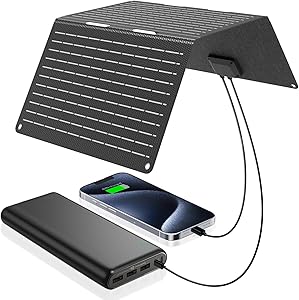
- Power Output: 30W
- Waterproof Rating: IP67
- Conversion Rate: 23.5% Monocrystalline
- Weight: 2 lbs
The Ecosonique 30W Solar Panel Charger offers a perfect balance of power and portability, weighing 15% less than many other 30W panels on the market. Its tri-fold design makes it easy to stow in a backpack, while the integrated grommet holes allow for flexible mounting options. The panel features premium ETFE lamination, which ensures high light transmittance and provides a surface that is easy to clean and highly resistant to oxidation and scratches.
Equipped with smart safety chips, the USB-C and USB-A ports provide optimized power delivery while protecting your devices from short circuits or overvoltage. The IP67 waterproof rating means you don’t have to worry about sudden rain showers or accidental splashes near the lake. This versatility makes it an excellent choice for various USB-powered electronics, ensuring you have a dependable energy source for your phone, GPS, or camera throughout your entire trip.
Pros: Lightweight for its power class, IP67 waterproof, and high-quality ETFE build.
Cons: Charging speed can drop noticeably in partial cloud cover.
See the Ecosonique Solar Panel Charger
8. Dongindar Foldable Solar Panel
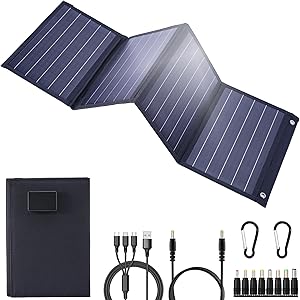
- Fast Charging: QC3.0 (27W) and PD2.0 (18W)
- Efficiency: 25% High Conversion N-Type Cells
- Port Variety: USB-A, USB-C, and 12V DC
- Lifespan: 25-Year Rated Durability
The Dongindar Foldable Solar Panel is a powerhouse of technology, featuring both QC3.0 and PD2.0 fast-charging ports. This allows for significantly faster charging times than standard solar panels, with some phones reaching a full charge in under two hours in ideal conditions. The inclusion of a 12V DC port makes it highly compatible with smaller portable power stations, while the upgraded intelligent chip ensures a high tracking efficiency of up to 99%.
Designed for harsh environments, the panel utilizes an IP67 dustproof and waterproof structure with an ETFE coating. It is rated for a 25-year lifespan, making it a long-term investment for any outdoor enthusiast or emergency prepper. Despite its heavy-duty performance, it remains surprisingly portable at 1.65 pounds. The multi-layer protection system ensures that your expensive electronics are always safe from overheating or overvoltage while drawing power from the sun.
Pros: Supports PD and QC fast charging, includes a DC port, and extremely high efficiency.
Cons: Junction box is not fully waterproof; requires care in heavy rain.
See the Dongindar Foldable Solar Panel
9. ELECOM NESTOUT Portable Solar Panel
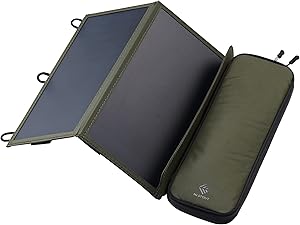
- Cell Type: SunPower MAXEON High Efficiency
- Output: Dual USB-A Ports
- Material: Water-Resistant Ripstop Nylon
- Unique Feature: Built-in LED Current Checker
The ELECOM NESTOUT Portable Solar Panel is an award-winning device that combines aesthetics with high-end functionality. Utilizing SunPower MAXEON cells, it offers a 24% increase in efficiency over traditional cells, ensuring you get the most out of every ray of light. One of its standout features is the built-in current checker LED display, which allows users to monitor the actual power generation in real-time, taking the guesswork out of panel placement.
This panel is integrated into a durable ripstop nylon bag that features mesh pouches for cable storage and exterior hooks for easy hanging. The vintage-inspired design doesn’t just look good; it includes two built-in adjustable stands to help you find the perfect angle for solar absorption. It is a well-rounded package that prioritizes user experience, offering a blend of durability, style, and technical precision that is rare in the solar charger market.
Pros: Excellent build quality, real-time power monitor, and premium SunPower cells.
Cons: Lacks a USB-C output port; relies on USB-A.
See the ELECOM NESTOUT Portable Solar Panel
10. MARBERO Portable Solar Panel

- Wattage: 30W (25W-30W in full sun)
- Output Ports: USB, QC3.0, USB-C, and 18V DC
- Accessories: 10-in-1 DC Adapter Set
- Weight: 2.7 lbs
The MARBERO 30W Portable Solar Panel is the ultimate choice for those using portable power stations. It comes bundled with a 10-in-1 DC adapter set, making it compatible with almost every major power station brand on the market. In addition to its DC versatility, it offers three USB outputs, including QC3.0 and high-wattage USB-C, allowing it to charge everything from a laptop to a smartphone simultaneously with ease and safety.
Even in less-than-ideal conditions, this panel performs admirably, maintaining 15W-20W of output on cloudy days. When folded, it takes the form of a sleek 14-inch laptop bag with a convenient handle, making it very easy to transport. The durable Oxford cloth construction and IP65 rating ensure it can handle the moisture and dust of off-grid living. It is a robust, all-in-one power solution for campers, boaters, and those in need of emergency backup gear.
Pros: Massive compatibility with 10 adapters, multiple fast-charge ports, and good cloudy-day performance.
Cons: Heaviest unit on the list at 2.7 lbs.
See the MARBERO Portable Solar Panel
The Ultimate Guide to Portable Solar Panels for Backpacking
For modern backpackers, the call of the wild is often accompanied by the hum of electronics. Whether it is a smartphone used for navigation, a high-end camera for capturing vistas, or a satellite messenger for safety, these devices require a reliable power source. Portable solar panels have revolutionized off-grid travel, allowing hikers to harvest energy directly from the sun. This guide explores everything you need to know about selecting, using, and optimizing solar power for your next wilderness adventure.
Understanding Solar Technology for the Trail
Before diving into specific models, it is essential to understand the technology behind these portable chargers. Most backpacking panels use monocrystalline silicon cells, which are known for their high efficiency and longevity. Unlike older thin-film technologies, monocrystalline panels can convert a higher percentage of sunlight into electricity within a smaller surface area, which is critical when every square inch of your pack matters.
Efficiency and Conversion Rates
In the context of portable solar, efficiency refers to the percentage of sunlight that the panel can successfully convert into usable electricity. Most high-quality portable panels currently offer conversion rates between 22% and 25%. While this might sound low, it is significantly higher than the 15% efficiency seen just a decade ago. Higher efficiency means you can carry a smaller, lighter panel and still achieve the same charging speeds as a larger, less efficient one.
Key Features to Look for in a Backpacking Panel
When shopping for a solar charger, you must balance power output with weight and durability. A panel that is too heavy will be left at home, while one that is too fragile won’t survive the rigors of the trail.
Wattage and Power Output
Wattage is the most common metric used to categorize solar panels. For backpacking, most panels fall between 10W and 30W. A 10W panel is generally sufficient for maintaining a smartphone or a small headlamp in perfect sunny conditions. However, for users carrying multiple devices or traveling in areas with intermittent cloud cover, a 20W to 30W panel provides the necessary “headroom” to ensure devices actually charge rather than just maintaining their current battery level.
Portability and Weight
Weight is the eternal enemy of the backpacker. Portable solar panels have become remarkably light, with some 10W models weighing under 10 ounces. Larger, 28W panels typically weigh between 1.5 and 2.5 pounds. Consider a foldable design that can be tucked into the hydration sleeve of your pack or clipped to the exterior using carabiners. This “on-the-go” charging capability allows you to gather energy while you are actively hiking.
Durability and Weather Resistance
The trail is a harsh environment. Look for panels featuring ETFE (Ethylene Tetrafluoroethylene) coatings rather than PET (Polyethylene Terephthalate). ETFE is more durable, has better light transmission, and is resistant to high temperatures and UV radiation. Additionally, check the IP (Ingress Protection) rating. A rating of IP67 means the panel is dust-tight and can survive temporary immersion in water, though you should always ensure the USB junction box stays dry.
How to Optimize Solar Charging in the Wilderness
Simply having a solar panel is not enough; you must know how to use it effectively. Solar energy is highly dependent on environmental variables that can fluctuate throughout the day.
The Importance of Angle and Orientation
To achieve the maximum rated wattage, a solar panel must be perpendicular to the sun’s rays. Even a slight tilt away from the sun can reduce efficiency by 30% or more. While hiking with a panel clipped to your backpack is convenient, it is rarely the most efficient method because your movement constantly changes the angle of the panel. The best practice is to align the panel during rest breaks or once you have reached camp, using adjustable stands or propping the panel against a rock.
Dealing with Clouds and Shading
Solar panels are extremely sensitive to shade. Even a small shadow from a tree branch or a strap falling across a single cell can significantly drop the power output of the entire panel. Some modern panels feature “auto-reconnect” technology. This is vital because many smartphones stop charging when power drops (like when you walk under a tree) and won’t resume until the cable is unplugged and replugged. Auto-reconnect handles this handshake automatically once the sun returns.
The Solar Panel vs. Power Bank Debate
A common question among hikers is whether to bring a solar panel or just a large battery pack (power bank). The answer usually depends on the length of the trip.
Short Trips vs. Long Hauls
For a weekend trip (2-3 days), a high-capacity 20,000mAh power bank is almost always more efficient and reliable than a solar panel. It provides guaranteed power regardless of the weather. However, for “thru-hikers” or those on trips lasting a week or more, a solar panel becomes the lighter option. Once you exceed the energy capacity of a battery pack, a solar panel provides an infinite supply of energy, whereas a dead battery pack becomes dead weight.
The Hybrid Approach
The most effective strategy for most backpackers is to use both. Instead of plugging your phone directly into the solar panel, plug the panel into a power bank. This creates a “buffer.” Solar energy is often “choppy” due to clouds and movement, which can be hard on sensitive phone batteries. A power bank can accept this inconsistent flow of energy throughout the day and then provide a steady, fast charge to your devices at night.
Charging Different Types of Gear
Not all electronics draw power at the same rate. Understanding the requirements of your gear will help you manage your “energy budget” on the trail.
Low-Wattage Electronics
Devices like headlamps, GPS watches, and wireless headphones require very little power. Small 5W to 10W panels are perfectly suited for these items. These devices often don’t support fast charging, so a high-wattage panel wouldn’t offer any speed advantage.
Smartphones and Tablets
Modern smartphones, especially larger “Pro” models, require significant power. To charge these at a reasonable speed, look for panels with “Smart IC” technology or Power Delivery (PD) through a USB-C port. These protocols allow the panel and the device to communicate and negotiate the fastest safe charging speed.
Common Pitfalls and How to Avoid Them
Many hikers are disappointed by solar performance because of a few common mistakes. One major pitfall is trying to charge through a tent window or a car windshield. Glass reflects and diffuses a significant portion of solar energy, often reducing a panel’s output by more than 50%. Always place your panels in direct, unobstructed sunlight for best results.
Another mistake is ignoring heat. Solar panels actually become less efficient as they get hotter. If you are charging in a stationary position, try to keep your phone or power bank in the shade behind the panel while the panel itself sits in the sun. This prevents your devices from overheating and throttling their intake of power.
Conclusion
Portable solar panels have matured into a reliable, essential tool for the modern adventurer. By understanding the balance between wattage, weight, and efficiency, you can maintain a “green” power grid wherever the trail leads. While they require a bit more attention and technique than a standard wall outlet, the reward is the freedom to stay out in the wild for as long as your heart desires, with the peace of mind that your essential safety and navigation tools will never run out of juice.
As technology continues to improve, we can expect panels to become even lighter and more resilient. For now, investing in a high-quality 20W-28W monocrystalline panel with ETFE coating remains the “sweet spot” for most backpacking applications. Pack light, plan for the sun, and enjoy the limitless energy of the outdoors.