Best Synthetic Sleeping Bags of 2026
When you’re camping or hiking, a good night’s sleep matters, and you don’t need to spend a fortune on down to stay warm. Synthetic sleeping bags are a smart, budget-friendly choice. They keep you cozy even when damp, dry fast, and are easy to clean. Whether you’re a beginner or a seasoned backpacker, this guide highlights the best synthetic bags for comfort, durability, and value.
1. REI Co-op Trailmade 25

- Temperature Rating: 25°F (-4°C)
- Insulation: 100% recycled polyester synthetic fill
- Weight: 2 lbs. 15.14 oz. (Medium)
- Shape: Mummy
The REI Co-op Trailmade 25 is an excellent entry-level choice for those who want a reliable bag for both backpacking and car camping. Its synthetic insulation provides a great balance of warmth and packability, ensuring you stay cozy even if the conditions get a bit damp. The recycled ripstop polyester shell is durable and features a PFAS-free water-repellent finish, making it an environmentally conscious pick for the trail.
Designed with a classic mummy shape, this bag efficiently traps heat while remaining light enough to carry on multi-day treks. It comes in various sizes and widths, catering to different body types for a more personalized fit. For hikers seeking a versatile, three-season bag that won’t break the bank, this model hits the sweet spot between performance and value.
Pros: Wide range of sizes available; eco-friendly recycled materials; great price-to-performance ratio.
Cons: Synthetic fill is slightly bulkier than down; limited to 20-degree lower limits.
See the REI Co-op Trailmade 25
2. Kelty Cosmic 20 Synthetic

- Insulation: Cirroloft synthetic
- Shell: 380T nylon taffeta
- Weight: 2 lbs. 13 oz. (Regular)
- Fits Up To: 6 feet (Regular)
The Kelty Cosmic 20 Synthetic is a workhorse designed for the budget-minded backpacker who refuses to sacrifice comfort. Featuring the innovative Cirroloft insulation, this bag maintains its loft and warmth even in damp or cold environments, preventing those dreaded cold spots during the night. The nylon taffeta shell feels soft against the skin while remaining tough enough to handle frequent trail use without snagging or tearing.
What sets this bag apart is its spacious, natural-fit footbox, which allows for extra movement and better circulation. It also includes a convenient external stash pocket for keeping essentials like a headlamp or phone within easy reach. Kelty has successfully built a bag that meets minimalist standards for weight and packability while providing the rugged durability that the brand is known for across the outdoor community.
Pros: Roomy footbox; maintains warmth when damp; includes a compression stuff sack.
Cons: Can be tight for broader sleepers; synthetic loft may degrade over years of heavy compression.
See the Kelty Cosmic 20 Synthetic
3. Teton Sports Sleeping Bag

- Temperature Rating: Survival rated to +20°F
- Lining: Double-brushed microfiber
- Shape: Mummy with vaulted footbox
- Storage: Heavy-duty compression sack
Teton Sports offers a mummy-style sleeping bag that prioritizes a cozy interior feel alongside technical performance. The double-brushed liner is exceptionally soft, providing a bed-like comfort that is often missing in technical gear. Its innovative microfiber insulation is designed for high compressibility, allowing it to fit into a backpack without taking up excessive space, while the vaulted footbox ensures your toes stay warm and unrestricted.
The hood is specifically tailored to wrap around the face to lock in heat, and the integrated zipper draft tube prevents cold air from leaking through the teeth. While the 20-degree rating is a survival limit, the bag excels in cool-weather hiking and camping scenarios. It is an ideal option for those who want a high-loft feel and a durable compression system that simplifies the packing process after a long trip.
Pros: Extremely soft inner lining; excellent compressibility; high-quality hood design.
Cons: Survival rating is optimistic for comfort; may require extra layers in freezing temperatures.
See the Teton Sports Sleeping Bag
4. REI Co-op Siesta Hooded

- Temperature Rating: 20°F (-6.6°C)
- Weight: 5 lbs. 7.3 oz. (Medium)
- Shape: Rectangular with hood
- Fill: 98% recycled polyester synthetic
If you prefer the freedom to sprawl out rather than being confined by a mummy bag, the REI Co-op Siesta Hooded 20 is a fantastic choice. This rectangular bag offers significant interior volume, making it perfect for side sleepers or those who toss and turn. Despite its roomy shape, the addition of a hood allows you to cinch down for extra warmth around your head on those particularly chilly nights at the campground.
Built primarily for car camping, this bag uses substantial synthetic fill that stays warm even if it gets wet. It is constructed with bluesign-approved materials, ensuring that your outdoor comfort doesn’t come at a high environmental cost. While it is too heavy and bulky for traditional backpacking, its durability and spaciousness make it a top-tier luxury for basecamp setups or weekend road trips with the family.
Pros: Very spacious rectangular cut; hood adds extra warmth; sustainable materials.
Cons: Too heavy for backpacking; large compressed volume takes up car space.
See the REI Co-op Siesta Hooded
5. Teton Sports Celsius
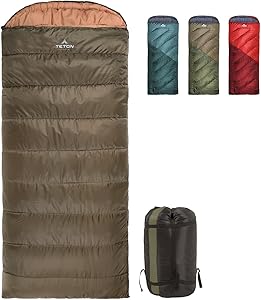
- Lining: Soft poly-flannel
- Construction: Double-layer with draft tubes
- Hood: Half-circle mummy-style
- Storage: Compression stuff sack included
The Teton Sports Celsius is designed for the camper who misses the feel of home bedding while in the woods. The standout feature is its soft poly-flannel lining, which provides immediate warmth and a familiar texture that avoids the “sticky” feel of nylon. Its double-layer construction works in tandem with integrated draft tubes to ensure that cold air is effectively blocked out, providing a consistent temperature throughout the night.
Although it features a half-circle hood to keep your head warm and your pillow in place, the bag remains spacious enough for a comfortable night’s rest. Teton includes a heavy-duty compression sack that eliminates the need to roll the bag, which is a major convenience when breaking camp. It is a robust, well-insulated choice for those who prioritize sleep quality and comfort during their outdoor adventures.
Pros: Cozy flannel interior; high-quality draft protection; no-roll packing system.
Cons: Bulky and heavy for long treks; flannel can take longer to dry if wet.
6. The North Face Wawona Bed 20

- Weight: 4 lbs. 14.3 oz. (Regular)
- Shell: 50D recycled ripstop polyester
- Zipper: Right-hand location
- Shape: Rectangular
The North Face Wawona Bed 20 is a premium rectangular sleeping bag designed for campers who want a bed-like experience. Its large dimensions allow you to sleep on your back, side, or front without feeling restricted. The 50-denier recycled ripstop shell is treated with a non-PFC water repellent, offering a tough exterior that can handle the rigors of frequent camping while protecting the insulation from light moisture.
Internally, the bag features recycled polyester taffeta that is smooth and comfortable. This model is specifically engineered for car camping where weight is less of a concern than comfort and durability. With its right-side zipper and generous girth at the shoulders and hips, it provides a consistent, cozy environment for a restful night under the stars. It’s a stylish and functional piece of gear that lives up to The North Face’s reputation.
Pros: Extremely durable shell; very roomy for all sleep positions; recycled materials.
Cons: Large compressed size; not suitable for carrying on a backpack.
See the The North Face Wawona Bed 20
7. Marmot Trestles Elite Eco 20

- Insulation: HL-ElixR ECO synthetic
- Tested Comfort: 24°F (ISO)
- Shell: 100% postconsumer recycled polyester
- Zipper: Dual Left/Right options
The Marmot Trestles Elite Eco 20 is a high-performance synthetic mummy bag that rivals down for its loft and packability. Using HL-ElixR ECO insulation, it provides impressive warmth and a plush feel while remaining surprisingly light for a synthetic bag. It is specifically designed to keep its insulation properties even if moisture enters the bag, making it a reliable partner for backpacking in unpredictable or humid weather conditions.
Marmot has focused heavily on sustainability, utilizing recycled fabrics and fill throughout the construction. The bag features a dual-zipper system that makes it easier to get in and out of while allowing for better ventilation on warmer nights. Its ISO-tested comfort rating gives users confidence in its ability to perform in true near-freezing temperatures. This is a top-tier choice for serious backpackers who want eco-friendly, technical gear.
Pros: Excellent warmth-to-weight ratio; works well in wet conditions; high-quality dual zippers.
Cons: Higher price point than basic synthetic bags; mummy fit may be snug for some.
See the Marmot Trestles Elite Eco 20
8. REI Co-op Campwell 30

- Temperature Rating: 30°F (-1°C)
- Shape: Relaxed rectangular
- Weight: 4 lbs. 15.6 oz. (Medium)
- Fill: 98% recycled polyester
The REI Co-op Campwell 30 is designed to be the most approachable bag for casual campers and those new to the outdoors. It features a relaxed fit that avoids the “squeezed” feeling of traditional technical bags, making it a great choice for warm-weather car camping and backyard sleepovers. The synthetic fill is largely recycled and provides enough warmth for summer and shoulder-season trips where temperatures stay above freezing.
This bag is all about ease of use and comfort. The rectangular shape offers plenty of room to move your legs, and the polyester shell and lining are designed for durability and a smooth feel. While it lacks the extreme insulation of colder-weather bags, its simplicity and eco-friendly construction make it a dependable option for anyone looking for a straightforward, comfortable sleeping solution for their next camping trip.
Pros: Very easy to use; comfortable relaxed fit; affordable and sustainable.
Cons: Limited to 30-degree nights; bulky for its temperature rating.
9. oaskys Sleeping Bag

- Seasons: 3-Season (10°C – 20°C)
- Shell: 210T anti-tearing polyester
- Design: Separated bottom zipper
- Lining: 190T polyester pongee
The oaskys Sleeping Bag is a versatile three-season option designed for those who enjoy trekking, hiking, and travel. Its most unique feature is the separated zipper at the bottom, which allows you to stick your feet out for ventilation if you get too warm during the night. The 210T anti-tearing polyester fabric is both waterproof and breathable, ensuring you stay dry and comfortable even in damp or slightly humid conditions.
This bag is built for convenience, coming with a compression sack that makes it easy to carry on the move. The half-circle hood includes an adjustable drawstring to help retain heat around your head when the temperature dips. It’s a great entry-level bag for explorers who need a lightweight, easy-to-clean sleeping solution that can adapt to changing temperatures throughout their journey.
Pros: Excellent foot ventilation; budget-friendly; waterproof and breathable shell.
Cons: Not suitable for freezing weather; thinner than high-end camping bags.
10. MalloMe Sleeping Bag

- Temperature Range: 50°F to 77°F
- Weight: Approx. 3 lbs.
- Shell: Waterproof hex-tech design
- Zippers: Snag-free double-sided
The MalloMe Sleeping Bag is a fantastic all-rounder for families and casual adventurers, particularly in the spring and summer months. Its waterproof hex-tech shell and S-shape stitching keep the synthetic fiber fill in place, ensuring optimal insulation and protection from the elements. The bag is designed to be ultralight and includes a compression sack, making it a solid choice for shorter backpacking trips where weight is a factor.
Safety and comfort are key here, with high-quality snag-free zippers and a velcro securing strap that prevents the zipper from sliding down while you sleep. The vibrant colors and spacious interior make it a hit for both adults and children alike. Since it is machine washable, maintenance is incredibly easy, making it a practical choice for frequent use on campgrounds and trailheads across the country.
Pros: Very easy to clean; snag-free zippers; lightweight and portable.
Cons: Only rated for cool/warm weather; not a winter-capable bag.
How to Choose the Perfect Synthetic Sleeping Bag
Choosing a sleeping bag is one of the most critical decisions for any outdoor enthusiast. While down insulation often gets the spotlight for its warmth-to-weight ratio, synthetic sleeping bags have evolved into high-performance, durable, and cost-effective alternatives. Whether you are a casual car camper or a dedicated backpacker, understanding the nuances of synthetic fill will help you stay warm and comfortable under the stars.
Understanding Synthetic Insulation
Synthetic insulation is typically made from polyester fibers that are engineered to mimic the structure of down. These fibers are either continuous filaments (long, thin strands) or short-staple fibers (small bits of fluff). Unlike down, which relies on the plumage of ducks or geese, synthetic insulation is vegan-friendly and maintains its structure through mechanical loft.
The primary advantage of synthetic material is its performance in wet conditions. While down loses its insulating power when damp, synthetic fibers are non-polar, meaning they do not absorb water. This allows the bag to trap heat even if you are dealing with condensation, high humidity, or a leaking tent.
Key Factors to Consider When Choosing
Temperature Ratings and ISO Standards
When looking at a synthetic bag, you will see a temperature rating, such as 20°F or 0°C. Modern bags often use the ISO (International Organization for Standardization) or EN (European Norm) rating systems. These provide two main numbers: the “Comfort” rating, which is the lowest temperature at which a cold sleeper stays warm, and the “Limit” rating, the temperature at which a warm sleeper stays comfortable.
Always choose a bag rated slightly colder than the lowest temperature you expect to encounter. If you typically camp in 30-degree weather, a 20-degree bag provides a safety margin that ensures a restful night’s sleep regardless of unexpected cold snaps.
Weight vs. Packability
Historically, synthetic bags were known for being bulky and heavy. However, modern technology like microfiber blends and hollow-core fibers has significantly reduced this gap. When choosing, consider your travel style. If you are car camping, weight is irrelevant, and you can prioritize a heavier, plush bag. If you are backpacking, look for “short-staple” synthetic fills, as they tend to compress more efficiently into a stuff sack.
Durability and Longevity
Synthetic bags are incredibly resilient. They can withstand being stuffed into sacks repeatedly without the fibers breaking down as easily as some lower-quality down. Furthermore, they are easier to clean. Most synthetic bags can be tossed into a front-loading washing machine, making them ideal for those who camp frequently or in muddy environments.
The Importance of Sleeping Bag Shape
The shape of your sleeping bag affects both your comfort level and how efficiently the bag retains heat. Synthetic bags come in three primary silhouettes:
Mummy Bags
Mummy bags are tapered at the feet and feature a fitted hood. This snug fit minimizes the amount of air your body has to heat up, making it the most thermally efficient design. Because there is less fabric and insulation, mummy bags are usually the lightest and most packable synthetic options. They are the standard for backpacking and cold-weather expeditions.
Rectangular Bags
If you feel claustrophobic in a tight space, a rectangular bag is the way to go. These bags offer plenty of room to stretch your legs and toss and turn. While they are less efficient at trapping heat and are generally heavier, they are perfect for summer camping or for use as a comforter when unzipped. Many rectangular bags can also be zipped together to form a double bed.
Semi-Rectangular and Wide Cuts
A semi-rectangular bag is a hybrid, offering more room than a mummy but more efficiency than a rectangle. Additionally, many brands now offer “Wide” or “Long” versions of their standard bags. If you have broad shoulders or are taller than average, investing in a bag that fits your frame is essential to prevent “cold spots” where your body compresses the insulation against the shell.
Evaluating Shell and Lining Materials
The “face fabric” of the bag is just as important as the insulation inside. Most synthetic bags use nylon or polyester ripstop for the shell. Look for a Denier (D) rating; a higher denier means a thicker, more durable fabric. A 30D or 50D shell is standard for a balance of weight and toughness.
The lining is what touches your skin. While many technical bags use smooth polyester taffeta, some camping-oriented synthetic bags feature flannel or brushed microfiber linings. These feel much softer and “warmer” to the touch, though they add weight and are slower to dry if they get wet.
Special Features to Look For
Small design details can make a massive difference in your overall experience. When comparing models, look for the following:
- Draft Tubes: An insulated tube that runs along the inside of the zipper to prevent cold air from seeping through the teeth.
- Draft Collars: An insulated “yoke” around the neck that prevents warm air from escaping when you move.
- Anti-Snag Zippers: Look for zippers with guards to prevent the thin shell fabric from getting caught in the slider.
- Stash Pockets: A small internal or external pocket is perfect for keeping your phone or headlamp warm and accessible.
Matching the Bag to Your Activity
Backpacking and Trekking
For backpacking, every ounce matters. Look for high-end synthetic fills like Primaloft or proprietary blends like Marmot’s HL-ElixR. These are designed to be “ultralight” and highly compressible. Focus on a mummy shape to save weight and ensure you have a high-quality compression sack to minimize the volume in your pack.
Car Camping and Festivals
When the car is doing the heavy lifting, prioritize comfort. A 20-degree rectangular bag with a flannel lining provides a luxurious sleep environment. You don’t need to worry about the compressed volume, so you can choose a bag with thicker, loftier insulation that feels more like a real bed.
Humid and Wet Environments
If you frequently camp in the Pacific Northwest, the UK, or near coastal areas, a synthetic bag is a non-negotiable asset. Even the best treated “hydrophobic down” can eventually clump in sustained 90% humidity. Synthetic fibers will keep you safe and warm in the dampest conditions, providing peace of mind during rainy expeditions.
Conclusion
Choosing a synthetic sleeping bag is about balancing your specific needs for warmth, space, and budget. While they may not always pack as small as down, their reliability in wet weather and ease of maintenance make them an unbeatable choice for many adventurers. By paying attention to temperature ratings, shape, and shell durability, you can find a synthetic bag that will provide a cozy sanctuary at the end of a long day outdoors for years to come.