Best Bear-Proof Coolers of 2026
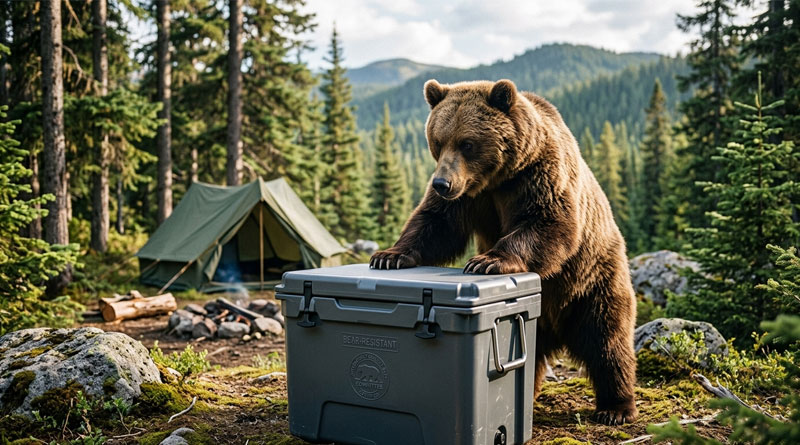
When you’re camping in bear country, keeping your food safe is a must. The best bear-proof coolers are tough, lockable, and built to stop even the strongest bears from sniffing out your snacks. These coolers keep ice for days, survive rough trails, and meet safety standards. Whether you’re hiking or car camping, picking the right one means peace of mind—and a bear-free night.
1. Lifetime Hard Cooler

- Capacity: 65 Quart
- Ice Retention: Up to 8 days
- Certification: IGBC Bear Resistant
- Dimensions: 28.4 x 18.1 x 17.5 inches
The Lifetime Hard Cooler is a powerhouse designed for serious outdoor enthusiasts who prioritize durability and long-term performance. Its heavy-duty polyethylene construction and urethane insulation allow it to hold ice for over a week, rivaling much more expensive brands. The bear-resistant certification adds a layer of security for those camping in wilderness areas where wildlife is a concern.
Functionality is at the forefront with thoughtful additions like built-in bottle openers and a garden hose compatible drain spout. The nylon rope handles with injection-molded grips make it manageable to carry even when fully loaded. This cooler offers a premium, rugged experience without the typical luxury price tag, making it an excellent investment for extended trips.
Pros: High ice retention, bear-resistant, dual bottle openers.
Cons: Heavy at 25.5 lbs, bulky exterior footprint.
2. YETI Tundra 45

- Capacity: 32.9 Liters
- Material: Rotomolded polyethylene
- Insulation: Urethane foam
- Weight: 24 lbs. 9.6 oz.
The YETI Tundra 45 is a gold standard in the cooling world, known for its virtually indestructible rotomolded construction. It is designed to handle everything from rough boat rides to family picnics in the sun. The extra-thick walls ensure that your food and beverages stay ice-cold for days, providing peace of mind during weekend adventures.
While the interior storage space is slightly smaller than some competitors due to the thick insulation, the thermal efficiency is unmatched. This cooler is built for longevity and can withstand significant wear and tear over years of use. It is a reliable, high-performing companion for anyone who demands the best in temperature regulation and structural integrity.
Pros: Exceptional durability, superior insulation, iconic design.
Cons: High price point, heavy for its storage capacity.
See the YETI Tundra 35 See the YETI Tundra 45 See the YETI Tundra 65
3. Coleman Classic Series

- Capacity: 52 Quarts
- Weight: 8.7 Pounds
- Material: Durable Plastic
- Dimensions: 15.63 x 27.87 x 17.99 inches
The Coleman Classic Series is the quintessential choice for casual campers and weekend tailgaters. It provides a reliable cooling solution without the weight or cost of high-end rotomolded options. The lightweight design makes it easy to transport from the car to the campsite, while the 52-quart capacity offers ample room for a family’s worth of refreshments.
A standout feature of this model is the Have-A-Seat lid, which can support up to 250 pounds, giving you an extra chair whenever you need one. This versatility, combined with its straightforward insulated design, makes it a practical staple for any outdoor gathering. It focuses on the essentials, delivering cooling performance that meets the needs of most traditional outings.
Pros: Very lightweight, affordable, lid doubles as a seat.
Cons: Lower ice retention than hard-shell competitors, basic latches.
See the Coleman Classic Series
4. Coleman Classic Series Rolling

- Capacity: 100 Quarts
- Weight: 20.37 Pounds
- Features: Heavy-duty wheels
- Dimensions: 17.3 x 36.9 x 18 inches
When you need to transport a massive amount of food and drink for a large group, the Coleman Classic Series Rolling cooler is the ideal tool. With a massive 100-quart capacity, it is built for long picnics, large family reunions, or multi-day base camps. The inclusion of wheels is a game-changer, allowing one person to move a heavy load with ease.
Despite its large size, the cooler remains relatively manageable thanks to its plastic construction. It offers plenty of space for ice, cans, and perishable food, ensuring everything stays chilled throughout your event. This model prioritizes volume and portability, making it a favorite for those who refuse to leave anything behind when heading outdoors.
Pros: Enormous storage capacity, easy to move with wheels, great value.
Cons: Occupies significant trunk space, wheels struggle on soft sand.
See the Coleman Classic Series Rolling
5. YETI Roadie 24 2.0

- Capacity: 23 Liters
- Weight: 13 lbs. 4.8 oz.
- Insulation: Permafrost Polyurethane
- Dimensions: 17.4 x 16.6 x 14.1 inches
The YETI Roadie 24 2.0 is specifically designed for the road tripper and the mobile adventurer. It is taller than the original Roadie, allowing it to hold standard wine bottles upright while maintaining a slim profile that fits behind vehicle seats. The HeftyHauler handle makes it incredibly comfortable to carry over short distances from the car to your destination.
This cooler features the same high-end Permafrost insulation and ColdLock gasket found in larger YETI models, ensuring your items stay frozen or cold for a surprisingly long time given its size. It strikes a perfect balance between portability and thermal efficiency, making it the ultimate personal cooler for solo trips or couples on the move.
Pros: Fits upright wine bottles, compact footprint, excellent handle.
Cons: No drain plug, expensive for its internal volume.
6. Coleman Chiller
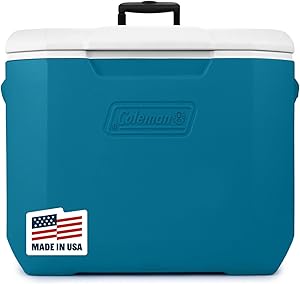
- Capacity: 60 Quarts
- Weight: 11.4 Pounds
- Material: Polyurethane (PU)
- Dimensions: 17.6 x 22.6 x 17.5 inches
The Coleman Chiller is a versatile wheeled cooler that bridges the gap between personal use and group outings. Its 60-quart capacity is plenty for a long weekend of camping, and the recessed wheels make it much easier to navigate parking lots and flat trails. The polyurethane insulation provides decent cold retention for standard recreational use.
Its design is focused on convenience, featuring a telescopic handle that makes pulling the cooler behind you effortless. The lightweight nature of the materials used means it won’t be a struggle to lift into your SUV once the trip is over. It’s a dependable, user-friendly option for those who want the ease of wheels in a mid-sized package.
Pros: Wheeled for easy transport, lightweight, good capacity.
Cons: Handle feels less sturdy when full, moderate insulation.
7. Igloo Hard Cooler

- Capacity: 113 Liters (120 Qt)
- Weight: 8.26 Kilograms
- Color: Polar White
- Dimensions: 17.38 x 38.3 x 17.75 inches
The Igloo Polar Hard Cooler is a massive, high-capacity unit designed for those who need to store a large volume of supplies for an extended period. With a 113-liter capacity, it is ideal for fishing trips, hunting, or massive family reunions. Despite its size, it is surprisingly lightweight for its volume, which helps when moving it between locations.
The Polar White finish isn’t just for looks; it helps reflect heat to keep the internal temperature stable. While it may not have the rugged rotomolded build of premium brands, it offers an incredible amount of storage space for the price. It is a practical, no-nonsense solution for anyone who needs to keep a large inventory of food and drinks cold on a budget.
Pros: Massive interior space, lightweight for its size, budget-friendly.
Cons: Lacks wheels, plastic latches can be fragile over time.
8. Coleman Snap ‘N Go

- Capacity: 45 Liters
- Weight: 16 pounds
- Feature: Collapsible design
- Dimensions: 24.3 x 13.1 x 13 inches
The Coleman Snap ‘N Go offers a unique solution for campers with limited storage space. It provides the rigid protection and performance of a hard cooler but can collapse down to a third of its original size when not in use. This makes it perfect for apartment dwellers or those with small vehicles who still want quality insulation on their trips.
Setting up the cooler takes only about ten seconds, making it incredibly convenient for spontaneous outings. While it may not match the ice retention of a heavy rotomolded cooler, its portability and space-saving design are unparalleled. It is an innovative hybrid that solves the storage dilemma without sacrificing the structure needed for a proper camping cooler.
Pros: Saves storage space, quick setup, decent hard-shell protection.
Cons: Heavier than soft coolers, more moving parts to potentially fail.
How to Bear-Proof Your Cooler: A Comprehensive Guide to Wildlife Safety
Venturing into the great outdoors offers a sense of freedom and a connection to nature that is hard to find elsewhere. Whether you are camping in the dense forests of the Pacific Northwest, the rugged terrain of the Rocky Mountains, or the lush Appalachian Trail, you are entering the natural habitat of various wildlife, including bears. One of the most critical skills any camper or overlander can possess is the ability to manage food and attractants. A bear that associates humans with easy food is a “spoiled” bear, which often leads to dangerous encounters and, unfortunately, the eventual destruction of the animal by wildlife authorities. The cornerstone of bear-country etiquette is the bear-proof cooler. Understanding how to select, prepare, and secure these containers is essential for your safety and the preservation of wildlife.
Understanding the Bear Threat
Bears possess an extraordinary sense of smell, estimated to be seven times stronger than that of a bloodhound. They can detect scents from miles away and are naturally curious and opportunistic. In many popular camping destinations, black bears and grizzly bears have learned that human coolers are “treasure chests” filled with high-calorie rewards. A standard plastic cooler is no match for a 400-pound animal with powerful claws and jaws. To protect your supplies and keep bears at bay, you must transition from standard storage to certified bear-resistant systems.
1. Choosing the Right Cooler
Not all coolers are created equal. If you are traveling in bear country, the first step is ensuring your equipment is up to the task. Most high-end roto-molded coolers are marketed as “bear-resistant,” but you should look for official certification.
The IGBC Certification
The Interagency Grizzly Bear Committee (IGBC) is the gold standard for testing bear-resistant products. To receive this certification, a cooler must undergo rigorous testing, which often involves being placed in an enclosure with live grizzly bears. The bears are given ample time to attempt to break into the cooler using their claws, teeth, and sheer body weight. If the cooler remains closed and the interior remains inaccessible for a predetermined period (usually 60 minutes of active interaction), it passes. When purchasing a cooler, look for the IGBC certification logo or check their official list of approved products.
Roto-Molded Construction
Roto-molding (rotational molding) creates a thick, consistent plastic shell without seams. This process makes the cooler incredibly durable and provides the structural integrity needed to withstand the prying force of a bear. Look for heavy-duty hinges and reinforced locking points, as these are the areas a bear will target first.
2. The Essential Role of Padlocks
A common misconception is that simply owning a bear-resistant cooler makes it bear-proof. This is false. A bear-resistant cooler is only effective if it is locked properly. Most certified coolers feature two holes on the front corners designed specifically for padlocks.
Locking Mechanism Requirements
To meet IGBC standards in the field, you must use locks. Bears are highly intelligent and can easily manipulate standard rubber “T-latches” or plastic clips found on many coolers. You should use long-shank padlocks or specialized bear bolts. If a bear can find a gap large enough to insert a claw or a tooth, it can use leverage to rip the lid open. Using a lock on both corners prevents the bear from “peeling” the lid back from one side.
Key vs. Combination Locks
While both are effective, many experienced campers prefer combination locks to avoid the risk of losing a key in the wilderness. However, ensure the locks are weather-resistant and won’t rust shut after a rainstorm. If you use keyed locks, keep a spare key in your vehicle’s glove box.
3. Managing Scents and Attractants
The best way to bear-proof a cooler is to ensure the bear never wants to touch it in the first place. This starts with scent management.
Airtight Seals and Cleaning
Bears are attracted to the smell of food, but also to the smell of spilled juice, meat drippings, or even scented soaps stored nearby. Before your trip, ensure your cooler’s gasket is in good condition to provide an airtight seal. After every trip, scrub your cooler with a bleach solution or an enzyme-based cleaner to remove lingering odors that might attract wildlife while the cooler is stored in your garage.
Double-Bagging and Vacuum Sealing
To further reduce odors, vacuum-seal your meats and pungent foods. If you don’t have a vacuum sealer, double-bagging items in heavy-duty freezer bags can help. This also prevents meltwater from contaminating your food, which leads to smells that permeate the plastic of the cooler.
4. Strategic Cooler Placement
Where you put your cooler is just as important as how you lock it. You should never keep a cooler inside your tent or even in the vestibule.
The Vehicle Method
In many campgrounds, the recommendation is to store your cooler inside a hard-sided vehicle with the windows rolled up completely. However, be warned: in areas with highly habituated bears (like Yosemite National Park), bears have been known to “door-pop” cars to get to coolers they can see through the window. In these areas, it is best to cover the cooler with a blanket so it is not visible, or use provided metal bear lockers.
Using Bear Lockers
Many National Park campsites provide heavy-duty steel bear lockers (also known as “bear boxes”). If these are available, use them. Even a locked, IGBC-certified cooler should be placed inside a bear locker if possible. This provides a secondary layer of protection and ensures that even if a bear manages to move your cooler, they won’t get far with it.
The 100-Yard Rule
If you are dispersed camping and no bear locker or vehicle is available, use the “Triangle Method.” Set up your sleeping area at least 100 yards upwind from your cooking and food storage area. This ensures that if a bear is attracted to your cooler, it is far away from where you are sleeping.
5. Anchoring Your Cooler
A bear might not be able to get *into* your cooler, but that doesn’t mean it won’t walk away with it. Grizzly bears have been known to roll coolers down hills, into rivers, or simply drag them into the brush to work on them in private. To prevent your cooler from disappearing, use a heavy-duty cable lock to anchor it to a permanent structure like a tree or a mounting point in your truck bed. Make sure the cable is tight so the bear cannot get enough leverage to snap it.
6. What to Do During an Encounter
If you wake up to find a bear investigating your cooler, do not attempt to retrieve it. Even if the cooler is expensive, it is not worth a physical confrontation with a bear. From a safe distance (inside a vehicle or a safe building), try to scare the bear away by making loud noises, shouting, or using a car horn. If the bear successfully moves the cooler, wait until it has completely left the area before investigating the damage. Most bear-resistant coolers will survive the encounter with nothing more than some cosmetic scratches and tooth marks, provided they were locked correctly.
Summary of Best Practices
Bear-proofing is a multi-layered approach. It begins with the purchase of an IGBC-certified roto-molded cooler, continues with the diligent use of padlocks on every corner, and is supported by smart scent management and strategic placement. By following these steps, you protect your food, your safety, and the lives of the bears who call the wilderness home. Remember the mantra of the experienced woodsman: “A fed bear is a dead bear.” Keep your cooler locked, keep your camp clean, and enjoy the wild responsibly.