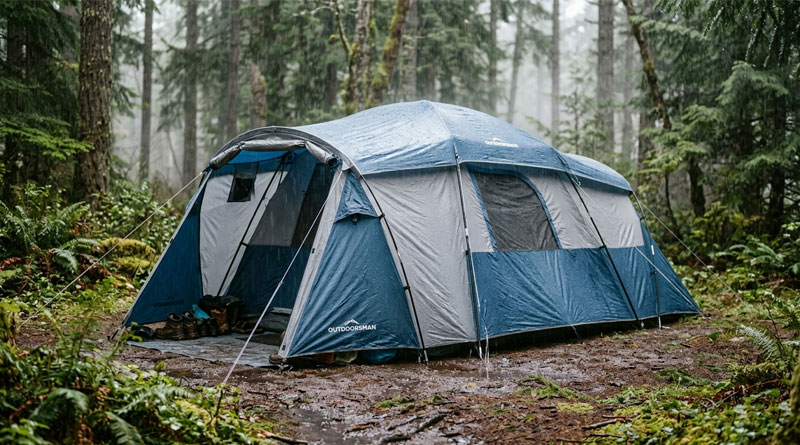
Best 10-Person Tent for Rain of 2026
When camping with a big group, rain can ruin the fun fast. That’s why picking the right shelter matters. In this article, we rank the best 10-person tents for rainy weather. We focus on strong waterproof materials, taped seams, and smart designs that keep water out. Whether you’re with family or friends, these tents offer dry, reliable space so everyone stays comfortable when the skies open up.
1. FanttikOutdoor Camping Tent
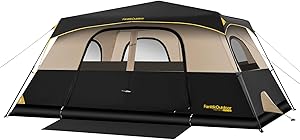
- Dimensions: 168″L x 120″W x 76″H
- Occupancy: 10 Person
- Water Resistance: 2000mm technology
- Weight: 27.5 Pounds
The FanttikOutdoor Camping Tent is a reliable choice for large families or groups looking for a balance between space and protection. Its trapezoidal shape provides a unique internal layout that maximizes floor width, allowing for comfortable sleeping arrangements. The inclusion of a 2000mm water resistance rating ensures that you stay dry during moderate rain showers, making it a dependable 3-season companion for your outdoor adventures.
Setting up this instant cabin is straightforward thanks to the included components like the rainfly and sturdy stakes. At 27.5 pounds, it remains relatively portable for a tent of its size. The 76-inch peak height allows most campers to stand upright comfortably, reducing the cramped feeling often associated with lower-profile tents. It is a solid investment for those prioritizing vertical space and moisture protection.
Pros: High water resistance rating, easy instant setup, spacious interior height.
Cons: Trapezoidal shape may limit some corner storage, heavier than ultralight options.
See the FanttikOutdoor Camping Tent
2. Zempire Aerospeed 10 Air

- Setup Type: Inflatable Air frame
- Peak Height: 88 inches
- Floor Area: 149.1 square feet
- Fabric: 75D solution-dyed polyester
The Zempire Aerospeed 10 Air stands out with its innovative inflatable beam technology, allowing for a pitch time of under two minutes. This 3-season tent offers an impressive 88-inch peak height, providing one of the most cavernous interiors in the 8 to 10-person category. The use of solution-dyed fabrics and high-quality PU coatings on the floor and rainfly ensures long-lasting durability and excellent weather protection during family trips.
Beyond its quick assembly, the tent features three doors and dual vestibules, offering significant storage space for gear outside the main sleeping area. While the packaged weight is 35 pounds, the convenience of the air frame eliminates the struggle of traditional poles. The freestanding design and ripstop polyester rainfly provide peace of mind in windy conditions, making it a premium choice for enthusiasts who value time and comfort.
Pros: Extremely fast inflation, massive overhead room, superior fabric quality.
Cons: Pump adds weight, higher price point than traditional pole tents.
See the Zempire Aerospeed 10 Air
3. UNP Camping Tent

- Dimensions: 216″L x 108″W x 78″H
- Floor Width: 18 Feet
- Weight: 21 Pounds
- Water Resistance: 1000 mm
The UNP Camping Tent is designed for maximum length, stretching out to 18 feet in floor width. This square-style footprint is ideal for creating distinct sections within the tent, making it perfect for 10-person occupancy where privacy or organization is needed. Despite its massive size, it is surprisingly lightweight at only 21 pounds, which is a major advantage for groups who need to carry their gear short distances.
While the 1000mm water resistance is lower than some competitors, it serves well for fair-weather 3-season camping. The 78-inch height ensures that most adults can move freely without crouching. Included stakes provide the necessary stability for the large frame. This tent is best suited for casual summer camping and large family gatherings where floor space is the absolute priority over heavy storm protection.
Pros: Exceptional floor length, very lightweight for its size, easy to partition.
Cons: Lower water resistance rating, requires a large flat surface for pitching.
4. Wakeman 10 Person Camping Tent

- Peak Height: 84 inches
- Dimensions: 168″L x 120″W x 84″H
- Weight: 31.3 Pounds
- Feature: Rainproof treatment
The Wakeman 10 Person Camping Tent prioritizes vertical clearance with a staggering 84-inch peak height. This makes it one of the tallest options available, creating an airy and open atmosphere that prevents the “cave” feeling of smaller tents. The 168-inch length provides plenty of room for multiple queen-sized air mattresses, catering to families who don’t want to sacrifice the comforts of home while sleeping in the great outdoors.
Constructed with a general water-resistant treatment and a specialized rainproof feature, it is built to handle typical 3-season weather. The weight of 31.3 pounds reflects its sturdy build and larger dimensions. It includes essential stakes for secure anchoring. If you are looking for a tent that feels like a portable room with enough ceiling height for tall individuals, the Wakeman is a top-tier contender for your next hiking trip.
Pros: Excellent 7-foot peak height, spacious floor plan, rainproof special features.
Cons: Heavier profile, general water treatment may require maintenance over time.
See the Wakeman 10 Person Camping Tent
5. CORE Tent for Family Camping

- Weight: 41 Pounds
- Shape: Rectangular
- Water Resistance: 1200mm
- Components: Room divider included
The CORE Tent for Family Camping is a heavy-duty option specifically designed for car camping and extended trips. At 41 pounds, it is the heaviest on the list, but that weight translates into a very stable rectangular structure that stands up well to wind. The inclusion of a room divider is a major selling point, allowing users to split the 10-person space into two separate living or sleeping areas for added privacy.
With a 1200mm water resistance rating and specific windproof features, this tent is built to withstand more than just a light breeze. It comes fully equipped with a carry bag, poles, rainfly, and stakes, providing everything needed for a complete setup. Its versatility across spring, summer, and fall makes it a true 3-season workhorse for travelers who want a durable, feature-rich home base in the wilderness.
Pros: Includes room divider for privacy, very stable in wind, multi-season versatility.
Cons: Quite heavy at 41 lbs, large packed size for storage.
See the CORE Tent for Family Camping
6. Amazon Basics Instant Camping Tent
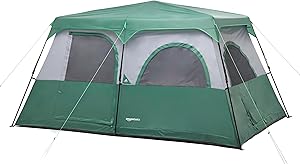
- Setup Time: 60-second instant setup
- Materials: Polyester and Steel frame
- Special Feature: Electrical cord port
- Ventilation: Ground vent and mesh ceiling
The Amazon Basics Instant Camping Tent focuses on extreme user convenience with its pre-attached telescoping frame. This design allows for a 60-second setup, which is a lifesaver when arriving at a campsite late or in poor weather. The tent utilizes a blend of polyester and steel for a balance of durability and flexibility. It also features thoughtful additions like an electrical cord port and a gear loft for organized storage.
Ventilation is a highlight here, featuring adjustable ground vents and a mesh ceiling that promotes airflow while keeping insects out. The water-resistant construction is bolstered by sealed seams and a removable rainfly. For a 10-person tent, it provides a very practical and efficient experience, especially for those who find traditional pole assembly frustrating. It is an excellent all-around choice for casual family adventures and weekend getaways.
Pros: incredibly fast 60-second assembly, great ventilation system, built-in cord port.
Cons: Telescoping poles can be bulky when folded, steel frame adds weight.
See the Amazon Basics Instant Camping Tent
The Ultimate Guide to Choosing and Using 10-Person Tents for Rain
Camping with a large group is an incredible way to bond with family and friends, but when the clouds roll in and the rain starts to fall, a 10-person tent can either be a sanctuary or a disaster. Because of their sheer size, 10-person tents have a larger surface area for water to collect and more structural points that can fail under the weight of a heavy downpour. Selecting the right gear and knowing how to manage it in wet conditions is the difference between a cozy memory and a soaked, miserable weekend. This guide explores everything you need to know about navigating the challenges of rainy weather in a massive tent.
Understanding Waterproof Ratings and Materials
When shopping for a 10-person tent specifically for rain, the first thing you must look at is the “hydrostatic head” (HH) rating. This measurement, usually given in millimeters (e.g., 2000mm), tells you how much water pressure the fabric can withstand before it starts to leak. For a large tent that might face sustained rain, look for a rating of at least 2000mm to 3000mm.
The Importance of Fabric Choice
Most large tents are made of polyester or nylon. Polyester is generally preferred for rain because it doesn’t stretch as much as nylon when wet. When fabric stretches, it can sag, creating pools of water on the roof of the tent. If you have a 10-person tent, a sagging roof can lead to a collapse. Additionally, ensure the fabric has a Polyurethane (PU) coating, which provides the actual waterproof barrier.
Seam Sealing and Construction
The fabric might be waterproof, but the holes made by the sewing needles are not. High-quality rain-ready tents come with “factory-taped seams,” where a waterproof tape is heat-sealed over the stitching. For a tent of this size, there are hundreds of feet of seams; if they aren’t taped, you will inevitably deal with drips.
Design Features for Wet Weather
Not all 10-person tents are shaped the same, and the silhouette of your shelter plays a massive role in how it handles rain. While cabin-style tents offer the most “walk-around” room, they often have flatter roofs that can collect water.
Dome vs. Cabin Style
A dome-style 10-person tent is naturally better at shedding water and wind because of its sloped sides. However, because dome tents of this size are rare, many manufacturers create “extended domes” or “screen house hybrids.” If you choose a cabin-style tent for the vertical space, ensure it has a very robust frame and a rainfly that covers the entire structure, not just the very top.
The Full-Coverage Rainfly
Many 10-person tents come with a “partial” rainfly that only covers the roof vents. In a storm, wind-driven rain can easily blow under a partial fly and through the mesh windows. For serious rain protection, seek out a “full-fly” design that extends all the way to the ground. This creates a secondary barrier for the entire tent body.
Site Selection and Setup Strategy
Even the best tent will fail if it is placed in a natural drainage basin. When you are hauling a tent large enough for 10 people, your options for level ground might be limited, but you must be picky.
Higher Ground and Natural Drainage
Avoid “dished” campsites where the center is lower than the perimeter. Look for a slight slope that allows water to run away from the tent. Be wary of camping under large, “widow-maker” branches that could fall during a storm, but a light forest canopy can actually help break the force of heavy raindrops before they hit your tent.
The Footprint Foundation
Always use a footprint or a heavy-duty tarp under your 10-person tent. However, the most common mistake is using a tarp that is larger than the tent floor. If the tarp sticks out, it will catch rainwater and funnel it directly underneath your tent, creating a “waterbed” effect. Always tuck the edges of the tarp under the tent floor so no plastic is visible from above.
Managing the Interior Environment
In a 10-person tent, you have ten people breathing, sweating, and potentially bringing in wet clothes. This creates a massive amount of internal moisture, often mistaken for a leak.
Combating Condensation
Condensation occurs when warm, moist air inside the tent hits the cold fabric of the walls. To prevent this, you must maintain airflow. Even if it is raining, keep the high vents open and, if possible, crack the tops of the windows that are protected by the rainfly. If you seal the tent completely to stay “dry,” you will likely wake up with “interior rain” dripping from the ceiling.
Creating a “Wet Zone”
With ten people, the entrance of the tent will quickly become a muddy mess. Designate a specific area—ideally a vestibule or a “screen room” attachment—as a mudroom. All wet boots, raincoats, and umbrellas should stay in this zone. Never bring wet gear into the sleeping area, as the moisture will quickly evaporate and contribute to the condensation problem mentioned above.
Post-Rain Maintenance and Care
The work doesn’t end when the sun comes out. Taking care of a large tent after a storm is crucial for its longevity. A 10-person tent represents a significant financial investment, and mold is its greatest enemy.
The “Never Pack Wet” Rule
If you must pack up while it is still raining, make sure to set the tent back up at home as soon as possible. A wet tent packed into its bag can develop permanent mildew and “sour” smells in as little as 24 to 48 hours. Spread it out in a garage or backyard until every inch of fabric, webbing, and floor is bone-dry.
Re-treating the DWR
Over time, the Durable Water Repellent (DWR) coating on the outside of the fabric will wear off. If you notice water “wetting out” (soaking into the fabric) rather than “beading up” and rolling off, it is time to apply a spray-on waterproofing treatment. For a tent of this size, you will likely need two or three bottles of UV-protectant waterproof spray to ensure full coverage.
Conclusion
Surviving and thriving in a 10-person tent during the rain is all about preparation and physics. By choosing a tent with a high hydrostatic head and a full-coverage fly, selecting a campsite with proper drainage, and managing internal condensation through ventilation, you can keep your entire group dry. Remember that a large tent is a sail in the wind and a basin in the rain; respect the elements, stake your lines tight, and you will find that there is nothing quite as cozy as the sound of rain on a well-pitched tent.